Culinary Advisor
A cooking platform built around craft, culture, and the stories behind what we eat.
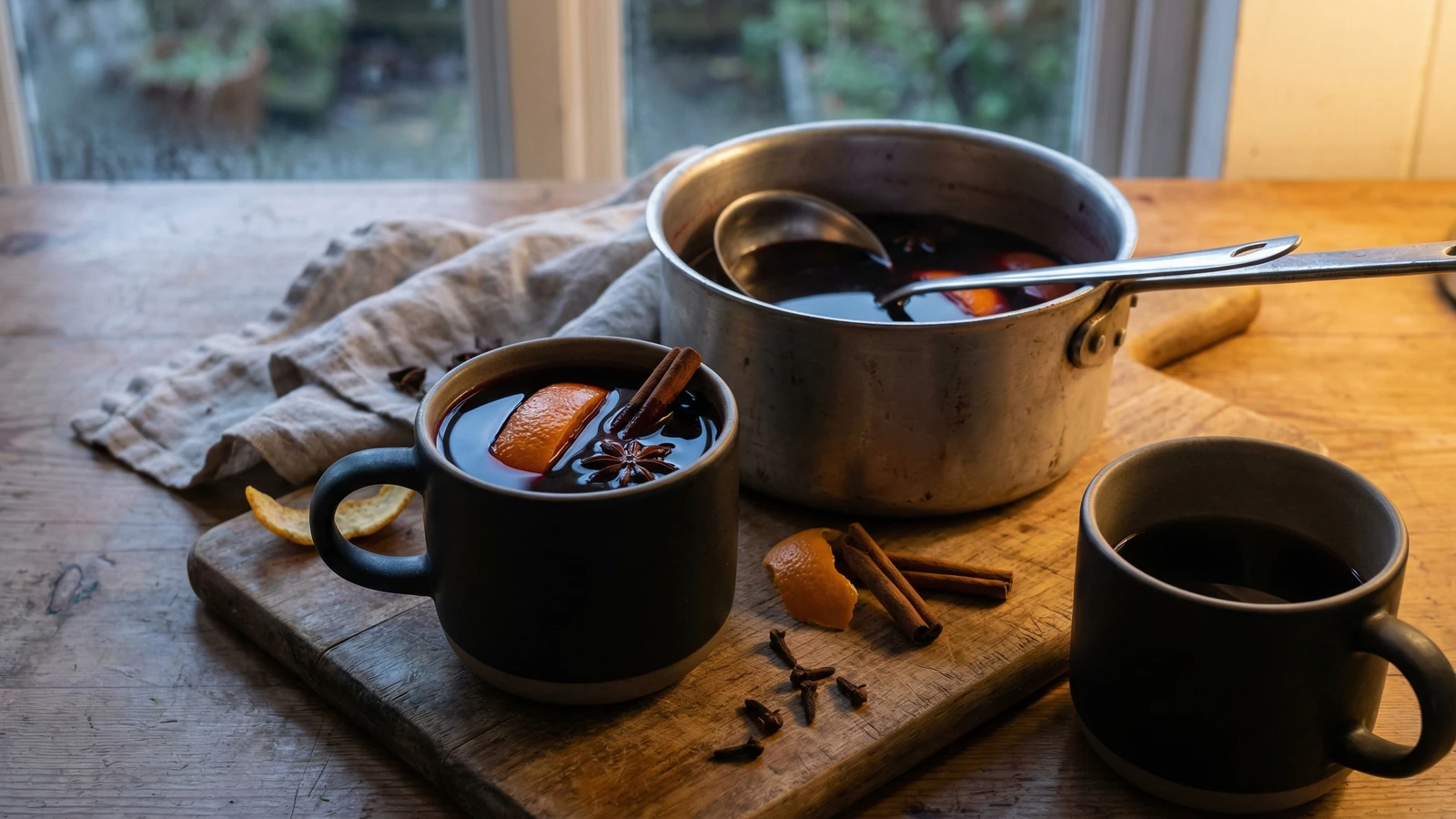
Mulled Wine
Created by Chef Thomas
A pan of red wine warmed slowly with honey, citrus and winter spices. The drink you make when the kitchen window fogs over and people are walking up the path in scarves.
There's a smell that belongs to the second half of December, and this is it. Red wine warming on the hob with orange peel, cloves and cinnamon, the kitchen window fogging over, something soft playing in another room. You don't need an occasion. You need the cold outside and a few people you like.
Mulled wine has a reputation it doesn't quite deserve. Too often it's made from whatever red was going cheap, boiled to within an inch of its life, and dosed with so much sugar it tastes of nothing but. That's not this. This is gentler, closer to a spiced warmth than a hot pudding. Use a wine you'd happily drink on its own. Nothing grand, just honest. And keep the heat low, always low. Boiling wine is a small act of vandalism.
The trick, if there is one, is to make a little syrup first. Peel and spice and honey cooked together in a splash of wine until they know each other, then the rest of the bottle added and warmed through. It takes five extra minutes and it's the difference between mulled wine and mulled wine.
I wrote it down in the notebook years ago and the note says: "First one of the year. Thursday. Everyone stayed longer than they meant to." That's about right. There are few better feelings than putting a warm glass in someone's hand when they've come in out of the rain.
The technique, the tradition, and the story behind every dish.
Discover Culinary AdvisorIngredients
medium-bodied red wine
Quantity
1 bottle (750ml)
something you'd happily drink on its own
unwaxed orange
Quantity
1
peel pared in strips, then juiced
unwaxed lemon
Quantity
1
peel pared in strips
runny honey
Quantity
3 tablespoons, plus more to taste
cinnamon sticks
Quantity
2
whole cloves
Quantity
6
star anise
Quantity
3
bay leaf
Quantity
1
fresh nutmeg
Quantity
a few gratings
fresh ginger
Quantity
1 thumb
sliced
brandy or port (optional)
Quantity
50ml
| Ingredient | Quantity |
|---|---|
| medium-bodied red winesomething you'd happily drink on its own | 1 bottle (750ml) |
| unwaxed orangepeel pared in strips, then juiced | 1 |
| unwaxed lemonpeel pared in strips | 1 |
| runny honey | 3 tablespoons, plus more to taste |
| cinnamon sticks | 2 |
| whole cloves | 6 |
| star anise | 3 |
| bay leaf | 1 |
| fresh nutmeg | a few gratings |
| fresh gingersliced | 1 thumb |
| brandy or port (optional) | 50ml |
Equipment Needed
- •Heavy-bottomed saucepan
- •Vegetable peeler
- •Ladle
- •Heatproof glasses or small mugs
Instructions
- 1
Start with the syrup
Pare the peel from the orange and lemon in wide strips, avoiding the bitter white pith underneath. Put the peels into a heavy-bottomed saucepan with the honey, the cinnamon sticks, cloves, star anise, bay leaf, ginger and a generous grating of nutmeg. Pour in just enough of the wine to cover everything, maybe a large glassful.
This is the bit that matters most. Reducing the aromatics in a small amount of wine with the honey draws the spice and citrus into a proper syrup before the rest of the wine goes in. Skip it and you'll have warm wine with bits floating in it. Do it, and you'll have mulled wine. - 2
Make the spiced base
Bring the pan to a gentle simmer over a medium heat. Let it bubble quietly for about five minutes, until the honey has dissolved and the kitchen starts to smell like Christmas whether you're ready or not. Don't let it boil hard. You're not cooking it off, you're coaxing the spices open.
- 3
Add the rest of the wine
Pour in the remaining wine along with the juice of the orange. Keep the heat low. The goal is to warm it through, never to simmer it properly. You want a few thin wisps of movement at the surface and nothing more. Boiling red wine turns sour and tired and you can't bring it back.
Trust your nose. It knows before you do. When the whole kitchen smells of orange and clove and something Christmassy, it's ready. - 4
Warm and steep
Let the wine sit on the lowest possible heat for fifteen to twenty minutes, so the spices have time to give everything they've got. Taste it. If it needs more honey, add more. If it's too sweet, squeeze in a bit more lemon. This is where a recipe stops being a recipe and becomes whatever suits the people you're making it for.
- 5
Finish and serve
If you're using brandy or port, stir it in right at the end, off the heat, so the alcohol stays honest. Ladle into heatproof glasses or small mugs, making sure each one gets a piece of peel or a star anise, for the look of the thing. Hand them round as people come in from the cold, preferably still in their coats.
Chef Tips
- •The wine matters, but not in the way people think. You don't need anything expensive, but you do need something drinkable. A soft, fruity red (a Merlot, a Grenache, a cheap and cheerful Côtes du Rhône) is what you want. Anything tannic or oaky turns harsh when warmed. If you wouldn't pour a glass of it on a Tuesday night, don't put it in the pan.
- •Never let it boil. This is the only real rule. Boiling wine drives off the alcohol and sours the fruit, and you can't fix it. Keep the heat low, let it steam gently, and you'll be rewarded.
- •Use unwaxed citrus if you can find it. The peel is doing real work here and you don't want the waxy coating or whatever the supermarket sprays on the standard oranges. A quick scrub under hot water helps if unwaxed isn't an option.
- •If there's any left over, strain it into a jar and keep it in the fridge. Reheat gently in a small pan the next evening. It's quietly splendid the second day, once all the spice has had more time to settle.
Advance Preparation
- •The spice syrup in step one can be made a few hours ahead and left in the pan. When guests arrive, pour in the rest of the wine and warm it through. This is the civilised way to do it.
- •Leftover mulled wine keeps in a sealed jar in the fridge for up to three days. Reheat gently, never boiling, and it will be every bit as good.
Frequently Asked Questions
Nutrition Information
1 serving (about 140g)
Where cooking meets culture.
Culinary mentorship, cultural storytelling, and the editorial depth that makes cooking meaningful.
Explore Culinary Advisor