Culinary Advisor
A cooking platform built around craft, culture, and the stories behind what we eat.
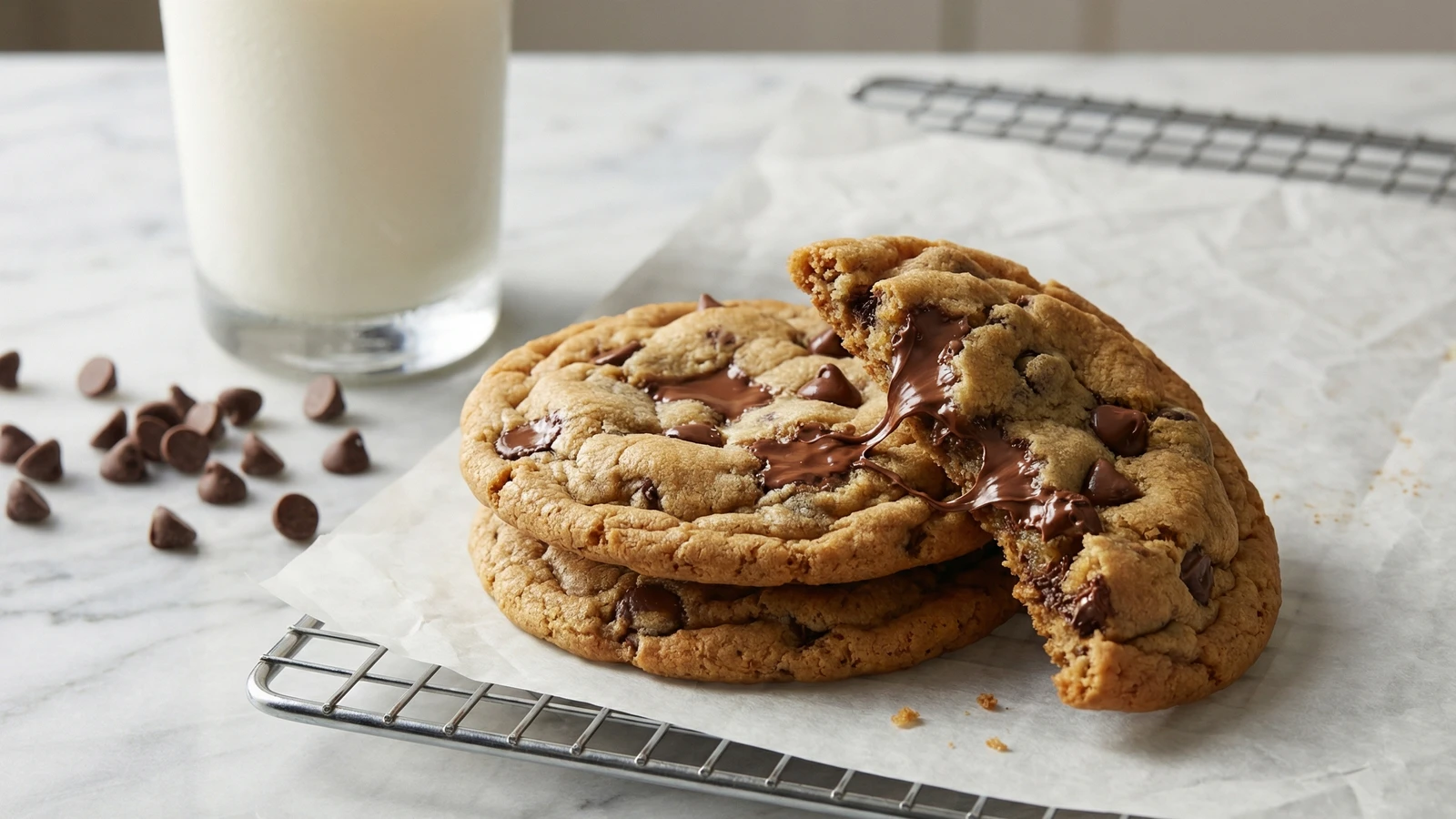
Mrs. Fields-Style Soft Chocolate Chip Cookies
Created by
Thick, buttery cookies with crisp golden edges yielding to impossibly soft centers studded with pools of melted chocolate. The recipe that made a Palo Alto housewife a household name.
In 1977, Debbi Fields walked into a bank in Palo Alto asking for a loan to open a cookie shop. The loan officer told her she was crazy. Americans bought cookies in grocery stores, in boxes, by the sleeve. Nobody would pay good money for fresh-baked cookies one at a time. She got the loan anyway. Within a decade, Mrs. Fields cookies were the smell of every shopping mall in America.
What made those cookies different wasn't a secret ingredient. It was a philosophy: bake them soft, serve them warm, make people feel like they'd wandered into somebody's kitchen. The cookies that came out of those mall kiosks were deliberately underbaked by traditional standards. Pull them when they look slightly raw in the center. Let carryover heat finish the job. This is the technique that separates a forgettable cookie from one people remember.
The ratio matters too. More brown sugar than white gives you chew. Creaming the butter just until combined, not until fluffy, keeps them dense rather than cakey. And cold dough is non-negotiable. Warm dough spreads into thin, crispy discs. Chilled dough holds its shape, stays thick, and develops those characteristic crinkled tops.
This recipe won't get you sued by the Mrs. Fields corporation, but it will get you cookies that taste like 1985 felt: optimistic, indulgent, and worth the trip to the mall.
The technique, the tradition, and the story behind every dish.
Discover Culinary AdvisorIngredients
all-purpose flour
Quantity
2 1/4 cups (280g)
baking soda
Quantity
1 teaspoon
fine sea salt
Quantity
1 teaspoon
unsalted butter
Quantity
1 cup (2 sticks/225g)
softened
dark brown sugar
Quantity
1 cup (200g)
packed
granulated sugar
Quantity
1/2 cup (100g)
large eggs
Quantity
2
at room temperature
pure vanilla extract
Quantity
2 teaspoons
semi-sweet chocolate chips
Quantity
2 cups (340g)
| Ingredient | Quantity |
|---|---|
| all-purpose flour | 2 1/4 cups (280g) |
| baking soda | 1 teaspoon |
| fine sea salt | 1 teaspoon |
| unsalted buttersoftened | 1 cup (2 sticks/225g) |
| dark brown sugarpacked | 1 cup (200g) |
| granulated sugar | 1/2 cup (100g) |
| large eggsat room temperature | 2 |
| pure vanilla extract | 2 teaspoons |
| semi-sweet chocolate chips | 2 cups (340g) |
Equipment Needed
- •Stand mixer or hand mixer
- •Large mixing bowl
- •Medium cookie scoop (2 tablespoon capacity)
- •Baking sheets
- •Parchment paper
- •Wire cooling rack
Instructions
- 1
Whisk the dry ingredients
In a medium bowl, whisk together the flour, baking soda, and salt until evenly combined. Set aside. This takes thirty seconds and prevents streaks of baking soda that would leave bitter spots in your finished cookies.
- 2
Cream butter and sugars
In a large bowl with a hand mixer, or in a stand mixer fitted with the paddle attachment, beat the softened butter with both sugars on medium speed. Stop when the mixture is just combined and slightly lightened, about 2 minutes. You're not making buttercream here. Overbeating incorporates too much air and produces cakey cookies instead of chewy ones. The texture should be thick and paste-like, not fluffy.
Properly softened butter should yield to gentle pressure but still hold its shape. If you can poke it and your finger goes straight through, it's too soft. Put it in the refrigerator for 15 minutes. - 3
Add eggs and vanilla
Add the eggs one at a time, beating on medium speed until each is just incorporated before adding the next. Scrape down the sides of the bowl with a spatula. Add the vanilla extract and mix briefly to combine. The mixture may look slightly curdled. This is fine and will smooth out when you add the flour.
- 4
Incorporate the flour
Add the flour mixture all at once. Mix on low speed just until the flour disappears into the dough, about 30 seconds. Stop the mixer when you can still see a few streaks of flour. Finish mixing by hand with a sturdy spatula, folding from the bottom of the bowl. The moment gluten starts developing, your cookies get tough. Work quickly and stop the instant the dough comes together.
If you can see individual patches of butter in the dough, you haven't mixed enough. If the dough looks shiny and smooth like bread dough, you've gone too far. - 5
Fold in chocolate chips
Add the chocolate chips and fold them through the dough with your spatula until evenly distributed. Resist the temptation to add more chips than the recipe calls for. Two cups is plenty, and overloading the dough makes cookies that fall apart.
- 6
Chill the dough
Cover the bowl tightly with plastic wrap pressed directly against the surface of the dough. Refrigerate for at least 2 hours, or overnight. This step is non-negotiable. Cold dough spreads slowly in the oven, giving you thick cookies with chewy centers. It also allows the flour to fully hydrate and develops deeper flavor as the sugars dissolve. Patience here is the difference between good cookies and great ones.
For even better flavor, chill the dough for 24 to 48 hours. The longer rest produces cookies with more complex, almost toffee-like notes. - 7
Prepare for baking
When ready to bake, position a rack in the center of your oven and preheat to 350°F (175°C). Line baking sheets with parchment paper. Remove the dough from the refrigerator. It will be firm but still scoopable.
- 8
Portion the dough
Using a medium cookie scoop or two spoons, portion the dough into 2-tablespoon balls, roughly the size of golf balls. Place them on the prepared baking sheets with 2 inches between each cookie. They will spread. Do not flatten them. The height of the dough ball determines the thickness of your finished cookie.
- 9
Bake until just set
Bake one sheet at a time for 10 to 12 minutes. Here is the critical moment: pull the cookies when the edges are golden brown but the centers still look pale, slightly puffed, and almost underdone. They will appear too soft. They are not. The cookies continue baking on the hot sheet for several minutes after leaving the oven. If you wait until they look done, they'll be overbaked by the time they cool.
- 10
Cool and finish
Let cookies rest on the baking sheet for 5 minutes. They'll deflate slightly and the centers will set while remaining soft. Transfer to a wire rack to cool completely, or eat them warm while the chocolate is still molten. The edges should be crisp and golden. The center should bend rather than snap. If you press the top gently, it should feel like a soft pillow, not a firm disc.
Chef Tips
- •Use a kitchen scale if you have one. Flour measurements vary wildly depending on how you scoop. Too much flour is the most common cause of dry, tough cookies.
- •Dark brown sugar contains more molasses than light, which adds moisture and chew. Don't substitute light brown sugar here unless you want a different cookie.
- •Let your eggs come to room temperature by placing them in a bowl of warm water for 10 minutes. Cold eggs can cause the creamed butter to seize up.
- •For bakery-style presentation, press a few extra chocolate chips onto the tops of the dough balls just before baking.
- •These cookies are at their absolute best eaten within 4 hours of baking, when the edges are still crisp and the centers haven't firmed up from cooling. After that, they're still excellent. Just different.
Advance Preparation
- •Dough can be refrigerated for up to 5 days. The flavor actually improves over the first 48 hours.
- •Portioned dough balls can be frozen on a baking sheet, then transferred to a freezer bag for up to 3 months. Bake directly from frozen, adding 2 to 3 minutes to the bake time.
- •Baked cookies keep in an airtight container at room temperature for 5 days. Add a slice of bread to the container to keep them soft.
- •To refresh day-old cookies, microwave individually for 8 to 10 seconds. The chocolate will re-melt and the center will soften.
Frequently Asked Questions
Nutrition Information
1 serving (about 44g)
Where cooking meets culture.
Culinary mentorship, cultural storytelling, and the editorial depth that makes cooking meaningful.
Explore Culinary Advisor