Culinary Advisor
A cooking platform built around craft, culture, and the stories behind what we eat.
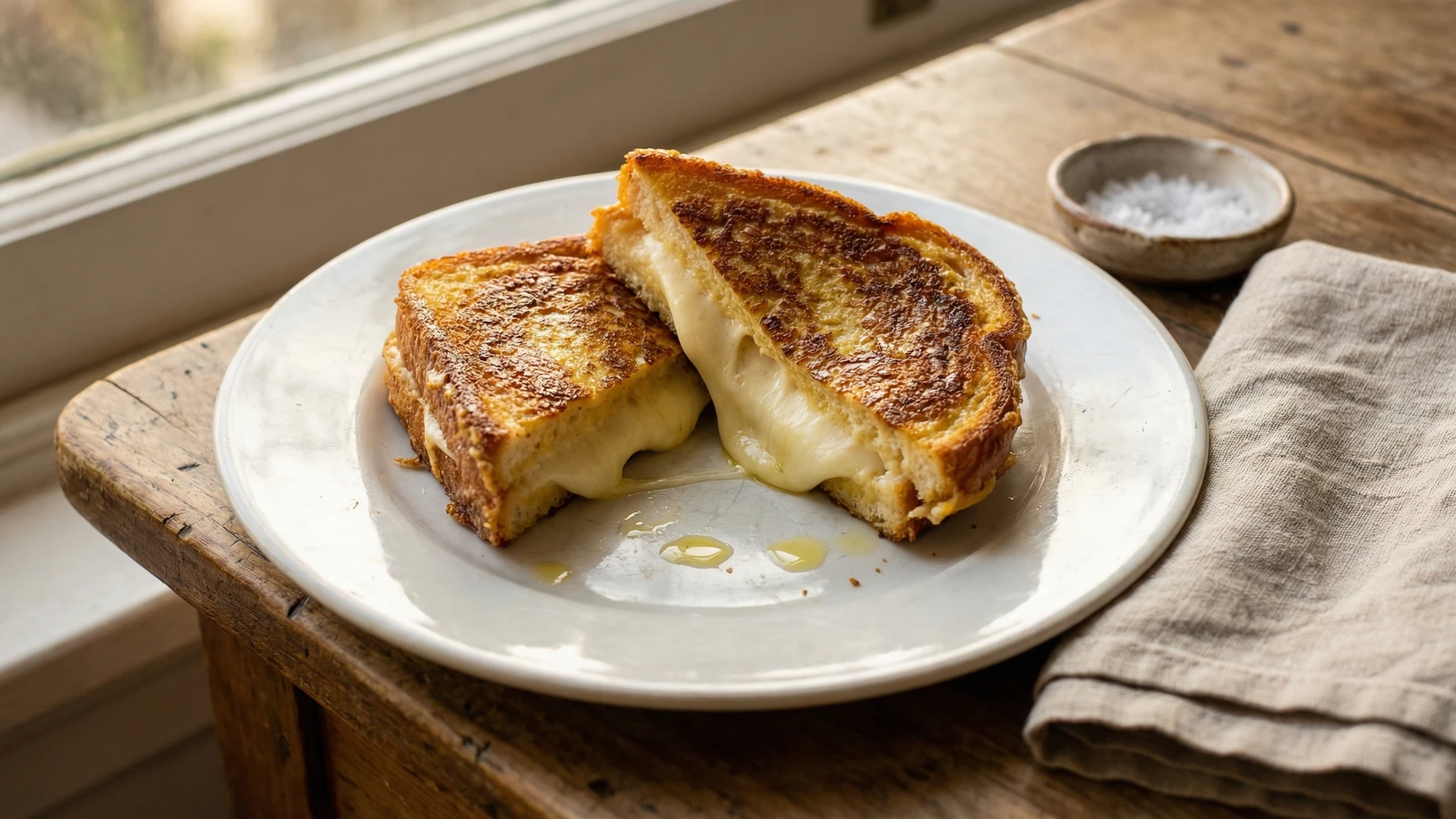
Mozzarella in Carrozza
Created by Chef Graziella
Naples' beloved fried mozzarella sandwich, where day-old bread becomes a golden carriage for molten cheese. Four minutes of perfection that cannot wait.
In Carrozza means 'in a carriage,' and this is precisely what Naples created: a vehicle for transporting mozzarella from the plate to your mouth in the most satisfying way imaginable. The bread is not the point. The bread is the delivery system.
Americans see this and think of grilled cheese. They are wrong. Grilled cheese is cooked dry on a griddle. Mozzarella in carrozza is dipped in egg and fried in oil, creating a golden, crisp exterior that shatters against your teeth while the cheese inside stretches in long, satisfying strands. The technique is completely different. The result is incomparable.
The dish requires speed at every stage. You assemble, you dip, you fry, you eat. There is no holding this in a warm oven. There is no making it ahead for a party. You stand at the stove and you serve it the moment it leaves the oil. Your guests wait for the food; the food does not wait for them. This is the bargain you make with anything fried.
Mozzarella in carrozza originated in Campania as cucina povera, a way for Neapolitan home cooks to use day-old bread and stretch precious mozzarella into a more substantial dish. Street vendors sold them wrapped in paper from carts, and the dish became inseparable from Naples itself. The anchovy, found in traditional versions, connects the dish to the city's long fishing heritage.
The technique, the tradition, and the story behind every dish.
Discover Culinary AdvisorIngredients
white sandwich bread
Quantity
8 slices
day-old preferred
fresh mozzarella (fior di latte)
Quantity
8 ounces
sliced 1/4 inch thick
anchovy fillets (optional)
Quantity
4
drained and halved
large eggs
Quantity
3
whole milk
Quantity
1/2 cup
all-purpose flour
Quantity
1/2 cup
kosher salt
Quantity
to taste
olive oil or vegetable oil
Quantity
for frying
| Ingredient | Quantity |
|---|---|
| white sandwich breadday-old preferred | 8 slices |
| fresh mozzarella (fior di latte)sliced 1/4 inch thick | 8 ounces |
| anchovy fillets (optional)drained and halved | 4 |
| large eggs | 3 |
| whole milk | 1/2 cup |
| all-purpose flour | 1/2 cup |
| kosher salt | to taste |
| olive oil or vegetable oil | for frying |
Equipment Needed
- •Large heavy skillet (cast iron or stainless steel)
- •Instant-read thermometer or small cube of bread for testing oil temperature
- •Slotted spatula or spider
- •Paper towels for draining
Instructions
- 1
Prepare the bread
Trim the crusts from the bread slices. This is not optional. The crusts become tough when fried while the soft interior turns golden and crisp. If your bread is fresh, leave the slices uncovered for an hour. Slightly stale bread absorbs the egg better without becoming sodden.
- 2
Assemble the sandwiches
Pat the mozzarella slices dry with paper towels. Wet cheese will cause spattering in the oil. Divide the mozzarella evenly among four bread slices, leaving a half-inch border around the edges. If using anchovy, lay a piece or two over the cheese. Cover with the remaining bread slices and press the edges firmly to seal. The seal is essential. Without it, the cheese escapes during frying.
The anchovy is traditional and worth including. It does not make the sandwich taste of fish. It adds depth and salt, enhancing the mozzarella rather than competing with it. Those who claim to dislike anchovy often cannot detect it here. - 3
Prepare the batter
Spread the flour on a plate. In a shallow bowl wide enough to hold a sandwich, beat the eggs with the milk and a pinch of salt until thoroughly combined. The mixture should be smooth and uniform.
- 4
Coat the sandwiches
Dredge each sandwich lightly in flour on both sides, shaking off excess. Then dip into the egg mixture, letting it soak for 20 to 30 seconds per side. The bread should absorb the egg but not become waterlogged. Lift and let excess drip back into the bowl.
- 5
Heat the oil
Pour oil into a large skillet to a depth of half an inch. Heat over medium until the oil reaches 350 degrees, or until a small piece of bread dropped in sizzles immediately and turns golden in about 30 seconds. The temperature matters. Too cool and the sandwiches absorb oil. Too hot and the outside burns before the cheese melts.
- 6
Fry until golden
Carefully lower the sandwiches into the oil. Do not crowd the pan. Two at a time is usually the limit. Fry until the bottom is deep golden, about 2 minutes. Turn once with a spatula and fry the second side until equally golden. The cheese inside should be completely molten. Transfer to a plate lined with paper towels.
Do not press down on the sandwiches while frying. This squeezes out the melted cheese. Let them be. - 7
Serve immediately
Season lightly with salt while still hot. Cut in half diagonally if you wish to show the stretchy cheese inside. Serve at once. There is no reheating this dish. It exists in its perfect state for approximately four minutes. After that, the bread softens, the cheese solidifies, and the magic is gone.
Chef Tips
- •Use fior di latte, the cow's milk mozzarella, not mozzarella di bufala. Buffalo mozzarella contains too much moisture and will make your sandwiches soggy and cause dangerous spattering in the oil.
- •The seal matters more than you think. Press those edges firmly. If the mozzarella escapes into the oil, you have a mess and a disappointment.
- •Do not be tempted to add herbs, garlic, or other flourishes. This is a three-ingredient dish for good reason. What you keep out is as significant as what you put in.
- •Anchovy skeptics should try it once. The fillets melt into the cheese and create a savory depth that enhances everything. You will not taste fish.
Advance Preparation
- •The sandwiches can be assembled and sealed up to 2 hours ahead. Refrigerate them on a plate, covered. Bring to room temperature before coating and frying.
- •Do not coat with flour and egg until the moment before frying. The bread will become soggy.
- •This dish cannot be reheated successfully. Plan your timing so guests are seated when the frying begins.
Frequently Asked Questions
Nutrition Information
1 serving (about 140g)
Where cooking meets culture.
Culinary mentorship, cultural storytelling, and the editorial depth that makes cooking meaningful.
Explore Culinary Advisor