Culinary Advisor
A cooking platform built around craft, culture, and the stories behind what we eat.
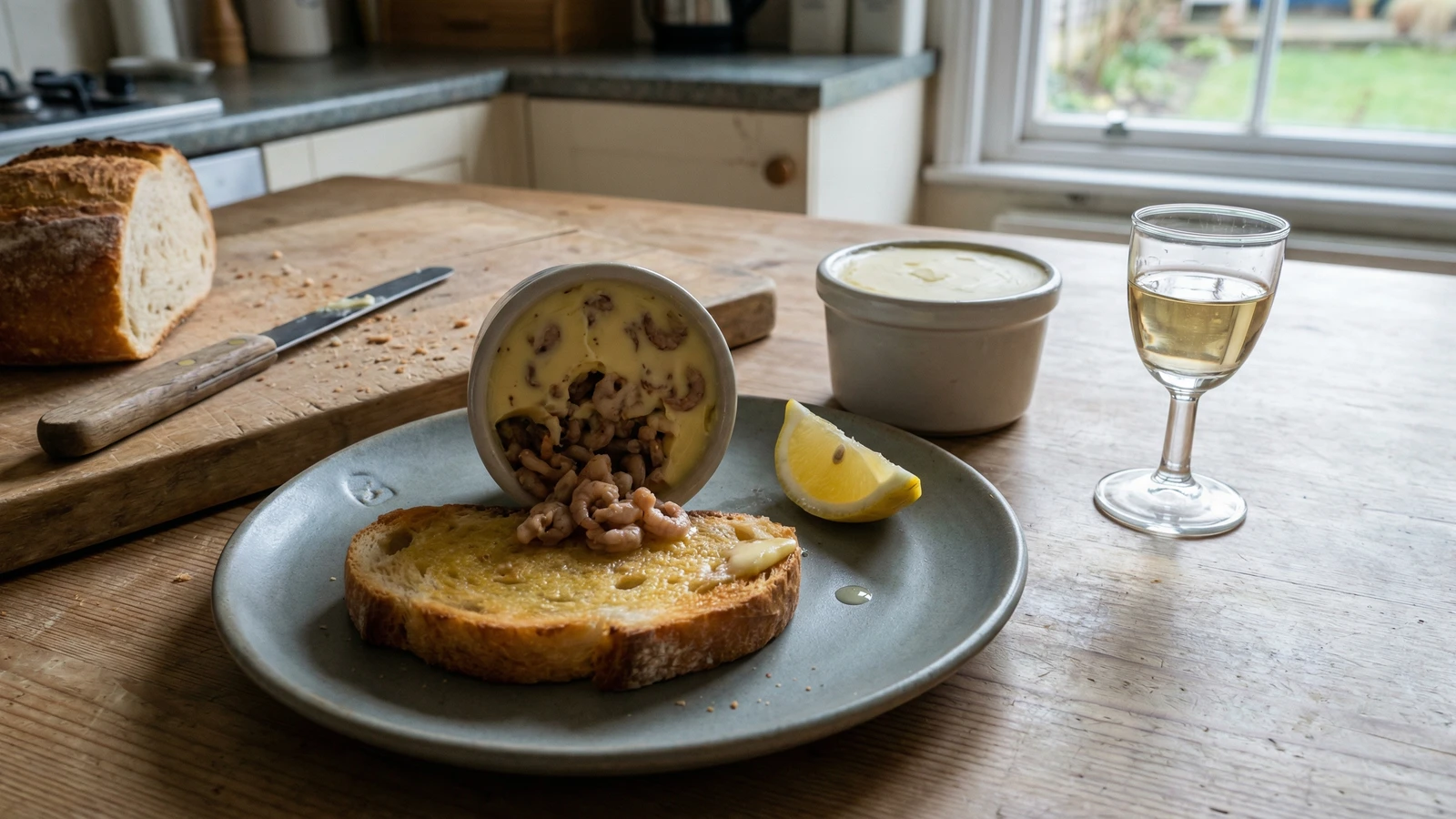
Morecambe Bay Potted Shrimp
Created by Chef Thomas
Tiny brown shrimp set in spiced butter with mace and cayenne, turned out cold onto hot toast with a squeeze of lemon. A Lancashire keeper's supper that has barely changed since the bay boats brought the catch in.
The smell is what gets you. Butter, warmed gently with a blade of mace and a thread of cayenne, and then a handful of brown shrimp stirred through it. It smells of the coast. Not the breezy, postcard coast, but the working one: salt flats, wet sand, nets drying in the wind. Morecambe Bay in a ramekin.
Potted shrimp is one of those dishes that makes you wonder why anyone ever felt the need to complicate food. Brown shrimp, butter, spice. That's it. The shrimp are tiny, barely the length of your thumbnail, sweet and briny and nothing like the bland, waterlogged prawns that pass for shellfish in most supermarkets. They've been potted this way on the Lancashire coast for two hundred years, and the method hasn't changed because it doesn't need to.
I make these when a good fishmonger has brown shrimp in, which isn't as often as I'd like. When they appear, I buy more than I need and spend a quiet half hour potting them into ramekins. The butter sets. The fridge does the rest. Two days later, you turn one out onto hot toast and the whole thing collapses slowly, the butter softening in the warmth, the shrimp tumbling free, that gentle heat of cayenne catching you just behind the teeth. A wedge of lemon. A glass of something cold and dry.
I wrote it down in the notebook years ago: shrimp, butter, mace, Tuesday. It's the kind of thing that doesn't need embellishing. There are few better feelings than putting one of these little pots in front of someone who has never had potted shrimp before and watching them work out what they've been missing.
The technique, the tradition, and the story behind every dish.
Discover Culinary AdvisorIngredients
peeled brown shrimp
Quantity
200g
Morecambe Bay if you can get them
unsalted butter
Quantity
150g
mace
Quantity
1 blade, or a good pinch of ground
cayenne pepper
Quantity
small pinch
nutmeg
Quantity
a grating
lemon juice
Quantity
a squeeze
fine sea salt
Quantity
to taste
good bread or toast
Quantity
to serve
lemon wedges
Quantity
to serve
| Ingredient | Quantity |
|---|---|
| peeled brown shrimpMorecambe Bay if you can get them | 200g |
| unsalted butter | 150g |
| mace | 1 blade, or a good pinch of ground |
| cayenne pepper | small pinch |
| nutmeg | a grating |
| lemon juice | a squeeze |
| fine sea salt | to taste |
| good bread or toast | to serve |
| lemon wedges | to serve |
Equipment Needed
- •Small heavy-bottomed saucepan
- •Four ramekins or small ceramic pots (about 100ml each)
- •Fine-mesh sieve or spoon for skimming
Instructions
- 1
Clarify the butter
Melt the butter in a small, heavy saucepan over a low heat. Don't rush it. When it's fully melted, you'll see a layer of pale foam on the surface and milky solids drifting to the bottom. Skim the foam off with a spoon and pour the clear golden butter carefully into a clean jug, leaving the solids behind in the pan. This is clarified butter, and it's what seals the shrimps and keeps them sweet for days. It smells clean and faintly nutty. If it smells sharp or browned, the heat was too high.
You can skip clarifying if you prefer. Whole butter tastes richer, but it won't keep as long. If you're eating these within a day or two, it barely matters. - 2
Warm the spiced butter
Pour about two-thirds of the clarified butter back into a clean pan set over the gentlest heat you have. Add the blade of mace, the cayenne, and a grating of nutmeg. Let the spices steep for three or four minutes. The butter should be warm, not simmering. You're coaxing flavour out, not frying anything. The cayenne should give the butter a faint warmth at the back of your throat when you taste it, nothing more. If it burns your tongue, you've been heavy-handed.
- 3
Add the shrimp
Tip the brown shrimp into the spiced butter and stir them gently through. Let them warm for a minute or two, just long enough to take on the spices. They're already cooked, so you're not cooking them further, just letting the butter carry the mace and cayenne into every crevice. Add a squeeze of lemon juice and a pinch of salt. Taste the butter. It should be savoury, gently spiced, with the sweet brine of the shrimp coming through underneath. Adjust as you see fit. Fish out the blade of mace if you used one.
Brown shrimp are tiny and sweet, nothing like the large prawns you find frozen in supermarkets. They taste of the sea in a way that bigger shellfish rarely manage. If you can't find them fresh, good potted shrimp from a fishmonger is better than bad shrimp potted at home. - 4
Pot and seal
Divide the shrimp and their butter between four small ramekins or pots, pressing down gently with the back of a spoon so the shrimp are snug and level. Pour the remaining clarified butter over the top of each pot in a thin, even layer. This is the seal. It should cover the shrimp completely, a golden lid of butter that will set firm in the cold. Put the pots in the fridge and leave them for at least two hours, though overnight is better. The butter will set opaque and pale, and underneath it the shrimp will be waiting.
- 5
Serve on hot toast
Take the pots from the fridge fifteen minutes before you want to eat. You don't want the butter liquid, but you do want it to yield to a knife rather than shatter. Toast good bread until it's properly golden and still hot. Turn the potted shrimp out onto the toast, or serve the ramekins directly with a knife and let people spread their own. A wedge of lemon on the side. Nothing else. The shrimp, the butter, the toast, the lemon. That's all it needs and all it has ever needed.
Chef Tips
- •The shrimp are everything. Brown shrimp, Crangon crangon, are what make this dish. They're small, sweet, and taste properly of the sea. Large prawns won't do. If you can't find fresh brown shrimp, the vacuum-packed peeled ones from a good fishmonger are reliable. Frozen is a last resort.
- •Mace, not nutmeg, is the traditional spice here, though a little nutmeg does no harm alongside it. Mace has a warmer, more floral quality that sits well with the sweetness of the shrimp. A single blade steeped in the butter is enough. Ground mace works, but use it sparingly. It's stronger than you think.
- •Go easy with the cayenne. This isn't about heat. You want the barest suggestion of warmth, something you feel after you've swallowed rather than when you bite. A small pinch, less than you'd put on a devilled egg, is about right.
- •These keep well in the fridge for up to three days, sealed under their butter. In fact, they improve after a day, as the spices settle into the shrimp. Make them on a Saturday and eat them on a Monday. A glass of Muscadet or a dry sherry alongside is worth having.
Advance Preparation
- •The potted shrimp must be chilled for at least two hours, though overnight is better. The butter needs to set fully to seal the shrimp and carry the spices through.
- •Keeps well in the fridge for up to three days under its butter seal. The flavour deepens after the first day. Take the pots out fifteen minutes before serving to soften the butter slightly.
- •Not suitable for freezing. The texture of the shrimp suffers and the butter can turn grainy on thawing.
Frequently Asked Questions
Nutrition Information
1 serving (about 85g)
Where cooking meets culture.
Culinary mentorship, cultural storytelling, and the editorial depth that makes cooking meaningful.
Explore Culinary Advisor