Culinary Advisor
A cooking platform built around craft, culture, and the stories behind what we eat.
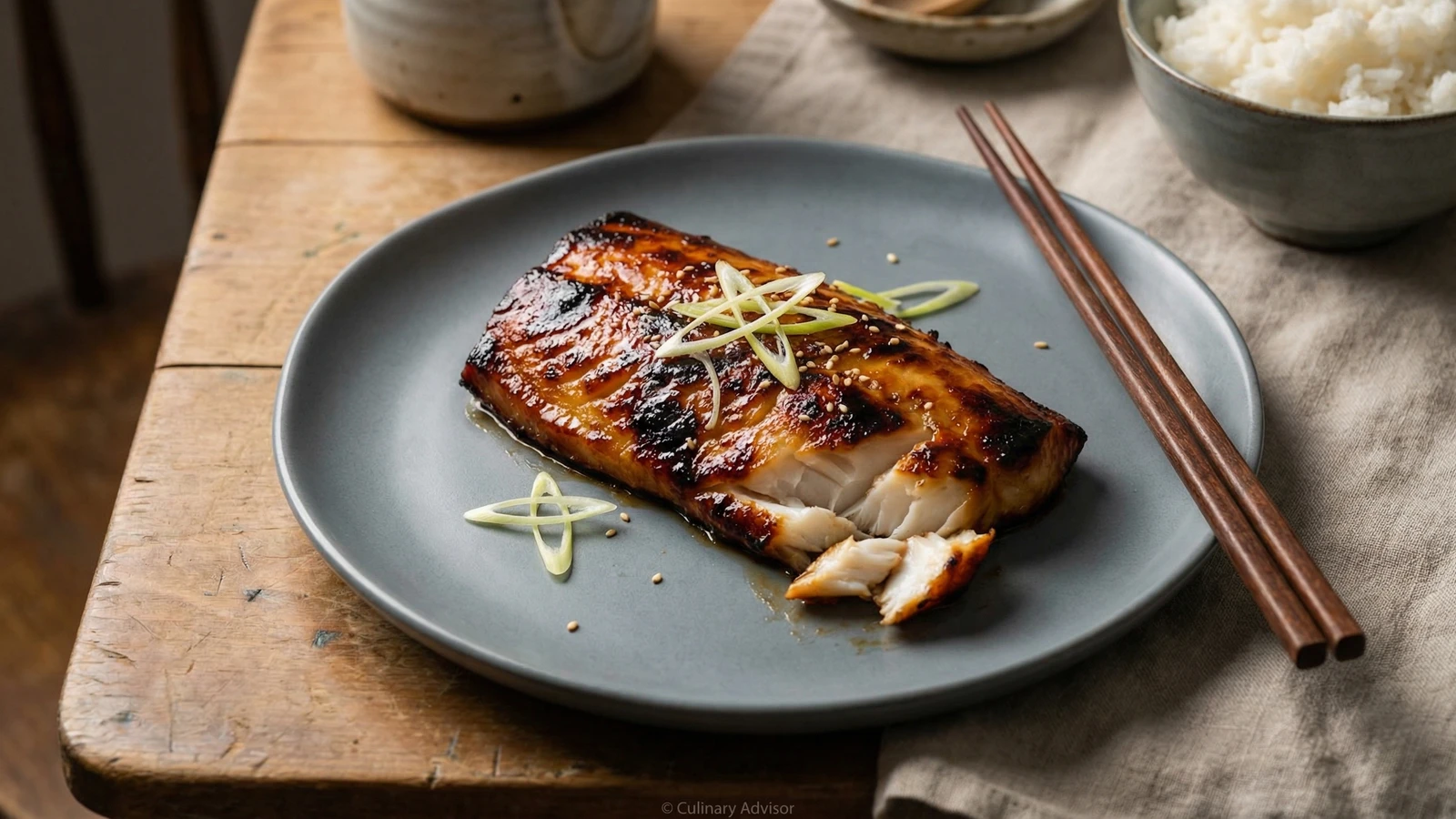
Miso-Glazed Black Cod
Created by Chef Ally
Silken black cod transformed by days in white miso, then broiled until the surface shatters into sweet, salty caramel while the flesh beneath stays impossibly tender and rich.
Black cod is one of the ocean's great luxuries, though it asks for almost nothing in return. The flesh is so rich with natural oils that it stays succulent even if you overcook it slightly. This forgiveness makes it perfect for home cooks, but the real magic happens in the waiting.
The Japanese technique of marinating fish in miso, called misozuke, was born from preservation. Fishermen discovered that coating their catch in fermented soybean paste kept it fresh for weeks. What they also discovered, perhaps by accident, is that the miso transforms the fish. The salt draws out moisture while the enzymes break down proteins, concentrating flavor and creating a texture that falls somewhere between raw and cooked before it ever sees heat.
You can marinate this fish for two hours and have something delicious. But give it two or three days, and you will understand why this dish launched a thousand restaurant menus. The miso works its way deep into the flesh, building umami upon umami. When you finally broil it, the sugars caramelize into a lacquered crust while the interior stays silken and almost custard-like.
This is not a dish about technique. It is about time and trust. Find good fish, make a simple marinade, and then let them become acquainted.
The technique, the tradition, and the story behind every dish.
Discover Culinary AdvisorIngredients
skin-on black cod fillets
Quantity
4 (6 ounces each, about 1 inch thick)
white miso paste (shiro miso)
Quantity
1/2 cup
mirin
Quantity
3 tablespoons
sake
Quantity
2 tablespoons
granulated sugar
Quantity
2 tablespoons
neutral oil
Quantity
1 tablespoon
for the pan
scallions
Quantity
2
thinly sliced on the bias
toasted sesame seeds
Quantity
1 teaspoon
| Ingredient | Quantity |
|---|---|
| skin-on black cod fillets | 4 (6 ounces each, about 1 inch thick) |
| white miso paste (shiro miso) | 1/2 cup |
| mirin | 3 tablespoons |
| sake | 2 tablespoons |
| granulated sugar | 2 tablespoons |
| neutral oilfor the pan | 1 tablespoon |
| scallionsthinly sliced on the bias | 2 |
| toasted sesame seeds | 1 teaspoon |
Equipment Needed
- •Shallow glass or ceramic dish for marinating
- •Rimmed baking sheet
- •Aluminum foil
Instructions
- 1
Select your fish
Start at the fish counter. Black cod, also called sablefish, should smell of nothing but the ocean. The flesh should be pearly white, glistening, and firm to the touch. Ask where it was caught. Alaska and the Pacific Northwest yield the finest specimens, and sustainable fishing practices matter here. If your fishmonger does not know the source, find another fishmonger.
True black cod has an almost impossibly silky texture when cooked. Do not substitute Chilean sea bass, though some recipes suggest it. They are different fish entirely. - 2
Make the miso marinade
Whisk the white miso, mirin, sake, and sugar in a bowl until the sugar dissolves and the mixture is smooth. The marinade should have the consistency of thick honey. Taste it. You want sweetness balanced by the salty depth of the miso, with the sake adding a gentle warmth underneath.
- 3
Coat the fish
Pat the cod fillets dry with paper towels. Lay them in a single layer in a shallow dish. Spoon the marinade generously over each fillet, turning to coat all sides. The fish should be completely blanketed. Cover tightly and refrigerate for at least two hours, or up to three days.
Patience transforms this dish. Two hours will give you something good. Forty-eight to seventy-two hours will give you something transcendent. The miso penetrates the flesh slowly, building layers of umami that a quick marinade cannot achieve. - 4
Prepare for broiling
Remove the fish from the refrigerator thirty minutes before cooking. Position an oven rack about six inches from the broiler element and preheat your broiler to high. Line a rimmed baking sheet with foil and brush lightly with oil. Gently scrape most of the marinade from the fish, leaving just a thin coating. Too much marinade will burn before the fish cooks through.
- 5
Broil until caramelized
Place the fillets skin-side down on the prepared pan. Broil for eight to twelve minutes, depending on thickness, without flipping. Watch carefully after the six-minute mark. The sugars in the miso will caramelize and spot with dark patches. This is what you want. The top should be deeply burnished, almost lacquered, with the flesh just beginning to flake when you press the thickest part.
Every broiler runs differently. Stay close and trust your eyes. The transformation from pale to golden to perfectly caramelized happens quickly. - 6
Rest and serve
Let the fish rest for two minutes on the pan. This allows the flesh to relax and the juices to redistribute. Transfer each fillet to a warm plate. Scatter the scallions over the top and finish with a pinch of sesame seeds. The fish needs nothing else. Serve immediately with steamed rice to catch the sweet, salty juices.
Chef Tips
- •Seek out a fishmonger who can tell you when the fish was caught and where. Black cod from Alaska is typically the most sustainable choice, harvested using longline methods that minimize bycatch.
- •White miso, sometimes labeled shiro miso, is essential here. It is sweeter and milder than red or mixed miso. The gentleness allows the fish to remain the star.
- •Save the scraped-off marinade. It keeps refrigerated for weeks and works beautifully on chicken thighs, pork tenderloin, or firm tofu.
- •If you cannot find black cod, Arctic char or wild salmon will take the marinade well, though the texture will be different. Reduce marinating time to overnight for these leaner fish.
- •Serve with pickled ginger and a simple cucumber salad dressed with rice vinegar. The brightness cuts through the richness.
Advance Preparation
- •The fish improves dramatically with longer marinating. For best results, begin the marinade two to three days before you plan to serve.
- •The miso marinade can be made up to two weeks ahead and stored refrigerated. Let it come to room temperature before coating the fish.
- •This dish does not hold well after cooking. Plan to serve immediately from the oven.
Frequently Asked Questions
Nutrition Information
1 serving (about 215g)
Where cooking meets culture.
Culinary mentorship, cultural storytelling, and the editorial depth that makes cooking meaningful.
Explore Culinary Advisor