Culinary Advisor
A cooking platform built around craft, culture, and the stories behind what we eat.
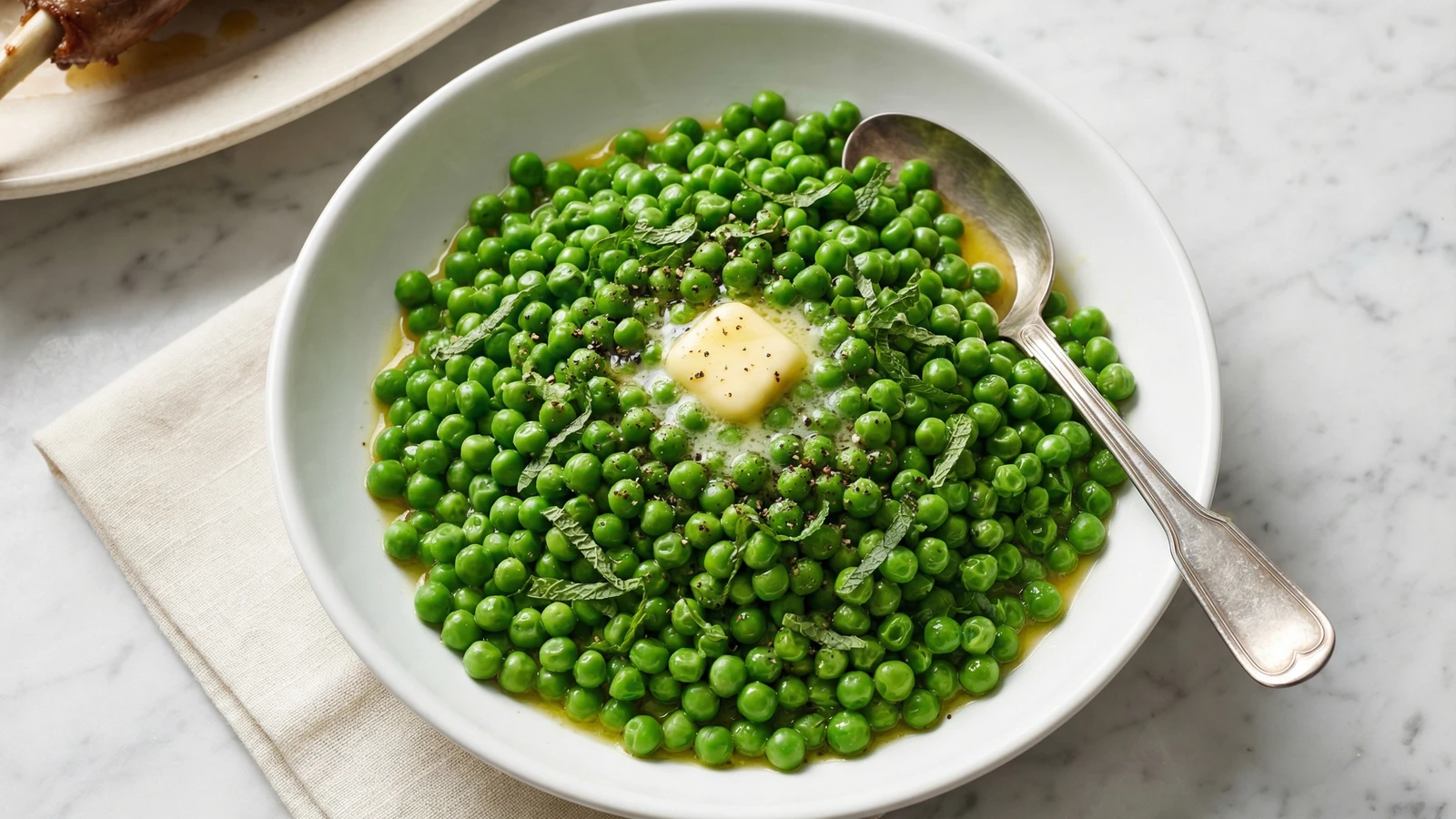
Minted Peas with Butter
Created by
Tender green peas glossed with sweet butter and ribbons of fresh mint, the classic British side dish that has graced Easter tables for generations and deserves a permanent place at yours.
The British understood something about peas that Americans often forget: simplicity is not the enemy of greatness. A bowl of properly cooked peas, bright green and barely yielding to the tooth, dressed with nothing more than good butter and fresh mint, can hold its own beside the finest roast lamb. This is the dish that signals spring has truly arrived at the English table.
I've watched home cooks overcomplicate peas for decades. They drown them in cream sauces, bury them under bacon, treat them as an afterthought to be rescued rather than celebrated. Stop. The pea is a remarkable vegetable when treated with respect. Its natural sweetness needs no enhancement, only a gentle hand and quality supporting players.
Here's a truth the British have known for centuries: frozen peas, processed within hours of harvest, often surpass the sad specimens that have languished in produce bins for days. Don't let snobbery guide your shopping. Let your palate and good sense prevail. Whether you're serving four for a weeknight supper or forty at your Easter gathering, this dish scales beautifully and rewards both the novice and the experienced cook.
The mint is non-negotiable. It must be fresh, torn or cut at the last moment, its oils released into the warm butter where they perfume the entire dish. Dried mint has no place here. This marriage of pea and mint is ancient, honest, and perfect.
The technique, the tradition, and the story behind every dish.
Discover Culinary AdvisorIngredients
fresh peas in pods or frozen petite peas
Quantity
2 pounds fresh (or 1 pound frozen)
shelled if fresh
unsalted butter
Quantity
4 tablespoons
fresh mint leaves
Quantity
1/2 cup loosely packed
torn or thinly sliced
fine sea salt
Quantity
1 teaspoon
freshly ground black pepper
Quantity
1/2 teaspoon
granulated sugar (optional)
Quantity
1 teaspoon
water or light chicken stock
Quantity
2 tablespoons
| Ingredient | Quantity |
|---|---|
| fresh peas in pods or frozen petite peasshelled if fresh | 2 pounds fresh (or 1 pound frozen) |
| unsalted butter | 4 tablespoons |
| fresh mint leavestorn or thinly sliced | 1/2 cup loosely packed |
| fine sea salt | 1 teaspoon |
| freshly ground black pepper | 1/2 teaspoon |
| granulated sugar (optional) | 1 teaspoon |
| water or light chicken stock | 2 tablespoons |
Equipment Needed
- •12-inch skillet or sauté pan with lid
- •Large bowl for shelling peas (if using fresh)
- •Warmed serving bowl
Instructions
- 1
Prepare your peas
If using fresh peas, shell them into a bowl, discarding any that are hard, yellowed, or blemished. You should have about one pound of shelled peas from two pounds in the pod. If using frozen peas, do not thaw them. They'll cook directly from frozen, which actually helps preserve their color and prevents mushiness.
Taste a raw pea before cooking. If it's starchy rather than sweet, add the optional sugar to compensate. Early season peas rarely need it; late season peas often do. - 2
Prepare the mint
Stack the mint leaves, roll them into a tight cylinder, and slice into thin ribbons (this is called a chiffonade). Alternatively, tear larger leaves into rough pieces. Either method works. What matters is that the leaves are cut immediately before use so their aromatic oils remain vibrant. Set aside about a tablespoon of the prettiest leaves for garnish.
- 3
Melt the butter
Place a wide skillet or sauté pan over medium heat. Add the butter and let it melt completely, swirling occasionally. Watch for the foam to subside and listen for the sizzling to quiet. The butter should be golden and smell nutty, not brown or burnt. This takes about two minutes. The French call this beurre noisette, and it adds a depth of flavor that raw melted butter cannot match.
For large gatherings, use a wide braiser or Dutch oven. The peas need room to move in a single layer for even cooking. - 4
Cook the peas
Add the peas to the butter along with the water or stock. The liquid will sizzle and steam immediately. Toss or stir to coat the peas evenly. Cover the pan and let them cook for 2 to 3 minutes for frozen peas, 3 to 4 minutes for fresh. Shake the pan once or twice during cooking. The peas are done when they're bright green, tender but not mushy, with a slight resistance when bitten.
- 5
Season and finish
Remove the lid and let any remaining liquid evaporate, about 30 seconds. Add the salt, pepper, and sugar if using. Toss well. Remove the pan from heat and add the sliced mint, reserving your garnish. Toss again to distribute the mint throughout. The residual heat will wilt it slightly and release its fragrance into the butter.
- 6
Serve immediately
Transfer to a warmed serving bowl and scatter the reserved mint leaves over the top. Bring to the table without delay. Minted peas wait for no one, and their brilliance fades with each passing minute. In Britain, these traditionally accompany roast lamb, but they belong beside any spring roast, grilled chops, or simple roasted chicken.
For a traditional Easter presentation, serve the peas in a shallow bowl alongside the lamb, allowing guests to spoon them over their slices of meat.
Chef Tips
- •For large gatherings, blanch fresh peas up to four hours ahead in salted boiling water for 60 seconds, then shock in ice water and drain thoroughly. Refrigerate in a single layer on a sheet pan. When ready to serve, simply warm through in the butter with mint. This two-stage method keeps them brilliantly green.
- •Quality butter matters enormously in a dish this simple. Use European-style butter with higher fat content if you can find it. Kerrygold, Plugrá, or any good cultured butter will make a noticeable difference.
- •The British tradition of serving minted peas specifically with lamb at Easter dates to medieval times, when spring lamb and the first peas of the season arrived together. This is seasonal cooking at its most logical.
- •Leftover minted peas (if you're lucky enough to have them) make excellent additions to frittatas, risotto, or pasta. Purée them with a bit of stock for a quick spring soup.
- •Double or triple this recipe easily for crowds. The technique remains identical; just use a larger vessel and work in batches if necessary to avoid crowding the pan.
Advance Preparation
- •Fresh peas can be shelled up to 24 hours ahead and stored refrigerated in an airtight container lined with a damp paper towel.
- •For make-ahead service, blanch peas in boiling salted water for 60 seconds, shock in ice water, drain, and refrigerate for up to 4 hours. Reheat in butter just before serving.
- •Mint can be washed, dried, and stored wrapped in barely damp paper towels in a sealed bag for up to 2 days. Slice only when ready to use.
- •The butter can be browned in advance and held at room temperature for up to 2 hours. Reheat gently before adding peas.
- •Never hold finished minted peas warm for extended periods. They turn army green and lose their fresh flavor. Time the final cooking to coincide with plating the main course.
Frequently Asked Questions
Nutrition Information
1 serving (about 76g)
Where cooking meets culture.
Culinary mentorship, cultural storytelling, and the editorial depth that makes cooking meaningful.
Explore Culinary Advisor