Culinary Advisor
A cooking platform built around craft, culture, and the stories behind what we eat.
Millionbof
Created by Chef Freja
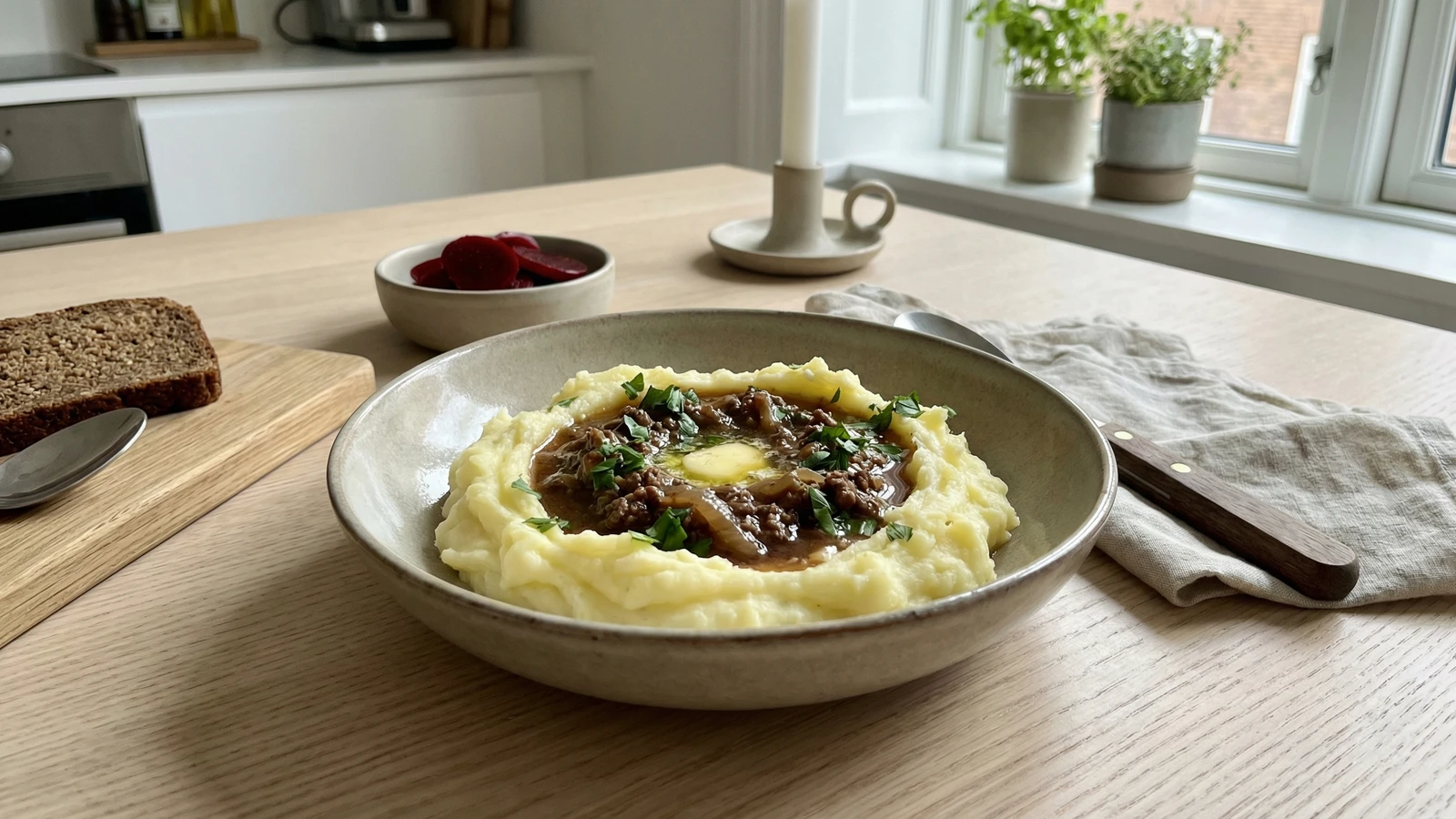
The fastest Danish comfort: ground beef and onions in a thick mahogany gravy, spooned over buttery mashed potatoes with ruby pickled beets alongside. The weeknight dinner that raised generations of Danes.
There's a Tuesday evening version of Danish cooking that nobody writes cookbooks about. The light has gone by four in winter, the wind is pushing against the windows, and nobody in the house has the patience for a long braise or a careful plate. This is when millionbof appears. Thirty-five minutes from cold pan to full bowl, and every Dane knows it by heart.
The name makes people smile. Millionbof means million beef, and the story is that there are a million tiny pieces of meat in the pan, which is the child's way of understanding ground beef. It's a dish that came out of the practical Danish kitchen of the twentieth century, when the home cook needed dinner on the table before the children fell apart, and it has stayed in rotation because it does what it promises. Ground beef, onions, a dark glossy gravy, mash underneath, pickled beets alongside. That's the whole architecture.
What I want you to pay attention to is the browning. This dish has five ingredients doing the heavy lifting, and if you don't brown the beef properly, the whole thing goes flat. Leave the meat alone when it first hits the pan. Let it sit. Let it develop the dark crust that becomes the gravy's foundation. Everything after that is easy, and you'll know when it's right because the smell of the kitchen changes. That's the moment the dish becomes itself.
Millionbof belongs to the 1950s and 60s wave of Danish weeknight cooking, when ground beef became widely available in butcher shops and home cooks built a new repertoire around it alongside frikadeller and hakkebøf. The name is pure Danish humor, a family word that entered cookbooks through the back door rather than the front. The combination with mashed potatoes and syltede rødbeder, the sweet-sharp pickled beets that have been a fixture of the Danish pantry since the nineteenth century, is the classic pairing that most Danes over the age of forty can recite from childhood memory.
The technique, the tradition, and the story behind every dish.
Discover Culinary AdvisorIngredients
ground beef (around 15% fat)
Quantity
600g
yellow onions
Quantity
2 large
finely chopped
unsalted butter
Quantity
50g
neutral oil
Quantity
1 tablespoon
plain flour
Quantity
2 tablespoons
beef stock
Quantity
500ml
warm
dark soy sauce
Quantity
1 tablespoon
Dijon mustard
Quantity
1 teaspoon
bay leaves
Quantity
2
fine sea salt
Quantity
to taste
black pepper
Quantity
freshly ground, to taste
cold butter, to finish
Quantity
1 tablespoon
fresh parsley
Quantity
small handful
chopped
floury potatoes
Quantity
800g
peeled, cut into chunks
whole milk
Quantity
150ml
warmed
butter for the mash
Quantity
50g
syltede rødbeder (Danish pickled beets)
Quantity
to serve
dark rugbrod (optional)
Quantity
thick slices, to serve
| Ingredient | Quantity |
|---|---|
| ground beef (around 15% fat) | 600g |
| yellow onionsfinely chopped | 2 large |
| unsalted butter | 50g |
| neutral oil | 1 tablespoon |
| plain flour | 2 tablespoons |
| beef stockwarm | 500ml |
| dark soy sauce | 1 tablespoon |
| Dijon mustard | 1 teaspoon |
| bay leaves | 2 |
| fine sea salt | to taste |
| black pepper | freshly ground, to taste |
| cold butter, to finish | 1 tablespoon |
| fresh parsleychopped | small handful |
| floury potatoespeeled, cut into chunks | 800g |
| whole milkwarmed | 150ml |
| butter for the mash | 50g |
| syltede rødbeder (Danish pickled beets) | to serve |
| dark rugbrod (optional) | thick slices, to serve |
Equipment Needed
- •Heavy wide frying pan or shallow casserole, 28cm
- •Large pot for the potatoes
- •Potato masher
- •Wooden spoon
Instructions
- 1
Start the potatoes
Put the potato chunks in a pot of cold salted water and bring them to a simmer. They'll need about twenty minutes to cook through, which is the same time the meat needs. Start them first so everything lands on the plate together. Floury potatoes are what you want here, the kind that break down and drink up butter. Waxy potatoes stay firm and resist the mash, and that's not what this dish is asking for.
- 2
Brown the beef properly
Heat a heavy wide pan over medium-high heat with the oil and half the butter. When the butter stops foaming and smells faintly of hazelnuts, add the ground beef in an even layer. Now leave it alone. This is the part most cooks get wrong. If you stir the meat right away, it releases water and steams instead of browns, and you end up with grey beef in grey gravy. Let it sit for three or four minutes until the underside is deep brown, then break it up with a wooden spoon and brown the rest. The dark crust that forms on the pan is where the flavor lives.
If your pan is crowded, the meat will steam. Work in two batches rather than piling it in. You'll know it's browning right when you hear a steady sizzle and smell something nutty and savory rising from the pan. - 3
Soften the onions
Push the browned beef to one side of the pan and add the rest of the butter with the chopped onions. Season with a pinch of salt. Let the onions soften in the butter for about six or seven minutes, stirring them through the meat as they go translucent and golden at the edges. The salt pulls the moisture out and helps them lift the brown bits off the bottom of the pan. Those brown bits are not mess. They are the foundation of the gravy.
- 4
Build the gravy
Scatter the flour over the meat and onions and stir it through. Cook for a full minute, which takes the raw taste out of the flour and lets it toast gently in the fat. Now pour in the warm beef stock a little at a time, stirring constantly. Adding it warm matters: cold stock hitting a hot pan makes the flour seize into lumps, and warm stock blends in smoothly. Add the soy sauce, the mustard, and the bay leaves. The soy is the Danish weeknight trick: it gives the gravy its dark mahogany color and a quiet depth you can't quite place.
Taste a spoonful. The gravy should be glossy and coat the back of a spoon. If it feels thin, simmer another few minutes. If it feels thick, loosen with a splash of stock. - 5
Simmer and taste
Turn the heat down and let the whole thing simmer gently for ten minutes, uncovered. The gravy will thicken and the flavors will settle into each other. Taste and season with salt and black pepper. Be generous with the pepper. This dish wants it. Fish out the bay leaves before serving.
- 6
Mash the potatoes
Drain the cooked potatoes and let them steam in the colander for a minute to dry out. Wet potatoes make gluey mash. Return them to the warm pot off the heat, add the butter, and crush them with a masher. Pour in the warm milk slowly, beating it in until the mash is soft and loose. Season with salt. Warm milk folds in without cooling the potatoes, which is the difference between silky mash and stiff mash.
- 7
Finish and serve
Take the gravy off the heat and drop in the cold tablespoon of butter. Swirl the pan until it melts into the sauce. This is called mounting with butter, and it gives the gravy its final gloss and richness. Spoon a generous mound of mash into each shallow bowl, press a well in the middle with the back of the spoon, and ladle the millionbof into it so the gravy pools around the potatoes. Scatter with chopped parsley and serve immediately with pickled beets on the side. Tak for mad.
Chef Tips
- •Don't buy lean ground beef for this. You need the fat. Around 15% is right. Very lean beef gives you dry meat and thin gravy, and there's no rescuing it after the fact.
- •A splash of kulor, the Danish gravy browning, is the traditional way to deepen the color. Soy sauce does the same job and adds a little savor besides. Either works. Both are honest.
- •Serve with a cold glass of light Danish beer if the moment calls for it. A Pilsner, nothing fancy. This is not a wine dish. It's a Tuesday dish, and Tuesdays have their own rules.
- •Leftovers are arguably better the next day. The gravy deepens overnight in the fridge. Reheat gently with a splash of stock to loosen it back up.
Advance Preparation
- •The gravy and meat can be made a day ahead and reheated gently. Make the mash fresh, always. Mash does not keep; it turns gluey in the fridge and never recovers.
- •If you want to get ahead on a weeknight, chop the onions in the morning and store them covered in the fridge. It saves five minutes when you walk through the door hungry.
Frequently Asked Questions
Nutrition Information
1 serving (about 700g)
Where cooking meets culture.
Culinary mentorship, cultural storytelling, and the editorial depth that makes cooking meaningful.
Explore Culinary Advisor