Culinary Advisor
A cooking platform built around craft, culture, and the stories behind what we eat.
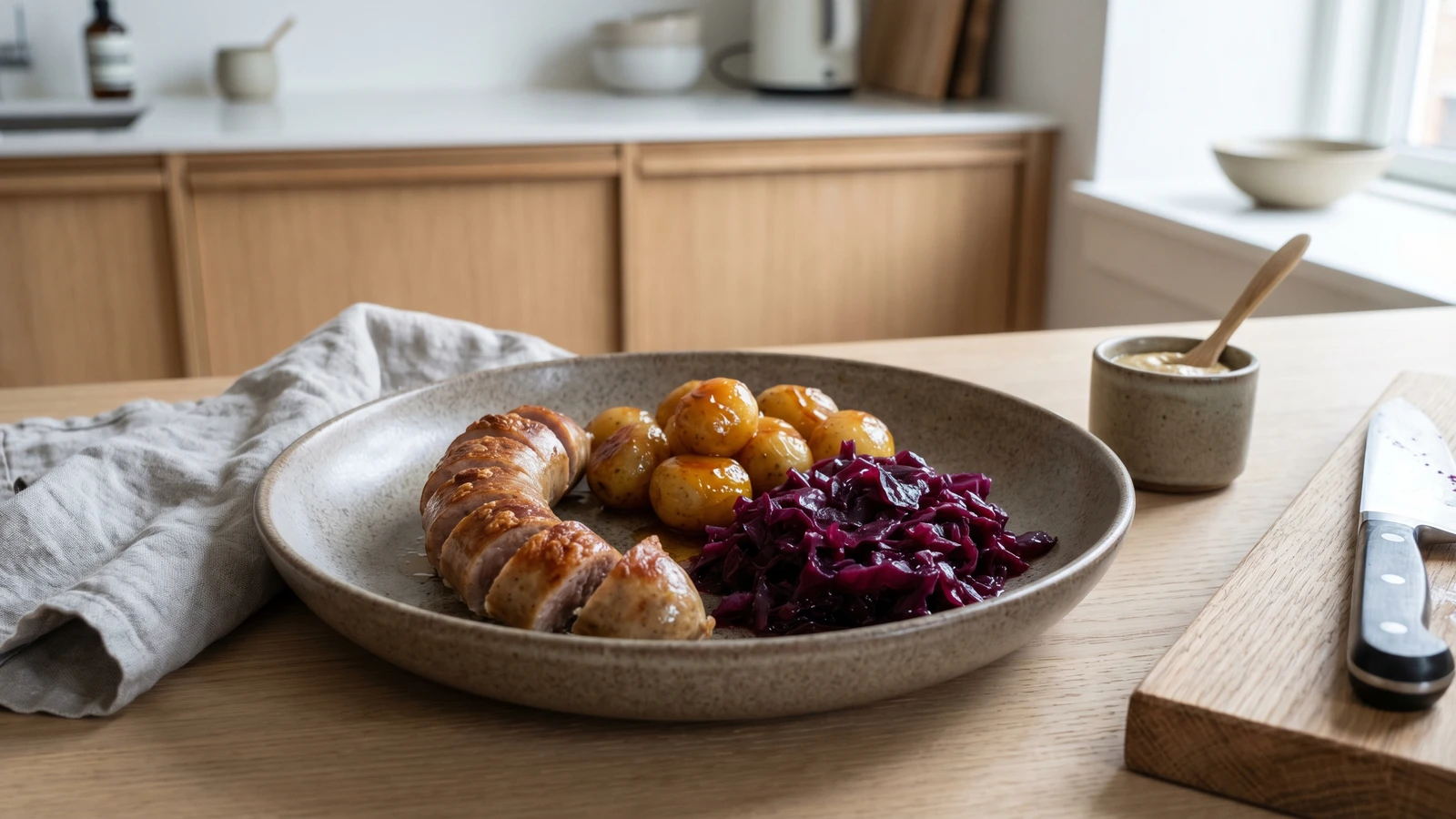
Medisterpølse med Brunede Kartofler
Created by Chef Freja Lund
Crisp-skinned spiced pork sausage with potatoes rolled in butter and caramel, braised red cabbage alongside. The plate that carries a Danish household through the dark months, cooked with love and served without ceremony.
November in Denmark is dark by four o'clock. The bicycles have lights on, the windows glow, and the kitchens smell like something warm. This is medisterpølse weather. The spiced pork sausage every Dane grew up eating, fried slowly until the casing splits and crisps, served with potatoes rolled in butter and caramel and a heap of braised red cabbage gone soft and sweet and sour. It's not a dish that announces itself. It just arrives, and the evening makes sense.
Medisterpølse is the weeknight dinner of the Danish kitchen. You buy the sausage from your butcher, and you cook it slowly in butter until the skin goes dark and crackly and the inside stays juicy and fragrant with allspice. The brunede kartofler, the caramelized potatoes, are the part that takes a little nerve. You melt sugar in a dry pan until it turns amber, add butter, and roll the boiled potatoes through until they're coated in a thin, glossy shell. The first time you do it, you'll think the caramel is going to seize. It won't. Trust the heat and keep the pan moving.
The rødkål, the braised red cabbage, is the easiest part and the most forgiving. It sits in its pot with butter, vinegar, and apple, softening and deepening for the better part of an hour while you tend to everything else. Together the three make a plate that is plain, generous, and deeply satisfying. Start the cabbage first, it needs the most time. Then boil your potatoes, fry the sausage, and caramelize the potatoes last so they come to the table still glossy and warm. This is how we greet each other on a cold evening. Tak for mad.
Medisterpølse takes its name from the Low German 'Mestwurst,' a tradition of finely ground, spiced pork sausage that became embedded in Danish cooking by the 1700s. The sausage is seasoned with allspice and cloves, spices that arrived through Copenhagen's role as a Baltic trading port. Brunede kartofler, the caramelized potatoes served alongside, were originally a Christmas dish in bourgeois Danish households of the 19th century, but by the mid-twentieth century they had become an everyday companion to fried sausage and roast pork across the country, carrying a trace of celebration into the ordinary weeknight.
The technique, the tradition, and the story behind every dish.
Discover Culinary AdvisorIngredients
medisterpølser
Quantity
4, about 600g total
unsalted butter (for the sausage)
Quantity
20g
neutral oil (for the sausage)
Quantity
1 tablespoon
small waxy potatoes
Quantity
800g
scrubbed
sugar (for the caramel)
Quantity
75g
unsalted butter (for the caramel)
Quantity
40g
red cabbage
Quantity
1 small, about 700g
unsalted butter (for the cabbage)
Quantity
30g
sugar (for the cabbage)
Quantity
2 tablespoons
apple cider vinegar
Quantity
75ml
tart apple
Quantity
1
peeled, coarsely grated
fine sea salt
Quantity
to taste
black pepper
Quantity
freshly ground, to taste
Danish mustard
Quantity
to serve
| Ingredient | Quantity |
|---|---|
| medisterpølser | 4, about 600g total |
| unsalted butter (for the sausage) | 20g |
| neutral oil (for the sausage) | 1 tablespoon |
| small waxy potatoesscrubbed | 800g |
| sugar (for the caramel) | 75g |
| unsalted butter (for the caramel) | 40g |
| red cabbage | 1 small, about 700g |
| unsalted butter (for the cabbage) | 30g |
| sugar (for the cabbage) | 2 tablespoons |
| apple cider vinegar | 75ml |
| tart applepeeled, coarsely grated | 1 |
| fine sea salt | to taste |
| black pepper | freshly ground, to taste |
| Danish mustard | to serve |
Equipment Needed
- •Heavy frying pan for the sausage
- •Wide pan or skillet for caramelizing the potatoes
- •Heavy-bottomed pot with lid, 3 litre, for the cabbage
- •Medium pot for boiling the potatoes
Instructions
- 1
Start the red cabbage
Quarter the red cabbage, cut out the core, and shred it finely. You want ribbons, not chunks. Melt the butter in a heavy pot over medium heat. Add the shredded cabbage, the sugar, the vinegar, the grated apple, and a good pinch of salt. Stir everything together until the cabbage starts to glisten and collapse slightly. Put the lid on, turn the heat to low, and let it braise for forty-five minutes to an hour, stirring every fifteen minutes or so. The vinegar keeps the color vivid. The apple dissolves into the cabbage and gives it a sweetness that sugar alone can't. By the time it's done, the cabbage should be soft enough to yield to a fork and taste equal parts sweet and sour.
Start the cabbage before anything else. It needs the most time and it only gets better the longer it sits. If you taste it and the balance isn't right, a splash more vinegar sharpens it, a little more sugar rounds it out. - 2
Boil the potatoes
Put the potatoes in a pot of well-salted cold water and bring to a boil. Cook until they're just tender when you push a knife through, about fifteen to eighteen minutes depending on their size. Don't overcook them. If they start to crumble, they'll fall apart in the caramel. Drain them thoroughly and let them steam dry in the pot for a few minutes. Then peel them while they're still warm. The skins come off easily when they're hot and fight you when they're cold.
Choose potatoes that are roughly the same size, about the width of a golf ball. If they're much bigger, halve them after boiling. The caramel needs to coat every surface, and smaller potatoes give you more surface to coat. - 3
Fry the sausage
While the potatoes boil, heat the butter and oil together in a heavy frying pan over medium-low heat. The oil stops the butter from burning during the long, slow fry. Prick the medisterpølser in a few places with a fork. This lets the fat render out gradually and prevents the casings from bursting in the wrong places. Lay the sausages in the pan and cook them slowly, turning every few minutes, for fifteen to twenty minutes. The skin should split and curl at the edges, turning deep golden and slightly crackly. The inside should be cooked through but still juicy. If you rush with high heat, the outside chars before the center is done. Patience is the whole technique here.
Press the center of a sausage gently with a finger. If it's firm with no give, it's done. If it still feels soft and springy, give it another few minutes. You'll know when it's right. - 4
Caramelize the potatoes
Scatter the sugar evenly across the bottom of a wide, dry pan. Set it over medium heat and leave it alone. Don't stir. The sugar will melt from the edges inward, turning liquid and then golden, then amber. This takes three to four minutes. Watch it closely. The moment it reaches an even amber color and smells like toffee, add the butter. It will foam and spit. Stir it in quickly. Now add the peeled potatoes and roll them through the caramel, turning them gently with a spoon or by shaking the pan. Keep the heat at medium and let them cook in the caramel for five to six minutes, turning often, until every surface is coated in a thin, glossy shell.
The potatoes must be completely dry before they go in. Any moisture on the surface will make the caramel seize and turn grainy. If they look damp after peeling, pat them with a clean cloth.Amber, not dark brown. Dark caramel is bitter and will make the potatoes taste burnt. Pull the pan off the heat the moment the color shifts from gold to amber. The residual heat finishes the job. - 5
Plate and serve
Slice the medisterpølser on the diagonal into thick pieces, or serve them whole if you prefer. The slicing lets you see the coarsely ground pork and the spice running through it. Arrange the sausage on warm plates with the brunede kartofler alongside, their caramel catching the light, and a generous spoonful of the braised red cabbage. Put the mustard pot on the table. This is a plate that doesn't need anything else. Serve it the way it's meant to be served: generous, warm, without fuss.
Chef Tips
- •In Denmark, medisterpølse is a specific product from the butcher, coarsely ground pork seasoned with allspice, cloves, and onion in a natural casing. If you can't find it, look for a good coarse pork sausage with warm spices. Cumberland sausage or a butcher's bratwurst are distant cousins, not the same thing, but closer than a supermarket banger.
- •The caramel is the only part of this meal that demands your full attention. Everything else is patient, forgiving cooking. Stand by the pan for those four minutes and don't walk away. The difference between amber and burnt is about thirty seconds.
- •Rødkål improves overnight. If you can, make the cabbage the day before and reheat it gently. The flavors settle and deepen in a way that same-day cabbage never quite achieves.
- •Danish mustard is mild, slightly sweet, and made for pork. If you can find a jar of Bähncke or Colman's Danish style, that's the one. A grainy Dijon works, but it changes the character of the plate.
Advance Preparation
- •The red cabbage can be made two to three days ahead and kept in the fridge. Reheat gently in its pot. It will taste better than on the day you made it.
- •The potatoes can be boiled and peeled several hours ahead, but caramelize them just before serving. The caramel softens as it sits, and the whole point is that glossy shell.
- •Medisterpølse is best fried and served immediately. It doesn't reheat well. The casing loses its crackle.
Frequently Asked Questions
Nutrition Information
1 serving (about 500g)
Where cooking meets culture.
Culinary mentorship, cultural storytelling, and the editorial depth that makes cooking meaningful.
Explore Culinary Advisor