Culinary Advisor
A cooking platform built around craft, culture, and the stories behind what we eat.
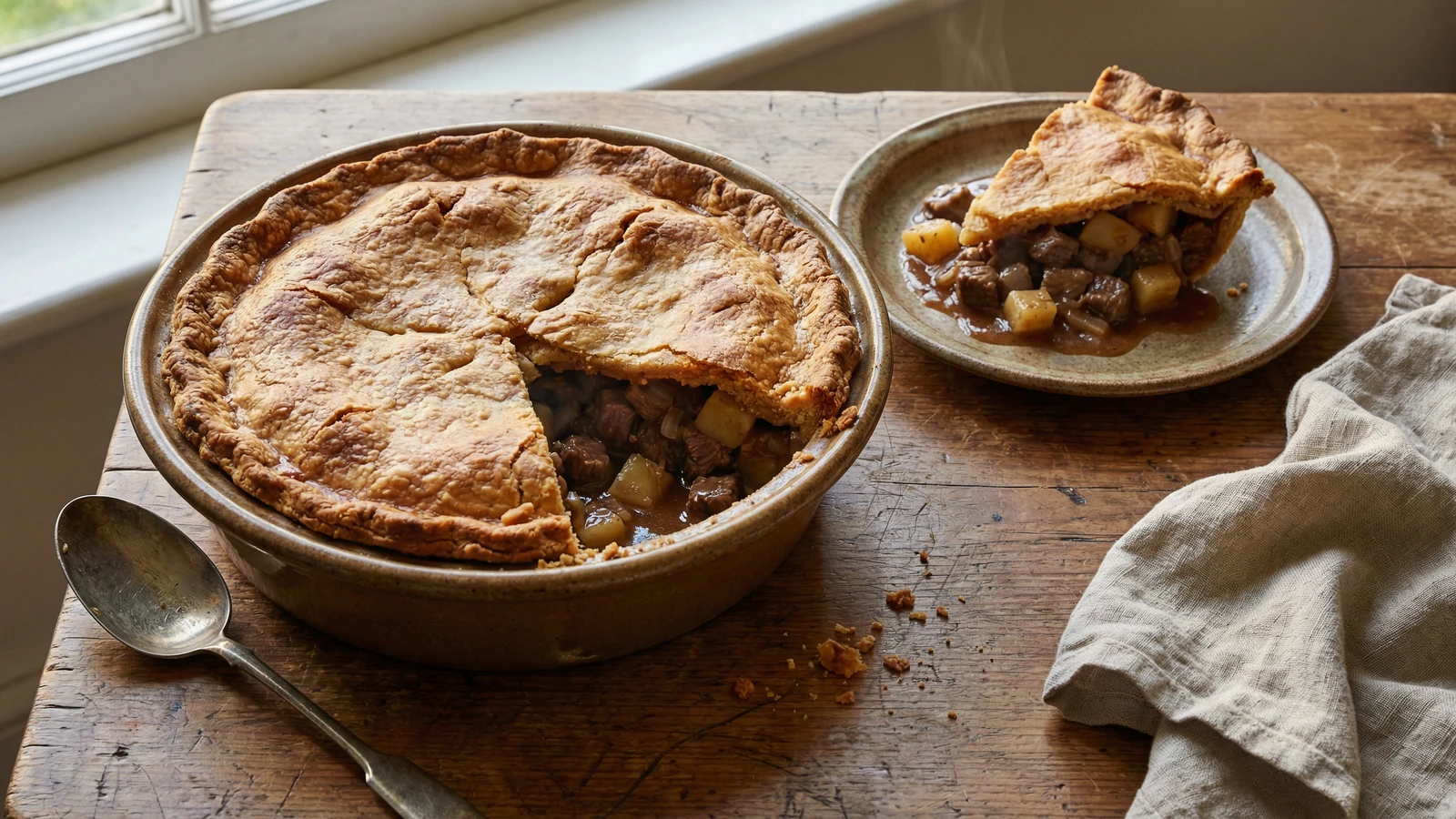
Meat and Potato Pie
Created by Chef Thomas
Beef, potato, and onion sealed in suet pastry and baked long and slow until the filling turns tender and the crust goes golden and crisp. The kind of pie that says somebody cared enough to make it properly.
There's a cold that arrives in November and doesn't leave until March. Not dramatic cold. A steady, grey insistence that follows you indoors and sits in your bones. This is the pie for that cold.
Meat and potato pie is Wigan food, Lancashire food, the kind of cooking that doesn't appear in glossy books or win awards. Beef and potatoes and onion, seasoned with nothing more than salt and white pepper, wrapped in suet pastry that bakes to something golden and giving. The filling steams when you cut in, rich and savoury and utterly plain. There's no herb garnish, no jus on the side. A pie, a plate, and the quiet satisfaction of feeding someone properly on a dark evening.
I think about the hands that made this for generations before anyone thought to write it down. Women who could make a pound of braising steak feed six people and make every one of them feel looked after. That's not humble cooking. That's skill in ordinary clothes.
Get the best beef you can. Chuck or braising steak with a bit of fat running through it, because lean meat dries out in a long bake and has nothing to give the potatoes. The suet pastry is quick to make and forgiving to work with. If you've never made pastry before, start here. Your kitchen, your rules. We're only making dinner.
The technique, the tradition, and the story behind every dish.
Discover Culinary AdvisorIngredients
self-raising flour
Quantity
350g
shredded beef suet
Quantity
175g
fine sea salt
Quantity
pinch
cold water
Quantity
about 200ml
braising steak (chuck)
Quantity
500g
cut into 1cm dice
waxy potatoes
Quantity
500g
peeled and cut into 1cm dice
onion
Quantity
1 large
finely diced
fine sea salt and white pepper
Quantity
to taste
beef stock
Quantity
150ml
egg or milk (optional)
Quantity
1 egg or a splash of milk
for glazing
| Ingredient | Quantity |
|---|---|
| self-raising flour | 350g |
| shredded beef suet | 175g |
| fine sea salt | pinch |
| cold water | about 200ml |
| braising steak (chuck)cut into 1cm dice | 500g |
| waxy potatoespeeled and cut into 1cm dice | 500g |
| onionfinely diced | 1 large |
| fine sea salt and white pepper | to taste |
| beef stock | 150ml |
| egg or milk (optional)for glazing | 1 egg or a splash of milk |
Equipment Needed
- •Deep pie dish, about 1.5 litres
- •Rolling pin
- •Large mixing bowl
- •Baking tray (to catch any overflow)
Instructions
- 1
Make the suet pastry
Put the flour, suet, and a good pinch of salt into a large bowl. Mix them together with your fingers until the suet is evenly distributed through the flour, like coarse breadcrumbs with purpose. Add the cold water gradually, stirring with a knife, until the dough comes together into something soft but not sticky. You may not need all the water, or you may need a splash more. The dough should feel pliable and slightly springy, willing to be rolled. Wrap it in cling film and let it rest for ten minutes while you prepare the filling.
Suet pastry is the most forgiving pastry there is. Unlike shortcrust, you can handle it freely without worrying about overworking. It won't punish you for touching it. If it tears, press it back together. It forgives everything. - 2
Prepare the filling
Cut the braising steak into small dice, roughly a centimetre. Do the same with the potatoes. Dice the onion finely. Put everything into a bowl and season generously with salt and white pepper. Toss it together with your hands until the meat, potato, and onion are well mixed. The seasoning matters here more than anywhere. This filling has three ingredients and nowhere to hide, so be braver with the salt than you think you need to be. If you want to check, taste a small piece of the seasoned raw potato. It should taste properly seasoned on its own.
- 3
Line the dish and fill
Set the oven to 200C (180C fan). Cut off roughly two thirds of the pastry and roll it out on a floured surface to about the thickness of a pound coin. Line a deep pie dish, about 1.5 litres, pressing the pastry gently into the corners and leaving a little overhang at the rim. Don't stretch it. Pastry that's been stretched will shrink back in the oven and leave you with gaps. Tip the filling in, pressing it down gently so it sits evenly with no air pockets. Pour the stock over the top. It should come about halfway up the filling, not cover it.
The stock creates steam inside the pie as it bakes, which is what cooks the filling through and keeps everything moist. Without it, you'll get dry pockets of potato at the top and meat that tightens instead of softens. - 4
Top and seal the pie
Roll out the remaining pastry for the lid. Brush the rim of the pastry lining with a little beaten egg or water, then lay the lid over the top. Press the edges together firmly with your thumb and forefinger, or crimp with a fork if you prefer a neater finish. Trim any excess. Cut a small cross in the centre of the lid to let the steam find its way out. Brush the top with beaten egg for a deep gold, or milk for something softer. Either works.
- 5
Bake long and slow
Put the pie on a baking tray and bake at 200C for twenty minutes until the pastry starts to take colour and firm up. Then turn the oven down to 160C (140C fan) and bake for another hour and a half. The crust should be a deep, confident gold, the kind of colour that makes you want to tap it with your knuckle, and the filling should be bubbling gently through the steam hole. If the top is browning too quickly, lay a sheet of foil loosely over it for the last half hour. When it's done, the kitchen will smell of pastry and beef stock and something you can't quite name but recognise immediately. Let it rest for ten minutes before cutting. The first slice is the cook's privilege.
Trust your nose. It knows before you do. When the smell shifts from raw and floury to something rich and savoury and deeply comforting, you're close. Open the oven door and listen for the gentle bubble of the filling. That's your signal.
Chef Tips
- •The beef needs fat. Chuck or braising steak from a good butcher, something with marbling that will soften and render during the long bake. Lean stewing steak sounds sensible but dries out and turns to string. Ask your butcher for something with a bit of character. This is not the place to economise or to be afraid of fat.
- •Dice everything small and even. The potato and the beef should be roughly the same size so they cook at the same rate. Big chunks of potato surrounded by overcooked meat is the most common mistake, and it comes down to the knife work at the start. Take the extra five minutes. It pays you back.
- •White pepper, not black. It's a Lancashire tradition, but it also makes practical sense in a pale filling where black specks look out of place. White pepper has a different heat, quieter and rounder, and it belongs in this pie the way it belongs in a chip shop.
- •If you have beef dripping, use a tablespoon of it rubbed into the flour alongside the suet. It gives the pastry a deeper savour that you can't quite place but would miss if it weren't there. My notebook says, simply: dripping makes it right.
Advance Preparation
- •The pie can be assembled, covered with cling film, and refrigerated for up to a day before baking. Add ten minutes to the initial baking time if putting it in the oven from cold.
- •Leftover pie reheats well in a moderate oven (160C) for twenty minutes, covered loosely with foil to stop the crust from darkening further. The pastry won't be quite as crisp, but the filling improves overnight as the flavours settle into each other.
- •The filling can be prepared and seasoned several hours ahead. Keep it covered in the fridge until you're ready to roll the pastry.
Frequently Asked Questions
Nutrition Information
1 serving (about 310g)
Where cooking meets culture.
Culinary mentorship, cultural storytelling, and the editorial depth that makes cooking meaningful.
Explore Culinary Advisor