Culinary Advisor
A cooking platform built around craft, culture, and the stories behind what we eat.
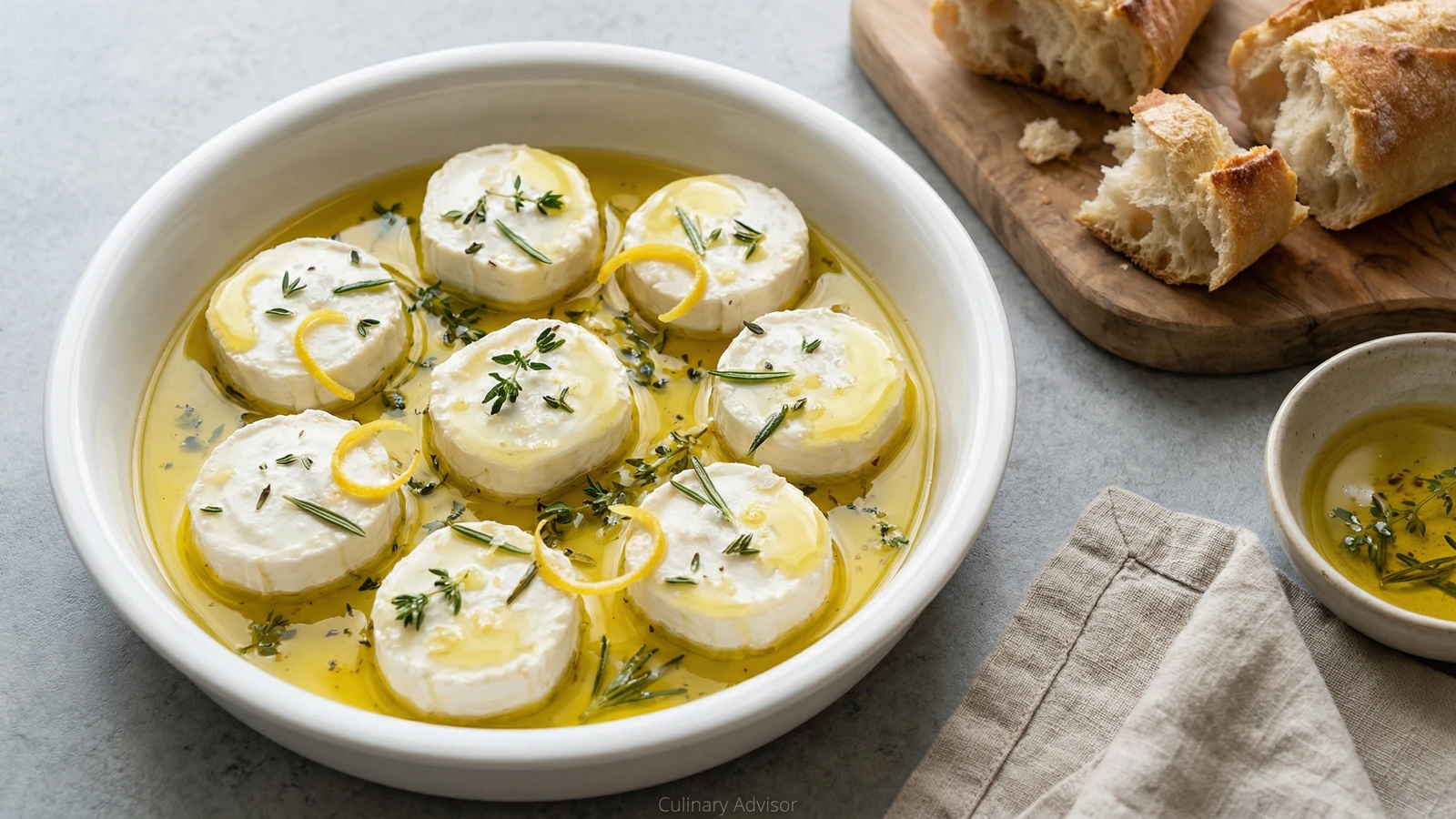
Marinated Goat Cheese with Herbs and Citrus
Created by
Tangy rounds of fresh goat cheese steeped in golden olive oil fragrant with thyme, rosemary, garlic, and bright citrus zest. The kind of make-ahead appetizer that improves while you sleep and makes you look impossibly accomplished.
This is the appetizer that arrives at the party having done all its own work. You spend twenty minutes assembling it, then the jar sits quietly in your refrigerator for days, the olive oil carrying thyme and rosemary and garlic into every pore of the cheese while you attend to other matters. By the time your guests arrive, you have something that looks like you fussed all afternoon.
The technique comes from the Mediterranean tradition of preserving cheese in oil, a practice born of necessity that became a luxury. Shepherds in Provence and goatherds in Greece discovered that submerging fresh cheese in olive oil extended its life and transformed its character. The cheese firms slightly. The flavors deepen. The oil itself becomes precious, infused with herbs and garlic, worthy of crusty bread on its own.
What I love about this dish is its honesty. There is no trickery, no obscure technique to master. You are simply introducing good ingredients to one another and giving them time to become acquainted. The quality of your goat cheese matters. The freshness of your herbs matters. The character of your olive oil matters more than anything. This is not a recipe that rewards shortcuts or substitutions made from convenience.
The technique, the tradition, and the story behind every dish.
Discover Culinary AdvisorIngredients
fresh goat cheese logs
Quantity
2 (11 ounces each)
well-chilled
extra-virgin olive oil
Quantity
1 1/2 cups, plus more as needed
fresh thyme leaves
Quantity
2 tablespoons
fresh rosemary
Quantity
1 tablespoon
finely chopped
fresh oregano leaves
Quantity
2 teaspoons
lemon zest
Quantity
from 2 lemons
removed in wide strips with vegetable peeler
orange zest
Quantity
from 1 small orange
removed in wide strips
garlic cloves
Quantity
4
thinly sliced
whole black peppercorns
Quantity
1 teaspoon
red pepper flakes
Quantity
1/2 teaspoon
bay leaves
Quantity
2
flaky sea salt
Quantity
1 teaspoon
crusty bread or crackers
Quantity
for serving
| Ingredient | Quantity |
|---|---|
| fresh goat cheese logswell-chilled | 2 (11 ounces each) |
| extra-virgin olive oil | 1 1/2 cups, plus more as needed |
| fresh thyme leaves | 2 tablespoons |
| fresh rosemaryfinely chopped | 1 tablespoon |
| fresh oregano leaves | 2 teaspoons |
| lemon zestremoved in wide strips with vegetable peeler | from 2 lemons |
| orange zestremoved in wide strips | from 1 small orange |
| garlic clovesthinly sliced | 4 |
| whole black peppercorns | 1 teaspoon |
| red pepper flakes | 1/2 teaspoon |
| bay leaves | 2 |
| flaky sea salt | 1 teaspoon |
| crusty bread or crackers | for serving |
Equipment Needed
- •Wide-mouthed glass jar or container (1-quart capacity)
- •Vegetable peeler for citrus zest
- •Sharp thin knife or unflavored dental floss
Instructions
- 1
Slice the cheese
Keep the goat cheese cold until the moment you cut it. This is not negotiable. Warm cheese smears under the knife and produces ragged rounds no amount of marinating will redeem. Use unflavored dental floss or a thin wire for the cleanest cuts: slide it under the log, cross the ends over the top, and pull gently through. Cut each log into rounds about 3/4-inch thick. You should get 8 to 10 rounds per log.
If using a knife, run it under hot water and wipe dry between cuts. The heat prevents sticking. - 2
Arrange the first layer
Select a wide-mouthed jar or a glass container with straight sides. The vessel matters because you want to admire your work, and because you need room to nestle each round without stacking them directly atop one another. Scatter half the thyme, rosemary, and oregano across the bottom. Add half the lemon and orange zest strips. Distribute half the garlic slices, half the peppercorns, and one bay leaf.
- 3
Add the cheese rounds
Gently place half the goat cheese rounds in a single layer over the herbs and aromatics. They can touch at the edges but should not overlap. Pour enough olive oil to just cover the cheese. Add the remaining herbs, citrus zest, garlic, peppercorns, red pepper flakes, and the second bay leaf. Arrange the remaining cheese rounds on top. Pour olive oil until everything is submerged by at least half an inch.
The cheese must be completely covered by oil to prevent oxidation and ensure even flavor infusion throughout every round. - 4
Season and seal
Sprinkle the flaky salt over the surface. It will sink slowly, distributing as it goes. Press any floating herb leaves gently below the oil line. Seal the container tightly. The aromatics will begin their work immediately, the oil drawing out their essential oils and carrying those flavors into the cheese.
- 5
Marinate properly
Refrigerate for at least 4 hours, though overnight is better. Two days is better still. Three days approaches perfection. The cheese firms slightly from the salt while absorbing the herb and citrus essence. The oil takes on a golden tint and develops its own value as a dipping medium.
- 6
Bring to room temperature
Remove the container from the refrigerator 45 minutes to an hour before serving. Cold olive oil turns cloudy and thick, muting both flavor and texture. At room temperature, the oil returns to its fluid, glossy state, and the cheese softens to a spreadable consistency that yields beautifully against crusty bread.
If you forget to take it out early, set the sealed jar in warm water for ten minutes to speed the process. - 7
Serve with intention
Transfer the cheese rounds to a serving dish using a slotted spoon, arranging them in a single layer. Spoon some of the herb-flecked oil over and around the cheese. Scatter a few of the prettier herb sprigs and citrus strips on top. Serve alongside a torn loaf of crusty bread, good crackers, or both. Provide a small bowl for the remaining oil so guests can drizzle as they please.
Chef Tips
- •Seek out goat cheese without the rind if you can find it, as the soft interior absorbs marinade more readily. Logs labeled 'fresh' or 'chèvre' work beautifully. Aged goat cheese crumbles rather than slices and belongs in a different dish entirely.
- •The olive oil you use becomes part of the finished dish, so choose one you would happily drizzle over bread. This is not the moment for that neutral cooking oil hiding in your cabinet. A fruity, peppery extra-virgin from California, Spain, or Greece will make itself known in the best way.
- •Save the infused oil after the cheese is gone. Strained and refrigerated, it keeps for weeks and transforms simple vinaigrettes, roasted vegetables, or grilled fish into something memorable.
- •For a dinner party, prepare two jars: one to set out immediately, one to replenish the platter midway through when the first inevitably disappears.
- •The red pepper flakes are optional but welcome. They add a whisper of warmth that plays beautifully against the tangy cheese without overwhelming the herbs.
Advance Preparation
- •The cheese can marinate for up to 2 weeks refrigerated, improving steadily through day 5 before reaching equilibrium. It will not spoil as long as all cheese remains submerged in oil.
- •Prepare a double batch if hosting more than 8 guests. This appetizer disappears faster than you expect, and having a backup jar in reserve prevents awkward gaps.
- •Bring to room temperature 45 minutes to 1 hour before serving. This step is essential: cold oil clouds and cold cheese loses its creamy spreadability.
Frequently Asked Questions
Nutrition Information
1 serving (about 98g)
Where cooking meets culture.
Culinary mentorship, cultural storytelling, and the editorial depth that makes cooking meaningful.
Explore Culinary Advisor