Culinary Advisor
A cooking platform built around craft, culture, and the stories behind what we eat.
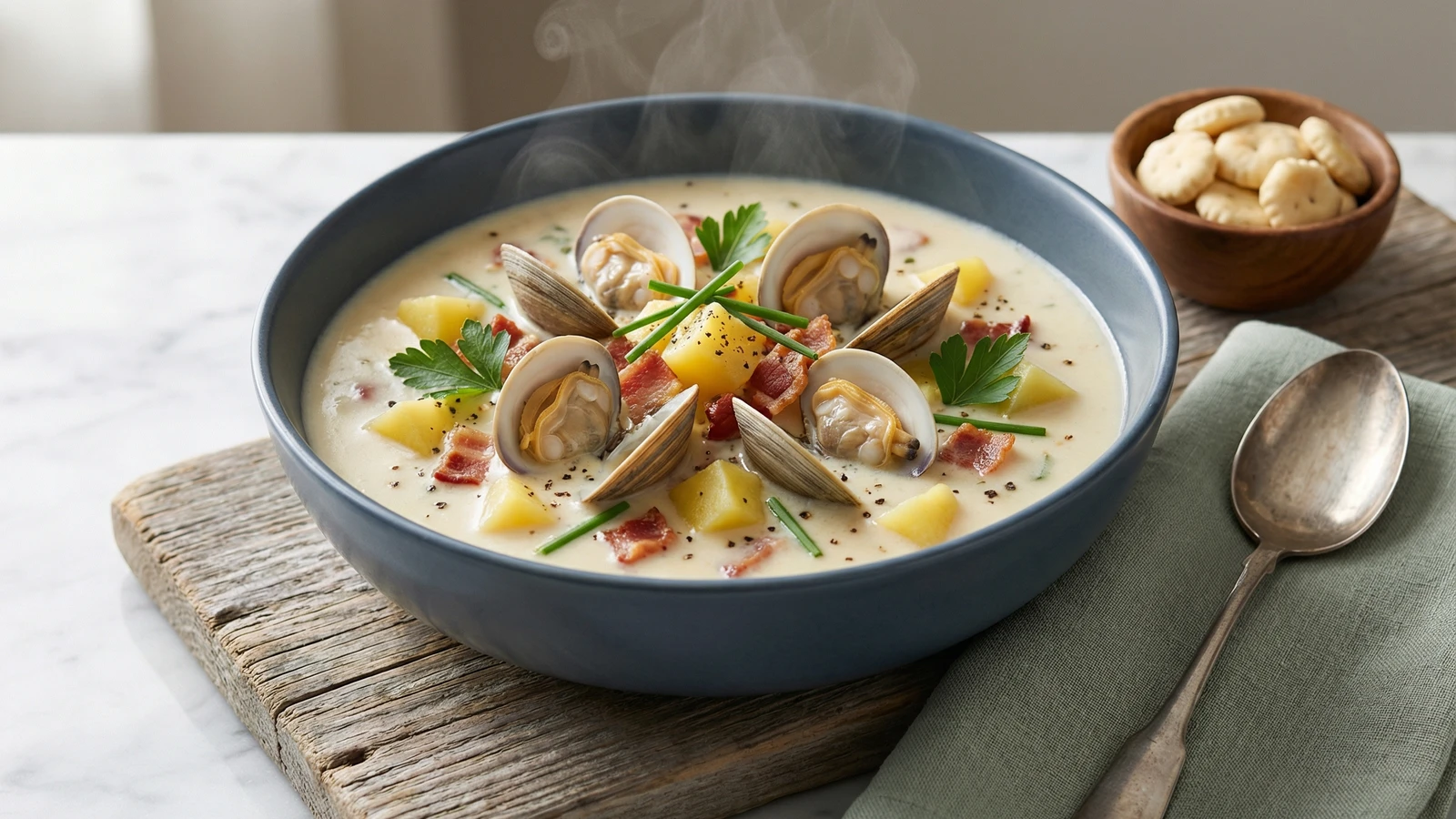
Manila Clam and Bacon Chowder
Created by
Briny Manila clams meet smoky bacon in a velvety chowder that honors both New England tradition and Pacific Northwest waters. This is comfort food with a conscience, built for rainy evenings and good company.
The chowder traditions of New England traveled west with settlers, but something remarkable happened when they reached Puget Sound. The local waters offered different gifts: Manila clams, smaller and sweeter than their Atlantic cousins, brought here accidentally in the 1930s with Japanese oyster seed. What began as a mistake became a regional treasure. These clams now define Pacific Northwest chowder making.
I've made this chowder for decades, refining it each time. The foundation remains unchanged: good bacon rendered slowly, aromatics sweated until soft, potatoes that hold their shape, and cream added with restraint. Too many chowders drown in dairy. This one lets the clams speak. You'll taste the brine of cold Pacific waters in every spoonful.
The Native peoples of this coast steamed clams over open fires for thousands of years before Europeans arrived. Scandinavian fishermen brought their cream-based soup traditions. Asian immigrants contributed techniques for coaxing maximum flavor from shellfish. This chowder carries all those influences, whether you know it or not. That's how American regional cooking works. It absorbs. It adapts. It becomes something new while honoring what came before.
Buy your clams from a fishmonger who can tell you where they were harvested. Sustainable sourcing matters here. Manila clams reproduce quickly and are farmed with minimal environmental impact along our coastline. When you support responsible harvesters, you're voting for the future of these waters.
The technique, the tradition, and the story behind every dish.
Discover Culinary AdvisorIngredients
Manila clams
Quantity
3 pounds
scrubbed and checked for broken shells
thick-cut bacon
Quantity
6 ounces
cut into 1/2-inch pieces
unsalted butter
Quantity
2 tablespoons
yellow onion
Quantity
1 large
diced
celery
Quantity
2 stalks
diced
garlic
Quantity
3 cloves
minced
Yukon Gold potatoes
Quantity
1 pound
cut into 1/2-inch cubes
bottled clam juice
Quantity
2 cups
dry white wine
Quantity
1 cup
bay leaf
Quantity
1
fresh thyme sprigs
Quantity
4
heavy cream
Quantity
1 1/2 cups
all-purpose flour
Quantity
2 tablespoons
white pepper
Quantity
1/4 teaspoon
fresh flat-leaf parsley
Quantity
2 tablespoons
chopped
fresh chives (optional)
Quantity
for garnish
oyster crackers (optional)
Quantity
for serving
| Ingredient | Quantity |
|---|---|
| Manila clamsscrubbed and checked for broken shells | 3 pounds |
| thick-cut baconcut into 1/2-inch pieces | 6 ounces |
| unsalted butter | 2 tablespoons |
| yellow oniondiced | 1 large |
| celerydiced | 2 stalks |
| garlicminced | 3 cloves |
| Yukon Gold potatoescut into 1/2-inch cubes | 1 pound |
| bottled clam juice | 2 cups |
| dry white wine | 1 cup |
| bay leaf | 1 |
| fresh thyme sprigs | 4 |
| heavy cream | 1 1/2 cups |
| all-purpose flour | 2 tablespoons |
| white pepper | 1/4 teaspoon |
| fresh flat-leaf parsleychopped | 2 tablespoons |
| fresh chives (optional) | for garnish |
| oyster crackers (optional) | for serving |
Equipment Needed
- •6-quart Dutch oven or heavy-bottomed pot with tight-fitting lid
- •Stiff-bristled brush for scrubbing clams
- •Wooden spoon
- •Ladle
Instructions
- 1
Inspect and purge the clams
Place clams in a large bowl of cold salted water (about 1/3 cup salt per gallon) for 20 minutes. This encourages them to expel any grit. Discard any clams with cracked shells or those that remain open when tapped. Rinse thoroughly under cold running water, scrubbing shells with a stiff brush if needed.
Fresh clams smell like clean ocean water. Any ammonia smell means they've turned. Trust your nose. - 2
Render the bacon
Place bacon pieces in a large Dutch oven or heavy-bottomed pot over medium-low heat. Cook slowly, stirring occasionally, for 8 to 10 minutes. You want the fat to render completely while the meat crisps to a deep golden brown. The kitchen will smell of woodsmoke and salt. Remove bacon to a paper towel-lined plate, leaving the rendered fat in the pot.
Low and slow is the rule here. High heat causes bacon to seize and toughen before the fat renders. Patience rewards you with both crispy bacon and flavorful cooking fat. - 3
Build the aromatic base
Add butter to the bacon fat and increase heat to medium. When the butter foams, add onion and celery. Cook, stirring often, for 6 to 8 minutes until softened and translucent. The onion should look glassy, not browned. Add garlic and stir for 30 seconds until fragrant. Sprinkle flour over the vegetables and stir constantly for 2 minutes to cook out the raw taste.
- 4
Add liquids and potatoes
Pour in the white wine, scraping up any fond from the bottom of the pot. Let it bubble for 1 minute. Add clam juice, bay leaf, and thyme sprigs. Bring to a simmer. Add potato cubes and cook for 12 to 15 minutes until potatoes are just tender when pierced with a knife. They should offer slight resistance. They'll continue cooking when you add the clams.
- 5
Steam the clams
Nestle the clams into the simmering liquid. Cover the pot tightly. Cook for 5 to 7 minutes, shaking the pot once halfway through. The clams are done when their shells have opened wide, releasing their liquor into the chowder. Remove and discard any clams that refuse to open after 8 minutes.
Don't lift the lid to check constantly. Each peek releases steam and extends cooking time. Trust the process. You'll hear the shells clicking against each other as they open. - 6
Finish with cream
Remove thyme sprigs and bay leaf. Reduce heat to low. Stir in heavy cream and white pepper. Warm through for 3 to 4 minutes without boiling. Boiling will cause the cream to break and the clams to toughen. The chowder should coat a spoon but still flow freely. Taste and adjust salt, though you may not need any. The clams and bacon contribute plenty.
- 7
Serve immediately
Ladle chowder into warmed bowls, distributing clams evenly. Scatter reserved bacon pieces over each serving. Finish with chopped parsley and snipped chives. Serve with a generous pile of oyster crackers alongside. This chowder waits for no one. Eat it hot, when the broth steams and the clams are still plump with juice.
Chef Tips
- •Manila clams are harvested year-round in the Pacific Northwest, but they're sweetest in colder months when the waters are cold. October through March yields the best specimens.
- •If you can't find Manila clams, littlenecks or small cherrystone clams work beautifully. Adjust steaming time slightly as larger clams take longer to open.
- •A dry Sauvignon Blanc or unoaked Chardonnay complements this chowder perfectly. Whatever you cook with, pour yourself a glass of the same.
- •Save the chowder base without clams for up to two days refrigerated. Steam fresh clams and add them just before serving for the best texture.
- •The flour creates body without making the chowder gluey. If you prefer a thinner broth, reduce it to one tablespoon or omit entirely.
Advance Preparation
- •Clams can be purged and refrigerated in a damp towel for up to 24 hours before cooking.
- •The bacon can be rendered and the chowder base (through step 4) prepared up to one day ahead. Refrigerate separately. Reheat base to a simmer before adding clams.
- •Chowder improves overnight as flavors meld, but add fresh steamed clams when reheating rather than storing clams in the broth.
Frequently Asked Questions
Nutrition Information
1 serving (about 360g)
Where cooking meets culture.
Culinary mentorship, cultural storytelling, and the editorial depth that makes cooking meaningful.
Explore Culinary Advisor