Culinary Advisor
A cooking platform built around craft, culture, and the stories behind what we eat.
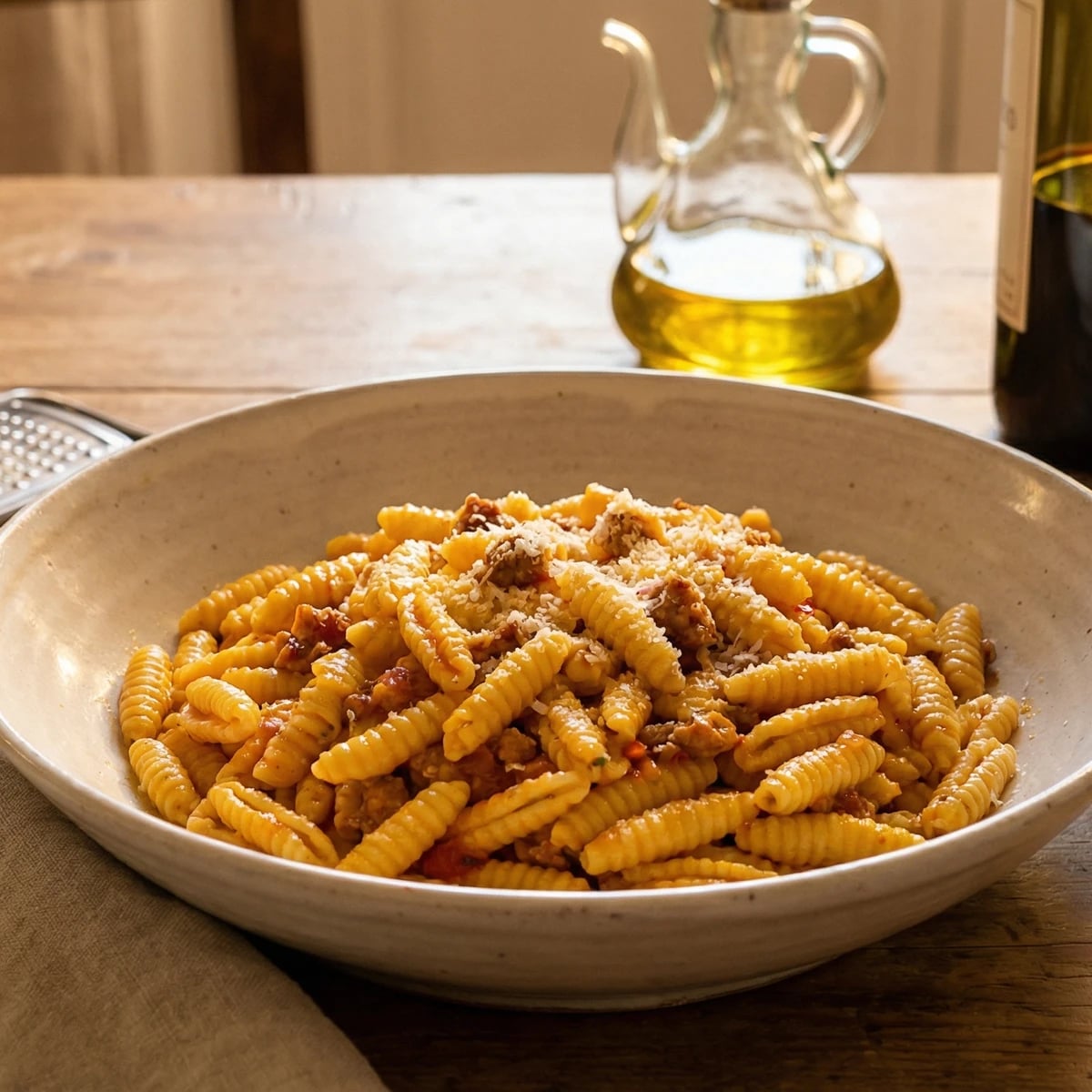
Malloreddus alla Campidanese
Created by Chef Graziella
The proud pasta of Sardinia's Campidano plain, where saffron-gold gnocchetti meet fennel-scented sausage in a sauce that speaks of shepherds, wheat fields, and an island that answers to no one.
Italian cooking, as such, does not exist. There is Bolognese cooking, Venetian cooking, Roman cooking. And then there is Sardinian cooking, which barely acknowledges the mainland at all. This island has been ruled by Phoenicians, Romans, Catalans, and Piedmontese, yet its kitchen remains stubbornly its own. Malloreddus alla Campidanese is the proof.
The pasta itself tells you everything. These small ridged shapes, golden with saffron, are made from semolina and water. No eggs. This is not the fresh pasta of Emilia-Romagna. This is the durum wheat tradition of the Mediterranean south, pressed by hand against woven baskets to create the grooves that catch the sauce. The name means 'little bulls' in the local dialect, though no one agrees on why.
The sauce is equally uncompromising. Sardinian sausage, perfumed with fennel and sometimes touched with heat, broken into the pan and simmered with tomatoes until the fat renders and the flavors marry. Pecorino sardo, the sheep's milk cheese that Sardinians consider far superior to its Roman cousin, grated over at the end. Nothing more. What you keep out is as significant as what you put in.
Ingredients
dried malloreddus
Quantity
1 pound
Sardinian pork sausage
Quantity
1 pound
extra virgin olive oil
Quantity
3 tablespoons
| Ingredient | Quantity |
|---|---|
| dried malloreddus | 1 pound |
| Sardinian pork sausage | 1 pound |
| extra virgin olive oil | 3 tablespoons |