Culinary Advisor
A cooking platform built around craft, culture, and the stories behind what we eat.
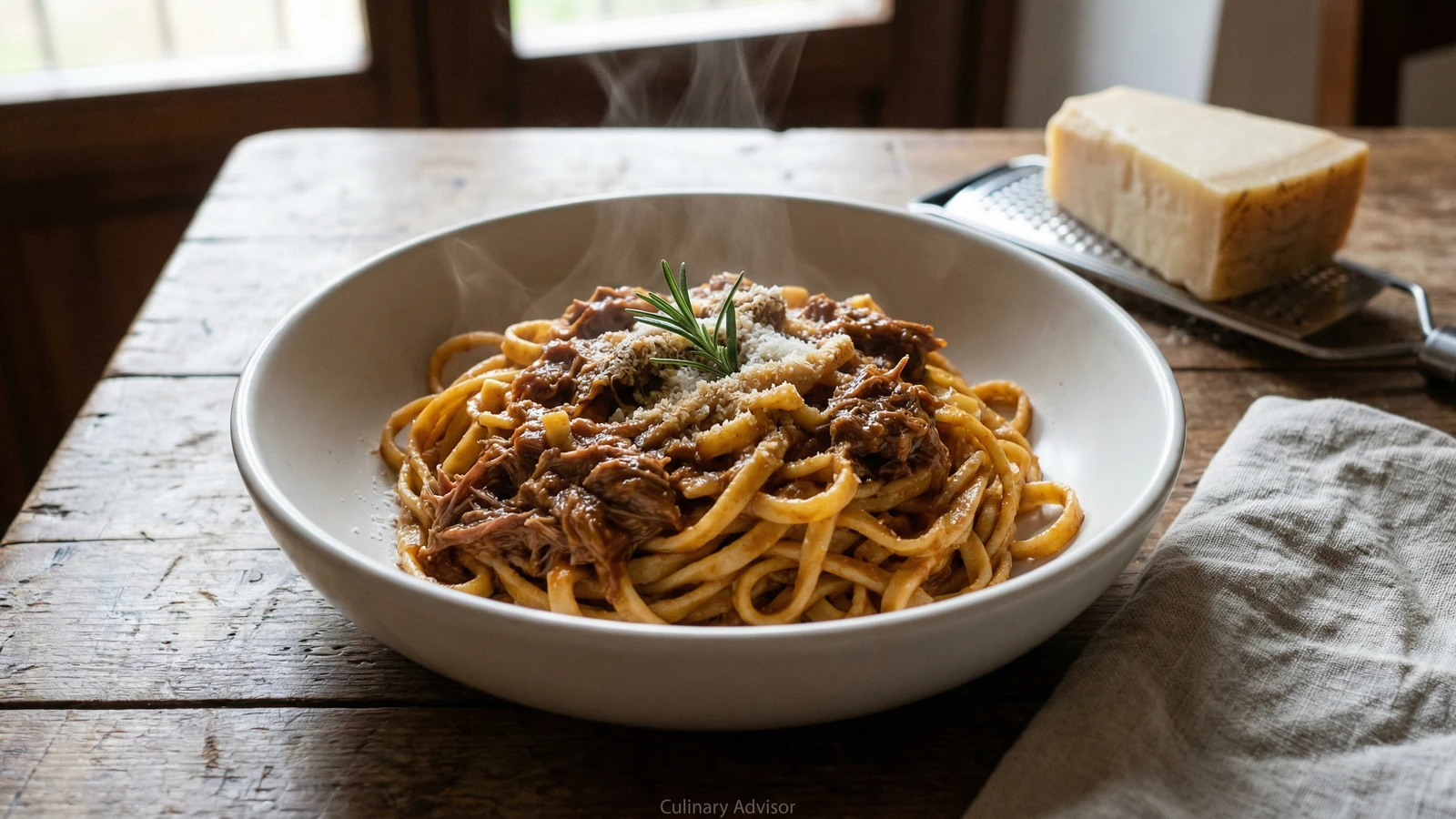
Maccheroni alla Chitarra con Ragù d'Agnello
Created by Chef Graziella
Square-cut egg pasta from Abruzzo's guitar-stringed press, dressed in slow-simmered lamb ragù that carries the flavor of mountain pastures. This is shepherds' food, made for people who work.
Abruzzo sits on a fault line in Italian cooking, where the egg pasta of the north meets the dried pasta of the south. The region chose neither. It invented its own tradition: fresh egg pasta pressed through wire strings stretched across a wooden frame, like the strings of a guitar. The result is a square-cut noodle with texture on all four sides, built to hold sauce.
The ragù comes from necessity. Abruzzo is mountain country, wild and steep, where sheep have grazed since before Rome existed. The shepherds who followed their flocks through these hills ate lamb because lamb was what they had. They simmered it slowly over low fires, stretching the meat with tomatoes and aromatics, creating a sauce that could feed a family on a single joint.
This is not delicate food. The pasta is sturdy. The ragù is rich with rendered fat and the particular sweetness of lamb cooked until it falls apart. If you find yourself adding cream or butter to finish, you have missed the point entirely. The lamb provides its own richness. Trust it.
La chitarra, the guitar-stringed pasta press, has been documented in Abruzzo since at least the early 19th century, though families in the mountain villages claim it is far older. The tool created a pasta shape perfectly suited to the region's lamb ragù: square-cut strands with enough texture to grip the meat and enough body to stand up to long-simmered sauces.
The technique, the tradition, and the story behind every dish.
Discover Culinary AdvisorIngredients
tipo 00 flour
Quantity
400g
fine semolina flour
Quantity
100g
large eggs
Quantity
4
large egg yolks
Quantity
2
extra virgin olive oil
Quantity
1 tablespoon
fine sea salt
Quantity
1/2 teaspoon
bone-in lamb shoulder
Quantity
2 pounds
cut into large chunks
extra virgin olive oil
Quantity
1/4 cup
yellow onion
Quantity
1 medium
diced fine
carrot
Quantity
1 medium
peeled and diced fine
celery stalks
Quantity
2
diced fine
garlic cloves
Quantity
3
lightly crushed
dry white wine
Quantity
1 cup
San Marzano tomatoes
Quantity
1 can (28 ounces)
crushed by hand
fresh rosemary
Quantity
2 sprigs
bay leaves
Quantity
2
dried peperoncino
Quantity
1 small, or pinch of red pepper flakes
kosher salt
Quantity
to taste
black pepper
Quantity
to taste
freshly ground
Pecorino Romano
Quantity
for serving
freshly grated
| Ingredient | Quantity |
|---|---|
| tipo 00 flour | 400g |
| fine semolina flour | 100g |
| large eggs | 4 |
| large egg yolks | 2 |
| extra virgin olive oil | 1 tablespoon |
| fine sea salt | 1/2 teaspoon |
| bone-in lamb shouldercut into large chunks | 2 pounds |
| extra virgin olive oil | 1/4 cup |
| yellow oniondiced fine | 1 medium |
| carrotpeeled and diced fine | 1 medium |
| celery stalksdiced fine | 2 |
| garlic cloveslightly crushed | 3 |
| dry white wine | 1 cup |
| San Marzano tomatoescrushed by hand | 1 can (28 ounces) |
| fresh rosemary | 2 sprigs |
| bay leaves | 2 |
| dried peperoncino | 1 small, or pinch of red pepper flakes |
| kosher salt | to taste |
| black pepperfreshly ground | to taste |
| Pecorino Romanofreshly grated | for serving |
Equipment Needed
- •Chitarra pasta cutter (or pasta machine and sharp knife)
- •Heavy 6-quart Dutch oven
- •Pasta machine with rollers
- •Large wooden board for kneading
- •Large pot for boiling pasta
Instructions
- 1
Make the pasta dough
Combine the tipo 00 flour and semolina on a clean work surface. Form a wide well in the center. Crack the whole eggs and add the yolks into the well, along with the olive oil and salt. Using a fork, beat the eggs gently, then begin incorporating flour from the inner walls of the well. When the dough becomes too stiff to mix with a fork, use your hands to bring it together into a shaggy mass.
The semolina gives the pasta the body it needs to stand up to the ragù and hold its shape through the chitarra. Pure 00 flour would make pasta too delicate for this dish. - 2
Knead until smooth
Knead the dough vigorously for 10 minutes. Push it away from you with the heel of your hand, fold it back over itself, rotate a quarter turn, and repeat. The dough should become smooth, elastic, and spring back when pressed. If it feels dry and cracks, wet your hands slightly and continue. If it sticks, dust with flour. Wrap tightly in plastic and rest at room temperature for 30 minutes minimum, one hour is better.
- 3
Begin the ragù
While the dough rests, start your ragù. Season the lamb pieces generously with salt and pepper. In a heavy Dutch oven, heat the olive oil over medium-high heat until it shimmers. Working in batches to avoid crowding, brown the lamb deeply on all sides. This takes 4 to 5 minutes per batch. The meat should develop a dark crust. Remove to a plate and continue with remaining pieces.
Do not rush the browning. The fond that develops on the bottom of the pot is the foundation of your sauce. Brown meat gives you flavor. Gray meat gives you nothing. - 4
Build the soffritto
Reduce heat to medium. Add the onion, carrot, and celery to the pot. Cook slowly in the rendered lamb fat and olive oil, stirring occasionally, scraping up the browned bits from the bottom. The vegetables should become completely soft and the onion golden, about 15 minutes. Add the crushed garlic cloves and cook one minute more. The garlic perfumes the soffritto but should not brown.
- 5
Add wine and reduce
Pour in the white wine. It will sizzle and steam. Stir well, scraping any remaining fond from the pot. Let the wine simmer until it has reduced by half and you can no longer smell raw alcohol. This takes about 5 minutes.
- 6
Simmer the ragù
Return the lamb and any accumulated juices to the pot. Add the crushed tomatoes, rosemary, bay leaves, and peperoncino. Stir to combine. Bring to a simmer, then reduce heat to the lowest possible setting. The sauce should barely bubble, with only an occasional ripple breaking the surface. Cover partially and cook for 2 and a half to 3 hours, stirring occasionally, until the lamb is completely tender and falling from the bone.
If the sauce reduces too much during cooking, add water in small amounts. Never add more tomatoes. The lamb should be the dominant flavor, the tomato merely its vehicle. - 7
Finish the ragù
Remove the lamb pieces to a cutting board. Discard the rosemary stems, bay leaves, garlic cloves, and peperoncino. When cool enough to handle, pull the meat from the bones and shred it into rough pieces. Return the meat to the sauce. Taste and adjust salt and pepper. The ragù can rest, covered, while you roll and cut the pasta.
- 8
Roll the pasta
Divide the rested dough into four pieces. Work with one at a time, keeping the rest covered. Flatten the piece with your hands, then roll it through your pasta machine at the widest setting. Fold in thirds like a letter, rotate 90 degrees, and roll again. Repeat this folding and rolling three times to develop the gluten. Then roll progressively thinner, one setting at a time, until you reach about 2 millimeters thick. The sheet should be thin enough to see your hand through, but sturdy enough to hold its shape.
- 9
Cut with the chitarra
Dust the pasta sheet lightly with semolina and lay it over the strings of your chitarra. Using your rolling pin, press down firmly and roll back and forth until the pasta falls through the strings in square-cut strands. Toss the cut pasta with more semolina to prevent sticking and form into loose nests. Repeat with remaining dough.
If you do not have a chitarra, cut the pasta by hand: roll the sheet loosely, then cut crosswise into strips about 3 millimeters wide. Unroll and toss with semolina. The result is not identical but is respectable. - 10
Cook the pasta
Bring a large pot of water to a vigorous boil. Salt it generously. The water should taste like the sea. Drop in the pasta and stir immediately to prevent sticking. Fresh maccheroni alla chitarra cooks quickly, 2 to 3 minutes. Taste a strand. It should be tender but with pleasant resistance at the center. Reserve one cup of pasta water before draining.
- 11
Marry the pasta and ragù
Drain the pasta and add it directly to the pot with the warm ragù. Toss vigorously over low heat for one minute, adding splashes of pasta water as needed to help the sauce coat every strand. The pasta should glisten with ragù, not swim in it. Once the pasta is sauced, serve it promptly, inviting your guests and family to put off talking and start eating. Pass Pecorino Romano at the table.
Chef Tips
- •Bone-in lamb shoulder gives superior flavor to boneless. The bones contribute gelatin as the meat braises, creating body in the sauce that no amount of reduction can replicate.
- •The peperoncino is traditional to Abruzzo but should whisper, not shout. If you cannot find dried whole peppers, a small pinch of red pepper flakes is acceptable. Remove them before shredding the meat.
- •A proper chitarra can be purchased from specialty kitchen shops or Italian importers. It is a worthwhile investment if you love this pasta. The texture created by the strings cannot be replicated by other methods.
- •Pecorino Romano is the traditional cheese for this dish, not Parmigiano-Reggiano. The sharp, salty tang of aged sheep's milk cheese echoes the lamb in the sauce. This pairing exists for a reason.
Advance Preparation
- •The ragù improves significantly if made one or two days ahead. Refrigerate it overnight and remove any solidified fat from the surface before reheating. The flavors will have deepened and married.
- •Fresh pasta can be made several hours ahead. Form the cut pasta into nests, dust generously with semolina, and leave uncovered at room temperature. Or freeze the nests on a sheet pan, then transfer to bags for storage up to one month. Cook directly from frozen, adding one minute to the cooking time.
- •The complete ragù freezes well for three months. Thaw overnight in the refrigerator before reheating gently with a splash of water.
Frequently Asked Questions
Nutrition Information
1 serving (about 285g)
Where cooking meets culture.
Culinary mentorship, cultural storytelling, and the editorial depth that makes cooking meaningful.
Explore Culinary Advisor