Culinary Advisor
A cooking platform built around craft, culture, and the stories behind what we eat.
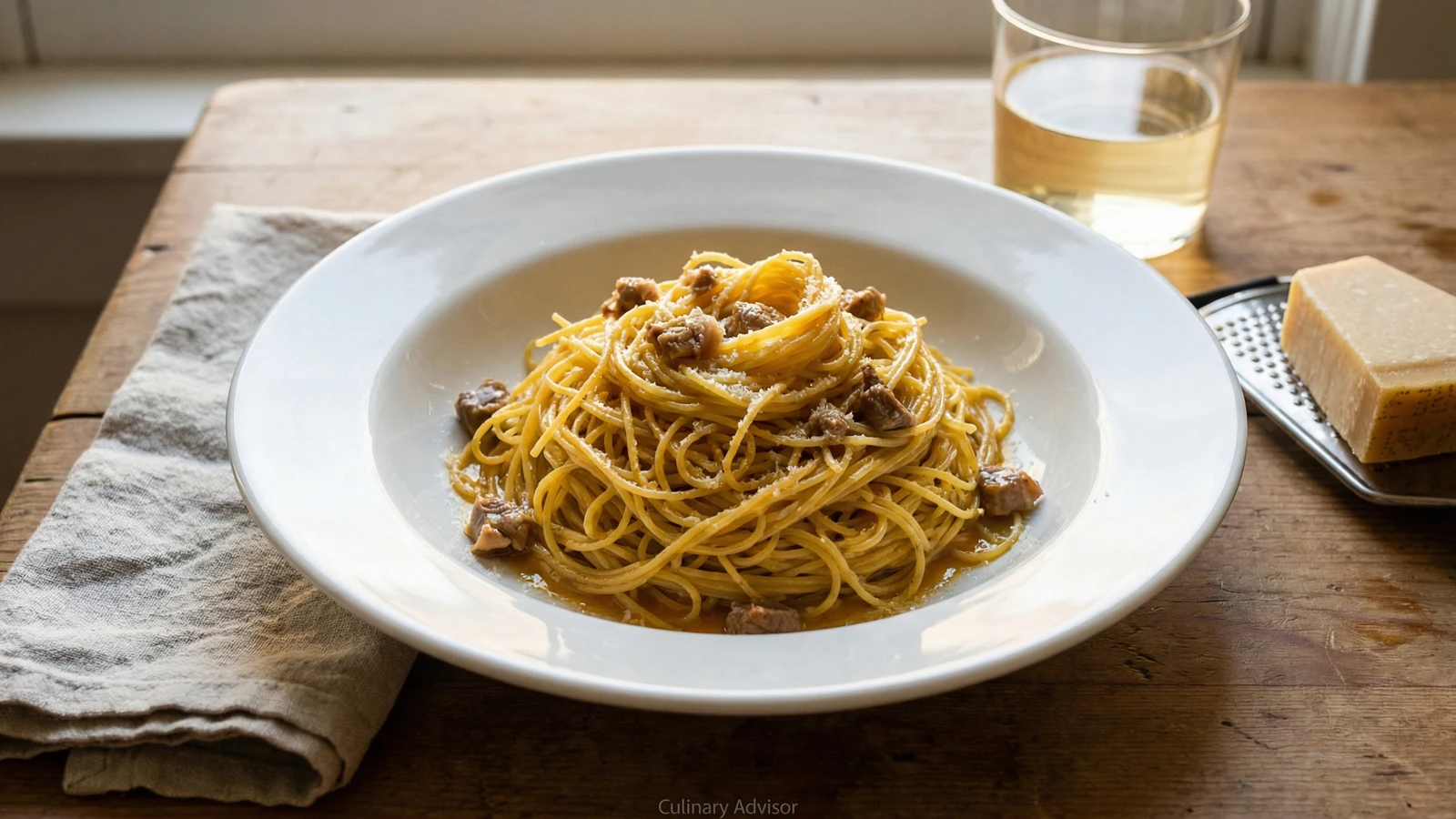
Maccheroncini di Campofilone
Created by Chef Graziella
The finest egg pasta in Italy, from a village of 1,800 souls in the Marche hills. Ten eggs to every kilo of flour, rolled until you can read a love letter through it, cut into strands thin as silk thread.
Campofilone is a village so small you could miss it if you blinked while driving through the Marche hills. Yet this place, perched above the Adriatic, has been making the most extraordinary egg pasta in Italy for six hundred years. The women of Campofilone roll their dough thinner than anywhere else, cut it finer than anywhere else, and use more eggs than anyone would think reasonable. Ten eggs for every kilogram of flour. The result is pasta so delicate it cooks in thirty seconds, so rich it needs only the simplest treatment.
The traditional sauce is not what Americans expect. It is ragù di rigaglie, a slow-simmered sauce of chicken giblets: hearts, livers, gizzards. This is peasant wisdom at its most sophisticated. What the wealthy discarded, the poor transformed into something profound. The giblets give depth and complexity that no chicken breast could approach.
This is not easy. The pasta must be rolled until it is nearly transparent, then cut into strands so fine they tangle like threads of gold. If you cannot achieve this thinness, you are not making maccheroncini di Campofilone. You are making something else. But if you take the time, if you develop the feel, you will understand why this village earned Italy's first IGP designation for egg pasta.
Documents from 1400 mention the pasta of Campofilone being served at papal banquets and noble weddings. The women of this village developed their technique in isolation, passing the secrets from mother to daughter for twenty generations. When the European Union created the IGP designation for regional foods, Campofilone's egg pasta was the first pasta fresca to receive protection, acknowledging what Italians had known for centuries.
The technique, the tradition, and the story behind every dish.
Discover Culinary AdvisorIngredients
Italian tipo 00 flour
Quantity
500g (about 1 pound)
large eggs
Quantity
5
at room temperature
fine salt
Quantity
pinch
chicken giblets
Quantity
400g (about 14 ounces)
hearts, livers, and gizzards
extra virgin olive oil
Quantity
3 tablespoons
unsalted butter
Quantity
2 tablespoons
yellow onion
Quantity
1 small
diced fine
carrot
Quantity
1 small
peeled and diced fine
celery stalk
Quantity
1
diced fine
dry white wine
Quantity
1/2 cup
tomato paste
Quantity
2 tablespoons
chicken broth
Quantity
1 cup
warmed
bay leaf
Quantity
1
fresh rosemary
Quantity
1 sprig
kosher salt
Quantity
to taste
black pepper
Quantity
to taste
freshly ground
Parmigiano-Reggiano
Quantity
for serving
freshly grated
| Ingredient | Quantity |
|---|---|
| Italian tipo 00 flour | 500g (about 1 pound) |
| large eggsat room temperature | 5 |
| fine salt | pinch |
| chicken gibletshearts, livers, and gizzards | 400g (about 14 ounces) |
| extra virgin olive oil | 3 tablespoons |
| unsalted butter | 2 tablespoons |
| yellow oniondiced fine | 1 small |
| carrotpeeled and diced fine | 1 small |
| celery stalkdiced fine | 1 |
| dry white wine | 1/2 cup |
| tomato paste | 2 tablespoons |
| chicken brothwarmed | 1 cup |
| bay leaf | 1 |
| fresh rosemary | 1 sprig |
| kosher salt | to taste |
| black pepperfreshly ground | to taste |
| Parmigiano-Reggianofreshly grated | for serving |
Equipment Needed
- •Large wooden board or marble surface for pasta making
- •Pasta machine or long thin rolling pin
- •Sharp knife for cutting pasta
- •Heavy-bottomed saucepan or Dutch oven
- •Large pot for boiling pasta
Instructions
- 1
Make the pasta dough
Pour the flour onto a clean wooden board or marble surface and form a well in the center. The walls should be high enough to contain the eggs. Crack the eggs into the well and add the salt. Using a fork, beat the eggs gently while gradually incorporating flour from the inner walls. When the mixture becomes too thick for the fork, begin working with your hands. Knead until you have a smooth, elastic dough, about 10 minutes. The dough should feel like your earlobe when pressed. Wrap tightly in plastic and rest for 30 minutes at room temperature.
The traditional ratio is ten eggs per kilogram of flour. This dough is extremely rich and golden. Do not be tempted to add water. If the dough seems dry, your eggs were small. Work it longer. - 2
Prepare the giblets
Clean the giblets thoroughly. Trim any fat or connective tissue from the hearts. Remove the greenish bile sac from the livers if your butcher has not done so, and cut away any discolored portions. Split the gizzards and remove the tough inner lining. Rinse everything under cold water and pat dry. Cut all giblets into small, uniform pieces, about the size of a chickpea. The livers should be slightly larger as they will break down more during cooking.
Ask your butcher for giblets from free-range chickens. The flavor difference is remarkable. Many butchers will save them for you if you ask in advance. - 3
Build the soffritto
In a heavy saucepan or Dutch oven, heat the olive oil and butter over medium-low heat until the butter foam subsides. Add the onion, carrot, and celery. Cook slowly, stirring occasionally, until the vegetables are completely soft and the onion is translucent with golden edges, about 15 minutes. The soffritto is the foundation. Do not rush it.
- 4
Brown the giblets
Increase heat to medium-high. Add the hearts and gizzards first, as they take longer to cook. Brown them well on all sides, stirring frequently, about 8 minutes. Add the livers and cook 3 minutes more. The livers should be browned outside but still slightly pink within at this stage. Season with salt and pepper.
- 5
Deglaze and simmer
Pour in the white wine and scrape up any browned bits from the bottom of the pan. Let the wine bubble until nearly evaporated. Stir in the tomato paste, coating the giblets. Add the warm broth, bay leaf, and rosemary sprig. Reduce heat to the lowest setting. The sauce should barely simmer, with only an occasional bubble breaking the surface. Cook uncovered for 1 hour and 30 minutes, stirring occasionally. The giblets should become very tender and the sauce will reduce and thicken. Add a splash of warm water if it becomes too dry. Remove bay leaf and rosemary before serving.
The tomato here is restrained, barely a blush. This is a meat sauce, not a tomato sauce. The giblets are the point. - 6
Roll the pasta impossibly thin
Divide the rested dough into four pieces. Work with one piece at a time, keeping the rest covered. If using a machine, roll through progressively thinner settings until you reach the thinnest. If rolling by hand, use a long thin rolling pin and roll until you can see your hand through the dough when held to the light. This is not exaggeration. The women of Campofilone say you must be able to read a love letter through the pasta. Let each sheet dry for 5 minutes on a floured cloth, until the surface is no longer tacky but still pliable.
If your pasta is not thin enough, you have not made maccheroncini di Campofilone. You have made tagliolini. There is no shame in tagliolini, but know what you are making. - 7
Cut the pasta
Dust each sheet lightly with flour and roll it loosely from both ends toward the center, forming two scrolls that meet in the middle. Using a very sharp knife, cut crosswise into the thinnest strands you can manage, no more than 1 millimeter wide. Unroll the strands gently and toss with a little flour to prevent sticking. Spread them on a floured tray. The pasta can be cooked immediately or dried for a few hours.
- 8
Cook the pasta
Bring abundant salted water to a vigorous boil. Add the maccheroncini and stir immediately to prevent clumping. Fresh pasta this thin cooks in 30 seconds to 1 minute. Taste it. The moment it is tender, drain it, reserving a cup of pasta water. Do not rinse.
Watch the pot. Blink and you will overcook it. This pasta waits for no one. - 9
Finish and serve
Add the drained pasta directly to the ragù in the pan. Toss gently over low heat for 30 seconds, adding a splash of pasta water if needed to help the sauce coat the strands. The pasta should glisten, not swim. Divide among warm bowls and serve immediately with Parmigiano-Reggiano at the table. Once the pasta is sauced, invite your guests to put off talking and start eating. This pasta does not improve with waiting.
Chef Tips
- •Seek out a butcher who sells giblets separately. Farmers' markets often have vendors who raise their own poultry and save the offal. The quality of supermarket giblets is inconsistent at best.
- •If the idea of giblets is too foreign, this pasta is also traditional with a simple ragù of ground veal and pork. But know that you are missing the point. The giblet ragù is the soul of this dish.
- •In Campofilone, they dry the pasta in nests, called matasse. If making ahead, form small nests and let them dry completely. They will keep for several days in a paper bag.
- •The pasta machine is acceptable, but hand-rolling develops a slightly rougher texture that holds sauce better. The women of Campofilone use a mattarello, a thin rolling pin nearly a meter long. If you have one, use it.
Advance Preparation
- •The ragù can be made two days ahead and refrigerated. Reheat gently before serving, adding a splash of broth if it has thickened.
- •Fresh pasta can be made several hours ahead, spread on floured trays, and covered with clean towels. Do not refrigerate, which makes it gummy.
- •Dried maccheroncini keep for up to a week in a paper bag at room temperature. Cooking time increases slightly for dried pasta.
Frequently Asked Questions
Nutrition Information
1 serving (about 250g)
Where cooking meets culture.
Culinary mentorship, cultural storytelling, and the editorial depth that makes cooking meaningful.
Explore Culinary Advisor