Culinary Advisor
A cooking platform built around craft, culture, and the stories behind what we eat.
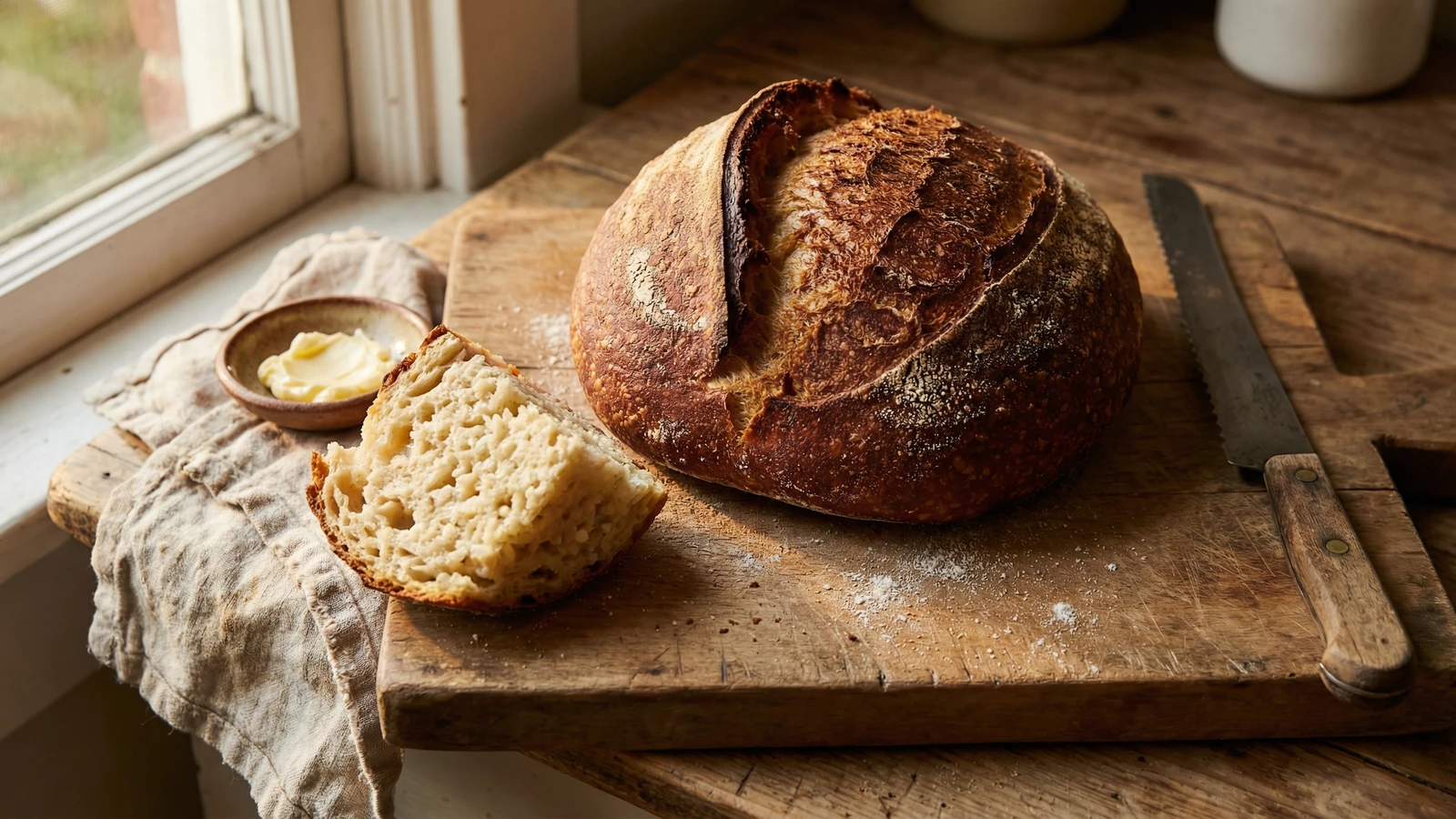
Louisiana Rice Sourdough
Created by Chef Remy
A three-day labor of love that transforms Louisiana rice into a crusty, tender loaf with a crumb so soft it melts on your tongue, carrying whispers of the bayou in every bite.
Rice has been growing in Louisiana since the 1700s, long before the Acadians arrived with their French bread traditions. When those two worlds collided, something beautiful happened. Bakers started folding cooked rice into their doughs, creating loaves with a tenderness you can't achieve any other way. The rice holds moisture, adds a subtle sweetness, and gives you a crumb that practically dissolves on your tongue.
This bread takes three days. There's no way around it. Good sourdough requires time the same way good gumbo requires time. You're building flavor in layers: the wild yeast in your starter, the fermentation during bulk proof, the cold overnight rest that develops complexity you can't rush. My grandmother Evangeline used to say that the best things in life make you wait.
The crust on this loaf will shatter when you cut it. The interior will be open and airy with pockets where the rice created little cushions of tenderness. Tear off a piece while it's still barely warm, spread it with good butter, and you'll understand why four generations of Boudreaux bakers have kept this recipe alive.
The technique, the tradition, and the story behind every dish.
Discover Culinary AdvisorIngredients
active sourdough starter
Quantity
100g
bread flour
Quantity
400g
rice flour
Quantity
50g
Louisiana medium-grain rice
Quantity
150g
cooked and cooled
water
Quantity
325g
room temperature
fine sea salt
Quantity
10g
rice flour
Quantity
for dusting
| Ingredient | Quantity |
|---|---|
| active sourdough starter | 100g |
| bread flour | 400g |
| rice flour | 50g |
| Louisiana medium-grain ricecooked and cooled | 150g |
| waterroom temperature | 325g |
| fine sea salt | 10g |
| rice flour | for dusting |
Equipment Needed
- •Dutch oven or heavy lidded pot (5-7 quart)
- •Banneton proofing basket or bowl with kitchen towel
- •Razor blade or sharp knife for scoring
- •Digital scale for accurate measurements
- •Wire cooling rack
Instructions
- 1
Feed your starter (Day 1)
The night before you mix your dough, feed your sourdough starter. Equal parts flour and water by weight, mixed into whatever mother culture you've been keeping alive. You want it bubbly, active, and ready to work by morning. A healthy starter should double in size within four to six hours at room temperature.
If your starter has been sleeping in the refrigerator, give it two feedings twelve hours apart before using. You want it vigorous, not sluggish. - 2
Cook the rice (Day 1)
Cook your Louisiana rice according to package directions, but use slightly less water than called for. You want individual grains, not porridge. Spread the cooked rice on a sheet pan and let it cool completely, then refrigerate overnight. Cold rice incorporates better and won't kill your starter with residual heat. This rice is the soul of the bread, so don't skimp on quality.
- 3
Mix the autolyse (Day 2, morning)
In a large bowl, combine the bread flour, rice flour, and room temperature water. Mix with your hands until no dry flour remains. This shaggy, rough mess is exactly what you want. Cover and let it rest for one hour. This autolyse lets the flour hydrate fully and begins gluten development before you even start kneading. The bayou way is patient. The bread knows.
Room temperature water means around 75 to 78 degrees. Too warm and your fermentation runs away from you. Too cold and everything moves like molasses in January. - 4
Add starter and salt
After the autolyse, add your active starter and the salt. Use wet hands to squeeze and fold the dough, incorporating the starter throughout. This takes three to four minutes of patient work. The dough will feel sticky and resistant at first, then gradually become more cohesive. Don't fight it. Work with it.
- 5
Fold in the rice
Scatter the cold cooked rice over the dough surface. Using wet hands, fold the dough over itself repeatedly, pressing gently to distribute the rice throughout. Some grains will poke through the surface. That's fine. They'll create those beautiful pockets of tender sweetness in the final loaf. The rice wants to be part of this bread. Let it.
- 6
Bulk fermentation with folds
Cover the bowl and let the dough ferment at room temperature for four to five hours. Every 30 minutes for the first two hours, perform a set of stretch and folds: wet your hands, grab one side of the dough, stretch it up, and fold it over the center. Rotate the bowl and repeat three more times. After the folds are complete, leave the dough undisturbed for the remaining time. It should increase in volume by about 50 percent and feel airy when you touch it.
In a warm Louisiana kitchen, this might take less time. In a cold house, it takes longer. Watch the dough, not the clock. When it's puffy and jiggles like a happy belly, it's ready. - 7
Shape the loaf
Turn the dough onto a lightly floured surface. Gently shape it into a round by folding the edges toward the center, then flip it seam-side down. Cup your hands around the dough and drag it toward you to create surface tension. The skin should feel taut. Don't tear it. This tension is what gives you that beautiful rise in the oven.
- 8
Cold proof overnight (Day 2 to Day 3)
Dust a banneton or a bowl lined with a floured kitchen towel generously with rice flour. Place the shaped dough seam-side up in the basket. Cover with plastic wrap or a shower cap and refrigerate for 12 to 16 hours. This cold proof develops complex flavors and makes the dough easier to score. The magic happens while you sleep.
- 9
Preheat your Dutch oven (Day 3)
Place your Dutch oven with its lid inside your regular oven. Preheat to 500 degrees for a full hour. That cast iron needs to be screaming hot. The initial blast of heat combined with the trapped steam from the lid is what creates that shattering crust. Don't rush this step. Patience is the bayou way.
A 5 to 7 quart Dutch oven works best. If you don't have one, use a large oven-safe pot with a tight-fitting lid. At Lagniappe, we use the same cast iron my grandmother Evangeline seasoned sixty years ago. - 10
Score and bake covered
Remove the dough from the refrigerator. Turn it out onto a piece of parchment paper, seam-side down. Using a sharp razor blade or knife held at a 45-degree angle, score a deep slash across the top, about half an inch deep. Work quickly and confidently. Carefully lower the dough on its parchment into the screaming hot Dutch oven. Cover immediately and bake at 500 degrees for 20 minutes.
The score isn't decoration. It controls where the bread expands so it rises up beautifully instead of blowing out the sides. One confident slash is all you need. - 11
Finish uncovered
Remove the lid and reduce oven temperature to 450 degrees. Bake for another 20 to 25 minutes until the crust is deeply caramelized, mahogany brown with some darker spots where the score opened. The loaf should sound hollow when you tap the bottom. Internal temperature should read 205 to 210 degrees if you have a thermometer, but your eyes and ears will tell you the truth.
- 12
Cool completely
Transfer the loaf to a wire rack and let it cool for at least one hour before cutting. I know this is the hardest part. The bread is singing to you as it cools, those little crackling sounds as the crust sets. But the interior is still setting up, still steaming. Cut too soon and you'll have gummy bread. Trust the process. When you finally tear into it, you'll find a tender, almost custardy crumb with pockets of sweet rice throughout. That's the reward for your patience.
Chef Tips
- •Louisiana medium-grain rice like Jazzmen or any quality Southern rice works beautifully here. The starch content is higher than long-grain, which gives you that tender crumb.
- •If you don't have a sourdough starter, you can create one in about a week with just flour and water. Or find a baker friend who will share some of theirs. That's the generous way.
- •The dough will feel wetter and stickier than standard sourdough because of the rice. Wet hands are your friend. Don't add more flour, or you'll lose that tender quality we're after.
- •This bread is best eaten the day it's baked, but it toasts beautifully for two or three days after. At Lagniappe, we slice day-old loaves thick and griddle them in butter for French toast.
Advance Preparation
- •Your sourdough starter should be fed and active at least 4 to 6 hours before mixing. If refrigerated, plan for two feedings over 24 hours before baking day.
- •The rice can be cooked up to three days ahead and refrigerated. Cold rice actually incorporates better than room temperature.
- •The shaped loaf can cold-proof in the refrigerator for up to 24 hours, giving you flexibility on baking time.
Frequently Asked Questions
Nutrition Information
1 serving (about 75g)
Where cooking meets culture.
Culinary mentorship, cultural storytelling, and the editorial depth that makes cooking meaningful.
Explore Culinary Advisor