Culinary Advisor
A cooking platform built around craft, culture, and the stories behind what we eat.
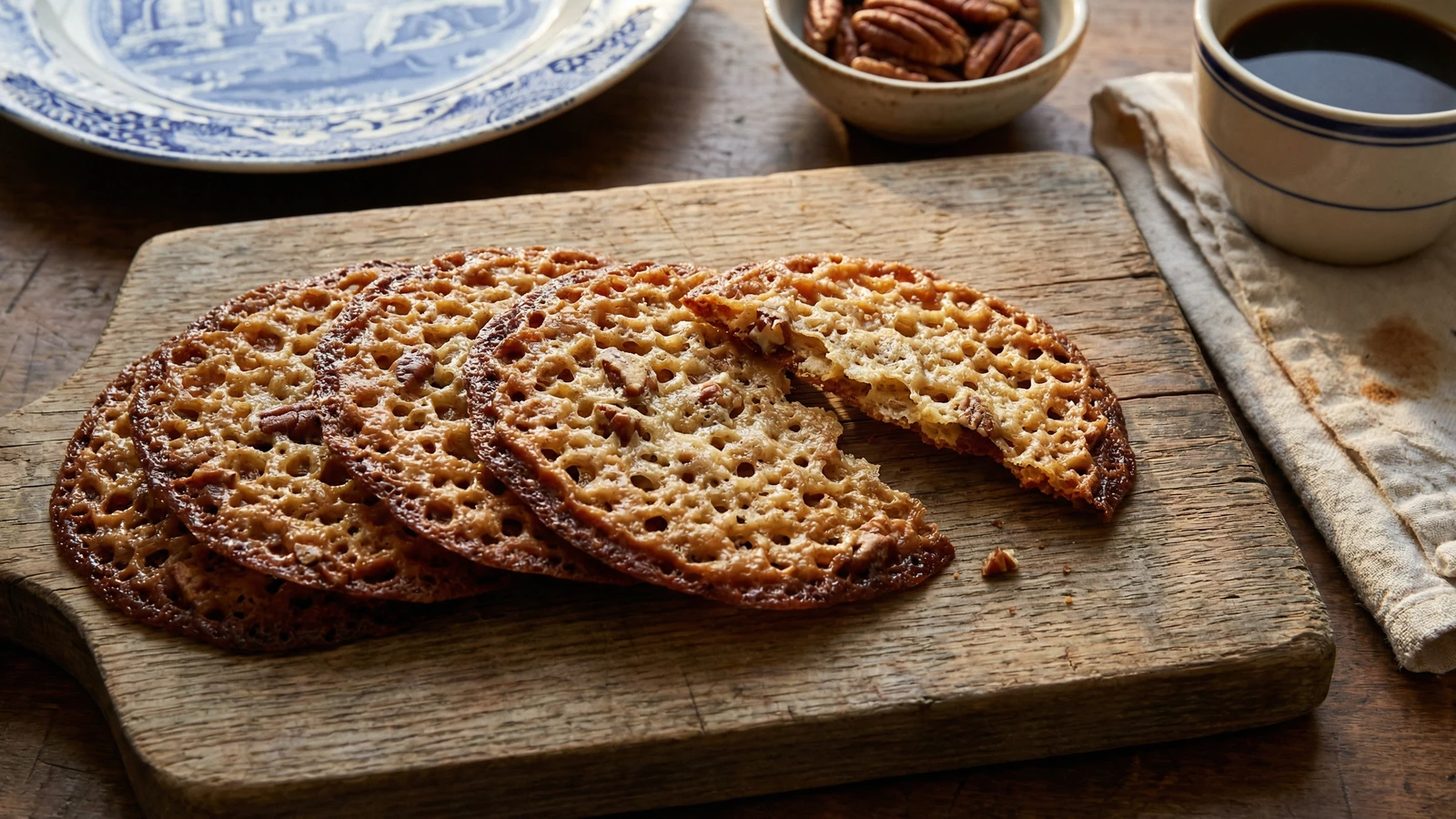
Louisiana Lace Cookies
Created by Chef Remy
Paper-thin pecan cookies with shatteringly crisp edges and deep caramel sweetness, the kind of elegant treat that proves Louisiana country baking can hold its own against any Parisian pastry shop.
Some cookies are about comfort. These are about showmanship. Lace cookies came to Louisiana with the French, but we made them ours by adding pecans and cane syrup. The result is something magical: a cookie so thin and delicate it shatters at the first bite, yet so rich with butter and toasted pecans that one is never enough.
My grandmother Evangeline made these every Christmas, and she taught me the two secrets that separate good lace cookies from great ones. First, you let the batter rest. The oats need time to absorb the butter and sugar, and that resting period is what gives you the spread and the lace pattern. Second, you pull them from the oven when they still look slightly underdone in the center. They firm up as they cool. Wait too long and you've got burnt sugar and bitter regrets.
At Lagniappe, we serve these alongside coffee and chicory after dinner. They're simple to make but require patience and attention. You can't rush a lace cookie. The batter needs its rest, the oven needs to be properly heated, and you need to watch them like a hawk. But when you pull that first batch from the oven and see those golden, lacy circles cooling on the pan, you'll understand why these elegant little things have been worth the effort for four generations of Boudreaux cooks.
The technique, the tradition, and the story behind every dish.
Discover Culinary AdvisorIngredients
unsalted butter
Quantity
1/2 cup (1 stick/113g)
granulated sugar
Quantity
1/2 cup (100g)
Steen's cane syrup or light corn syrup
Quantity
2 tablespoons
old-fashioned rolled oats
Quantity
1/2 cup (45g)
all-purpose flour
Quantity
1/3 cup (40g)
fine sea salt
Quantity
1/4 teaspoon
pure vanilla extract
Quantity
1 teaspoon
pecans
Quantity
3/4 cup (85g)
finely chopped
| Ingredient | Quantity |
|---|---|
| unsalted butter | 1/2 cup (1 stick/113g) |
| granulated sugar | 1/2 cup (100g) |
| Steen's cane syrup or light corn syrup | 2 tablespoons |
| old-fashioned rolled oats | 1/2 cup (45g) |
| all-purpose flour | 1/3 cup (40g) |
| fine sea salt | 1/4 teaspoon |
| pure vanilla extract | 1 teaspoon |
| pecansfinely chopped | 3/4 cup (85g) |
Equipment Needed
- •Medium saucepan
- •Rimmed baking sheets
- •Parchment paper or silicone baking mats
- •Small cookie scoop or measuring teaspoon
- •Thin metal spatula
Instructions
- 1
Melt butter with sugar
Combine the butter, sugar, and cane syrup in a medium saucepan over medium heat. Stir occasionally until the butter melts completely and the sugar dissolves. You'll see it come together into a smooth, glossy mixture. Don't let it boil. Once everything is melted and combined, remove the pan from the heat.
Steen's cane syrup is a Louisiana treasure that adds depth you won't get from regular corn syrup. It's worth seeking out. Look in the baking aisle of Southern grocery stores or order it online. - 2
Build the batter
Stir the oats, flour, and salt into the warm butter mixture. Mix until everything is evenly combined and the oats are coated. Add the vanilla and chopped pecans, stirring to distribute them throughout. The batter will look loose and almost soupy. That's exactly right.
- 3
Rest the batter
Cover the saucepan and let the batter rest at room temperature for at least one hour. This is not optional. The oats absorb the butter and sugar during this time, and that absorption is what creates the signature lace pattern. Skip this step and your cookies won't spread properly. You can rest the batter up to 24 hours in the refrigerator if you're planning ahead.
If you refrigerate the batter overnight, let it come to room temperature for 30 minutes before baking. Cold batter doesn't spread as well. - 4
Prepare for baking
Preheat your oven to 350°F. Line baking sheets with parchment paper or silicone baking mats. These cookies spread dramatically and will stick to an unlined pan. Don't learn this the hard way.
- 5
Portion carefully
Drop the batter by level teaspoons onto your prepared baking sheets, spacing them at least three inches apart. I mean three full inches. These cookies will spread to four times their original size. You'll only fit about six cookies per standard baking sheet. Any more than that and they'll run together into one giant lace disaster.
Use a small cookie scoop or measuring spoon for consistent sizing. Different sized cookies bake at different rates, and with something this thin, even thirty seconds makes a difference. - 6
Bake until golden
Bake for 7 to 9 minutes, watching carefully after the 6 minute mark. The cookies will spread thin, bubble, and turn golden brown from the edges inward. Pull them when the edges are deep golden and the centers are still slightly pale. They'll continue to darken on the hot pan. The kitchen will smell like caramelized butter and toasted pecans. That's how you know you're close.
- 7
Cool completely on pan
Let the cookies cool completely on the baking sheet, at least 10 minutes. They're extremely fragile when warm and will tear if you try to move them too soon. As they cool, they'll firm up and become crisp. You'll hear them crackle slightly as they set. Once fully cooled, use a thin spatula to gently lift them from the parchment.
- 8
Optional: shape while warm
If you want curved cookies (for draping over desserts or filling with mousse), work fast. Remove the pan from the oven and let cookies cool for exactly 30 seconds. Use a thin spatula to drape each cookie over a rolling pin or wine bottle. They set within seconds. This takes practice, but the results are stunning for a dinner party presentation.
For tulip-shaped cups, press the warm cookie into a muffin tin. Fill with ice cream or mousse once cooled. This is how we serve them at Lagniappe for special occasions.
Chef Tips
- •Louisiana pecans are smaller and sweeter than varieties from other regions. If you can get your hands on some, your cookies will taste like mine do at Lagniappe.
- •Chop your pecans by hand, not in a food processor. The processor turns them to paste too quickly. You want small, irregular pieces that toast evenly.
- •Humidity is the enemy of lace cookies. Store them in an airtight container with a few grains of raw rice to absorb moisture. They'll stay crisp for up to a week.
- •These cookies are delicate enough to shatter if you look at them wrong. Store them in a single layer between sheets of parchment paper.
- •For a touch of Louisiana decadence, drizzle the cooled cookies with melted dark chocolate. Let it set before storing.
Advance Preparation
- •Batter can be made up to 24 hours ahead and refrigerated. Bring to room temperature for 30 minutes before portioning and baking.
- •Baked cookies keep in an airtight container at room temperature for up to one week. Do not refrigerate, as condensation will make them chewy.
- •Unbaked portioned dough can be frozen on a baking sheet, then transferred to a freezer bag for up to two months. Bake from frozen, adding one minute to baking time.
Frequently Asked Questions
Nutrition Information
1 serving (about 12g)
Where cooking meets culture.
Culinary mentorship, cultural storytelling, and the editorial depth that makes cooking meaningful.
Explore Culinary Advisor