Culinary Advisor
A cooking platform built around craft, culture, and the stories behind what we eat.
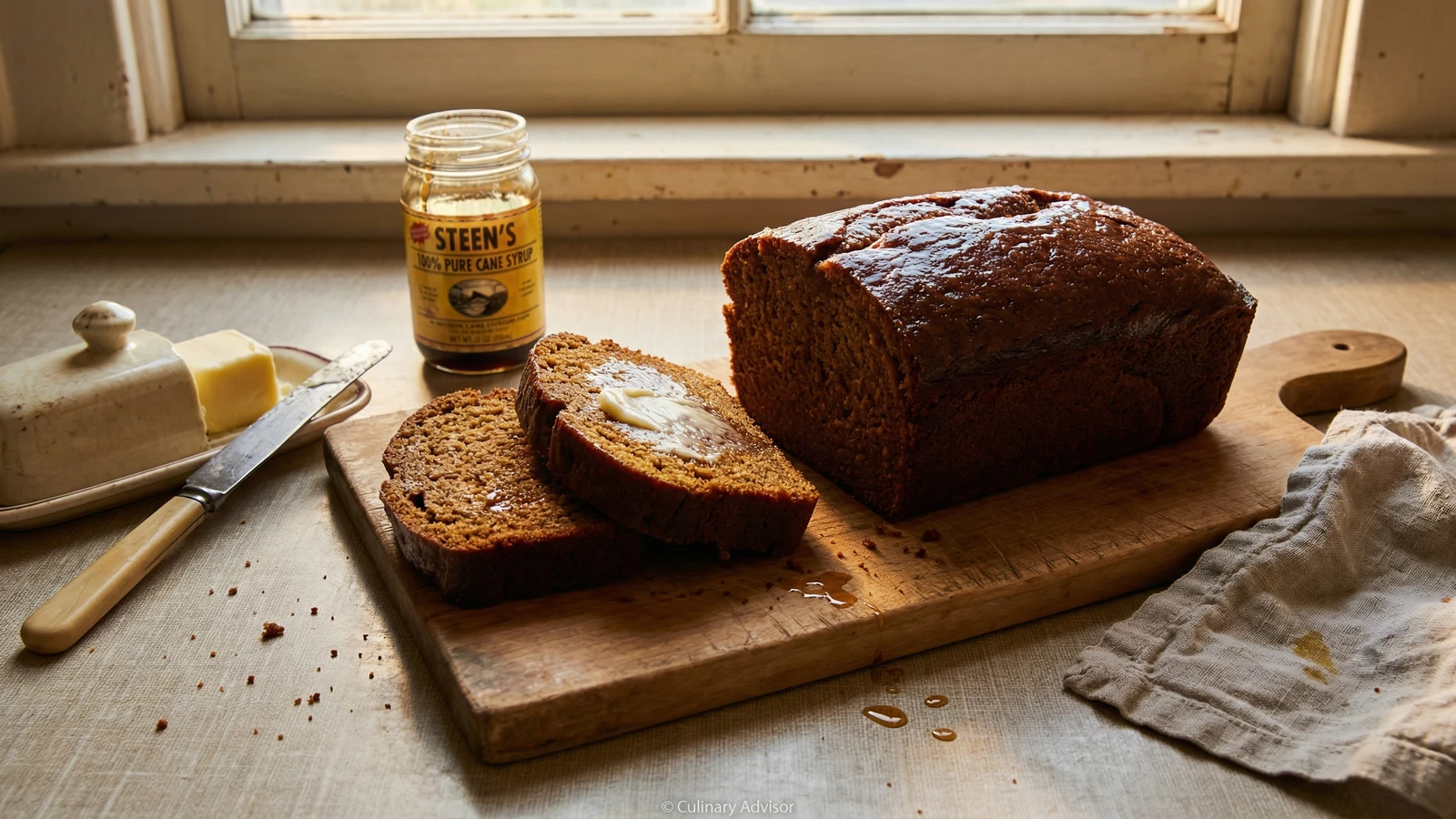
Louisiana Cane Syrup Molasses Bread
Created by Chef Remy
A deeply flavored loaf born from Louisiana sugarcane fields, dark as bayou water at dusk, with that unmistakable cane syrup sweetness that makes our baking unlike anything else in the South.
Cane syrup runs through Louisiana cooking the way blood runs through veins. My grandmother Evangeline kept a gallon jug of Steen's in her pantry year-round, and she used it in everything from biscuits to glazed ham. When she made bread, she'd pour a generous ribbon of that dark amber syrup into the dough, and the whole house would smell like heaven for hours.
This bread carries all that history in every slice. The cane syrup gives it a color somewhere between mahogany and molasses, with a sweetness that's complex rather than cloying. You taste the sugarcane fields, the open kettle cooking, the patience of generations who understood that some things cannot be rushed. At Lagniappe, we serve this bread warm with fresh butter, and grown men have been known to fight over the last piece.
The technique here is forgiving. You're building an enriched dough, which means butter and eggs and that beautiful cane syrup all working together. The key is patience with your rise times and trust in the process. Your kitchen will smell like a Louisiana farmhouse on a Sunday morning, and that smell alone is worth the effort.
The technique, the tradition, and the story behind every dish.
Discover Culinary AdvisorIngredients
bread flour
Quantity
3 1/2 cups (440g)
active dry yeast
Quantity
2 1/4 teaspoons (1 packet)
fine sea salt
Quantity
1 teaspoon
ground cinnamon
Quantity
1/2 teaspoon
freshly grated nutmeg
Quantity
1/4 teaspoon
whole milk
Quantity
3/4 cup
warmed to 110°F
Louisiana cane syrup
Quantity
1/2 cup
unsalted butter (for dough)
Quantity
4 tablespoons
softened
large eggs
Quantity
2
at room temperature
unsalted butter (for brushing)
Quantity
1 tablespoon
melted
| Ingredient | Quantity |
|---|---|
| bread flour | 3 1/2 cups (440g) |
| active dry yeast | 2 1/4 teaspoons (1 packet) |
| fine sea salt | 1 teaspoon |
| ground cinnamon | 1/2 teaspoon |
| freshly grated nutmeg | 1/4 teaspoon |
| whole milkwarmed to 110°F | 3/4 cup |
| Louisiana cane syrup | 1/2 cup |
| unsalted butter (for dough)softened | 4 tablespoons |
| large eggsat room temperature | 2 |
| unsalted butter (for brushing)melted | 1 tablespoon |
Equipment Needed
- •9x5 inch loaf pan
- •Stand mixer with dough hook (optional)
- •Instant-read thermometer
- •Wire cooling rack
Instructions
- 1
Bloom the yeast
Pour the warm milk into a large mixing bowl. The temperature matters here: too hot kills the yeast, too cold and it won't wake up. It should feel like a warm bath on your wrist. Sprinkle the yeast over the surface and let it sit for five minutes until it gets foamy and smells like fresh bread already. If nothing happens, your yeast is dead and you need to start over with a fresh packet.
Louisiana humidity can kill yeast faster than you'd think. Store your packets in the refrigerator and check the expiration date. - 2
Add wet ingredients
Pour in the cane syrup. Watch it ribbon into the milk, dark and gorgeous. Add the softened butter and eggs, then whisk everything together until the butter breaks into small pieces throughout. The mixture will look a bit shaggy, and that's exactly right.
- 3
Build the dough
In a separate bowl, whisk together the flour, salt, cinnamon, and nutmeg. Add half the flour mixture to the wet ingredients and stir with a wooden spoon until combined. Add the remaining flour and stir until a rough, sticky dough forms. It should pull away from the sides of the bowl but still feel tacky to the touch.
The cane syrup makes this dough stickier than regular bread dough. Resist the urge to add more flour, or you'll end up with a dense loaf. - 4
Knead until smooth
Turn the dough onto a lightly floured surface. Knead for eight to ten minutes, using the heel of your hand to push the dough away from you, then fold it back over itself. The dough will transform from shaggy and sticky to smooth and elastic. When you poke it with your finger, it should spring back slowly. You'll know it's ready when the surface looks almost satiny.
If the dough sticks to your hands, wet them slightly rather than adding more flour. Water is your friend with enriched doughs. - 5
First rise
Grease a large bowl with butter and place the dough inside, turning once to coat all sides. Cover with a clean kitchen towel or plastic wrap and set in a warm spot. Let it rise until doubled in size, about one and a half to two hours. The dough should look puffy and alive, and when you press it gently, your fingerprint should remain.
In Louisiana summers, dough rises fast. In winter, I set the bowl on top of the stove while the oven preheats, using that gentle warmth to help things along. - 6
Shape the loaf
Punch down the dough to release the gas, then turn it onto a clean surface. Pat it into a rough rectangle about eight inches by twelve inches. Starting from one short end, roll the dough tightly into a log, pinching the seam closed as you go. Tuck the ends under and place the loaf seam-side down in a greased 9x5 inch loaf pan.
- 7
Second rise
Cover the pan loosely and let the dough rise again until it crowns about one inch above the rim of the pan, forty-five minutes to one hour. The surface should look pillowy and soft. While it rises, preheat your oven to 350°F.
- 8
Bake until deep brown
Bake for forty to forty-five minutes. The cane syrup means this bread browns faster than plain loaves, so watch it carefully after thirty minutes. The crust should be deep mahogany, almost the color of dark roast coffee. Tap the bottom of the loaf: if it sounds hollow, it's done. The internal temperature should reach 190°F on an instant-read thermometer.
If the top is browning too quickly, tent loosely with foil for the last fifteen minutes. - 9
Cool and glaze
Remove the bread from the oven and immediately brush the top with melted butter. This gives it a soft, glossy crust that catches the light. Let the loaf cool in the pan for ten minutes, then turn it out onto a wire rack. Let it cool completely before slicing, if you can stand to wait. The bread needs this time to set its crumb structure.
Chef Tips
- •Steen's cane syrup is the gold standard, made in Abbeville, Louisiana since 1910. If you can't find it locally, order online. Regular molasses works in a pinch, but the flavor won't be quite the same.
- •This bread makes the finest French toast you'll ever taste. Slice it thick, soak it well, and griddle it in butter until the edges caramelize.
- •For a holiday gift, bake two loaves, wrap them in parchment and twine, and include a small jar of local honey. People remember gifts like that.
- •Toast slices and spread with cream cheese for breakfast, or use for ham sandwiches where the sweetness plays against the salt. That's the bayou way.
Advance Preparation
- •Dough can be made through the first rise, then punched down, wrapped tightly, and refrigerated overnight. Let it come to room temperature for one hour before shaping.
- •Baked bread keeps wrapped at room temperature for three days, or frozen for up to two months. Slice before freezing for easy toasting.
- •This bread actually improves on the second day as the flavors meld and deepen. If you can exercise patience, wait to slice it.
Frequently Asked Questions
Nutrition Information
1 serving (about 70g)
Where cooking meets culture.
Culinary mentorship, cultural storytelling, and the editorial depth that makes cooking meaningful.
Explore Culinary Advisor