Culinary Advisor
A cooking platform built around craft, culture, and the stories behind what we eat.
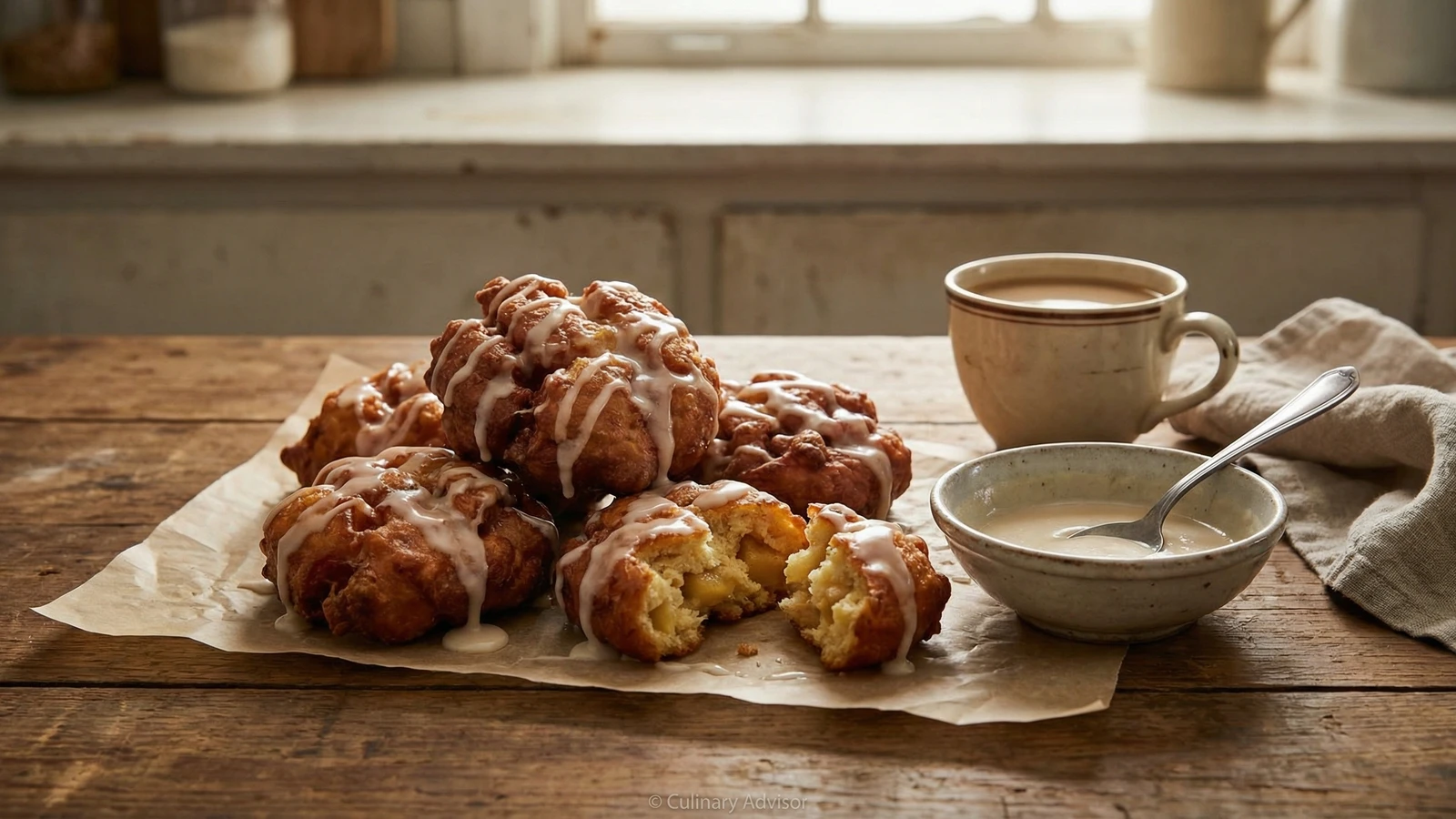
Louisiana Apple Fritters
Created by Chef Remy
Crispy, golden pillows of spiced batter studded with tender apple chunks, fried until impossibly light and drizzled with a sweet vanilla glaze that pools in every crevice, the kind of treat that makes Sunday mornings worth waking up for.
Good fritters are about trust. Trust in the batter, trust in the oil temperature, trust in your own hands. You drop that ragged spoonful into hot fat and let it do what it knows how to do. No fussing. No shaping into perfect spheres. The irregular edges crisp up golden while the centers stay soft and pillowy, and that's exactly what you want.
My grandmother Evangeline made apple fritters every fall when the orchards north of Lafayette started bringing fruit to market. She'd let the apples sit on the counter for a day or two until they smelled like heaven, then fold them into a buttermilk batter so light it barely held together. The secret, she told me, is not overmixing. You want lumps. You want shaggy. The gluten hasn't had time to develop, and that's what keeps your fritters tender instead of tough.
At Lagniappe, we serve these warm with café au lait on Sunday mornings. The glaze goes on while the fritters are still hot enough to melt it slightly, creating that glossy sheen that makes people reach for seconds before they've finished their first. That's the bayou way: generous portions, bold flavors, and never apologizing for something sweet.
The technique, the tradition, and the story behind every dish.
Discover Culinary AdvisorIngredients
all-purpose flour
Quantity
2 cups (250g)
granulated sugar
Quantity
1/3 cup (65g)
baking powder
Quantity
1 1/2 teaspoons
ground cinnamon
Quantity
1 teaspoon
nutmeg
Quantity
1/2 teaspoon
freshly grated
fine sea salt
Quantity
1/2 teaspoon
ground allspice
Quantity
1/4 teaspoon
large eggs
Quantity
2
at room temperature
buttermilk
Quantity
1/2 cup
at room temperature
whole milk (for batter)
Quantity
1/4 cup
unsalted butter
Quantity
2 tablespoons
melted and cooled
pure vanilla extract (for batter)
Quantity
1 teaspoon
Granny Smith apples
Quantity
2 medium (about 12 ounces)
vegetable or peanut oil
Quantity
about 2 quarts
for frying
powdered sugar
Quantity
2 cups (240g)
sifted
whole milk (for glaze)
Quantity
3 tablespoons
pure cane syrup
Quantity
1 tablespoon
pure vanilla extract (for glaze)
Quantity
1 teaspoon
fine sea salt (for glaze)
Quantity
pinch
| Ingredient | Quantity |
|---|---|
| all-purpose flour | 2 cups (250g) |
| granulated sugar | 1/3 cup (65g) |
| baking powder | 1 1/2 teaspoons |
| ground cinnamon | 1 teaspoon |
| nutmegfreshly grated | 1/2 teaspoon |
| fine sea salt | 1/2 teaspoon |
| ground allspice | 1/4 teaspoon |
| large eggsat room temperature | 2 |
| buttermilkat room temperature | 1/2 cup |
| whole milk (for batter) | 1/4 cup |
| unsalted buttermelted and cooled | 2 tablespoons |
| pure vanilla extract (for batter) | 1 teaspoon |
| Granny Smith apples | 2 medium (about 12 ounces) |
| vegetable or peanut oilfor frying | about 2 quarts |
| powdered sugarsifted | 2 cups (240g) |
| whole milk (for glaze) | 3 tablespoons |
| pure cane syrup | 1 tablespoon |
| pure vanilla extract (for glaze) | 1 teaspoon |
| fine sea salt (for glaze) | pinch |
Equipment Needed
- •Large Dutch oven or heavy-bottomed pot (at least 5-quart)
- •Deep-fry or candy thermometer
- •Slotted spoon or spider strainer
- •Wire cooling rack
- •Rimmed baking sheet
Instructions
- 1
Mix the dry ingredients
Whisk together the flour, sugar, baking powder, cinnamon, nutmeg, salt, and allspice in a large bowl. Take a moment to smell this mixture. The spices should hit your nose with warmth and promise. If your spices smell dusty or flat, they're too old and will produce a fritter that tastes like nothing at all. Fresh spices matter here.
Grate your nutmeg fresh from the whole seed. Pre-ground nutmeg loses its aromatic oils within weeks and tastes like cardboard by comparison. - 2
Combine wet ingredients
In a separate bowl, whisk together the eggs, buttermilk, milk, melted butter, and vanilla extract until smooth. The buttermilk adds tang and tenderness, reacting with the baking powder to create lift. Room temperature ingredients incorporate better and produce a more consistent batter.
- 3
Make the batter
Pour the wet ingredients into the dry ingredients and stir with a wooden spoon or spatula until just combined. Stop the moment you no longer see dry flour. The batter should look rough, shaggy, even a little lumpy. This is correct. Overmixing develops gluten and turns your light, airy fritters into dense, chewy disappointments.
Count your strokes if it helps. Fifteen to twenty is usually enough. Walk away from the bowl when you're tempted to keep stirring. - 4
Prepare the apples
Peel and core the apples, then cut them into half-inch chunks. You want pieces small enough to cook through in the time it takes to fry the batter, but large enough to provide bursts of apple in every bite. Fold the apple chunks gently into the batter, distributing them evenly without deflating the mixture.
- 5
Heat the oil
Pour oil into a large Dutch oven or heavy-bottomed pot to a depth of three inches. Clip a deep-fry thermometer to the side and heat over medium-high until the oil reaches 350 degrees Fahrenheit. This temperature is critical. Too hot and the outside burns before the inside cooks. Too cool and the fritters absorb oil and turn greasy.
Peanut oil has the highest smoke point and produces the cleanest-tasting fritters. Vegetable oil works fine if that's what you have. - 6
Set up your station
Line a baking sheet with paper towels and set a wire rack on top. Position this next to your frying station. Have a slotted spoon or spider strainer ready. Organization matters when you're working with hot oil. No reaching across open flames, no fumbling for tools.
- 7
Fry the fritters
Working in batches of four or five, drop heaping tablespoons of batter into the hot oil. Use a second spoon to push the batter off if it clings. The fritters will sink briefly, then bob to the surface as they puff. Fry for two to three minutes per side, turning once, until deep golden brown all over. The irregular edges should be crispy while the centers stay soft.
Do not crowd the pot. Too many fritters at once drops the oil temperature and produces soggy results. Patience here is everything. - 8
Drain and rest
Transfer finished fritters to the wire rack using your slotted spoon. The rack keeps air circulating underneath so the bottoms don't steam and turn soggy. Let the oil return to 350 degrees before frying the next batch. This waiting is not optional.
- 9
Make the glaze
While the fritters cool slightly, whisk together the sifted powdered sugar, milk, cane syrup, vanilla, and salt in a shallow bowl. The consistency should be thick but pourable, like heavy cream. If it seems too thick, add milk a teaspoon at a time. Too thin, add more powdered sugar. The cane syrup adds a subtle molasses depth that plain corn syrup cannot match.
- 10
Glaze and serve
Dip the top of each warm fritter into the glaze, letting the excess drip back into the bowl, or drizzle the glaze over the fritters using a fork. The residual heat will set the glaze to a glossy, slightly tacky finish. Serve warm or at room temperature. These are best within a few hours of frying, when the contrast between crispy exterior and soft interior is at its peak.
For extra indulgence, double-glaze: dip once, let set for five minutes, then dip again for a thicker coating.
Chef Tips
- •Granny Smith apples hold their shape and provide tartness that balances the sweet glaze. Honeycrisp works well too, but avoid Red Delicious, which turns mealy when cooked.
- •The batter can rest for up to thirty minutes at room temperature if you need to prep other things. Any longer and the baking powder starts losing its punch.
- •If you don't have cane syrup, look for Steen's at specialty stores or online. It's a Louisiana staple worth having in your pantry. Light corn syrup works in a pinch, but the flavor is not the same.
- •Test your oil with a small drop of batter before committing to a full batch. It should sizzle immediately and rise to the surface within seconds.
- •Leftover fritters can be reheated in a 350 degree oven for five minutes to restore some crispness, but they will never be as good as fresh. Make only what you'll eat.
Advance Preparation
- •The dry ingredients can be whisked together and stored in an airtight container overnight. Combine with wet ingredients and apples just before frying.
- •The glaze can be made several hours ahead and stored covered at room temperature. Whisk briefly before using if it has thickened.
- •Fritters are best served within two to three hours of frying. They do not store or freeze well. Plan to make them when you're ready to eat them.
Frequently Asked Questions
Nutrition Information
1 serving (about 75g)
Where cooking meets culture.
Culinary mentorship, cultural storytelling, and the editorial depth that makes cooking meaningful.
Explore Culinary Advisor