Culinary Advisor
A cooking platform built around craft, culture, and the stories behind what we eat.
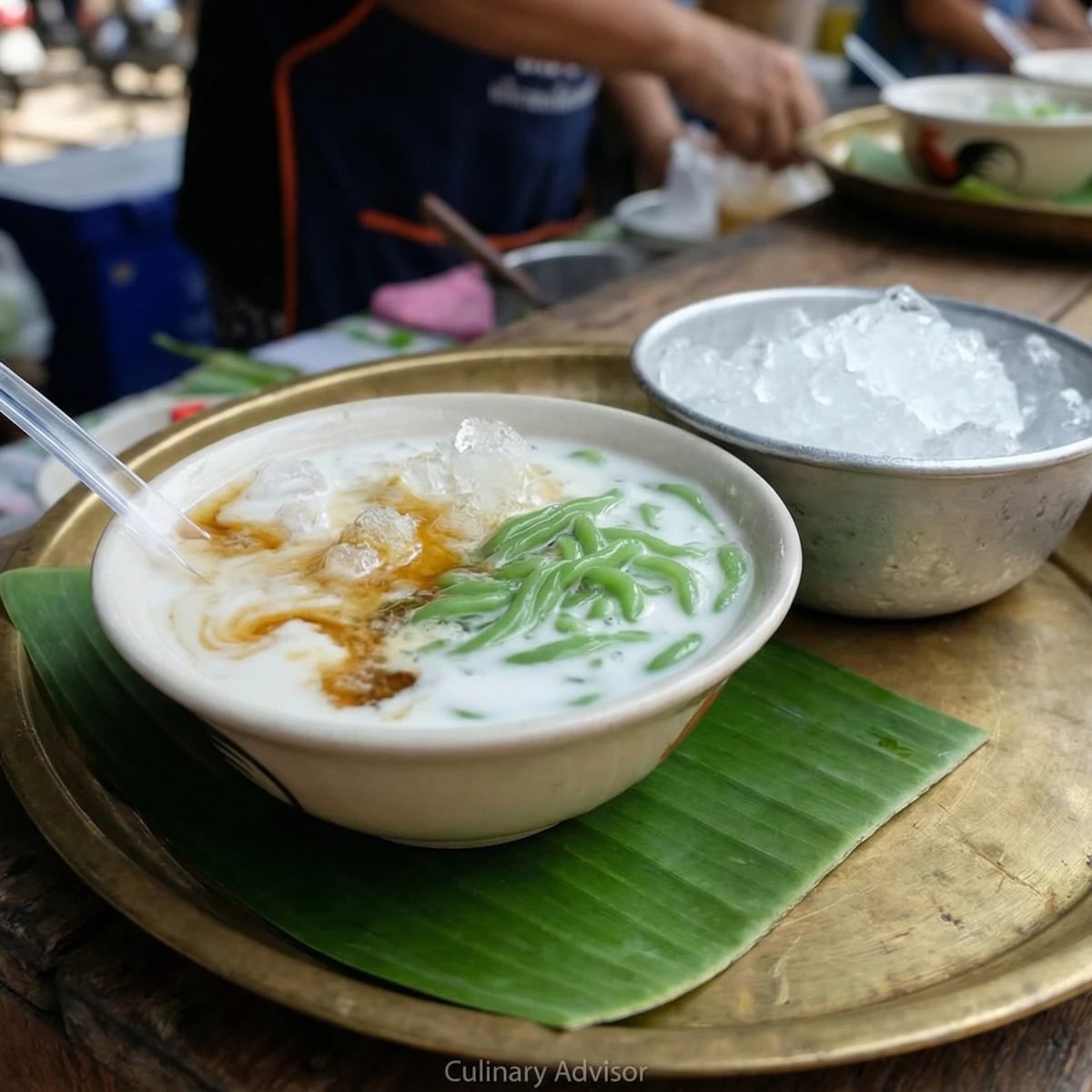
Pandan Noodles in Coconut Milk (Lod Chong Nam Kathi)
Created by Chef Fai
Palm sugar is the sweet pillar. Coconut cream is the medium. Pandan is the soul. Thai dessert follows the same system as every curry and stir-fry: principles first, recipes second. This is the proof.
Thai dessert is not a separate world. It follows the same governing system as every gaeng, every stir-fry, every som tam you've ever eaten. Ajarn always said the four pillars don't stop at savory food. They define Thai cuisine. All of it. And the sweet pillar, nam tan pip (palm sugar), is the one that rules khanom thai.
Lod chong is the clearest demonstration. Two components: pandan noodles and sweetened coconut milk. That's it. And both are governed by rules. The noodles get their green from bai toey (pandan leaves), pounded or blended and squeezed for juice. Not extract. Not food coloring. The real leaf, with its grassy, floral fragrance that no bottle can replicate. The flour is paeng khao jao (regular rice flour), not glutinous, combined with paeng man sampalang (tapioca starch) for that slippery, chewy bite. Cook the dough on the stove until it goes translucent and thick, then press it through a mold into ice water. The cold shock sets the noodles. Physics.
The coconut milk side is where people go wrong. Granulated sugar is not palm sugar. Cow's milk is not coconut cream. These aren't creative substitutions. They're violations of the system. Nam tan pip gives a caramel depth, a smokiness, a complexity that white sugar can't touch. Hua kati (thick coconut cream, the first press) gives richness that no dairy replicates. A pinch of salt pulls the sweetness forward. That salt-sweet tension is pure Thai thinking.
I learned lod chong from a vendor at Khlong Toei market who'd been pressing noodles through a brass mold for thirty years. Her ice water bucket sat right next to the charcoal stove where she cooked the dough. Hot to cold in two seconds. The noodles came out perfect every time, bright green, firm, slippery. She never weighed anything. She knew the dough by feel: too wet and the noodles dissolve, too dry and they crack. That knowledge lives in the hands, not in measuring cups. But I'll give you the measurements so you can get there.
Ingredients
rice flour (paeng khao jao)
Quantity
100g
tapioca starch (paeng man sampalang)
Quantity
50g
pandan leaves (bai toey), for noodle dough
Quantity
15 leaves
cut into 1-inch pieces
| Ingredient | Quantity |
|---|---|
| rice flour (paeng khao jao) | 100g |
| tapioca starch (paeng man sampalang) | 50g |
| pandan leaves (bai toey), for noodle doughcut into 1-inch pieces | 15 leaves |