Culinary Advisor
A cooking platform built around craft, culture, and the stories behind what we eat.
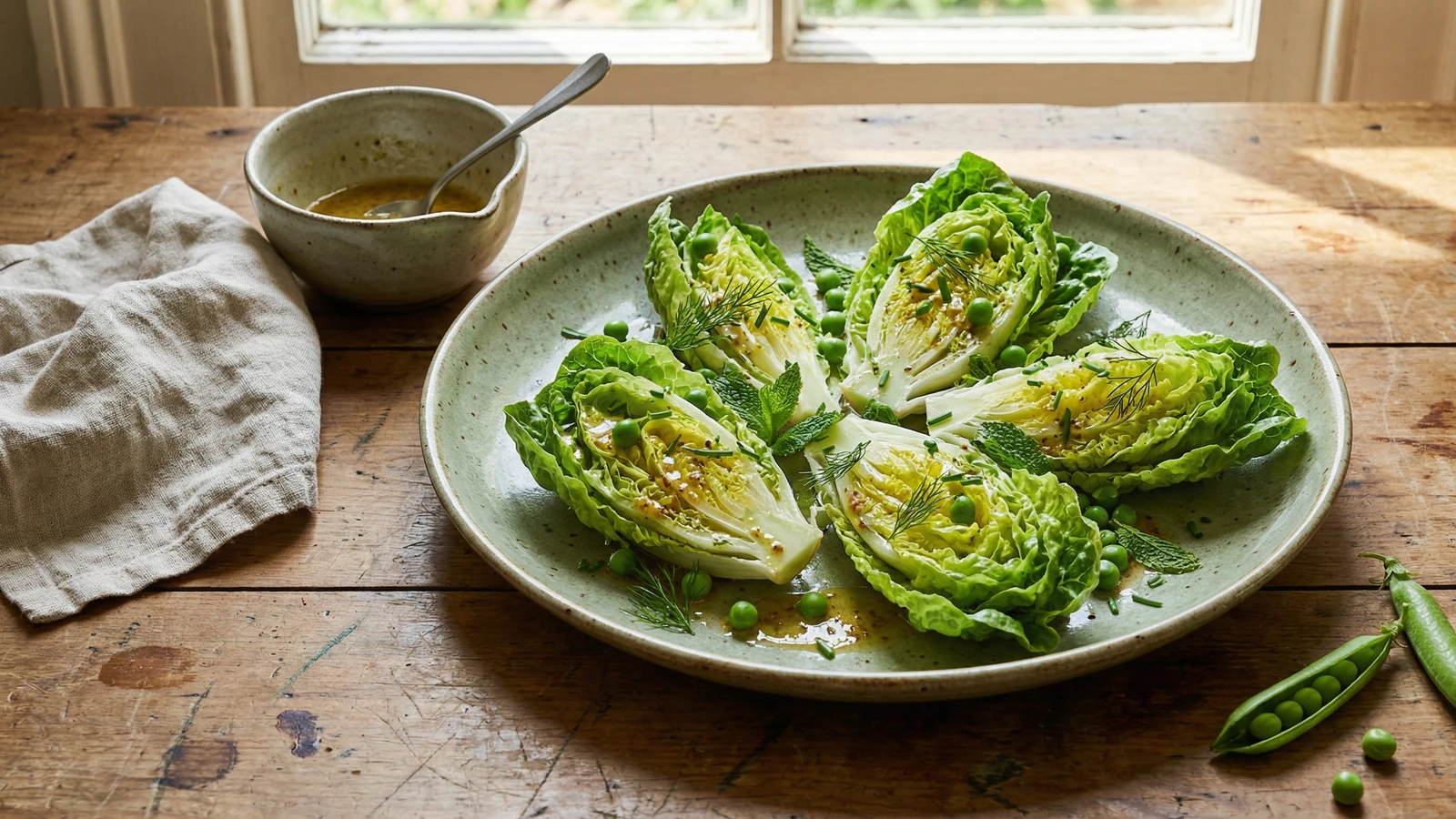
Little Gem, Peas and Summer Herbs
Created by Chef Thomas
Crisp little gem wedges scattered with raw peas and torn herbs, dressed in something sharp and mustardy. The kind of salad that tastes like the garden smells in June.
The peas came in on Saturday. Proper peas, in fat pods that split with a clean snap when you press your thumbnail along the seam. I stood at the kitchen counter eating half of them raw before they made it anywhere near a recipe. That's how you know they're ready.
This isn't really a recipe. It's an assembly. Little gems, quartered so you get that crisp, pale heart and the cupped leaves that hold the dressing. Raw peas, sweet enough to eat straight. Mint and dill, torn, not chopped, because chopping bruises them and loses the oils. A sharp, mustardy dressing that cuts through all that green sweetness and makes it sing. Ten minutes, start to finish. We're only making dinner.
I come back to this salad every June and keep making it until the peas are done. It sits beside grilled lamb or fish, or next to bread and cheese on a warm evening when nobody wants to stand at the stove. It's the sort of thing you put in the middle of the table and let people help themselves, which is, when you think about it, the best way to eat almost anything.
I wrote it down in the notebook years ago. Three words: peas, mint, Tuesday. That's all it needed.
The technique, the tradition, and the story behind every dish.
Discover Culinary AdvisorIngredients
little gem lettuces
Quantity
3-4
outer leaves removed, quartered lengthways
fresh peas in the pod
Quantity
200g (about 80g podded)
podded
fresh mint leaves
Quantity
small handful
torn
fresh dill fronds
Quantity
small handful
torn or left whole
chives
Quantity
a few stalks
snipped
Dijon mustard
Quantity
1 tablespoon
white wine vinegar
Quantity
1 tablespoon
good olive oil
Quantity
3 tablespoons
lemon juice
Quantity
a squeeze
fine sea salt
Quantity
to taste
black pepper
Quantity
to taste
| Ingredient | Quantity |
|---|---|
| little gem lettucesouter leaves removed, quartered lengthways | 3-4 |
| fresh peas in the podpodded | 200g (about 80g podded) |
| fresh mint leavestorn | small handful |
| fresh dill frondstorn or left whole | small handful |
| chivessnipped | a few stalks |
| Dijon mustard | 1 tablespoon |
| white wine vinegar | 1 tablespoon |
| good olive oil | 3 tablespoons |
| lemon juice | a squeeze |
| fine sea salt | to taste |
| black pepper | to taste |
Equipment Needed
- •Wide shallow serving plate or bowl
- •Small jar or bowl for the dressing
Instructions
- 1
Pod the peas
Pod the peas into a bowl. Eat a few as you go. If they're sweet enough to eat standing at the counter, they're right for this salad. If they taste starchy or dull, they've been off the plant too long and you'd be better off blanching them briefly in boiling water, thirty seconds, no more, then straight into cold water. But fresh peas, truly fresh, need nothing at all.
This only works with peas that are worth eating raw. If you can't find them fresh in the pod, frozen petit pois defrosted under cold running water are honest and good. Better a frozen pea at its best than a fresh one past it. - 2
Make the dressing
Put the mustard and vinegar in a small bowl or jar. Add a pinch of salt. Stir until smooth, then pour in the olive oil in a slow stream, whisking or shaking as you go. It should come together into something thick and glossy, the colour of pale honey. Add a squeeze of lemon. Taste it on a lettuce leaf, not from a spoon. You're dressing leaves, not soup. Adjust. More salt, more acid, more oil. You'll know when it's right.
- 3
Prepare the lettuces
Quarter the little gems lengthways through the root so the leaves hold together. If they're small, halve them. Wash them gently and dry them properly. A wet lettuce dilutes everything and the dressing slides off instead of clinging. Lay them cut-side up on a wide plate or shallow bowl. You want them arranged loosely, not piled.
- 4
Assemble the salad
Scatter the peas over and between the lettuce wedges. Tear the mint leaves roughly and drop them in. Add the dill in feathery pieces, and snip the chives over the top. Spoon the dressing over everything, letting it pool in the cut faces of the lettuce and settle around the peas. Don't toss it. This isn't that kind of salad. It should look like a garden on a plate, a bit wild, a bit careless, everything landing where it lands. Season with a final grind of black pepper and bring it to the table as it is.
Chef Tips
- •The peas make or break this. Taste them before you commit. A raw pea should be sweet and milky, with a pop when you bite through the skin. If it's floury or bland, it has been too long since the plant and no amount of dressing will save it.
- •Little gems are sturdier than they look. Quarter them through the root so the wedges hold together and you get layers of leaf to spoon the dressing into. Don't separate the leaves. The architecture is part of the pleasure.
- •Make more dressing than you think you need. It keeps in a jar in the fridge for a week and improves everything: cold potatoes, grilled courgettes, a piece of fish. A good vinaigrette is one of the most useful things you can have on hand.
- •If you're serving this at a barbecue, dress it at the last moment. The lettuce goes limp quickly once the vinaigrette hits it, and you want that contrast between the sharp, cold crunch of the leaves and whatever is hot off the grill.
Advance Preparation
- •The dressing can be made a day or two ahead and kept in a sealed jar in the fridge. Give it a good shake before using.
- •Pod the peas up to a few hours in advance and keep them covered in the fridge. Prepare the herbs and lettuce no more than an hour ahead, wrapped in a damp tea towel to stay crisp.
- •Do not assemble until you are ready to eat. This is a salad that lives in the moment.
Frequently Asked Questions
Nutrition Information
1 serving (about 130g)
Where cooking meets culture.
Culinary mentorship, cultural storytelling, and the editorial depth that makes cooking meaningful.
Explore Culinary Advisor