Culinary Advisor
A cooking platform built around craft, culture, and the stories behind what we eat.
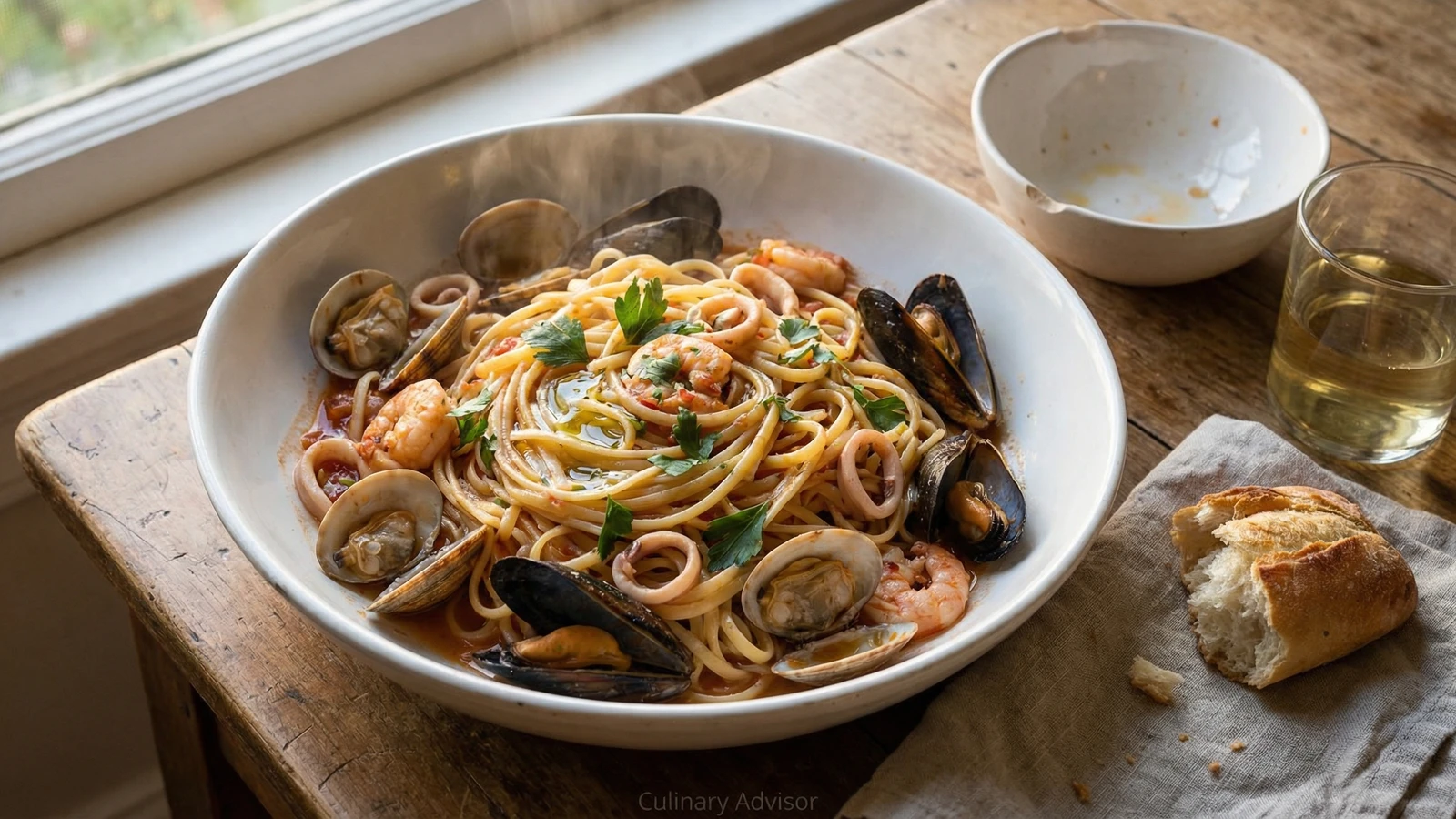
Linguine allo Scoglio
Created by Chef Graziella
A tumble of clams, mussels, shrimp, and squid over linguine, bright with tomato and white wine. The fishermen's pasta of the Amalfi coast, where the rocks meet the sea.
Scoglio means rock, and this is the pasta of the rocks: the jagged shoreline where Neapolitan fishermen have cast their nets for centuries. What came up went into the pot. Clams, mussels, whatever small creatures clung to the stones. The result is not a recipe so much as a tradition, a way of cooking that follows the catch.
Americans make this too complicated. They add cream. They add cheese. Let me be clear: there is no cream in allo scoglio. There is no cheese on any pasta di mare in all of Italy. Cheese and seafood together is an abomination that Italians do not recognize and would never commit. The sea provides enough richness. It does not need help.
The technique matters more than the specific shellfish. You must open the clams and mussels first to create a briny cooking liquid. You must add the squid and shrimp at the end to avoid overcooking. Everything must come together in the pan, the pasta finishing in the sauce so that each strand absorbs the flavor of the sea. The sauce should coat the pasta, not pool at the bottom of the bowl.
Pasta allo scoglio belongs to the fishermen and their families along the Neapolitan coast, from the Bay of Naples down through the Amalfi peninsula. The name, meaning 'of the rocks,' refers to the shellfish that cling to the coastal stones. This was poverty cooking, using whatever the sea offered that day, elevated through technique into something restaurant menus now celebrate.
The technique, the tradition, and the story behind every dish.
Discover Culinary AdvisorIngredients
dried linguine
Quantity
1 pound
littleneck clams
Quantity
1 pound
scrubbed
mussels
Quantity
1 pound
scrubbed and debearded
medium shrimp
Quantity
8 ounces
shell on
cleaned squid
Quantity
8 ounces
bodies cut into 1/2-inch rings, tentacles halved
extra virgin olive oil
Quantity
1/2 cup
garlic cloves
Quantity
4
sliced thin
red pepper flakes
Quantity
1/4 teaspoon
dry white wine
Quantity
1 cup
San Marzano tomatoes
Quantity
1 can (14 ounces)
crushed by hand
fresh flat-leaf parsley
Quantity
1/2 cup leaves
chopped
kosher salt
Quantity
to taste
| Ingredient | Quantity |
|---|---|
| dried linguine | 1 pound |
| littleneck clamsscrubbed | 1 pound |
| musselsscrubbed and debearded | 1 pound |
| medium shrimpshell on | 8 ounces |
| cleaned squidbodies cut into 1/2-inch rings, tentacles halved | 8 ounces |
| extra virgin olive oil | 1/2 cup |
| garlic clovessliced thin | 4 |
| red pepper flakes | 1/4 teaspoon |
| dry white wine | 1 cup |
| San Marzano tomatoescrushed by hand | 1 can (14 ounces) |
| fresh flat-leaf parsleychopped | 1/2 cup leaves |
| kosher salt | to taste |
Equipment Needed
- •Wide 14-inch sauté pan or brasier with lid
- •Large pot for pasta (at least 8 quarts)
- •Tongs for handling shellfish
- •Spider or slotted spoon
Instructions
- 1
Inspect the shellfish
Discard any clams or mussels that are cracked, broken, or gaping open and do not close when tapped sharply. These are dead. Dead shellfish will make you ill. Rinse the good ones under cold running water. The mussels must have their beards removed: grasp the hairy tuft and pull it firmly toward the hinge of the shell.
Complete this step no more than an hour before cooking. Shellfish breathe. Cleaned mussels left too long in fresh water will suffocate and spoil. - 2
Start the pasta water
Bring a large pot of water to a vigorous boil. Salt it generously. The water should taste like the sea. This is not poetry; it is instruction. Undersalted pasta water produces flat, lifeless pasta.
- 3
Build the base
In a pan wide enough to hold the finished pasta, warm the olive oil over medium heat. Add the sliced garlic and red pepper flakes. Cook until the garlic is pale gold and fragrant, about two minutes. Watch it carefully. The moment before the garlic browns, you must act. Browned garlic is bitter garlic, and bitter garlic ruins everything it touches.
- 4
Open the clams and mussels
Raise the heat to high. Add the clams and pour in the wine. Cover the pan. Cook for two minutes, shaking the pan occasionally. Add the mussels, cover again, and cook until the shells open, another three to four minutes. As they open, transfer them to a bowl with tongs. Discard any that refuse to open after six minutes of cooking. They are dead and stubborn.
Work in batches if your pan is small. Crowded shellfish steam poorly and open unevenly. - 5
Add the tomatoes
Add the crushed tomatoes to the pan with the shellfish liquor. Let this simmer for five minutes. The sauce should reduce slightly and become cohesive. It will smell of the sea and the garden at once.
- 6
Cook the squid and shrimp
Add the squid rings and tentacles to the simmering sauce. Cook for exactly two minutes. Squid requires either two minutes or two hours; anything between produces rubber. Add the shrimp in their shells. Cook until the shrimp are just pink and curled, about three minutes. Remove the pan from heat.
The shells protect the shrimp from overcooking and add flavor to the sauce. Your guests may peel them at the table. This is correct. Provide napkins and a bowl for shells. - 7
Cook the pasta
Drop the linguine into the boiling water. Stir immediately to prevent sticking. Cook until the pasta is quite al dente, one to two minutes less than the package suggests. The pasta will finish cooking in the sauce. Reserve one cup of pasta water before draining.
- 8
Marry the pasta and sauce
Return the sauce to medium heat. Add the drained pasta directly to the pan. Return the clams and mussels to the pan. Toss everything together vigorously for one to two minutes, adding splashes of pasta water as needed to create a sauce that clings to the pasta. The starch in the water helps bind everything together. Add most of the parsley and toss once more.
- 9
Serve immediately
Transfer to warm shallow bowls, distributing the seafood evenly. Scatter the remaining parsley over the top. Drizzle with your best olive oil. Serve at once. There is no waiting. Once the pasta is sauced, invite your guests to put off talking and start eating. This dish does not improve with patience.
Chef Tips
- •Seek clams and mussels from a fishmonger who receives deliveries the same day. Shellfish should smell like the ocean, not like fish. Any ammonia odor means they are past their prime.
- •The pasta water is a tool, not an afterthought. Its starch binds the sauce. Add it gradually while tossing. You want the sauce to cling like silk, not run like water.
- •No Parmigiano. No pecorino. No cheese of any kind. I will say this as many times as necessary. The Neapolitan fisherman's wife who invented this dish would be appalled.
- •If you cannot find good mussels, use all clams. If you cannot find clams, use all mussels. Adapt to what is fresh. The tradition demands flexibility, not rigidity.
Advance Preparation
- •The shellfish can be cleaned and refrigerated up to four hours ahead. Cover with a damp towel, not water.
- •This dish cannot be made ahead. The pasta must be served the moment it is finished. Reheated seafood pasta is an insult to the ingredients and to your guests.
Frequently Asked Questions
Nutrition Information
1 serving (about 380g)
Where cooking meets culture.
Culinary mentorship, cultural storytelling, and the editorial depth that makes cooking meaningful.
Explore Culinary Advisor