Culinary Advisor
A cooking platform built around craft, culture, and the stories behind what we eat.
Leite Creme
Created by Chef Margarida
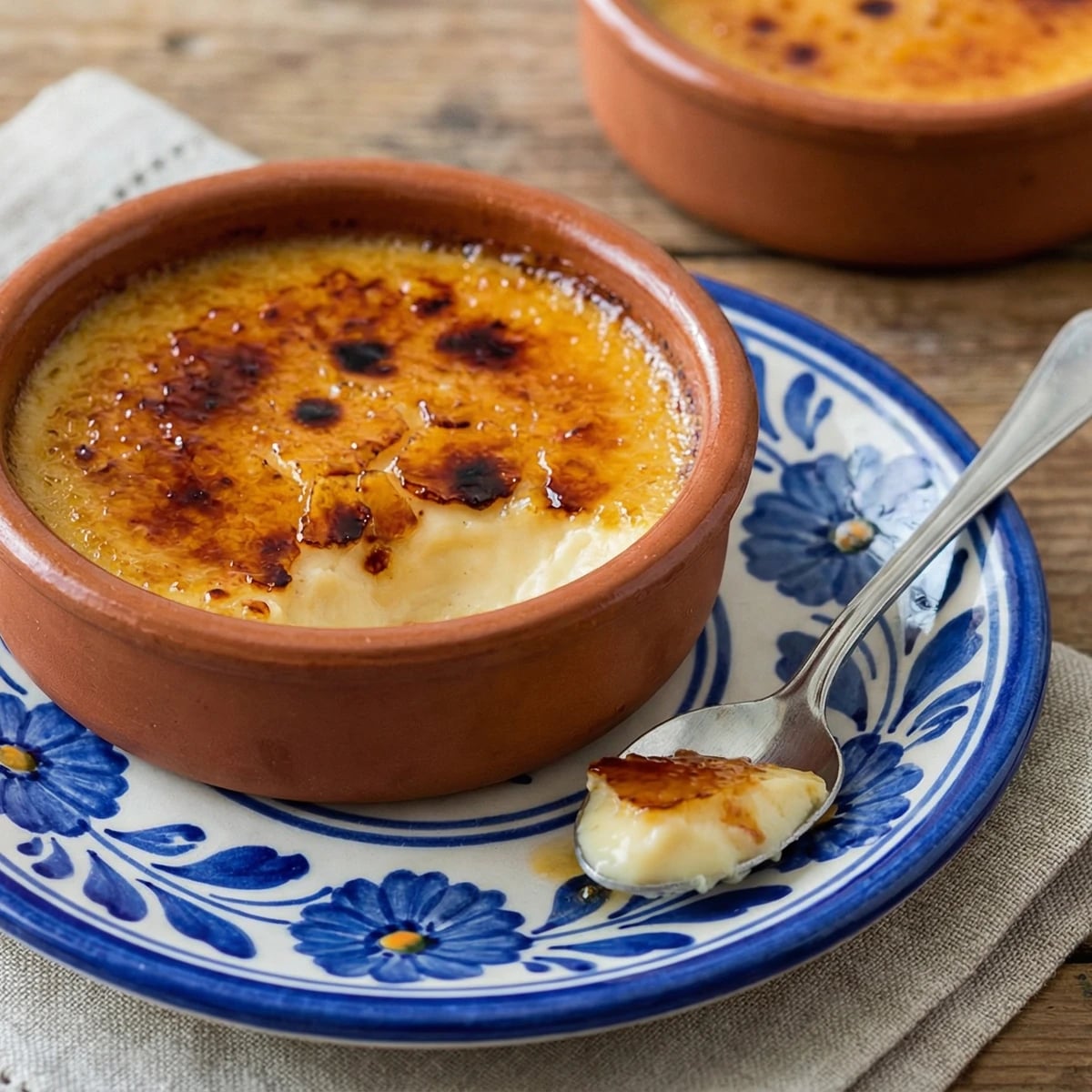
The custard that built convents, made from the yolks the nuns had in abundance. Silky, perfumed with cinnamon and lemon, topped with a glass-like caramel you crack with your spoon.
Every spoonful of leite creme carries the history of Portuguese convents. The nuns used egg whites to starch their habits and clarify wine. What to do with the mountains of leftover yolks? They made desserts. Dozens of them. Ovos moles, toucinho do céu, papos de anjo. And this: the simplest, the purest, the one that tastes like comfort itself.
Avó Leonor made leite creme in a battered aluminum pan that had belonged to her mother. She'd stir and stir, watching the custard like a hawk, because she knew the moment it turned was the moment everything mattered. Too soon, it's soup. Too late, it's ruined. She had the timing in her bones after sixty years of making it.
The French call their version crème brûlée and act like they invented it. Let them. We know our leite creme is older, humbler, made on the stovetop with cinnamon and lemon peel instead of vanilla pods. It's not fussy. It's not restaurant food dressed up for a prix fixe menu. It's what you make on a weeknight when you want something sweet and your pantry is simple.
That caramelized top, though. The shatter of burnt sugar giving way to cool silk beneath. That's the part that makes people close their eyes. At Mesa da Avó, I serve this in my grandmother's ceramic dishes, and every single time, the room goes quiet when people take their first bite. A cozinha é memória. One taste, and you're in someone's grandmother's kitchen. Maybe yours. Maybe mine. Maybe one that existed centuries ago behind convent walls.
Ingredients
egg yolks
Quantity
6 large
sugar
Quantity
150g, plus 4 tablespoons for topping
whole milk
Quantity
500ml
| Ingredient | Quantity |
|---|---|
| egg yolks | 6 large |
| sugar | 150g, plus 4 tablespoons for topping |
| whole milk | 500ml |