Culinary Advisor
A cooking platform built around craft, culture, and the stories behind what we eat.
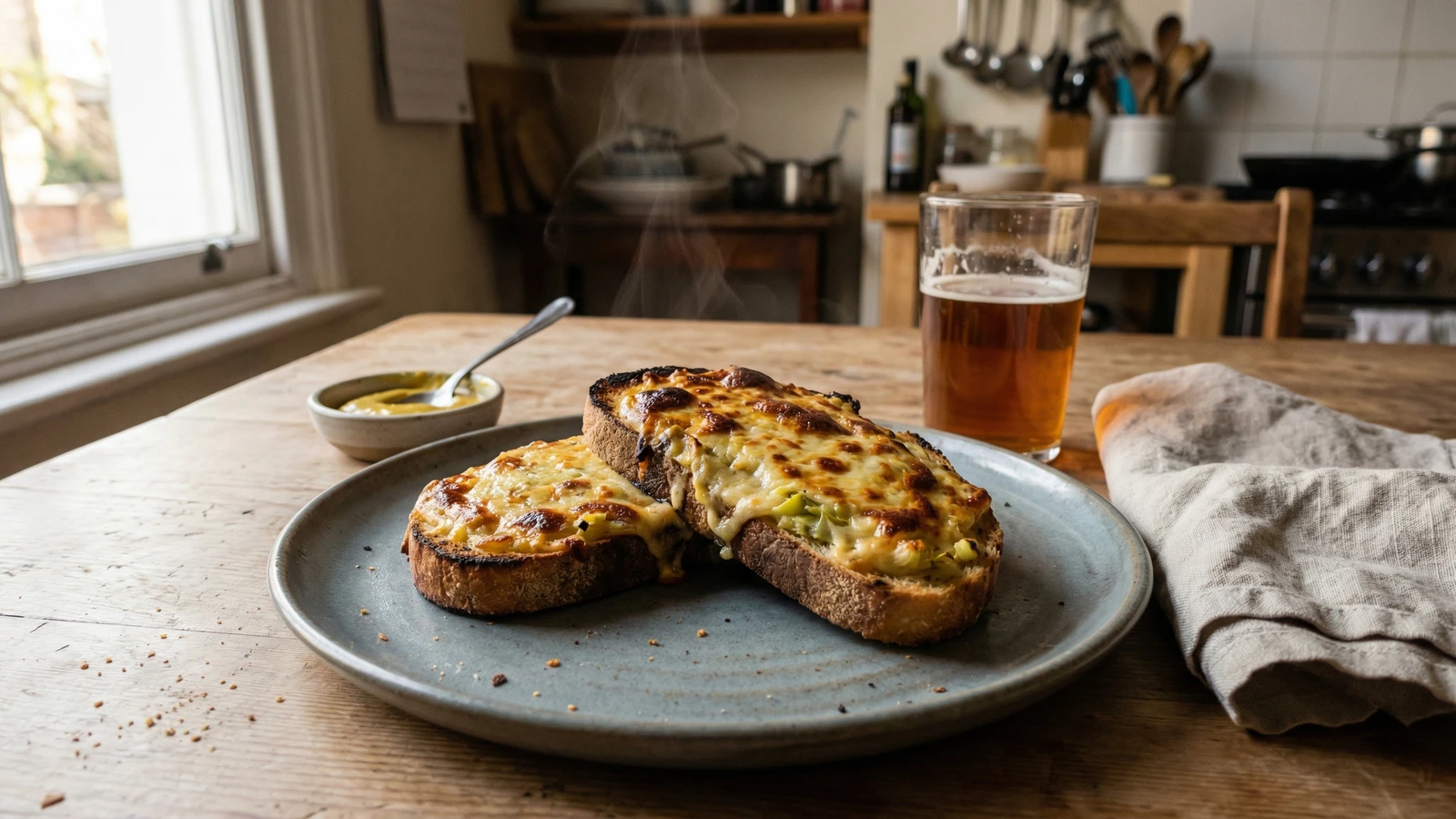
Leek and Caerphilly Rarebit
Created by Chef Thomas
Softened leeks folded into a bubbling Caerphilly and ale rarebit, grilled until blistered and golden on thick toast. A Welsh evening on a plate, made in the time it takes to set the table.
January rain against the window. The kitchen warm. A pan on the hob with leeks softening in butter, going from sharp and fibrous to something silky and sweet that smells of alliums and patience. This is a rarebit evening.
Ordinary Welsh rarebit is already one of the most useful things you can make in fifteen minutes. Cheese, ale, mustard, toast, the grill. It asks almost nothing and gives back a meal that feels like someone cared. But fold some softened leeks through the mixture and swap the cheddar for Caerphilly and the thing becomes more Welsh still: crumbly, tangy cheese against the sweetness of slow-cooked leeks, with a splash of ale to bring them together. It's not a reinvention. It's a conversation between ingredients that already know each other.
Caerphilly is the right cheese here. Younger than cheddar, more acidic, with a mineral quality that cuts through the richness of the butter and egg. It crumbles rather than melts smoothly, so the rarebit has a rougher, more interesting texture. If you can't get Caerphilly, a young Lancashire or a crumbly Wensleydale will do, but it's worth seeking out the real thing. The cheese makes the dish.
I wrote it in the notebook last winter: leeks, Caerphilly, ale, toast, Tuesday. The kitchen smelled like something worth coming home to. That's all a recipe needs to be.
The technique, the tradition, and the story behind every dish.
Discover Culinary AdvisorIngredients
leeks
Quantity
2 medium
trimmed and finely sliced
unsalted butter
Quantity
30g
Caerphilly cheese
Quantity
200g
crumbled
Welsh ale or good bitter
Quantity
100ml
egg yolk
Quantity
1
English mustard
Quantity
1 teaspoon
Worcestershire sauce
Quantity
a few shakes
plain flour
Quantity
1 tablespoon
black pepper
Quantity
to taste
sourdough or good white bread
Quantity
4 thick slices
| Ingredient | Quantity |
|---|---|
| leekstrimmed and finely sliced | 2 medium |
| unsalted butter | 30g |
| Caerphilly cheesecrumbled | 200g |
| Welsh ale or good bitter | 100ml |
| egg yolk | 1 |
| English mustard | 1 teaspoon |
| Worcestershire sauce | a few shakes |
| plain flour | 1 tablespoon |
| black pepper | to taste |
| sourdough or good white bread | 4 thick slices |
Equipment Needed
- •Heavy-bottomed saucepan
- •Grill or overhead broiler
- •Sturdy baking tray for grilling the toast
Instructions
- 1
Soften the leeks
Melt the butter in a heavy pan over a low heat. Add the sliced leeks and a pinch of salt. Stir them through the butter, cover with a lid, and let them sweat gently for eight to ten minutes, stirring now and again. You want them completely soft and silky, almost melting, with no colour at all. If they start to catch, add a splash of water and turn the heat down. When they're done, they should smell sweet and gentle, nothing sharp left. Tip them onto a plate and set aside.
Wash leeks well before slicing. Split them lengthways and fan the layers under running water. Grit hides where you least expect it, and nothing ruins a good rarebit like crunching on sand. - 2
Build the rarebit mixture
In the same pan, add the flour and stir it into the remaining butter for half a minute. Pour in the ale. It will fizz and spit. Let it bubble for a minute until it thickens into something that coats the back of a spoon. Take the pan off the heat and add the crumbled Caerphilly, the mustard, and the Worcestershire sauce. Stir until the cheese has mostly melted into a thick, rough paste. It won't be perfectly smooth because Caerphilly is crumbly by nature. That's fine. That's what gives it character. Let it cool for a minute, then stir in the egg yolk and a good grinding of black pepper.
Take the pan off the heat before adding the cheese. If it's too hot, the Caerphilly can turn grainy. Gentle warmth and patience is all it needs. - 3
Fold in the leeks
Add the softened leeks to the cheese mixture and fold them through. Taste it. The leeks should be sweet against the tang of the Caerphilly, with a low hum of mustard and the ale lingering somewhere behind. Adjust the seasoning. More pepper, perhaps. More mustard if you like heat. Trust your instincts here. This is your rarebit.
- 4
Toast and grill
Heat your grill to high. Toast the bread on one side only, directly under the grill. Turn the slices over and pile the rarebit mixture generously onto the untoasted side, spreading it right to the edges so the bread doesn't burn at the corners. Return to the grill and cook until the top is bubbling and blistered, with patches of deep gold and brown. This takes three to four minutes, but watch it. The line between golden and charred is narrow, and your nose will tell you when it's crossed. Serve immediately, on warm plates if you've remembered to heat them.
Spreading the mixture to the very edges matters. Exposed bread under a hot grill burns quickly. The cheese protects whatever it covers.
Chef Tips
- •Caerphilly varies. A younger one, chalky and fresh, melts differently from one that's been aged a few months. Either works, but the younger cheese gives a lighter, more tangy rarebit. Ask your cheesemonger what they'd recommend for cooking.
- •The ale matters more than you'd think. Use something you'd drink: a Welsh bitter or a decent pale ale. Nothing too hoppy, nothing too dark. The ale is a background note, not the lead. A stout would bully the cheese.
- •If you're feeding someone who doesn't eat meat but worries about Worcestershire sauce, leave it out. A squeeze of lemon juice in its place gives the same brightness. The dish loses nothing.
- •Leftovers of the rarebit mixture keep in the fridge for a day, covered. Spread onto toast straight from the fridge and grill as before. It's arguably better the second time, once the flavours have had the night to settle.
Advance Preparation
- •The rarebit mixture can be made several hours ahead and refrigerated. Bring it back to room temperature before spreading on the toast, or it won't spread easily.
- •The leeks can be softened earlier in the day and folded into the cheese mixture when you're ready to cook. The assembly then takes five minutes.
Frequently Asked Questions
Nutrition Information
1 serving (about 200g)
Where cooking meets culture.
Culinary mentorship, cultural storytelling, and the editorial depth that makes cooking meaningful.
Explore Culinary Advisor