Culinary Advisor
A cooking platform built around craft, culture, and the stories behind what we eat.
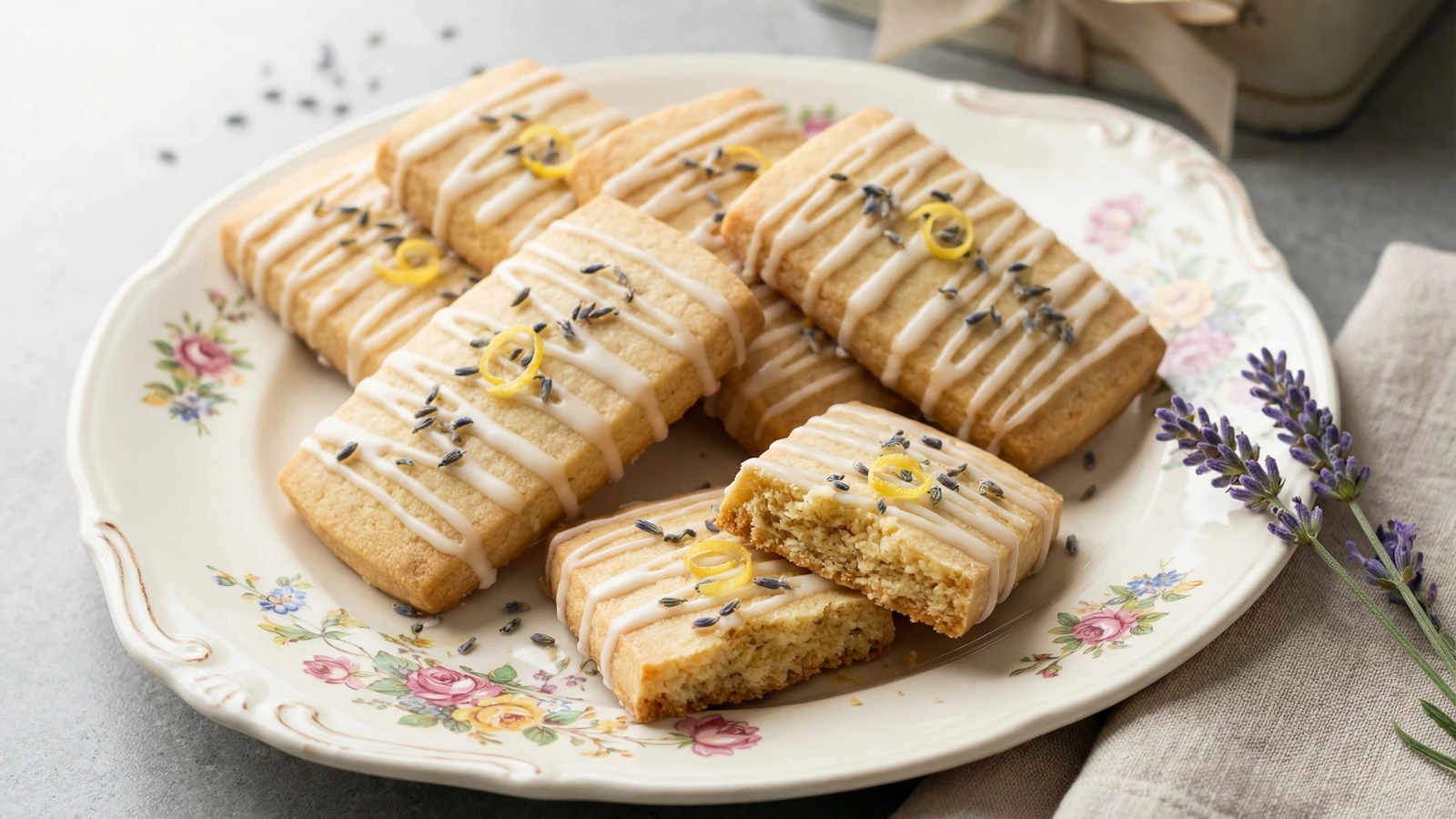
Lavender Honey Shortbread with Lemon Glaze
Created by
Buttery shortbread perfumed with dried lavender and wildflower honey, topped with a tart lemon glaze that cuts through the richness. This is the cookie that makes people ask for your recipe.
Shortbread arrived in America with Scottish immigrants who carried their grandmother's recipes across the Atlantic. They found butter here just as sweet, flour just as fine, and a tradition worth preserving. What they couldn't have imagined was what would happen when their formula met the lavender fields of the Pacific Northwest and the wildflower honey of American apiaries.
This cookie represents that meeting. The base remains faithful to Scottish proportion: one part sugar, two parts butter, three parts flour. No leavening. No eggs. Just the holy trinity of shortbread, worked together until it barely holds. The lavender enters through the sugar, where its oils have time to bloom. The honey replaces a portion of that sugar, adding floral depth and a tender crumb that shatters rather than snaps.
The lemon glaze isn't traditional, but it's necessary. Without it, the lavender can drift toward the soapy end of its spectrum. The acid from fresh lemon juice anchors those floral notes, makes them sing instead of shout. A thin coating, not a thick slather. You want to see the golden shortbread beneath.
I've given these cookies as gifts for twenty years. They travel well, improve over three days, and look elegant arranged in a simple tin lined with parchment. People remember them. That's the highest compliment a cookie can earn.
The technique, the tradition, and the story behind every dish.
Discover Culinary AdvisorIngredients
unsalted butter, cool but pliable
Quantity
226g (1 cup / 2 sticks)
granulated sugar
Quantity
100g (1/2 cup)
wildflower honey
Quantity
2 tablespoons
dried culinary lavender
Quantity
1 tablespoon
fine sea salt
Quantity
1/2 teaspoon
vanilla extract
Quantity
1 teaspoon
all-purpose flour
Quantity
300g (2 1/2 cups)
powdered sugar
Quantity
180g (1 1/2 cups)
sifted
fresh lemon juice
Quantity
3 tablespoons
lemon zest
Quantity
1 teaspoon
finely grated
dried lavender buds (optional)
Quantity
for garnish
| Ingredient | Quantity |
|---|---|
| unsalted butter, cool but pliable | 226g (1 cup / 2 sticks) |
| granulated sugar | 100g (1/2 cup) |
| wildflower honey | 2 tablespoons |
| dried culinary lavender | 1 tablespoon |
| fine sea salt | 1/2 teaspoon |
| vanilla extract | 1 teaspoon |
| all-purpose flour | 300g (2 1/2 cups) |
| powdered sugarsifted | 180g (1 1/2 cups) |
| fresh lemon juice | 3 tablespoons |
| lemon zestfinely grated | 1 teaspoon |
| dried lavender buds (optional) | for garnish |
Equipment Needed
- •Stand mixer or hand mixer
- •Rolling pin
- •Parchment paper
- •Bench scraper or sharp knife
- •Wire cooling rack
- •Small offset spatula or fork for glazing
Instructions
- 1
Infuse the lavender sugar
Combine the granulated sugar and dried lavender in a small bowl or spice grinder. Pulse briefly if using a grinder, or rub together with your fingers for two minutes until the sugar turns slightly purple and smells intensely floral. The friction releases the essential oils trapped in the dried buds. Let this mixture rest for at least 15 minutes, longer if you have time. The sugar will continue absorbing those fragrant oils.
Culinary lavender is essential here. The lavender sold for potpourri or sachets has been treated and tastes bitter. Look for food-grade lavender at spice shops, specialty grocers, or online. Provence and English varieties work equally well. - 2
Cream butter and sugar
Place the butter in the bowl of a stand mixer fitted with the paddle attachment, or use a large bowl with a hand mixer. Add the lavender sugar, honey, salt, and vanilla. Beat on medium speed until the mixture is pale and fluffy, about 3 minutes. Scrape down the sides of the bowl twice during this process. The butter should look almost white, with no visible sugar granules when you rub a bit between your fingers.
Butter temperature matters enormously. Too cold and it won't cream properly. Too warm and your shortbread will spread and lose its tender crumb. Cool but pliable means it yields slightly when pressed but doesn't feel soft or greasy. Around 65°F is ideal. - 3
Add flour gradually
Reduce mixer speed to low. Add the flour in three additions, mixing just until each portion disappears before adding the next. Stop the mixer the moment no dry flour remains visible. The dough will look shaggy and slightly crumbly. This is correct. Overworked shortbread becomes tough and dense rather than tender and crumbly. Turn the dough onto a clean work surface and press it together gently with your hands until it forms a cohesive mass.
- 4
Shape and chill the dough
Divide the dough in half. Roll each portion between two sheets of parchment paper into a rectangle roughly 1/4 inch thick. The parchment prevents sticking without adding extra flour, which would toughen the cookies. Slide the parchment-wrapped rectangles onto a baking sheet and refrigerate for at least 45 minutes, or freeze for 20 minutes. The dough must be thoroughly chilled before cutting. Warm dough produces misshapen cookies with blurred edges.
This is an excellent make-ahead point. The rolled dough keeps refrigerated for up to 3 days or frozen for 2 months. Bake directly from frozen, adding 2 to 3 minutes to the baking time. - 5
Cut the shortbread
Position racks in the upper and lower thirds of your oven. Preheat to 325°F. Line two baking sheets with parchment paper. Remove one dough rectangle from the refrigerator. Peel away the top parchment. Using a sharp knife or bench scraper, cut into rectangles approximately 1 by 3 inches. A ruler helps here if precision matters to you. Transfer cookies to prepared baking sheets, spacing them 1 inch apart. These cookies spread minimally, but they need room for air circulation. Dock each cookie twice with a fork, pressing straight down through to the parchment. Repeat with remaining dough.
- 6
Bake until golden
Bake for 16 to 18 minutes, rotating the pans from top to bottom and front to back at the halfway point. Watch carefully during the final few minutes. The cookies are done when the edges turn golden and the centers look set but still pale. They will firm as they cool. Remove from oven and let cookies rest on the baking sheets for 5 minutes before transferring to a wire rack to cool completely. The shortbread needs to be fully cooled before glazing, at least 30 minutes.
- 7
Make the lemon glaze
Sift the powdered sugar into a medium bowl to remove any lumps. Add the lemon juice and zest. Whisk until completely smooth. The glaze should be thick enough to coat but thin enough to drip slowly from a spoon. If too thick, add lemon juice half a teaspoon at a time. If too thin, add more powdered sugar by the tablespoon. Taste it. The glaze should be assertively tart, almost puckering. This acidity is what makes the lavender shine.
- 8
Glaze and garnish
Arrange cooled cookies on the wire rack set over a baking sheet to catch drips. Dip a fork into the glaze and drizzle across each cookie in thin, irregular lines. Or spread a thin layer across the top of each cookie using a small offset spatula. Before the glaze sets, sprinkle a few lavender buds onto each cookie. Work in batches of six or so, as the glaze begins to set within 3 minutes. Let cookies sit undisturbed until the glaze is completely firm, about 20 minutes.
Chef Tips
- •The quality of your butter determines the quality of your shortbread. Use the best you can find. European-style butters with higher fat content produce an exceptionally tender cookie.
- •Measure flour by weight if possible. The difference between a properly measured cup and a packed one can be 30 grams, enough to throw off the delicate ratio that makes shortbread work.
- •These cookies actually taste better on day two or three, once the lavender has had time to mellow and the glaze has softened slightly against the shortbread. Plan accordingly for gifting.
- •If the lavender flavor seems too faint after baking, you can add 1/8 teaspoon of food-grade lavender extract to the glaze. Use a light hand. Lavender extract is potent.
- •For a variation, substitute orange juice and zest for the lemon. The orange-lavender combination recalls Provençal kitchens.
Advance Preparation
- •Lavender sugar can be prepared up to 2 weeks ahead. Store in an airtight container at room temperature. The flavor deepens with time.
- •Rolled dough keeps refrigerated for 3 days or frozen for 2 months. Bake directly from frozen, adding 2 to 3 minutes to baking time.
- •Unglazed shortbread stores in an airtight container at room temperature for 1 week or frozen for 2 months.
- •Glazed cookies keep at room temperature in a single layer (or separated by parchment) for up to 5 days. Do not freeze after glazing, as the glaze becomes tacky when thawed.
Frequently Asked Questions
Nutrition Information
1 cookie (about 23g)
Where cooking meets culture.
Culinary mentorship, cultural storytelling, and the editorial depth that makes cooking meaningful.
Explore Culinary Advisor