Culinary Advisor
A cooking platform built around craft, culture, and the stories behind what we eat.
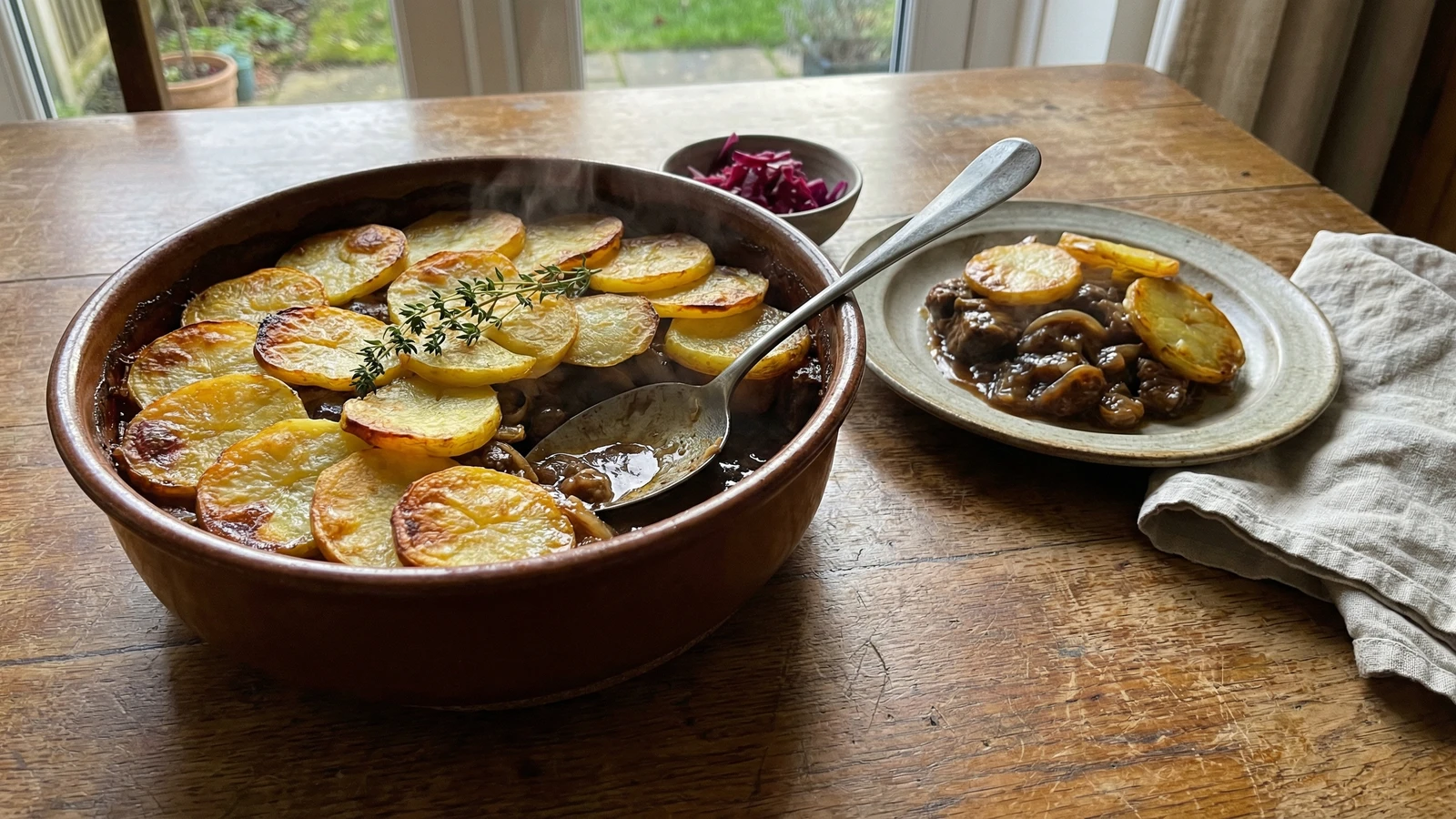
Lancashire Hotpot
Created by Chef Thomas
Lamb neck and onions layered beneath a lid of sliced potatoes, baked low and slow until the kitchen smells like the kind of evening you want to stay in for. A proper Northern supper.
January. The kind of evening where the light goes at four and the kitchen is the only warm room in the house. This is when a hotpot makes sense. Not because you planned it, but because you looked at what was there: lamb from the butcher, potatoes, onions, the last of the thyme from the garden. Those things wanted to become this.
Lancashire hotpot is not a recipe that tries to impress. It's lamb and onions, layered in a deep dish, topped with sliced potatoes, and left in a low oven until the lid turns golden and the juices soak upward through the layers. The kitchen fills with a smell that belongs to no other dish: rendered lamb fat, sweet onions, something savoury and deep that makes you check the oven every twenty minutes even though you know nothing needs doing. I wrote it down in the notebook years ago: "Hotpot. Tuesday. Rain. Enough." I still think that covers it.
The potatoes are the thing. Sliced thinly, overlapping like roof tiles, brushed with butter so they crisp and catch in the heat while the lamb beneath gives itself up to the stock. You need patience for this. A couple of hours, at least. But the real work is all at the beginning: the slicing, the layering, the quiet assembly of something that will look after itself. Once it's in the oven, you're free. Read something. Pour a glass of something. Trust your nose. It knows before you do.
The technique, the tradition, and the story behind every dish.
Discover Culinary AdvisorIngredients
lamb neck chops
Quantity
8 (about 1kg)
onions
Quantity
3 medium
sliced into rings
potatoes (Maris Piper or King Edward)
Quantity
750g
peeled and sliced 3mm thick
lamb or chicken stock
Quantity
500ml
warm
unsalted butter
Quantity
30g
melted
fresh thyme
Quantity
a few sprigs
bay leaves
Quantity
2
fine sea salt
Quantity
to taste
black pepper
Quantity
to taste
lamb kidneys (optional)
Quantity
2
halved and cored
| Ingredient | Quantity |
|---|---|
| lamb neck chops | 8 (about 1kg) |
| onionssliced into rings | 3 medium |
| potatoes (Maris Piper or King Edward)peeled and sliced 3mm thick | 750g |
| lamb or chicken stockwarm | 500ml |
| unsalted buttermelted | 30g |
| fresh thyme | a few sprigs |
| bay leaves | 2 |
| fine sea salt | to taste |
| black pepper | to taste |
| lamb kidneys (optional)halved and cored | 2 |
Equipment Needed
- •Deep oven-proof dish or casserole (about 2-litre capacity)
- •Mandoline or sharp knife for slicing potatoes
- •Large frying pan (if browning the lamb)
- •Pastry brush for buttering the potatoes
Instructions
- 1
Season the lamb
Season the neck chops generously with salt and pepper on both sides. If you have the time and the inclination, brown them in a hot pan with a little oil until they take on some colour. This isn't essential, but it adds a deeper, more savoury note to the stock as it cooks. If you're using kidneys, tuck them among the chops. Set everything aside while you prepare the rest.
Ask your butcher for middle neck chops, cut about 2cm thick. The bone and the fat are what make a hotpot taste like a hotpot. Don't trim the fat. It renders down during the long bake and enriches everything it touches. - 2
Build the layers
Set the oven to 160C/140C fan. In a deep, oven-proof dish or casserole, lay half the sliced onions across the bottom. Tuck the thyme sprigs and bay leaves in among them. Arrange the lamb chops (and kidneys, if using) in a single layer on top, then cover with the remaining onions. Pour in the warm stock. It should come about two-thirds of the way up the meat, not cover it completely.
A proper hotpot dish is tall and round, but any deep oven-proof casserole will do the job. What matters is that it's deep enough for the layers and wide enough for a good lid of potatoes on top. - 3
Arrange the potato lid
Layer the potato slices over the top, overlapping them like roof tiles in neat, concentric circles. Start from the outside and work inward. The slices should cover the surface completely with no gaps. Brush generously with the melted butter and season with a pinch of salt. This is the lid. It will protect the lamb while it braises and reward you with something golden and crisp when it's done.
- 4
Bake low and slow
Cover the dish tightly with a lid or a double layer of foil and put it in the oven for two hours. Don't open it. Don't check. The lamb needs this time to soften and surrender its flavour to the onions and the stock, and the potatoes need the trapped steam to cook through. After two hours, the kitchen will smell like something worth coming home to: rendered lamb fat, sweet onions, thyme, and something savoury and deep that belongs to no other dish.
A low, steady oven is the whole secret here. If yours runs hot, drop it by ten degrees. You want a gentle simmer inside the dish, not a rolling boil. The lamb should be yielding and soft, not dried out and tough. - 5
Crisp and serve
Remove the lid and turn the oven up to 200C/180C fan. Brush the potatoes with a little more butter if they look dry. Bake uncovered for another twenty to thirty minutes, until the potato lid has gone properly golden and crisp at the edges, with patches of deeper colour where they've caught the heat. The stock will have reduced and thickened beneath into something glossy and rich. Bring it to the table in the dish it was cooked in. A big spoon. Warm plates. There are few better feelings than putting this down in front of someone on a cold evening.
Chef Tips
- •Get proper lamb neck chops from a butcher. Supermarket lamb leg steaks won't do here. The neck has bone and fat and connective tissue that breaks down over the long bake into something rich and giving. This is not a dish for lean meat. The bone adds flavour to the stock, and the fat bastes the potatoes from below. We're only making dinner, but it helps to start with the right piece of lamb.
- •Slice the potatoes as thinly and evenly as you can manage. A mandoline makes this easier, but a sharp knife and a bit of patience will get you there. Uneven slices mean uneven cooking: some will crisp while others stay pale and soft. You want the whole lid golden, every tile doing its part.
- •Don't skip the final uncovered bake. The first two hours cook the hotpot. The last thirty minutes make it. That potato lid going from pale and steamed to golden and crisp is the difference between something good and something you'll want to make again next week.
- •Pickled red cabbage on the side. I won't say this is compulsory, but the sharp, vinegary sweetness cuts through the richness of the lamb in a way that makes the whole plate make sense. Some partnerships are too good to argue with.
Advance Preparation
- •The hotpot can be assembled up to a day ahead, covered, and refrigerated before baking. Add an extra fifteen minutes to the covered baking time if starting from cold.
- •Leftovers reheat well the next day in a moderate oven, loosely covered with foil. The potatoes soften slightly but the flavour deepens. I sometimes think the second day is better, though I'd never say so in Lancashire.
Frequently Asked Questions
Nutrition Information
1 serving (about 500g)
Where cooking meets culture.
Culinary mentorship, cultural storytelling, and the editorial depth that makes cooking meaningful.
Explore Culinary Advisor