Culinary Advisor
A cooking platform built around craft, culture, and the stories behind what we eat.
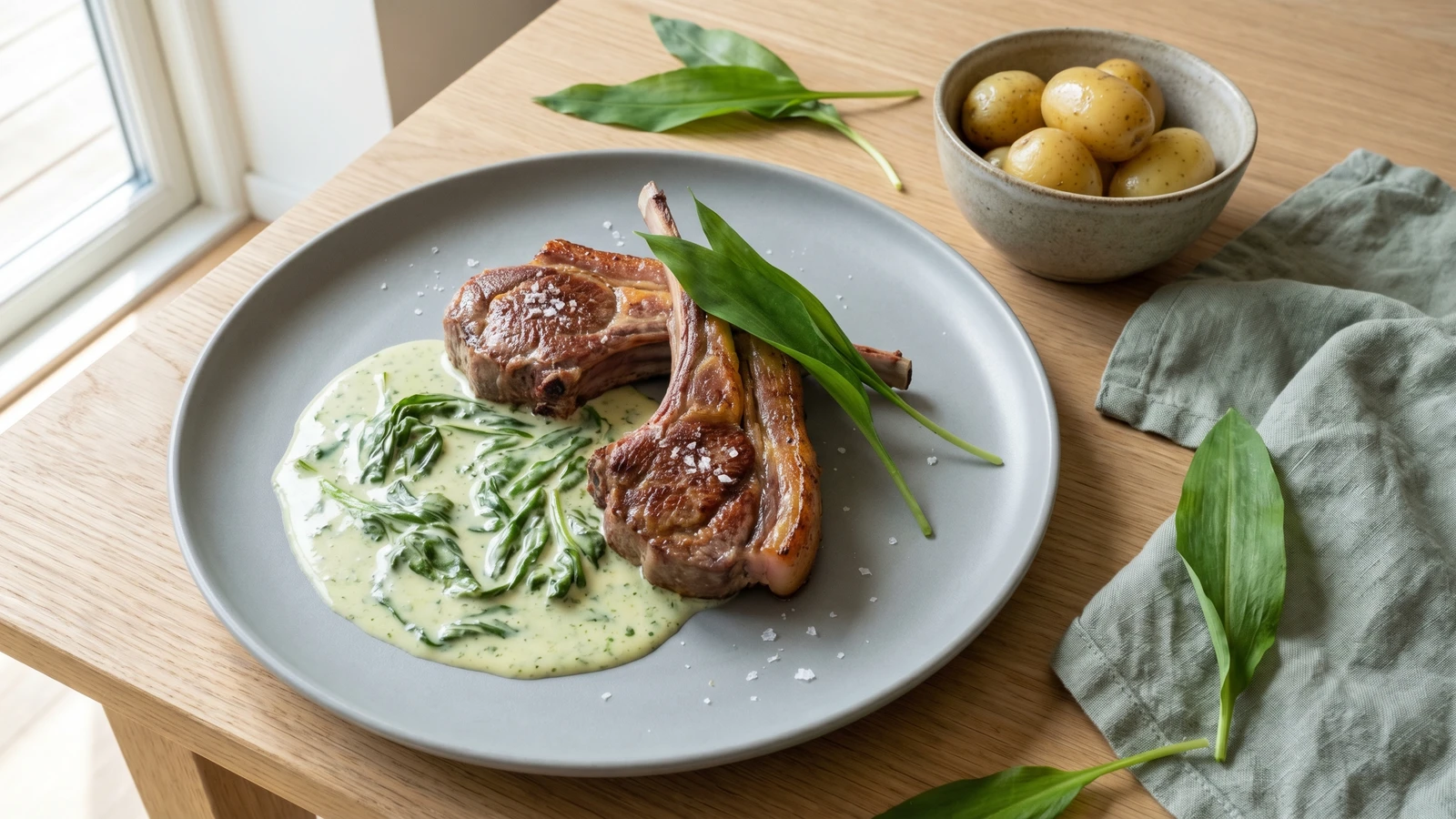
Lammekoteletter med Ramslog
Created by Chef Freja Lund
Lamb chops seared in butter and finished with a cream sauce of spring ramslog, the dish that arrives with April and the first green smell of the Danish forest floor.
April in Denmark has a smell. Not the cold mineral air of March, something green and alive rising from the forest floor where the beech trees are just starting to open. That smell is ramslog: wild garlic, broad soft leaves that carpet the ground under the trees and fill the air with a clean, sharp sweetness that lasts only a few weeks before it's gone.
This is when you make lammekoteletter med ramslog. The lamb is spring lamb, pink and tender and worth seeking out. The ramslog comes from the woods, or if you're lucky, from a good market stall that somebody filled that morning. You sear the chops in butter until the outside goes deep gold, rest them while you build a fast cream sauce in the same pan, and finish with handfuls of ramslog that wilt in seconds and turn the sauce a pale, living green.
What matters most here is the lamb itself. Don't overcook it. I'll walk you through how to read the chop by touch and by sight so you know when to pull it from the heat. Once you've done it, you'll trust your hands. And that trust is worth more than any timer. The season decides when you make this dish. Your confidence decides how well.
Lamb has grazed the Danish islands and the salt marshes of southern Jutland for over a thousand years, and the tradition of slaughtering spring lamb when the first grass came through marked the end of the long winter stores. Ramslog, which carpets the floors of Danish beech forests from April to May, has been gathered as a wild food since at least the medieval period, valued both as nourishment and as folk medicine. The pairing of the two is older than any written recipe: spring lamb and the first wild garlic of the year appearing together because the calendar put them in the same weeks, a coincidence that became a tradition that became a dish worth keeping.
The technique, the tradition, and the story behind every dish.
Discover Culinary AdvisorIngredients
lamb rib chops
Quantity
8, about 2cm thick
fine sea salt
Quantity
to taste
black pepper
Quantity
freshly ground, to taste
neutral oil
Quantity
1 tablespoon
unsalted butter
Quantity
40g
shallot
Quantity
1
finely sliced
dry white wine
Quantity
100ml
double cream
Quantity
150ml
ramslog (wild garlic leaves)
Quantity
150g
washed and dried
lemon juice
Quantity
a squeeze
new potatoes
Quantity
500g
| Ingredient | Quantity |
|---|---|
| lamb rib chops | 8, about 2cm thick |
| fine sea salt | to taste |
| black pepper | freshly ground, to taste |
| neutral oil | 1 tablespoon |
| unsalted butter | 40g |
| shallotfinely sliced | 1 |
| dry white wine | 100ml |
| double cream | 150ml |
| ramslog (wild garlic leaves)washed and dried | 150g |
| lemon juice | a squeeze |
| new potatoes | 500g |
Equipment Needed
- •Heavy frying pan or cast-iron skillet, large enough for 4 chops
- •Tongs
- •Medium saucepan for the potatoes
Instructions
- 1
Prepare everything
Scrub the new potatoes and drop them into well-salted boiling water. They'll need about fifteen minutes, depending on their size. While they cook, wash the ramslog thoroughly in cold water, shake it dry, and separate the leaves from the stems. Chop most of the leaves roughly, but set aside a handful of the smallest, most vivid ones for the end. They'll go on top of the finished dish as a raw, bright counterpoint to the cooked sauce. Season the lamb chops generously on both sides with salt and pepper. Let them sit at room temperature while you work. Cold meat in a hot pan drops the temperature, and the chops stew instead of searing.
Ramslog grows in the soil. Wash it in two or three changes of cold water and check the folds of the leaves for grit. Nothing ruins a silky sauce faster than sand between your teeth. - 2
Sear the lamb chops
Heat a heavy pan over high heat until it's properly hot, then add the oil and half the butter. When the butter foams and the foam begins to subside, lay the chops in without crowding. Work in two batches if you need to. Sear for three minutes on the first side without moving them. The crust forms through contact and patience, not by fussing. If you lift the chop and it sticks, it isn't ready. When it releases on its own, the crust is set. Flip and cook for two minutes more for a pink center, three if you prefer medium. Press the thickest part of a chop with your finger: soft and yielding means rare, gentle springy resistance means medium. You'll know when it's right. Transfer the chops to a warm plate and cover loosely. Five minutes of rest is not optional. The juices redistribute. Skip this and they run out onto the plate.
If the pan starts to smoke before the butter goes in, pull it off the heat for ten seconds. You want high heat, but scorched butter tastes bitter and coats the lamb in the wrong flavor. - 3
Build the ramslog sauce
Turn the heat down to medium. The pan will be dark with fond, the caramelized bits stuck to the surface. That is concentrated flavor. Add the remaining butter and the sliced shallot, stirring for a minute until it softens and turns translucent. Pour in the white wine and let it bubble, scraping the fond from the bottom of the pan with a wooden spoon. When the wine has reduced by half and the sharp alcohol smell has gone, add the cream. Let the sauce simmer for two minutes until it thickens enough to coat the back of a spoon. Now add the chopped ramslog. Stir it through. It will wilt in seconds and turn the sauce a pale, beautiful green. Squeeze in a little lemon juice, taste, and adjust the salt. The lemon doesn't make the sauce citrusy. It lifts everything and brings the ramslog into focus.
Don't cook the ramslog for more than thirty seconds in the hot cream. It should wilt and soften, not stew. Overcooked wild garlic turns grey and loses the bright, clean flavor that makes the dish sing. - 4
Plate and serve
Drain the potatoes and toss them with a small knob of butter and a pinch of flaky salt. Arrange the rested lamb chops on warm plates, pouring any resting juices into the sauce and stirring once. Spoon the ramslog cream sauce generously alongside the chops, letting it pool against the meat rather than covering it. Lay the reserved fresh ramslog leaves over the top so their color hits you first. Serve with the buttered potatoes and nothing else. This dish doesn't need complexity. It needs April, good lamb, and a handful of leaves from the forest floor. Tak for mad.
Chef Tips
- •Rest the chops. I know I said it already, but it matters. Five minutes under a loose covering on a warm plate, and the difference between juicy lamb and dry lamb is decided in that pause. Every drop that stays in the meat is a drop that doesn't end up on your plate.
- •If you can't find ramslog, don't substitute regular garlic and call it the same dish. Ramslog has a green, vegetal sweetness that dried cloves can't replicate. The closest alternative is a handful of baby spinach wilted with one small garlic clove, but honestly, this dish belongs to the weeks when ramslog is available. The season decides.
- •Use a wine you'd drink. The sauce concentrates whatever you put in it. A thin, sour wine makes a thin, sour sauce. Something dry and clean gives the sauce backbone without competing with the lamb.
Advance Preparation
- •Bring the lamb chops to room temperature thirty minutes before cooking. This is the single most important preparation step. Cold meat drops the pan temperature and steams instead of searing.
- •Ramslog can be washed, dried, and stored wrapped in a damp cloth in the fridge for up to two days. It wilts quickly once picked, so use it soon. If you forage it yourself, take only what you need and leave the roots for next year.
Frequently Asked Questions
Nutrition Information
1 serving (about 300g)
Where cooking meets culture.
Culinary mentorship, cultural storytelling, and the editorial depth that makes cooking meaningful.
Explore Culinary Advisor