Culinary Advisor
A cooking platform built around craft, culture, and the stories behind what we eat.
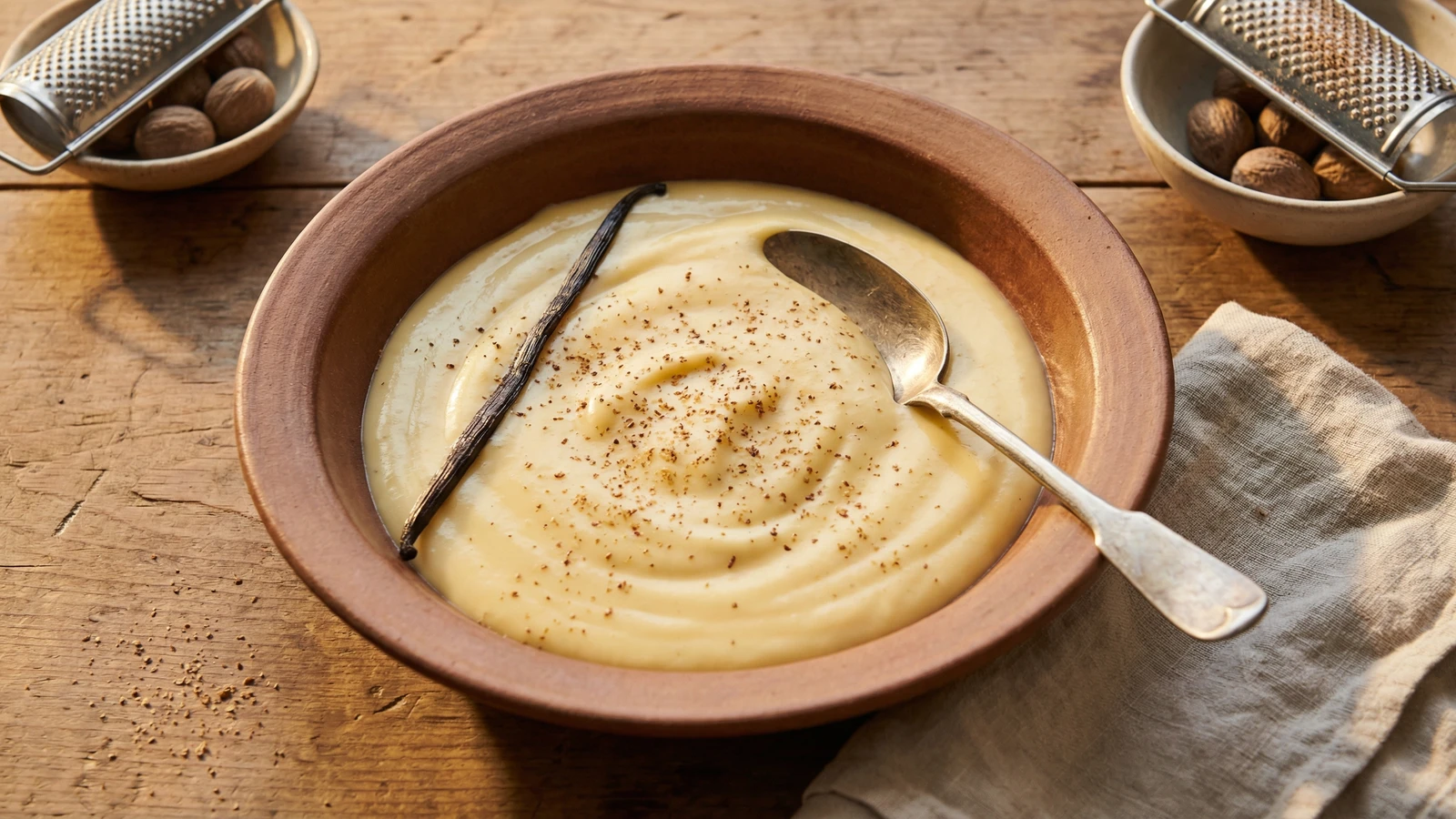
La Bouille (Cajun Vanilla Custard)
Created by Chef Remy
A velvety spoonful of Louisiana heritage: rich egg custard perfumed with real vanilla, the kind of simple dessert that closes a meal the way your grandmother intended.
Some desserts demand attention. La Bouille asks for nothing but a quiet moment and a spoon. This is the custard that Louisiana grandmothers have been stirring on stovetops for generations, a dish so humble it rarely appears on restaurant menus but shows up at every family gathering worth attending.
My grandmother Evangeline made this every Sunday after church. She'd stand at her stove, wooden spoon in hand, stirring that custard until it coated the back of the spoon just right. Never rushed it. Never walked away. She said you could taste impatience in a custard, and she was right. The eggs need gentle heat and constant attention. That's the whole secret.
At Lagniappe, we serve La Bouille when the weather turns cool, spooned warm into little cups with a whisper of nutmeg on top. Folks who grew up eating this get misty-eyed. Folks who never had it wonder why nobody told them about it sooner. The texture should be somewhere between silk and velvet, rich enough to satisfy but light enough that you'll want another serving. Real vanilla makes all the difference here. None of that imitation nonsense.
The technique, the tradition, and the story behind every dish.
Discover Culinary AdvisorIngredients
whole milk
Quantity
4 cups
granulated sugar
Quantity
1 cup
large egg yolks
Quantity
4
large whole eggs
Quantity
2
all-purpose flour
Quantity
1/3 cup
fine sea salt
Quantity
1/4 teaspoon
unsalted butter
Quantity
3 tablespoons
pure vanilla extract
Quantity
2 teaspoons
freshly grated nutmeg (optional)
Quantity
for serving
| Ingredient | Quantity |
|---|---|
| whole milk | 4 cups |
| granulated sugar | 1 cup |
| large egg yolks | 4 |
| large whole eggs | 2 |
| all-purpose flour | 1/3 cup |
| fine sea salt | 1/4 teaspoon |
| unsalted butter | 3 tablespoons |
| pure vanilla extract | 2 teaspoons |
| freshly grated nutmeg (optional) | for serving |
Equipment Needed
- •Heavy-bottomed 3-quart saucepan
- •Wooden spoon or silicone spatula
- •Large mixing bowl
- •Whisk
- •Ladle
- •Fine-mesh strainer (optional, for insurance)
Instructions
- 1
Warm the milk
Pour the milk into a heavy-bottomed saucepan and set it over medium heat. You want it steaming and just starting to form tiny bubbles around the edges, not boiling. This takes about five minutes. Watch it close because milk likes to boil over when you're not looking.
A heavy pot distributes heat evenly and prevents scorching. Thin pots create hot spots that'll ruin your custard before it starts. - 2
Build the egg mixture
While the milk heats, whisk together the sugar, egg yolks, whole eggs, flour, and salt in a large bowl. Whisk until completely smooth with no lumps of flour hiding anywhere. The mixture will be thick and pale yellow. This is your custard base, and it needs to be silky before it meets the hot milk.
- 3
Temper the eggs
Here's where patience matters. Ladle about half a cup of the hot milk into your egg mixture while whisking constantly. Keep whisking and add another half cup. Then another. You're warming the eggs gradually so they don't scramble. Rush this step and you'll have sweet scrambled eggs instead of custard. Nobody wants that.
The whisking never stops during tempering. One hand ladles, one hand whisks. Find your rhythm. - 4
Combine and cook
Pour the tempered egg mixture back into the saucepan with the remaining milk. Set it over medium-low heat. Now the real work begins. Stir constantly with a wooden spoon or silicone spatula, making sure to scrape the bottom and corners where custard likes to stick and scorch.
- 5
Watch for the thickening
Keep stirring for ten to fifteen minutes. The custard will seem thin and hopeless for a while, then suddenly it starts to thicken. You'll feel it in the resistance against your spoon. When it coats the back of the spoon and a line drawn through it holds its shape, you're there. The temperature should read 170 to 175 degrees if you have a thermometer, but your eyes and hands will tell you just as well.
If you see any lumps forming, immediately remove from heat and whisk vigorously. A fine-mesh strainer can save a slightly curdled custard. - 6
Finish with butter and vanilla
Pull the pot off the heat the moment the custard thickens properly. Stir in the butter, one tablespoon at a time, until it melts into that silky base. Then add the vanilla extract. Give it a good stir. The butter adds richness, the vanilla adds soul. Taste it now. This is when you'll understand why Louisiana grandmothers kept making this dish.
- 7
Serve warm or chilled
Spoon the custard into serving bowls or cups. Grate fresh nutmeg over the top if you like. La Bouille is beautiful served warm, straight from the pot, but it's also wonderful chilled. If serving cold, press plastic wrap directly onto the surface to prevent a skin from forming, then refrigerate for at least two hours.
Chef Tips
- •Use whole milk, not skim or low-fat. The fat carries flavor and creates that luxurious texture. This is not the place to cut corners.
- •Real vanilla extract costs more but earns its keep. The imitation stuff tastes thin and chemical. If you can find a whole vanilla bean, split it and scrape the seeds into the milk while it heats. That's the bayou way.
- •La Bouille keeps refrigerated for three days. It thickens as it chills, so stir in a splash of cold milk before serving if you want to loosen it up.
- •For a Louisiana twist, add a tablespoon of bourbon or dark rum with the vanilla. My grandmother would've raised an eyebrow, but she'd have taken seconds.
Advance Preparation
- •Custard can be made up to three days ahead and stored covered in the refrigerator. It will thicken considerably when cold.
- •To serve cold custard warm, gently reheat in a saucepan over low heat, stirring constantly. Add a splash of milk if it's too thick.
Frequently Asked Questions
Nutrition Information
1 serving (about 220g)
Where cooking meets culture.
Culinary mentorship, cultural storytelling, and the editorial depth that makes cooking meaningful.
Explore Culinary Advisor