Culinary Advisor
A cooking platform built around craft, culture, and the stories behind what we eat.
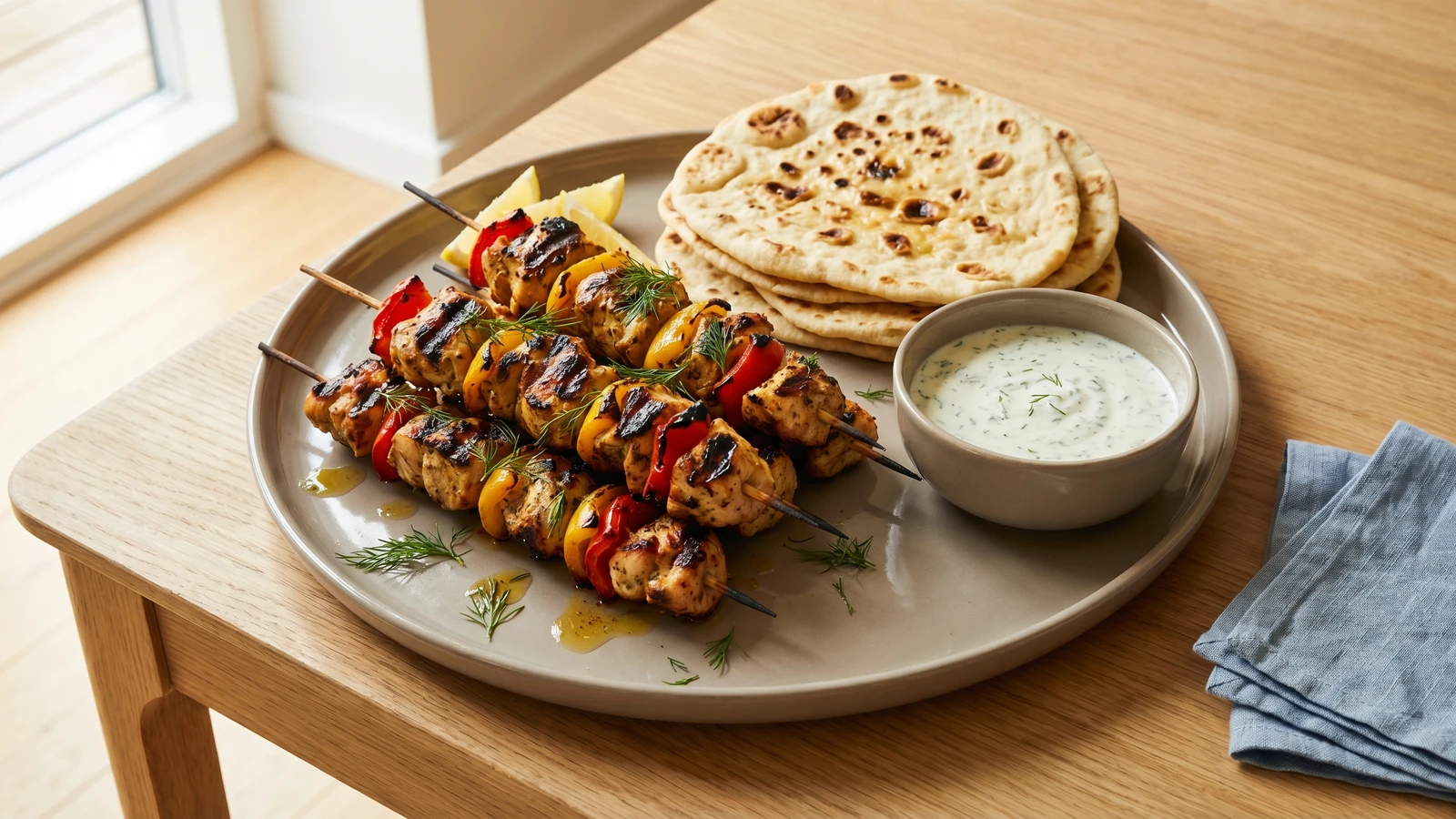
Kyllingespyd med Peberfrugter
Created by Chef Freja Lund
Grilled chicken skewers with sweet peppers and red onion, served on warm flatbread with a cold dill yogurt sauce. The weeknight dinner that belongs to long Danish summer evenings and the smell of charcoal in every garden.
June in Copenhagen, the light doesn't leave. At nine in the evening the sky is still pale gold and the air smells like charcoal and cut grass from every garden and balcony in the city. This is when the grill comes out, and this is what goes on it.
Kyllingespyd med peberfrugter is the weeknight grill dinner that carries the whole Danish summer. Chicken thighs marinated in lemon and garlic, threaded onto skewers with chunks of sweet pepper and red onion, grilled until the edges char and the meat stays juicy inside. You serve them on warm flatbread with a cold yogurt sauce scattered with dill, and the whole thing takes less than an hour from cutting board to table. It's the kind of meal where everyone stands around the grill, talks too much, and eats with their hands. That's the point.
Two things matter here. First, use thigh meat, not breast. Thighs have fat running through them, and that fat is what keeps the chicken tender on a hot grill where breast would tighten and dry out before the peppers even soften. Second, don't crowd the skewers. Leave a little space between each piece so the heat reaches every surface. You want char marks and color, not steamed chicken trapped against itself. Get those two things right and everything else follows. You'll know when it's right.
Outdoor grilling became a fixture of Danish summer life in the 1960s and 1970s, when the kugelgrill arrived in Danish gardens alongside a broader Scandinavian culture of outdoor leisure and the long light evenings that invite you to eat outside. The chicken skewer itself owes much to the kebab traditions brought to Denmark by Turkish and Pakistani communities from the 1970s onward, a contribution that has become so deeply woven into Danish everyday cooking that kyllingespyd now sits naturally alongside frikadeller and flæskesteg at any summer gathering. The yogurt sauce served alongside reflects the same exchange, adapted with Danish dill in place of mint.
The technique, the tradition, and the story behind every dish.
Discover Culinary AdvisorIngredients
boneless, skinless chicken thighs
Quantity
600g
cut into 3cm pieces
red bell pepper
Quantity
1
cut into 3cm chunks
yellow bell pepper
Quantity
1
cut into 3cm chunks
red onion
Quantity
1 large
cut into thick wedges
olive oil
Quantity
3 tablespoons
lemon
Quantity
1
juiced
garlic (for marinade)
Quantity
2 cloves
finely grated
sweet paprika
Quantity
1 teaspoon
fine sea salt
Quantity
1 teaspoon
black pepper
Quantity
freshly ground, to taste
thick natural yogurt (for sauce)
Quantity
200g
cucumber
Quantity
half
seeds removed, coarsely grated
fresh dill
Quantity
small bunch, plus extra fronds to serve
finely chopped
lemon juice (for sauce)
Quantity
1 tablespoon
garlic (for sauce)
Quantity
1 small clove
finely grated
plain flour
Quantity
250g
natural yogurt (for flatbread)
Quantity
150g
baking powder
Quantity
1 teaspoon
fine sea salt (for flatbread)
Quantity
half a teaspoon
butter (for cooking flatbread)
Quantity
for cooking
lemon wedges (optional)
Quantity
to serve
| Ingredient | Quantity |
|---|---|
| boneless, skinless chicken thighscut into 3cm pieces | 600g |
| red bell peppercut into 3cm chunks | 1 |
| yellow bell peppercut into 3cm chunks | 1 |
| red onioncut into thick wedges | 1 large |
| olive oil | 3 tablespoons |
| lemonjuiced | 1 |
| garlic (for marinade)finely grated | 2 cloves |
| sweet paprika | 1 teaspoon |
| fine sea salt | 1 teaspoon |
| black pepper | freshly ground, to taste |
| thick natural yogurt (for sauce) | 200g |
| cucumberseeds removed, coarsely grated | half |
| fresh dillfinely chopped | small bunch, plus extra fronds to serve |
| lemon juice (for sauce) | 1 tablespoon |
| garlic (for sauce)finely grated | 1 small clove |
| plain flour | 250g |
| natural yogurt (for flatbread) | 150g |
| baking powder | 1 teaspoon |
| fine sea salt (for flatbread) | half a teaspoon |
| butter (for cooking flatbread) | for cooking |
| lemon wedges (optional) | to serve |
Equipment Needed
- •8 metal or wooden skewers (soak wooden skewers for 30 minutes)
- •Outdoor grill or cast-iron grill pan
- •Heavy frying pan for the flatbread
- •Rolling pin
- •Box grater for the cucumber
Instructions
- 1
Marinate the chicken
Put the chicken pieces in a bowl with the olive oil, lemon juice, grated garlic, paprika, salt, and a good grind of black pepper. Mix everything together with your hands until every piece is coated. Cover and set aside for at least thirty minutes, or up to four hours in the fridge. The lemon juice and yogurt in the marinade begin breaking down the surface of the meat, and that's what gives you tenderness on a hot grill. Breast meat can't do this. It dries out before the peppers have even softened. Thighs have fat running through them, and that fat is your insurance.
Four hours is better than thirty minutes. If you can marinate in the morning before work and grill in the evening, do it. The flavor gets deeper and the texture gets softer. - 2
Make the yogurt sauce
Grate the cucumber on the coarse side of a box grater. Squeeze the grated cucumber firmly in your fist over the sink to get rid of the water. This matters: watery cucumber makes a thin, sad sauce. Put the squeezed cucumber in a bowl with the thick yogurt, the finely chopped dill, the lemon juice, the grated garlic, and a good pinch of salt. Stir it together and taste. It should be cool, sharp, and green with dill. Adjust the salt or lemon until it tastes bright. Set it in the fridge until you're ready to serve.
Squeeze the cucumber until almost nothing comes out. The difference between a sauce that clings to the chicken and one that pools on the plate is the water you removed. - 3
Make the flatbread dough
Mix the flour, baking powder, and salt in a bowl. Add the yogurt and stir until a rough dough forms. Tip it onto a lightly floured surface and knead for two minutes, just until smooth. The dough should be soft and pliable, not sticky. Divide it into four equal balls and cover with a clean cloth while you prepare the skewers. The yogurt makes this dough tender without yeast, and it cooks in minutes. No rising, no waiting.
- 4
Thread the skewers
Thread the marinated chicken onto skewers, alternating with chunks of pepper and wedges of red onion. Leave a small gap between each piece. This is important: if you pack them tight, the surfaces touching each other steam instead of grilling, and you lose the char that makes this dish work. You want each piece to face the heat directly. Eight skewers from this amount of chicken is about right, four pieces of meat on each with peppers and onion between.
If you're using wooden skewers, soak them in water for thirty minutes first. Dry wood catches fire on the grill and the skewer snaps when you try to turn it. Metal skewers are simpler and last forever. - 5
Grill the skewers
Get your grill hot. If you're using charcoal, wait until the coals are covered with white ash and you can hold your hand over them for no more than three seconds. That's the right heat. If you're using a grill pan indoors, set it over the highest heat and let it get properly hot before anything goes on. Oil the grill bars or pan lightly. Lay the skewers down and leave them alone for three to four minutes. Don't move them. The char forms because the meat sits still against the hot metal. Turn them and grill for another three to four minutes. The chicken is done when the juices run clear and the peppers have softened and taken on dark grill marks at the edges. The onion wedges should be tender but still holding their shape.
Resist turning the skewers more than once or twice. Every time you move them you interrupt the sear. Two good turns give you char on three sides, and that's enough. - 6
Cook the flatbread
While the skewers grill (or just before), roll each dough ball out on a lightly floured surface into a rough circle about 20cm across. Don't worry about perfect shapes. These are meant to look handmade. Heat a heavy frying pan over high heat and melt a small knob of butter in it. Lay a flatbread in the pan and cook for about ninety seconds on each side. You'll see bubbles forming on the surface and the underside will have golden brown spots. That's what you want. Stack the cooked flatbreads under a clean cloth to keep them warm and soft while you finish the rest.
- 7
Serve at the table
Pile the skewers on a warm platter. Set the yogurt sauce and the flatbreads alongside, with lemon wedges and a few extra dill fronds scattered over everything. Let people pull the chicken and vegetables off the skewers themselves, wrap them in flatbread, and spoon on the cold sauce. This is summer faellesspisning, the shared meal, and it works best when everyone builds their own. Tak for mad.
Chef Tips
- •Use chicken thighs, always. I cannot say this strongly enough. Breast meat on a skewer over high heat dries out and turns chalky. Thighs stay juicy because of the fat that runs through them, and they take on the marinade better. This is not a shortcut. It is the right choice.
- •The peppers should be sweet and heavy in the hand. Red and yellow are best for the grill because they have the most sugar and caramelize instead of just charring. Green peppers stay bitter under heat and fight the lemon in the marinade.
- •Make the yogurt sauce first and let it sit in the fridge while you grill. Cold sauce against hot chicken is the contrast that makes the whole plate work. If the sauce is room temperature, you've lost half the pleasure.
- •If you don't have an outdoor grill, a cast-iron grill pan on the highest heat your stove can give you does the job. Open the windows. The smoke is part of the experience.
Advance Preparation
- •The chicken can marinate in the fridge for up to four hours. Longer than that and the lemon juice starts to change the texture of the meat, making it mealy instead of tender.
- •The yogurt sauce keeps well in the fridge for two days. The flavor actually deepens overnight as the dill steeps into the yogurt.
- •The flatbread dough can be made and portioned an hour ahead. Keep the balls covered with a damp cloth so they don't dry out.
- •Thread the skewers up to an hour before grilling and keep them covered in the fridge. Bring them to room temperature for ten minutes before they hit the grill, so the meat cooks evenly.
Frequently Asked Questions
Nutrition Information
1 serving (about 410g)
Where cooking meets culture.
Culinary mentorship, cultural storytelling, and the editorial depth that makes cooking meaningful.
Explore Culinary Advisor