Culinary Advisor
A cooking platform built around craft, culture, and the stories behind what we eat.
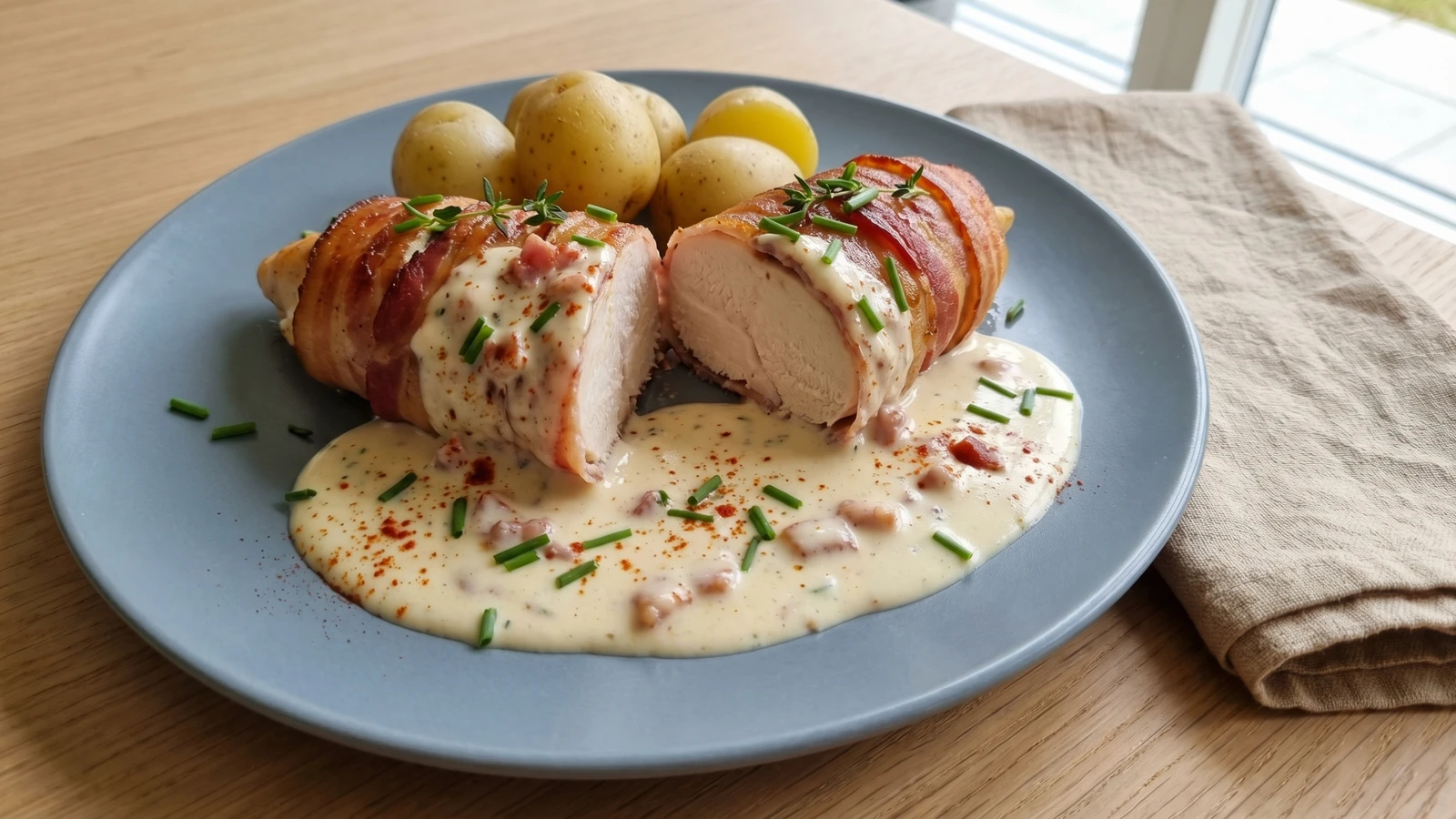
Kyllingefileter i Bacon med Fløde
Created by Chef Freja Lund
Chicken wrapped in bacon, seared golden, then baked in cream until the sauce thickens and the kitchen fills with something savory and good. A Danish weeknight dinner that feels like a reward.
November dark. The kind that starts at half past three and doesn't leave. You come home, put the lights on, and the kitchen becomes the warmest room in the house. This is when you make kyllingefileter i bacon med fløde.
The name says everything: chicken fillets in bacon with cream. It's not trying to be clever. You wrap chicken breasts in bacon, sear them until the bacon goes golden and firm, then lay them in a dish, pour over cream, and let the oven do the rest. Thirty minutes later the cream has thickened into a sauce that clings to the meat, rich and savoury from the bacon fat that has rendered into it. The chicken stays tender because the bacon and cream protect it from the dry heat that ruins so many chicken breasts. This is weeknight food that feels like someone thought about you.
Pay attention to two things. First, the searing. You want the bacon tight and golden on all sides before anything goes in the oven. This is where the flavour builds, and it's what holds the bacon in place so it doesn't unravel. Second, the cream. Use heavy cream, the kind Danes call piskefløde. It must be full-fat. Lower-fat cream will split in the oven heat instead of reducing into that thick, golden sauce you're after. Get those two things right and the rest follows. You'll know when it's right.
Cream-braised meats became a defining feature of Danish home cooking in the decades following the Second World War, when access to butter, cream, and good pork improved and the weeknight repertoire expanded beyond wartime austerity. Kyllingefileter i bacon med fløde belongs to this generation of dishes: simple preparations that use cream and pork fat as both cooking medium and sauce, requiring little technique but delivering a richness that made an ordinary evening feel considered. The dish remains one of the most frequently cooked Danish weeknight dinners, passed not through cookbooks but through watching someone else make it, the way most Danish kitchen knowledge has always travelled.
The technique, the tradition, and the story behind every dish.
Discover Culinary AdvisorIngredients
chicken breast fillets
Quantity
4, about 150-180g each
thinly sliced streaky bacon
Quantity
8-12 slices
heavy cream (piskefløde)
Quantity
300ml
unsalted butter
Quantity
1 tablespoon
neutral oil
Quantity
1 tablespoon
sweet paprika
Quantity
1 teaspoon
fine sea salt
Quantity
to taste
black pepper
Quantity
freshly ground, to taste
fresh thyme (optional)
Quantity
4-5 sprigs
chives (optional)
Quantity
small bunch
snipped, to finish
| Ingredient | Quantity |
|---|---|
| chicken breast fillets | 4, about 150-180g each |
| thinly sliced streaky bacon | 8-12 slices |
| heavy cream (piskefløde) | 300ml |
| unsalted butter | 1 tablespoon |
| neutral oil | 1 tablespoon |
| sweet paprika | 1 teaspoon |
| fine sea salt | to taste |
| black pepper | freshly ground, to taste |
| fresh thyme (optional) | 4-5 sprigs |
| chives (optional)snipped, to finish | small bunch |
Equipment Needed
- •Heavy frying pan, wide enough for four fillets
- •Oven dish, about 25cm by 18cm
- •Kitchen tongs for turning
- •Meat thermometer (optional)
Instructions
- 1
Season and wrap
Lay the chicken breast fillets on a clean board and pat them dry with kitchen paper. Dry surfaces brown. Wet surfaces steam, and steam is the enemy of crisp bacon. Season the fillets lightly on both sides with salt, pepper, and the sweet paprika. The paprika isn't about heat. It gives the meat a gentle warmth and a colour that deepens beautifully as it cooks. Take two or three slices of bacon per fillet, depending on size, and wrap them snugly around each one, overlapping slightly. Tuck the ends underneath so they sit seam-side down. The bacon should feel like a firm jacket, not a loose scarf.
If your chicken breasts are thick and uneven, press them flat with your palm before wrapping. An even thickness means even cooking, and that matters more here than people think. - 2
Sear the wrapped fillets
Heat your oven to 200°C. While it warms, set a wide, heavy frying pan over medium-high heat and add the butter and oil together. Butter alone burns before the bacon has time to colour. Oil alone gives you nothing worth tasting. Together they give you a golden crust and a nutty richness that carries into the finished dish. When the butter foams and the foam starts to settle, lay the wrapped fillets in seam-side down. This is important: the heat seals the bacon ends first and keeps the whole thing from unravelling. Sear for about two minutes on each side, turning carefully with tongs, until the bacon is golden and firm all around.
Don't crowd the pan. If four fillets are too tight, sear them in two batches. Crowded meat steams instead of browning, and you'll lose the crispness you just worked for. - 3
Arrange and add cream
Transfer the seared fillets to an oven dish, leaving a little space between each one. Tuck the thyme sprigs in among them if you have them. They'll perfume the cream as it reduces, a quiet note of warmth that belongs in the background. Pour the cream over and around the chicken. It should come about halfway up the fillets, not covering them. The tops of the bacon must stay exposed. That exposed bacon will continue to crisp in the oven heat while the submerged part stays tender and renders its fat into the sauce.
- 4
Bake until golden
Slide the dish into the oven and bake for twenty-five to thirty minutes. Watch what happens. The cream will bubble at the edges first, then across the whole surface. As it reduces, it thickens into a golden sauce that catches all the rendered bacon fat and the paprika warmth. The bacon on top will darken and crisp where it's exposed above the cream line. You'll know when it's right: the sauce coats the back of a spoon, the bacon is deep gold, and the kitchen smells of thyme and something savoury and good. If you have a thermometer, the centre of the thickest fillet should read 72°C.
If the cream reduces too quickly and the chicken isn't cooked through, add a splash more cream and give it five more minutes. The cream is both sauce and cooking medium. It needs to stay present. - 5
Rest and serve
Let the dish rest for five minutes out of the oven. The sauce will settle and thicken slightly as it cools, pulling together into something silky and rich. Spoon the cream sauce generously over the chicken when you plate it. Scatter a few snipped chives across the top for colour and a clean, sharp note against all that richness. Serve with boiled potatoes, the small waxy kind that hold their shape, and something green alongside. A simple butter lettuce salad with a mild vinaigrette is enough. The richness of the sauce needs something clean and fresh beside it. Tak for mad.
Chef Tips
- •Use thinly sliced streaky bacon, not thick-cut. Thin bacon wraps tightly and crisps evenly. Thick slices stay chewy and don't render enough fat into the cream to give the sauce its character.
- •The cream must be full-fat, at least 35 percent. This is not the place for half-and-half or cooking cream. Full-fat cream reduces without splitting, and the sauce it makes is worth the simplicity of everything else in the dish.
- •Serve this with small, waxy boiled potatoes. They hold their shape and soak up the cream sauce without falling apart. Floury potatoes dissolve into mush on the plate, and that's not what you want here.
- •If you want to make this for a dinner party, add a handful of sliced mushrooms to the dish before pouring in the cream. They cook in the sauce and give it an earthy depth that turns a weeknight dinner into something you'd set a proper table for.
Advance Preparation
- •You can wrap the chicken in bacon up to six hours ahead and keep it covered in the fridge. Bring it back to room temperature for twenty minutes before searing. Cold chicken straight from the fridge won't cook evenly.
- •This dish is best served immediately. The sauce thickens as it sits, and reheating dries the chicken out. If you must reheat, do it gently in a low oven with a splash of fresh cream to loosen the sauce.
Frequently Asked Questions
Nutrition Information
1 serving (about 225g)
Where cooking meets culture.
Culinary mentorship, cultural storytelling, and the editorial depth that makes cooking meaningful.
Explore Culinary Advisor