Culinary Advisor
A cooking platform built around craft, culture, and the stories behind what we eat.
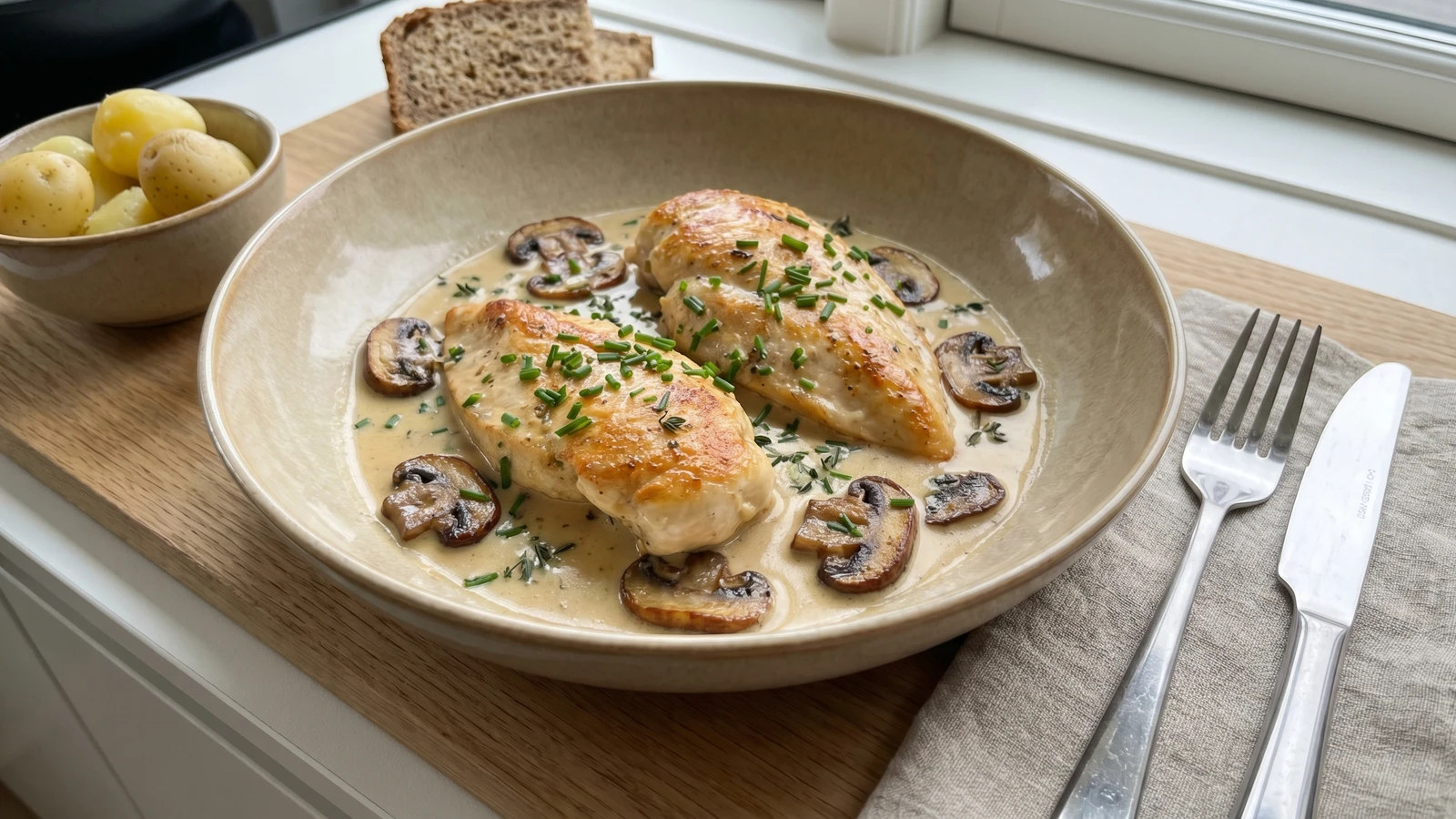
Kyllingefilet i Champignonsovs
Created by Chef Freja Lund
Pan-seared chicken breast finished in a creamy mushroom sauce with shallot, thyme, and a quiet note of Dijon mustard. The Danish weeknight dish that proves thirty minutes is enough to cook something worth sitting down for.
November evenings in Denmark come on fast. By four o'clock the windows are dark and the kitchen light is the warmest thing in the house. This is when you reach for the pan and the mushrooms and make champignonsovs.
Kyllingefilet i champignonsovs is the weeknight dish that every Danish household has some version of. Chicken breast, seared until golden, then finished in a cream sauce built on properly browned mushrooms, a shallot, and a splash of something dry and sharp. It's on the table in thirty minutes. It feeds a family. It makes the kitchen smell like someone's home.
The secret, if there is one, is patience with the mushrooms. Most people crowd them in the pan and stir too early, and the mushrooms stew instead of browning. Give them space and give them time. When they've gone golden and concentrated, the sauce practically makes itself. The cream goes in, the mustard goes in (just a teaspoon, for depth, not heat), and the chicken finishes gently in the warmth of it all. Serve it with boiled potatoes or plain rice, something that stays out of the way and lets the sauce do the talking. You'll know when it's right.
Cream-based sauces became a defining feature of Danish home cooking in the mid-twentieth century, when reliable refrigeration made fresh dairy a pantry staple rather than a luxury. Champignonsovs, mushroom sauce, entered the Danish weeknight repertoire in the 1950s and 1960s alongside the growing availability of cultivated mushrooms, which replaced the wild fungi that had been a seasonal harvest for centuries. The dish reflects a broader Scandinavian instinct to build richness from cream and butter rather than from the stock-based reductions of the French tradition, a practical kitchen logic rooted in a country where dairy has always been more abundant than time.
The technique, the tradition, and the story behind every dish.
Discover Culinary AdvisorIngredients
chicken breast fillets
Quantity
4, about 150g each
brown mushrooms
Quantity
300g
sliced 5mm thick
shallot
Quantity
1 large
finely diced
garlic
Quantity
2 cloves
finely sliced
double cream
Quantity
200ml
chicken stock
Quantity
100ml
dry sherry or white wine
Quantity
2 tablespoons
unsalted butter
Quantity
30g
neutral oil
Quantity
1 tablespoon
Dijon mustard
Quantity
1 teaspoon
fresh thyme
Quantity
1 teaspoon
leaves picked
fine sea salt
Quantity
to taste
black pepper
Quantity
freshly ground, to taste
chives
Quantity
small bunch
snipped, to finish
| Ingredient | Quantity |
|---|---|
| chicken breast fillets | 4, about 150g each |
| brown mushroomssliced 5mm thick | 300g |
| shallotfinely diced | 1 large |
| garlicfinely sliced | 2 cloves |
| double cream | 200ml |
| chicken stock | 100ml |
| dry sherry or white wine | 2 tablespoons |
| unsalted butter | 30g |
| neutral oil | 1 tablespoon |
| Dijon mustard | 1 teaspoon |
| fresh thymeleaves picked | 1 teaspoon |
| fine sea salt | to taste |
| black pepper | freshly ground, to taste |
| chivessnipped, to finish | small bunch |
Equipment Needed
- •Wide heavy frying pan with lid, 28cm or larger
- •Sharp knife for the mushrooms
Instructions
- 1
Prepare the chicken
Take the chicken breasts out of the fridge twenty minutes before you cook them. Cold chicken in a hot pan seizes up and cooks unevenly. Season both sides generously with salt and pepper. If the fillets are very thick, place each one between two pieces of cling film and press down firmly with the heel of your hand until they're an even 2cm thick. You're not pounding them flat. You're giving them a uniform thickness so the thinnest edge doesn't dry out while the centre catches up.
Room temperature chicken sears better. The surface dries slightly in those twenty minutes, and dry surfaces brown. Wet surfaces steam. - 2
Sear the chicken
Heat the oil in a wide, heavy frying pan over medium-high heat. When it shimmers, lay the chicken fillets in the pan. Do not touch them. Let them cook undisturbed for four to five minutes. You're building a golden crust on the underside, and that crust is where most of the flavor in this dish begins. When the edges turn white about a third of the way up, flip them. Cook for three minutes more, then transfer to a plate. They won't be cooked through yet. That's fine. They'll finish in the sauce.
If the chicken sticks when you try to flip it, it isn't ready. Wait another thirty seconds. When the crust has formed, it releases itself. - 3
Cook the mushrooms
Lower the heat to medium. Add the butter to the same pan. Those golden bits stuck to the bottom are fond, concentrated flavor from the chicken, and the butter is going to lift them. Add the sliced mushrooms in a single layer. Here is the thing most people get wrong: they crowd the pan and stir too often. Mushrooms are mostly water. If you pile them in and stir, they release their liquid all at once and stew instead of browning. Give them space. Let them sit for two minutes before you touch them. When the edges turn golden and the surface looks dry rather than slick, stir once and let them go again. This takes about six minutes total. You'll know they're done when they've shrunk by half and the pan is almost dry.
Brown mushrooms have more flavor than white button mushrooms. If you can find fresh chanterelles in September, use a handful alongside the brown ones. That's the season deciding for you. - 4
Build the sauce base
Push the mushrooms to the edges of the pan. Add the diced shallot to the centre and cook for two minutes, stirring, until it softens and turns translucent. Add the sliced garlic and the thyme leaves and cook for thirty seconds more, just until the garlic smells sweet, not sharp. Pour in the sherry or wine. It will hiss and reduce almost immediately. That's the alcohol burning off and the liquid dissolving the last of the fond from the bottom of the pan. Everything good in the sauce starts here.
- 5
Finish the sauce
Pour in the chicken stock and let it bubble for a minute until it reduces by about half. Then add the cream and the Dijon mustard. Stir them through and bring the sauce to a gentle simmer. The mustard isn't here for heat. It's here for depth, a rounded warmth underneath the cream that you can't quite identify but would miss if it weren't there. Let the sauce simmer for two to three minutes until it thickens enough to coat the back of a spoon. Taste it. Adjust the salt. The sauce should be rich and savoury, not flat.
- 6
Return the chicken
Nestle the seared chicken fillets back into the sauce, along with any juices that have collected on the plate. Those juices are flavor you don't want to waste. Spoon sauce over the top of each fillet. Cover the pan loosely and let everything simmer gently for five to six minutes until the chicken is cooked through. Cut into the thickest part of one fillet. The flesh should be white all the way through with clear juices, no pink. If there's pink, give it two more minutes. Overcooked chicken is dry. Undercooked chicken is unsafe. The window between the two is where you're aiming, and checking is not a failure. It's care.
- 7
Serve
Spoon the mushroom sauce generously over and around each fillet. Scatter snipped chives across the top. Serve with boiled potatoes or rice, something plain that lets the sauce be the reason you come back to the plate. This is a dish that tastes like someone made it with love, and the table is where it happens. Tak for mad.
Chef Tips
- •Use brown mushrooms, not white button. Brown mushrooms have deeper flavor and hold their shape when cooked. Slice them 5mm thick so they brown properly without disappearing into the sauce.
- •A teaspoon of Dijon mustard stirred into the cream does something quiet and important. It rounds out the sauce and gives it a warmth underneath that you can't quite name. Don't skip it, and don't add more. One teaspoon is the right amount.
- •If you have good chicken stock, made from bones and time, the sauce will be noticeably better. If you're using shop-bought, taste it first. Thin, salty stock makes a thin, salty sauce. Reduce it by half before adding it if you're unsure.
- •A splash of dry sherry lifts the whole dish. White wine works too. What matters is that the alcohol cooks off completely, leaving only the sharpness behind. If you don't cook with alcohol, a squeeze of lemon juice at the end does a similar job.
Advance Preparation
- •The mushroom sauce can be made a few hours ahead and reheated gently. Sear the chicken just before serving and finish it in the warmed sauce. The texture of the chicken is best when it hasn't been sitting.
- •Leftover sauce keeps for two days in the fridge. Reheat slowly over low heat, adding a splash of stock if it has thickened too much. It also works beautifully over pasta the next day.
Frequently Asked Questions
Nutrition Information
1 serving (about 260g)
Where cooking meets culture.
Culinary mentorship, cultural storytelling, and the editorial depth that makes cooking meaningful.
Explore Culinary Advisor