Culinary Advisor
A cooking platform built around craft, culture, and the stories behind what we eat.
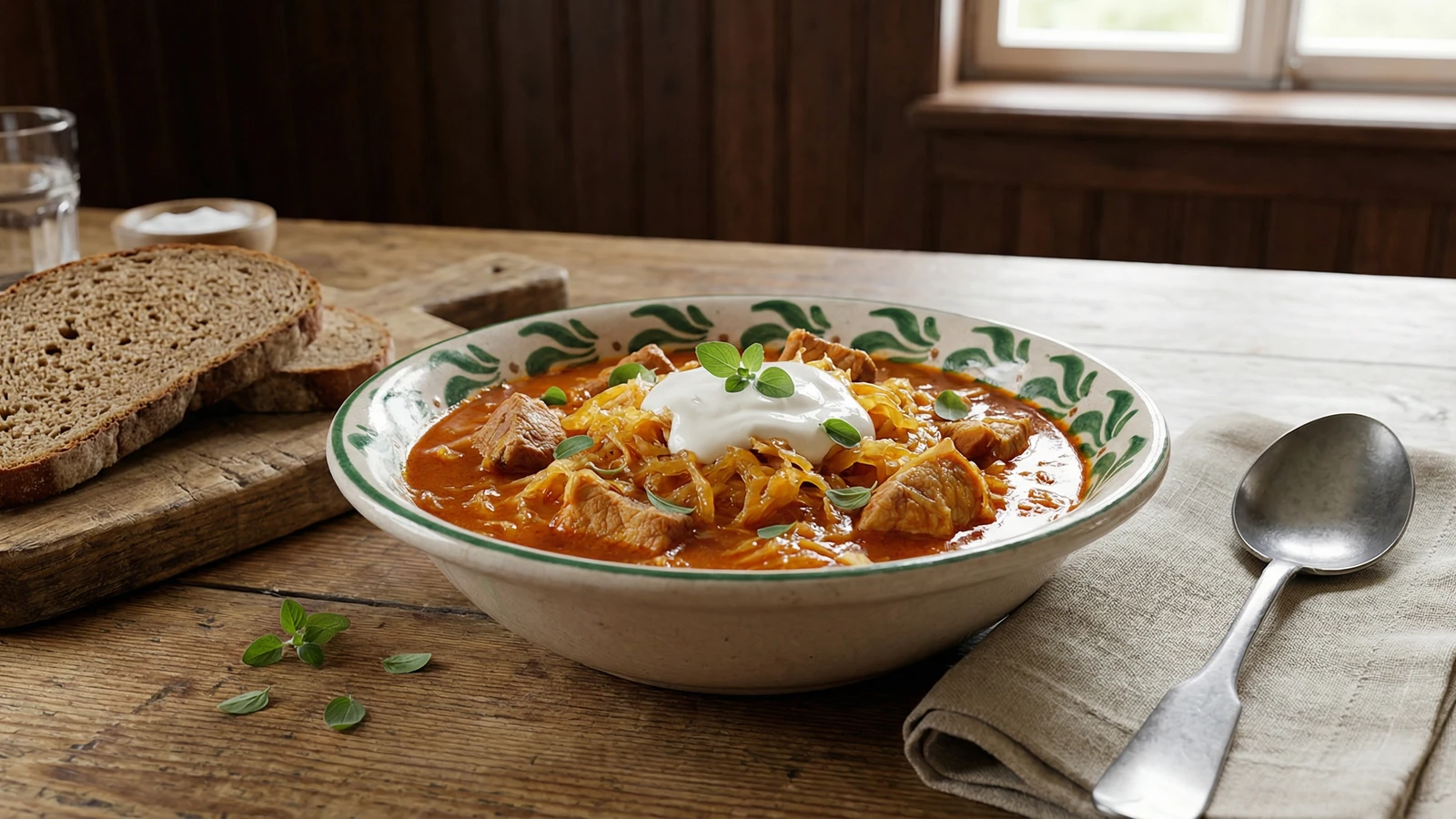
Krautfleisch
Created by Chef Elsa
Slow-braised pork shoulder with sauerkraut, caraway, and sweet paprika, finished with a swirl of Sauerrahm. One pot, two hours, and the kind of honest cooking that Austrian farm kitchens have been getting right for centuries.
The first time I ate Krautfleisch I was maybe eight or nine, sitting in a Gasthaus somewhere in the Salzkammergut on one of those annual trips with Gretel and my grandmother Eva. It came to the table in a heavy ceramic bowl, the pork falling apart into the sauerkraut, the whole thing flushed pink from paprika and smelling like caraway and something warm I couldn't name yet. Gretel pointed at it with her fork and said, 'This is good Austrian home cooking. Nothing fancy. Just right.'
She was right. Krautfleisch is a one-pot braise, the kind of dish that Austrian farm families have been making for as long as there have been pigs and cabbages in the same village. You brown pork shoulder in lard, soften onions until they go glassy and sweet, bloom paprika and caraway in the residual heat, then pile in the sauerkraut and let everything simmer together for two hours. The pork turns so tender you can pull it apart with a spoon. A generous spoonful of Sauerrahm (sour cream) stirred through at the end brings the whole pot together, rounding the sharpness of the sauerkraut and softening the paprika into something creamy and warm.
The caraway is what makes this unmistakably Austrian. Kümmel shows up everywhere in Austrian cooking: in bread, in cheese, in dumplings, in braises. It's the spice that tastes like Austria to me. The paprika comes from Hungary, carried into Austrian kitchens through centuries of Habsburg connection. Together with the sauerkraut, they give you a stew that's greater than anything you'd expect from such a short ingredient list. This is budget cooking. Peasant cooking. The kind of food that doesn't need to apologize for what it is.
Krautfleisch belongs to Austria's Bauernküche tradition, the practical farmhouse cooking that sustained rural families through long Alpine winters when sauerkraut, preserved in autumn barrels, was the essential stored vegetable. The addition of sweet Hungarian paprika, which became a pantry staple in Austrian kitchens during the 19th century, reflects the culinary exchange that flowed freely across Habsburg borders. Regional variations persist: Upper Austrian cooks sometimes grate a raw potato into the stew to thicken it, Styrian versions may finish with a drizzle of Kürbiskernöl (pumpkin seed oil), and in Carinthia you'll find the sauerkraut replaced with fresh white cabbage entirely.
The technique, the tradition, and the story behind every dish.
Discover Culinary AdvisorIngredients
pork shoulder (Schweineschulter)
Quantity
800g
cut into 3cm pieces
lard (Schweineschmalz) or sunflower oil
Quantity
2 tablespoons
onions
Quantity
2 large
finely diced
garlic
Quantity
2 cloves
minced
sweet Hungarian paprika (edelsüß)
Quantity
1 heaped tablespoon
caraway seeds (Kümmel)
Quantity
1 teaspoon
lightly crushed
sauerkraut
Quantity
500g
drained and loosely squeezed, liquid reserved
chicken or pork stock
Quantity
250ml
bay leaves
Quantity
2
salt
Quantity
1 teaspoon
black pepper
Quantity
to taste
sour cream (Sauerrahm)
Quantity
150ml
fresh marjoram or flat-leaf parsley (optional)
Quantity
for serving
Bauernbrot (dark farmhouse bread)
Quantity
for serving
| Ingredient | Quantity |
|---|---|
| pork shoulder (Schweineschulter)cut into 3cm pieces | 800g |
| lard (Schweineschmalz) or sunflower oil | 2 tablespoons |
| onionsfinely diced | 2 large |
| garlicminced | 2 cloves |
| sweet Hungarian paprika (edelsüß) | 1 heaped tablespoon |
| caraway seeds (Kümmel)lightly crushed | 1 teaspoon |
| sauerkrautdrained and loosely squeezed, liquid reserved | 500g |
| chicken or pork stock | 250ml |
| bay leaves | 2 |
| salt | 1 teaspoon |
| black pepper | to taste |
| sour cream (Sauerrahm) | 150ml |
| fresh marjoram or flat-leaf parsley (optional) | for serving |
| Bauernbrot (dark farmhouse bread) | for serving |
Equipment Needed
- •Heavy Dutch oven or braising pot with lid (4-liter minimum)
- •Wooden spoon
- •Kitchen paper for drying pork
Instructions
- 1
Brown the pork
Pat the pork shoulder pieces dry with kitchen paper. This matters. Wet meat doesn't brown, it steams, and you'll end up with gray, flabby cubes instead of a deep crust. Heat the lard in a heavy Dutch oven or braising pot over medium-high heat until it shimmers. Brown the pork in two batches, giving each piece enough room that they're not touching. Let them sit undisturbed for three to four minutes per side until they develop a proper dark golden crust. Transfer each batch to a plate.
Use lard if you can find it. Schweineschmalz is the traditional fat for Austrian braises, and it handles high heat without burning. It gives the stew a richness that oil can't match. Your butcher may have it, or you can render your own from pork fat trimmings. - 2
Cook the onions and bloom the spices
Lower the heat to medium. Add the diced onions to the same pot with all the rendered pork fat still in it. Cook them, stirring occasionally, for eight to ten minutes until they turn soft and glassy. They shouldn't take on much color. Add the garlic and cook for another minute until it smells fragrant. Now pull the pot off the heat entirely. This is the important part. Add the paprika and crushed caraway seeds, stirring them through the hot onions for about thirty seconds. Paprika burns in direct heat. It turns acrid and bitter and will ruin the whole pot. Off the heat, it blooms gently and releases that sweet, warm flavor you want.
Crush the caraway seeds lightly with the flat of a knife or in a mortar before adding them. Whole seeds will give you pockets of intense flavor. Crushed seeds distribute evenly and release their oils into the stew. You don't want to grind them to powder, just crack them open. - 3
Build the braise
Return the pot to medium heat. Add the drained sauerkraut and toss it through the onions and spices until everything is well combined. The sauerkraut will sizzle and pick up the paprika, turning from pale gold to a warm blush. Return the browned pork and any juices from the plate. Pour in the stock. If the liquid doesn't come at least halfway up the contents, add a splash of the reserved sauerkraut liquid. Tuck in the bay leaves. Bring everything to a gentle simmer.
Taste your sauerkraut before adding it. If it's very sharp, rinse it briefly under cold water and squeeze it out. If it's mild and balanced, use it as is. You can always add sharpness back with the reserved liquid later, but you can't take it away. - 4
Braise low and slow
Put the lid on, slightly ajar to let a wisp of moisture escape, and reduce the heat to low. The surface of the stew should barely move. Lazy bubbles rising every few seconds, nothing more. Let it cook for one and a half to two hours. Check it once or twice, give it a stir, and make sure nothing is catching on the bottom. The pork is done when it yields to a fork with almost no resistance. The sauerkraut will have softened and absorbed the paprika and caraway, turning the whole pot into something far more than the sum of its parts.
If you have time, braise this in the oven at 160°C instead. The heat surrounds the pot evenly, so you don't need to worry about hot spots or scorching on the bottom. It's the same result with less supervision. - 5
Finish with Sauerrahm and serve
Remove the pot from the heat and fish out the bay leaves. Stir in the sour cream until it melts into the stew, turning the liquid from ruddy pink to a warm, creamy coral. Do not put the pot back on high heat after adding the Sauerrahm. Sour cream curdles when it boils, and you'll go from silky to grainy in seconds. If the stew needs reheating, do it gently. Taste and adjust the salt. Ladle into warm bowls, scatter fresh marjoram or parsley over the top, and serve with thick slices of Bauernbrot to mop up the sauce. Mahlzeit!
Chef Tips
- •Buy pork shoulder, not loin. Shoulder has the fat and connective tissue that break down during braising and make the meat tender and the sauce rich. Lean cuts dry out and turn stringy in a long braise. This is not the place for expensive pork.
- •Gretel always said that Krautfleisch is better the next day, and she was right. The flavors deepen overnight as the paprika, caraway, and sauerkraut settle into each other. Make it on Sunday, eat it on Monday. Reheat gently with the lid on, and stir in a fresh spoonful of Sauerrahm just before serving.
- •Sweet paprika only. Not smoked, not hot. Austrian cooking uses edelsüß, the noble sweet variety. Smoked paprika belongs to Spanish cooking, and hot paprika will overpower the caraway and sauerkraut. If your paprika has been sitting in the cupboard for a year, buy a new tin. Old paprika tastes like red dust.
- •Serve this with bread, not with rice or pasta. A good dark Bauernbrot or a plain Semmel torn by hand is what this stew wants. The bread soaks up the Sauerrahm sauce and that's half the pleasure.
Advance Preparation
- •Krautfleisch improves significantly overnight. Make it a day ahead, cool and refrigerate, then reheat gently. Add the Sauerrahm fresh when you reheat, rather than the day before.
- •The stew keeps well in the fridge for three to four days. It also freezes beautifully for up to three months. Thaw overnight in the fridge and reheat slowly on the stovetop.
Frequently Asked Questions
Nutrition Information
1 serving (about 310g)
Where cooking meets culture.
Culinary mentorship, cultural storytelling, and the editorial depth that makes cooking meaningful.
Explore Culinary Advisor