Culinary Advisor
A cooking platform built around craft, culture, and the stories behind what we eat.
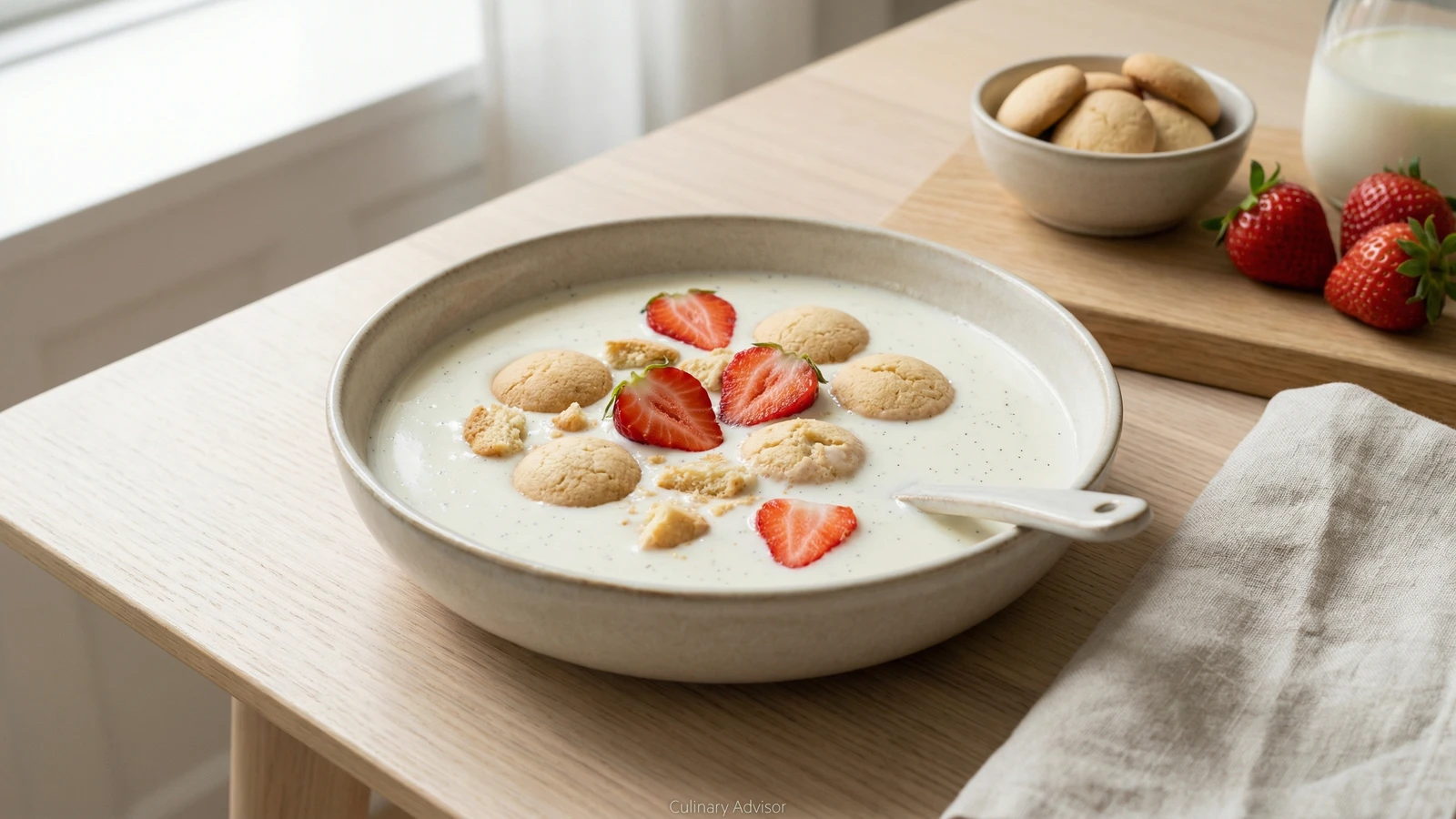
Koldskaal med Kammerjunker
Created by Chef Freja
Cold vanilla-scented buttermilk soup with twice-baked cardamom biscuits crumbled in and fresh strawberries scattered across the top. The bowl that arrives with Danish summer and vanishes by September.
There is a week in late May when Danish gardens start to smell of elderflower and the evenings stretch past ten. The buttermilk in the dairy aisle starts moving faster. The first bowls of koldskaal appear in home kitchens, and from that week until the light begins to shorten in September, this is what Danish summer tastes like in the morning.
Koldskaal is cold buttermilk soup, sweetened gently and perfumed with vanilla and lemon. You eat it for breakfast, for an afternoon snack on a warm day, sometimes for a light summer supper when the kitchen is too hot to think about cooking. Into the bowl you crumble kammerjunker, small twice-baked cardamom biscuits that are built for exactly this purpose: dry enough to hold their crunch against the cold soup for a few honest minutes before surrendering. The name means "chamberlain," a little courtly joke from the 19th century. Nobody remembers why.
This is a make-ahead dish in the best way. The biscuits can live in a tin for a week. The soup wants an hour in the fridge before it tastes the way it should. What matters most is the balance of sweet and sour, and I will tell you now that this is personal. Danish buttermilk, kaernemaelk, is sharper than most cultured milks you will find elsewhere, and the sugar is there to tame it, not to make dessert. Taste as you go. Add a little more lemon if it feels heavy, a little more sugar if your buttermilk is particularly sour. You will know when it's right because the soup will taste cold and alive at the same time, and you will want a second bowl. And if Danish strawberries are in season, use them. The first ones in June are worth waiting for. That's not a rule, it's a gift.
Koldskaal grew out of the practical thrift of Danish dairy farming, where the buttermilk left from butter-making needed a use and the summer heat made cooked food unwelcome. It appears in Danish cookbooks from the mid-1800s, already more or less as it is eaten today, though the original versions relied on raw egg yolks whisked into the buttermilk to thicken it, a step many modern cooks skip or replace with pasteurized yolks for safety. Kammerjunker, the twice-baked biscuit that belongs with it, was codified by the royal confectioner Johan Conrad Holm in the early 1800s, who gave them the courtly name as a kind of baker's wink, and they have been inseparable from koldskaal on Danish summer tables ever since.
The technique, the tradition, and the story behind every dish.
Discover Culinary AdvisorIngredients
cultured buttermilk (kaernemaelk)
Quantity
1 litre
cold
natural yogurt or skyr
Quantity
250g
cold
pasteurized egg yolks
Quantity
2
caster sugar (for the soup)
Quantity
75g, plus more to taste
vanilla pod
Quantity
1
split and seeds scraped
unwaxed lemon
Quantity
1
zested and juiced
plain flour
Quantity
250g, plus extra for dusting
cold unsalted butter
Quantity
100g
cubed
caster sugar (for the biscuits)
Quantity
75g
ground cardamom
Quantity
1 teaspoon
baking powder
Quantity
1 teaspoon
fine sea salt
Quantity
1/4 teaspoon
egg
Quantity
1 large
whole milk
Quantity
50ml
fresh Danish strawberries (optional)
Quantity
to serve
hulled and halved
| Ingredient | Quantity |
|---|---|
| cultured buttermilk (kaernemaelk)cold | 1 litre |
| natural yogurt or skyrcold | 250g |
| pasteurized egg yolks | 2 |
| caster sugar (for the soup) | 75g, plus more to taste |
| vanilla podsplit and seeds scraped | 1 |
| unwaxed lemonzested and juiced | 1 |
| plain flour | 250g, plus extra for dusting |
| cold unsalted buttercubed | 100g |
| caster sugar (for the biscuits) | 75g |
| ground cardamom | 1 teaspoon |
| baking powder | 1 teaspoon |
| fine sea salt | 1/4 teaspoon |
| egg | 1 large |
| whole milk | 50ml |
| fresh Danish strawberries (optional)hulled and halved | to serve |
Equipment Needed
- •Large mixing bowl
- •Whisk
- •Two baking sheets lined with parchment
- •Wire cooling rack
- •Sharp knife
- •Microplane or fine grater for the lemon zest
Instructions
- 1
Make the biscuit dough
Start with the kammerjunker, because they need to bake twice and cool between. In a bowl, rub the cold butter into the flour with your fingertips until the mixture looks like coarse sand. Add the sugar, cardamom, baking powder, and salt and stir through. Make a well in the centre and add the egg and milk. Bring it together quickly with a fork, then finish with your hands. Work the dough just enough to pull it into a smooth ball. Overworked dough makes heavy biscuits, and these should be light and a little crumbly.
Use freshly ground cardamom if you can. The flavor is twice as alive as the pre-ground jar, and cardamom is doing half the work in this recipe. - 2
Shape and first bake
Heat the oven to 180C. Divide the dough into four equal pieces and roll each into a long rope about 2cm thick. Lay them on a parchment-lined baking sheet, leaving space between because they will spread a little. Bake for fifteen minutes, until the tops are pale gold and the ropes feel firm when pressed. Take them out and let them sit for five minutes. They need to cool just enough to handle without collapsing.
- 3
Cut and second bake
Slice each rope on a slight diagonal into pieces about 1cm thick. Lay them cut-side up on the baking sheet and return to the oven for another twelve to fifteen minutes, turning once halfway through. You want them pale golden all over, dry to the centre, and crisp enough to snap. This is the second bake that gives kammerjunker their character. They need to be completely dry, because they are going to meet a bowl of cold buttermilk and they must hold their crunch long enough to matter. Cool them fully on a wire rack.
Break one open after they have cooled. The centre should be dry all the way through, never soft. If there is any give, return them to a low oven for five minutes more. - 4
Start the koldskaal base
While the biscuits cool, make the soup. In a large bowl, whisk the egg yolks with the sugar until the mixture turns pale and thick and falls from the whisk in ribbons. This takes two or three minutes by hand. The sugar needs to dissolve completely, because once the cold buttermilk goes in, nothing else will dissolve it. Scrape in the seeds from the vanilla pod and whisk them through. The yolks will go flecked with tiny black specks. That's what you want to see.
- 5
Add the dairy
Add the lemon zest and a good squeeze of the juice, about a tablespoon to start. Pour in the buttermilk slowly, whisking all the time so nothing curdles. Add the yogurt or skyr and whisk until the soup is smooth and pourable. Taste it. It should be tangy and sweet at once, with the vanilla behind everything and the lemon lifting the edges. Add more sugar if it needs it, more lemon if it feels flat. The balance is personal and the season decides. Early-summer buttermilk is sharper than late-summer buttermilk, and you adjust to what is in the bottle in front of you.
- 6
Chill thoroughly
Cover the bowl and put the koldskaal in the fridge for at least an hour. This is not optional. Cold is half the dish. A lukewarm koldskaal tastes thin and slack, and all the vanilla and lemon that you worked to balance goes quiet. Straight from the fridge, the flavors snap into place. You'll know when it's right because the first spoonful will taste brighter than the one you tasted while making it.
- 7
Serve
Ladle the cold koldskaal into shallow bowls. Break the kammerjunker into halves and scatter a generous handful across the top of each bowl, so some sink and some float. Add the strawberries, if you have them, halved and scattered loosely. Eat immediately, before the biscuits begin to soften. The contrast is the whole point: cold, silky soup against crisp, cardamom-sweet biscuit, with the first burst of Danish strawberry in between. Tak for mad.
Chef Tips
- •Use real cultured buttermilk, not the American-style buttermilk substitute made with vinegar and milk. Danish kaernemaelk or a good European cultured buttermilk is what you need. If you cannot find it, a thick live-culture yogurt loosened with a splash of whole milk is a closer substitute than anything labeled buttermilk in a US supermarket.
- •If you are uneasy about raw egg yolks, use pasteurized eggs or skip the yolks entirely. The soup will be a little thinner and a little less rich, but it will still taste like koldskaal. Many modern Danish home cooks leave them out.
- •Kammerjunker keep beautifully in a tin for a week, and they are worth making in a double batch. They are also excellent dunked into afternoon coffee when koldskaal is not on the table.
- •Strawberries belong to this dish in June and July in Denmark. Out of season, leave them off rather than using tasteless imports. A cold bowl of koldskaal with just the biscuits is still a complete thing.
Advance Preparation
- •The kammerjunker can be baked up to a week ahead and stored in an airtight tin at room temperature. They must be completely cool and completely dry before they go in the tin, or they will lose their snap.
- •The koldskaal base can be made the night before and kept covered in the fridge. The flavor settles and deepens overnight. Give it a good whisk before serving to bring everything back together.
- •Do not combine the biscuits and the soup until the moment you eat. Kammerjunker in koldskaal have a window of about ten minutes before they surrender. That window is the joy of the dish.
Frequently Asked Questions
Nutrition Information
1 serving (about 500g)
Where cooking meets culture.
Culinary mentorship, cultural storytelling, and the editorial depth that makes cooking meaningful.
Explore Culinary Advisor