Culinary Advisor
A cooking platform built around craft, culture, and the stories behind what we eat.
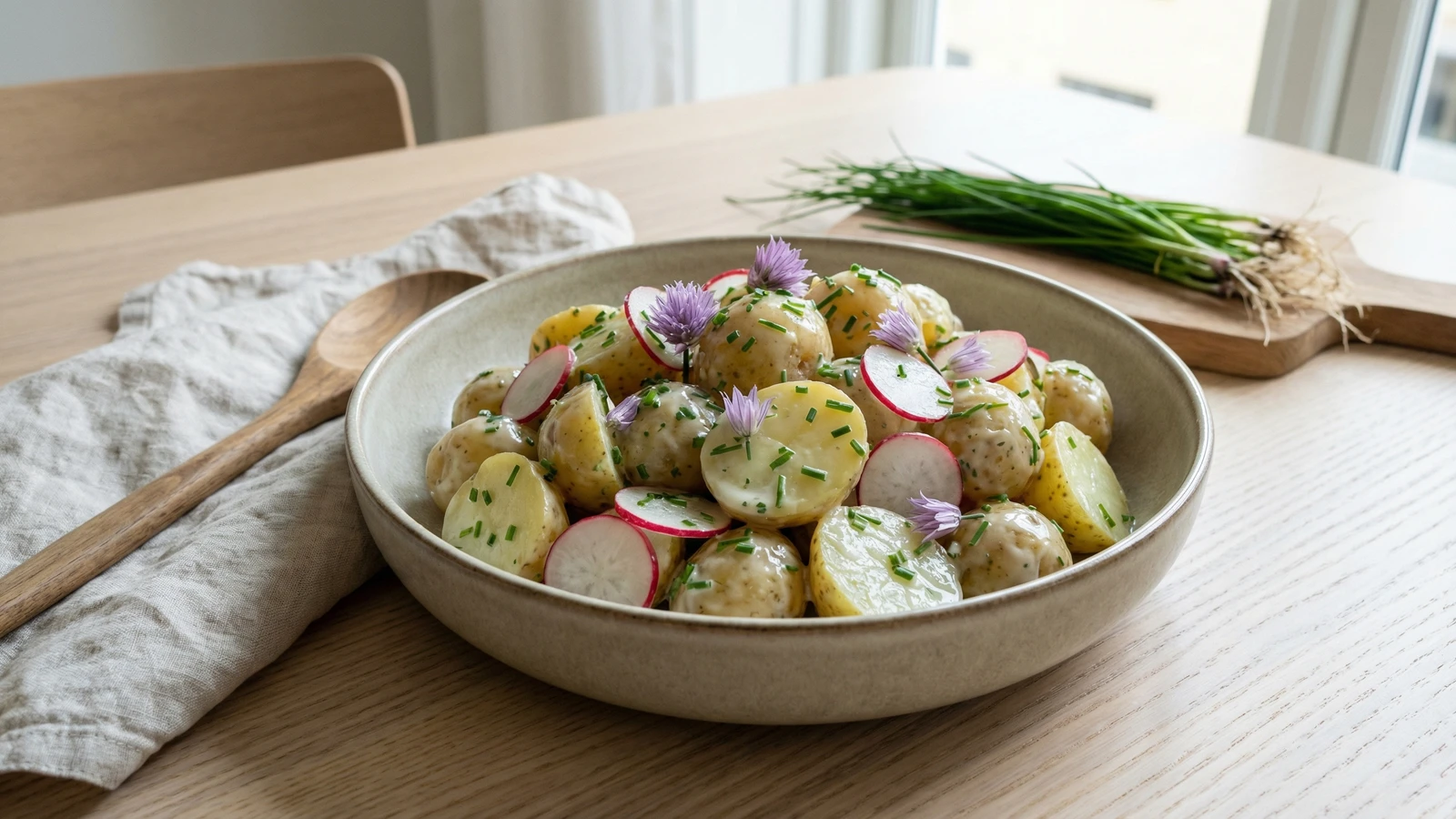
Kold Kartoffelsalat
Created by Chef Freja
Danish cold potato salad with new potatoes in a cool creme fraiche dressing, brightened with radishes and chives. The summer staple at every grillaften and garden lunch.
The first new potatoes arrive in June, and with them, the Danish summer changes shape. The grills come out. The tables move outside. Lunches stretch into afternoons and afternoons into the long blue evenings that only exist in northern latitudes. Kold kartoffelsalat belongs to these days.
This is not the heavy, mayonnaise-drowned potato salad you might be picturing. The Danish version is lighter and cooler: waxy new potatoes dressed in creme fraiche and a little good mayonnaise, brightened with snipped chives and paper-thin radishes, sharpened with mustard and white wine vinegar. The point is to let the potatoes taste like potatoes. Everything else is there to frame them. The season decides what belongs in the bowl, and in Danish summer, the answer is always the same: the youngest potatoes, the first radishes, a fistful of chives from the windowsill.
What matters most is the potato itself. Use small, waxy new potatoes, the kind that hold their shape when you cut them, and dress them while they're still slightly warm from the pot. Warm potatoes drink in the dressing the way cold ones never will, and that's the difference between a salad that tastes mixed and one that tastes integrated. I'll walk you through every step so you understand why each one is there, and by the time you carry the bowl out to the grill, you'll know in your hands that it's right.
Danish new potatoes, nye kartofler, are celebrated with a seriousness that can surprise outsiders. The first harvest from Samso and the islands of southern Fyn each June commands prices normally reserved for truffles, and their arrival is reported in the Copenhagen newspapers. The cold, dairy-dressed version of potato salad is a 20th century Danish adaptation, distinct from the warm, vinegar-based German style that preceded it, and it became a fixture of the summer grillaften, the backyard grill evening that anchors Danish social life from Sankt Hans in late June through the last warm weekends of August.
The technique, the tradition, and the story behind every dish.
Discover Culinary AdvisorIngredients
small new potatoes
Quantity
1kg
scrubbed but unpeeled
fine sea salt
Quantity
for the cooking water and to taste
full-fat creme fraiche
Quantity
200ml
good mayonnaise
Quantity
100ml
Dijon mustard
Quantity
2 teaspoons
white wine vinegar
Quantity
1 tablespoon
caster sugar
Quantity
1 teaspoon
white pepper
Quantity
freshly ground, to taste
radishes
Quantity
8 small
sliced paper-thin
spring onions
Quantity
2
finely sliced
fresh chives
Quantity
large bunch
finely snipped
dill fronds or chive flowers (optional)
Quantity
a few, to finish
| Ingredient | Quantity |
|---|---|
| small new potatoesscrubbed but unpeeled | 1kg |
| fine sea salt | for the cooking water and to taste |
| full-fat creme fraiche | 200ml |
| good mayonnaise | 100ml |
| Dijon mustard | 2 teaspoons |
| white wine vinegar | 1 tablespoon |
| caster sugar | 1 teaspoon |
| white pepper | freshly ground, to taste |
| radishessliced paper-thin | 8 small |
| spring onionsfinely sliced | 2 |
| fresh chivesfinely snipped | large bunch |
| dill fronds or chive flowers (optional) | a few, to finish |
Equipment Needed
- •Wide heavy-bottomed pot
- •Colander
- •Large mixing bowl
- •Mandoline for the radishes
- •Rubber spatula
Instructions
- 1
Boil the potatoes
Place the new potatoes in a wide pot and cover them with cold water by a couple of centimetres. Add a generous pinch of salt, enough that the water tastes like a mild broth, and bring to a gentle simmer. Cook for fifteen to twenty minutes, until the tip of a knife slides into the largest potato with no resistance at all. Start with cold water, not boiling. Cold water lets the potato heat through evenly, so the centre cooks at the same pace as the outside. Drop them into hot water and the skin splits before the middle is done.
New potatoes cook faster than older ones. Start checking at twelve minutes. You want tender, not falling apart. - 2
Mix the dressing
While the potatoes cook, whisk the creme fraiche, mayonnaise, Dijon mustard, vinegar, and sugar together in a large bowl. Season with a good pinch of salt and a few grinds of white pepper. Taste it. It should be cool, tangy, and rounded, never sharp. If it bites your tongue, add a little more creme fraiche. If it tastes flat, a few more drops of vinegar will wake it up. The dressing should be the backdrop, not the star.
- 3
Dress while warm
Drain the potatoes and let them sit in the colander for two or three minutes, just until the steam stops rising from them and they're cool enough to handle. Cut the larger ones in half or quarters, leaving the smallest ones whole, and tip them straight into the bowl with the dressing while they're still warm. Fold everything together gently. Warm potatoes drink in the dressing the way cold ones never will, and that's the difference between a salad that tastes mixed and one that tastes integrated. This is the step most people skip, and it's the one that matters most.
Fold with a rubber spatula, not a spoon. A spoon breaks the potatoes. You want them coated, not crushed. - 4
Add the fresh elements
Let the dressed potatoes cool for about fifteen minutes, until they're no longer warm to the touch. Then fold in most of the sliced radishes, the spring onions, and two thirds of the chives. Hold back some of each for the top. If you add the radishes while the potatoes are still hot, they go limp and bleed pink into the dressing. Wait for the warmth to leave.
- 5
Chill and finish
Cover the bowl and chill in the fridge for at least an hour, longer if you have time. The flavors settle and marry as the salad rests, and a properly cold potato salad is a different animal from a lukewarm one. Just before serving, taste again and adjust the salt if it needs it. Cold food always needs a little more salt than warm food. Scatter the reserved radish slices and the rest of the chives across the top, finish with a few dill fronds or chive flowers if you have them, and bring it to the table. Tak for mad.
Chef Tips
- •Use waxy potatoes, never floury. Floury potatoes break down and turn the salad into mash. Waxy varieties like new-season Charlotte or the Danish sommerkartofler hold their shape and give you the texture you want.
- •Danish creme fraiche (38% fat) gives the dressing its richness and body. If you're outside Denmark, look for a full-fat creme fraiche rather than a lighter sour cream. The fat is what carries the flavor.
- •Slice the radishes on a mandoline if you have one. Paper-thin slices curl slightly in the dressing and stay crisp. Thick slices turn woody and dominate the bite.
- •This salad drinks beautifully alongside a cold Danish pilsner or a glass of aquavit, served alongside grilled pork, chicken, or smoked mackerel at a summer garden lunch.
Advance Preparation
- •The salad can be made up to a day ahead. Dress the potatoes and chill, but fold in the radishes, spring onions, and most of the chives only an hour or two before serving so they stay crisp and green.
- •If making ahead, taste again just before serving and adjust the salt. Cold food always needs a little more seasoning than warm food, and a night in the fridge dulls the edges slightly.
Frequently Asked Questions
Nutrition Information
1 serving (about 245g)
Where cooking meets culture.
Culinary mentorship, cultural storytelling, and the editorial depth that makes cooking meaningful.
Explore Culinary Advisor