Culinary Advisor
A cooking platform built around craft, culture, and the stories behind what we eat.
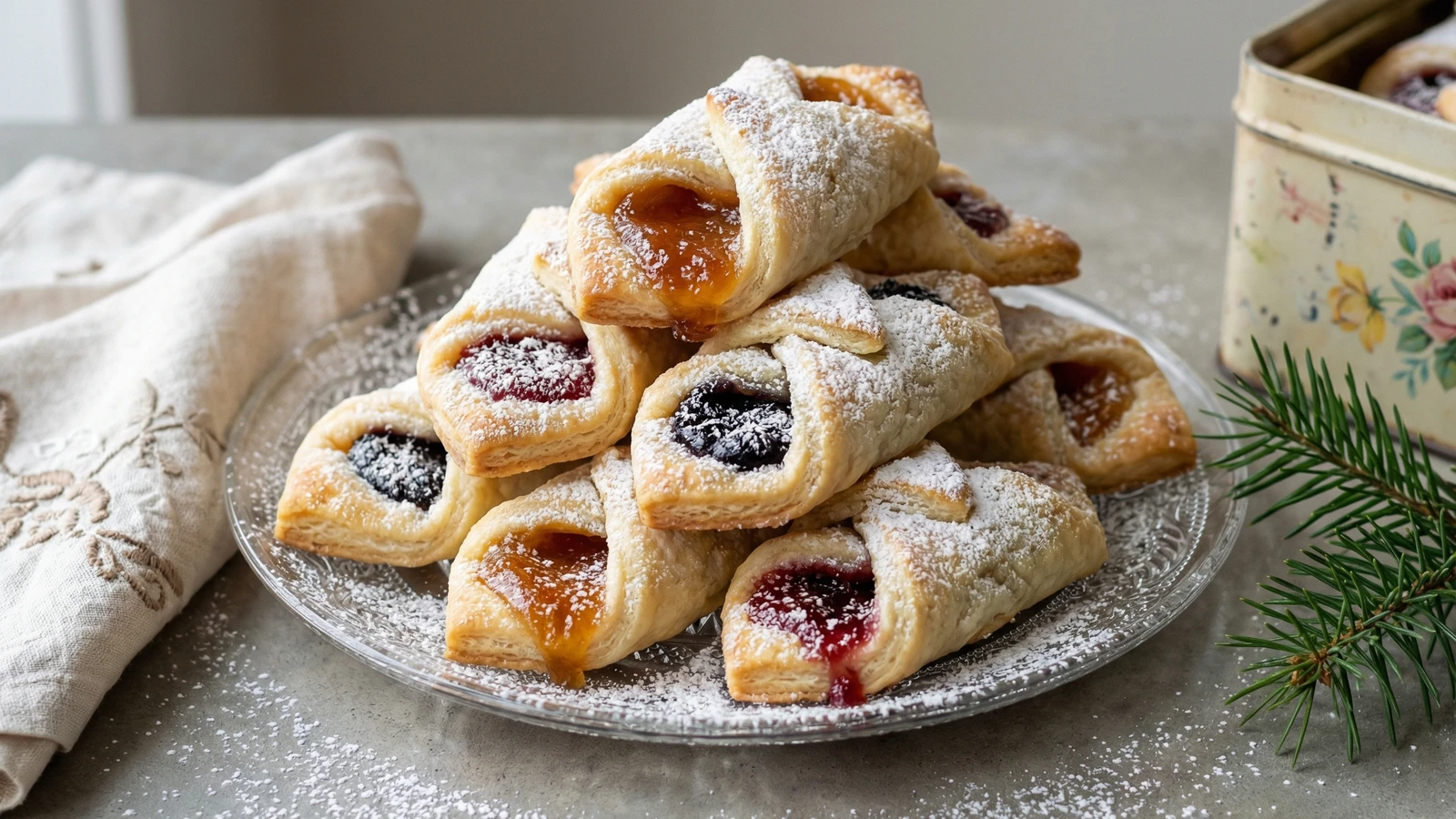
Kolaczki (Polish Cream Cheese Cookies)
Created by
Tender, flaky cream cheese pastry enveloping pockets of fruit preserves, dusted with drifts of powdered sugar. These beloved Polish Christmas cookies melt on the tongue and fill the kitchen with memories of old-world baking.
Every Polish grandmother I've known has her own kolaczki technique, passed down through kitchens in Chicago, Pittsburgh, Buffalo, and a hundred small towns where immigrant families settled and kept their traditions alive. The name comes from the word for wheel or circle, though these cookies take many shapes: corners folded to center like envelopes, edges pinched into little boats, or simple triangles that barely contain their jammy cargo.
The genius of kolaczki lies in the dough. Cream cheese and butter in equal measure create something neither pie crust nor cookie can claim. It's flaky and tender simultaneously, rich without being heavy, and it handles like a dream once properly chilled. The cold is essential. Work quickly. Let the dough rest. These are not cookies you rush.
In Polish-American households, kolaczki appear on Christmas Eve alongside oplatek wafers and herring, though they're welcome any time the weather turns cold and the kitchen needs warming. My students often make triple batches: one for the family, one for gifts, one hidden away because they disappear faster than anyone expects. The fillings are traditional but forgiving. Apricot and prune are canonical. Raspberry and poppy seed have their partisans. Use what your family loves.
The technique, the tradition, and the story behind every dish.
Discover Culinary AdvisorIngredients
cream cheese
Quantity
226g (8 oz)
cold, cut into cubes
unsalted butter
Quantity
226g (1 cup / 2 sticks)
cold, cut into cubes
all-purpose flour
Quantity
280g (2 1/4 cups)
fine sea salt
Quantity
1/4 teaspoon
granulated sugar
Quantity
1 tablespoon
fruit preserves
Quantity
340g (1 cup)
apricot, prune lekvar, raspberry, or poppy seed
powdered sugar
Quantity
115g (1 cup)
for dusting
| Ingredient | Quantity |
|---|---|
| cream cheesecold, cut into cubes | 226g (8 oz) |
| unsalted buttercold, cut into cubes | 226g (1 cup / 2 sticks) |
| all-purpose flour | 280g (2 1/4 cups) |
| fine sea salt | 1/4 teaspoon |
| granulated sugar | 1 tablespoon |
| fruit preservesapricot, prune lekvar, raspberry, or poppy seed | 340g (1 cup) |
| powdered sugarfor dusting | 115g (1 cup) |
Equipment Needed
- •Pastry blender or food processor
- •Rolling pin
- •Pizza wheel or sharp knife
- •Fine-mesh sieve for dusting
- •Sheet pans with parchment paper
Instructions
- 1
Cut butter and cream cheese
Cut the cold butter and cold cream cheese into half-inch cubes. Return them to the refrigerator while you measure the dry ingredients. Temperature matters here more than technique. If your butter starts to soften, the dough becomes sticky and the finished cookies lose their distinctive flakiness.
Freeze butter for 15 minutes if your kitchen runs warm. The colder, the better. - 2
Combine dry ingredients
Whisk together the flour, salt, and granulated sugar in a large bowl. The sugar is minimal by design. These cookies derive their sweetness from the jam filling and the generous powdered sugar finish. The dough itself stays neutral, almost savory, creating balance.
- 3
Cut in butter and cream cheese
Add the cold butter and cream cheese cubes to the flour mixture. Using a pastry blender, two knives, or your fingertips, cut the fats into the flour until the mixture resembles coarse crumbs with some pea-sized pieces remaining. Work quickly to keep everything cold. The texture should look shaggy and uneven. Don't aim for uniformity.
A food processor works beautifully here: pulse in short bursts until the mixture looks like wet sand with visible butter chunks. - 4
Form the dough
Gather the mixture and press it together into a cohesive mass. It will seem dry at first, then suddenly come together as the cream cheese warms slightly under your hands. Divide the dough into four equal portions. Flatten each into a disk about half an inch thick. Wrap tightly in plastic and refrigerate for at least 3 hours or overnight. The dough must be thoroughly chilled or rolling becomes an exercise in frustration.
- 5
Prepare to roll
When ready to bake, line two sheet pans with parchment paper. Remove one disk of dough from the refrigerator. Let it sit for 5 minutes, just long enough to lose its rock-hardness but not so long that it warms through. Dust your work surface generously with powdered sugar rather than flour. This adds sweetness and prevents sticking without toughening the dough.
- 6
Roll and cut
Roll the dough to about 1/8-inch thickness, working quickly and rotating the dough frequently to prevent sticking. Add more powdered sugar beneath as needed. Using a sharp knife or pizza wheel, cut into 2-inch squares. You should get 12 squares per disk. Transfer any scraps to a plate and refrigerate; they can be re-rolled once after the other disks are used.
- 7
Fill and shape
Place a scant teaspoon of preserves in the center of each square. Less is more. Overfilling causes the jam to bubble out during baking and burn on the pan. To shape, fold two opposite corners toward the center, overlapping slightly, and press firmly to seal. The dough is forgiving but needs a confident pinch. Some jam will peek out at the sides. That's traditional. That's correct.
If the dough becomes too soft to handle, slide the cut squares onto a sheet pan and refrigerate for 10 minutes before filling. - 8
Arrange and chill
Place shaped kolaczki on prepared sheet pans, spacing them 1 inch apart. They don't spread much but need room for air circulation. Refrigerate the filled pans for 15 minutes while you preheat the oven to 375°F (190°C). This final chill ensures the cookies hold their shape in the oven's initial heat.
- 9
Bake until golden
Bake one pan at a time on the center rack for 12 to 15 minutes. Watch for the edges to turn golden and the bottoms to show light browning when you lift a cookie with a spatula. The tops will remain pale. The jam will look glossy and slightly puffed. Rotate the pan halfway through if your oven heats unevenly.
- 10
Cool and dust
Let cookies cool on the pan for 3 minutes, then transfer to a wire rack. While still slightly warm, dust generously with powdered sugar through a fine-mesh sieve. The sugar will melt slightly and adhere. Once completely cool, dust again for that characteristic snowy appearance. Don't be shy. Kolaczki should look like they've been caught in a blizzard.
Chef Tips
- •Seek out thick, high-quality fruit preserves rather than runny jams. Polish delis often carry lekvar (prune butter) and proper poppy seed filling, which are thicker than American supermarket options and won't run during baking.
- •The dough freezes beautifully. Wrap disks tightly and freeze for up to 2 months. Thaw overnight in the refrigerator before rolling.
- •For a traditional Christmas Eve presentation, arrange kolaczki on a doily-lined plate with a mix of fillings: golden apricot, deep purple prune, bright red raspberry. The colors echo the stained glass of old church windows.
- •Store baked cookies between layers of wax paper in an airtight tin. They keep for a week at room temperature, though they rarely last that long. A fresh dusting of powdered sugar before serving revives their appearance.
Advance Preparation
- •Dough can be made up to 3 days ahead and refrigerated, or frozen for up to 2 months.
- •Shaped, unbaked cookies can be frozen on sheet pans, then transferred to freezer bags. Bake directly from frozen, adding 2-3 minutes to baking time.
- •Baked cookies keep in an airtight container at room temperature for up to 1 week. Dust with fresh powdered sugar before serving.
- •For best results during holiday baking marathons, make the dough one evening, shape and bake the following day.
Frequently Asked Questions
Nutrition Information
1 cookie (about 21g)
Where cooking meets culture.
Culinary mentorship, cultural storytelling, and the editorial depth that makes cooking meaningful.
Explore Culinary Advisor