Culinary Advisor
A cooking platform built around craft, culture, and the stories behind what we eat.
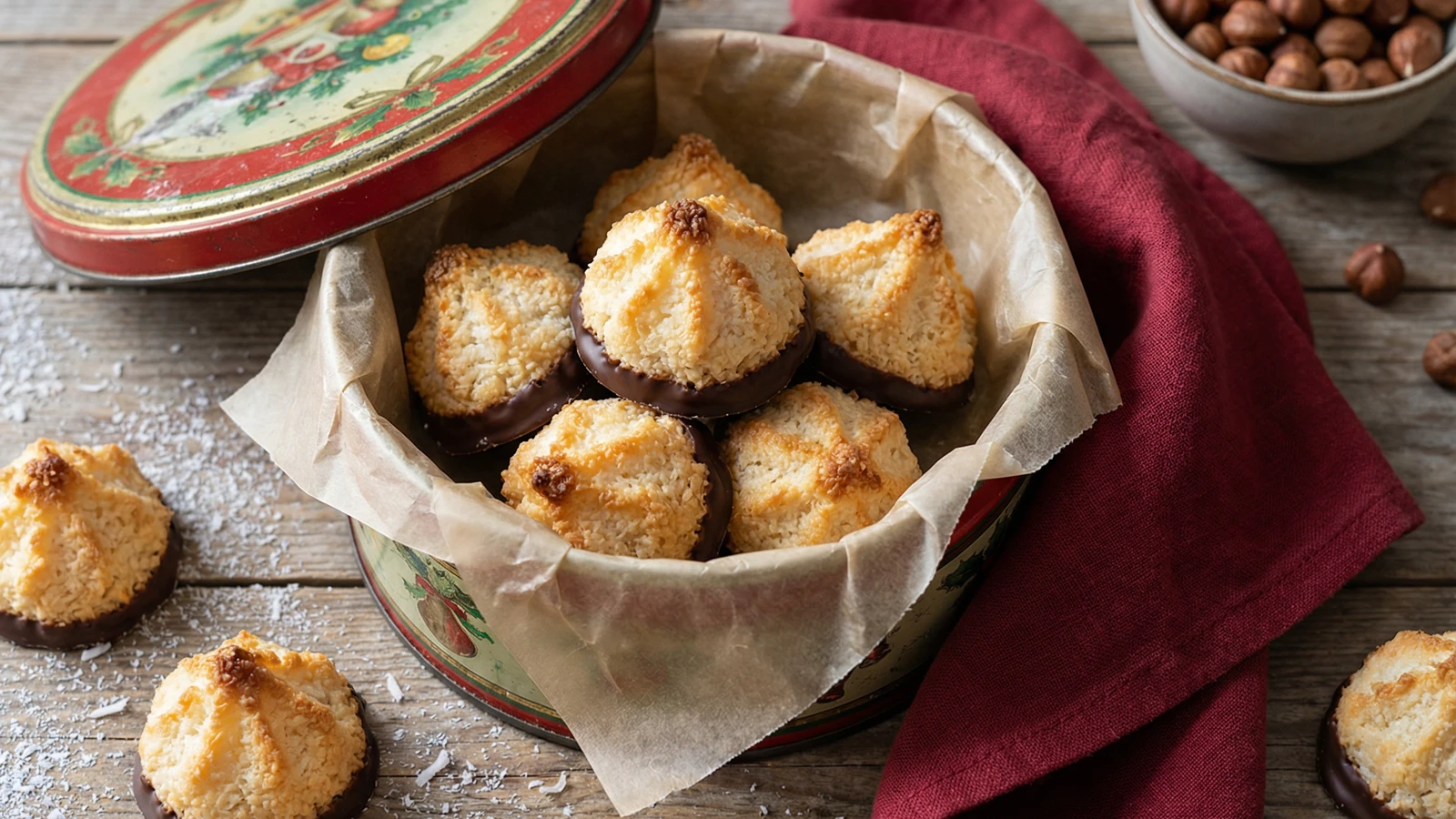
Kokosbusserl
Created by
Pillowy Austrian coconut macaroons with crisp edges and tender, chewy centers, finished with a glossy dark chocolate base that makes them as beautiful as they are irresistible.
Every Austrian Christmas cookie platter tells a story of patience and precision. The Kokosbusserl sits at the center of that tradition, a delicate mound of coconut that shatters slightly at first bite before yielding to a soft, chewy heart. These are not the dense, overly sweet coconut mounds you find shrink-wrapped at the grocery store. These are something finer.
The name translates roughly to 'little coconut kisses,' and that's exactly what they deliver. Viennese bakers have been making them for generations, often alongside Vanillekipferl and Linzer Augen on holiday platters passed among family and friends. The chocolate base isn't traditional in the oldest recipes, but it became standard in the twentieth century, and for good reason. The bittersweet foundation anchors the airy coconut and adds a sophistication that elevates the whole affair.
The technique here matters. You'll warm the egg whites and sugar together before folding in the coconut, a method borrowed from Swiss meringue that creates stability and a finer texture than simply whipping cold whites. It takes an extra five minutes and rewards you with cookies that hold their shape beautifully. Work with room-temperature ingredients. Move deliberately. These cookies respond to confidence.
I've seen home bakers intimidated by European Christmas cookies, convinced they require some special skill. Nonsense. If you can fold egg whites and operate a pastry bag, you can produce Kokosbusserl worthy of any Viennese konditorei. The only requirement is care.
The technique, the tradition, and the story behind every dish.
Discover Culinary AdvisorIngredients
unsweetened desiccated coconut, finely shredded
Quantity
200g (2 1/2 cups)
granulated sugar
Quantity
150g (3/4 cup)
large egg whites
Quantity
3 (about 100g)
fine sea salt
Quantity
1/4 teaspoon
pure vanilla extract
Quantity
1/2 teaspoon
almond extract (optional)
Quantity
1/4 teaspoon
bittersweet chocolate (60-70% cacao)
Quantity
170g (6 oz)
finely chopped
coconut oil or unsalted butter
Quantity
1 tablespoon
| Ingredient | Quantity |
|---|---|
| unsweetened desiccated coconut, finely shredded | 200g (2 1/2 cups) |
| granulated sugar | 150g (3/4 cup) |
| large egg whites | 3 (about 100g) |
| fine sea salt | 1/4 teaspoon |
| pure vanilla extract | 1/2 teaspoon |
| almond extract (optional) | 1/4 teaspoon |
| bittersweet chocolate (60-70% cacao)finely chopped | 170g (6 oz) |
| coconut oil or unsalted butter | 1 tablespoon |
Equipment Needed
- •Double boiler or heatproof bowl over saucepan
- •Pastry bag with large star or round tip
- •Sturdy silicone spatula
- •Instant-read thermometer (optional but helpful)
- •Rimmed baking sheets
- •Parchment paper
Instructions
- 1
Prepare your equipment
Line two baking sheets with parchment paper. Fit a pastry bag with a large open star tip (Ateco 826 or similar) or a plain round tip of about 1/2 inch diameter. Set a heatproof bowl over a pot containing an inch of simmering water. The bowl should not touch the water. Preheat your oven to 325°F (165°C) with racks in the upper and lower thirds.
- 2
Warm the egg white mixture
Add the egg whites, sugar, and salt to the heatproof bowl over the simmering water. Whisk constantly for 3 to 4 minutes until the sugar dissolves completely and the mixture feels hot to the touch (about 140°F if you have a thermometer). Rub a drop between your fingers. It should feel perfectly smooth with no gritty sugar crystals remaining. Remove from heat.
This warming step is essential. It partially cooks the egg whites for food safety and creates a more stable base that holds shape better during baking. - 3
Add flavorings and coconut
Stir in the vanilla extract and almond extract if using. Add all of the desiccated coconut at once and fold with a sturdy spatula until uniformly combined. The mixture will be thick and slightly sticky, holding together when pressed. Let it rest for 5 minutes to hydrate. This allows the coconut to absorb moisture, making piping easier.
- 4
Pipe the cookies
Transfer the coconut mixture to your prepared pastry bag. Pipe mounds about 1 1/4 inches in diameter onto the prepared baking sheets, leaving 1 inch between each. If using a star tip, pipe in a circular motion to create a peaked rosette. For round tips, pipe a mound and twist up to create a small point. Alternatively, use two spoons to drop rounded tablespoons of mixture, shaping each into a peaked mound with dampened fingers.
Dampen your fingertips with cold water to smooth any rough edges without the mixture sticking to your hands. - 5
Bake until golden
Bake for 16 to 18 minutes, rotating the pans front to back and switching their positions halfway through. The cookies are done when the edges turn golden brown and the peaks take on color while the centers remain pale and slightly soft to the touch. They will firm as they cool. Remove from oven and let cool completely on the baking sheets, at least 30 minutes. Do not rush this step.
- 6
Prepare the chocolate base
Place the chopped chocolate and coconut oil in a small heatproof bowl. Microwave in 20-second intervals, stirring after each, until smooth and glossy. Alternatively, melt over a double boiler, stirring constantly. The chocolate should be fluid but not hot. Let it cool for 2 minutes until slightly thickened but still pourable.
- 7
Dip the cookies
Line a clean baking sheet with parchment. Take a cooled cookie and dip its flat bottom into the melted chocolate, letting excess drip off for a few seconds. Place chocolate-side down on the parchment. Repeat with remaining cookies. Refrigerate for 15 minutes until the chocolate sets completely. The base should be firm and glossy, snapping cleanly when you bite through.
For extra elegance, drizzle thin lines of chocolate over the tops of the finished cookies using a fork dipped in the remaining melted chocolate. - 8
Store properly
Layer the finished Kokosbusserl between sheets of parchment paper in an airtight container. They keep at room temperature for up to one week, or frozen for up to two months. The chocolate may bloom slightly if stored in fluctuating temperatures, so maintain consistency. Bring to room temperature before serving for the best texture.
Chef Tips
- •Seek out finely shredded desiccated coconut, not the sweetened flaked variety sold for American-style macaroons. Bob's Red Mill unsweetened shredded coconut works well, or look in the baking aisle of European or Asian grocery stores for finer textures.
- •The almond extract is not traditional but adds a subtle depth that complements the coconut beautifully. A quarter teaspoon is enough to intrigue without announcing itself.
- •If your kitchen is warm, briefly chill the piped cookies for 10 minutes before baking. This helps them hold their shape and develop a more defined peak.
- •Use high-quality bittersweet chocolate with at least 60% cacao for the base. Lesser chocolate tastes waxy and cheap against the refined coconut.
- •These ship well for holiday gifting. Pack them in a single layer with parchment between tiers and include a small ice pack if temperatures exceed 70°F during transit.
Advance Preparation
- •The coconut mixture can be prepared, covered, and refrigerated for up to 24 hours before piping and baking. Let it come to room temperature for 30 minutes before proceeding.
- •Baked cookies without chocolate can be stored in an airtight container at room temperature for up to 3 days before dipping.
- •Fully finished Kokosbusserl freeze beautifully for up to 2 months. Thaw in the refrigerator overnight, then bring to room temperature before serving.
- •For a cookie-baking marathon, bake all your Kokosbusserl up to one week ahead and store with chocolate bases intact. They actually improve slightly over a few days as flavors meld.
Frequently Asked Questions
Nutrition Information
1 serving (about 17g)
Where cooking meets culture.
Culinary mentorship, cultural storytelling, and the editorial depth that makes cooking meaningful.
Explore Culinary Advisor