Culinary Advisor
A cooking platform built around craft, culture, and the stories behind what we eat.
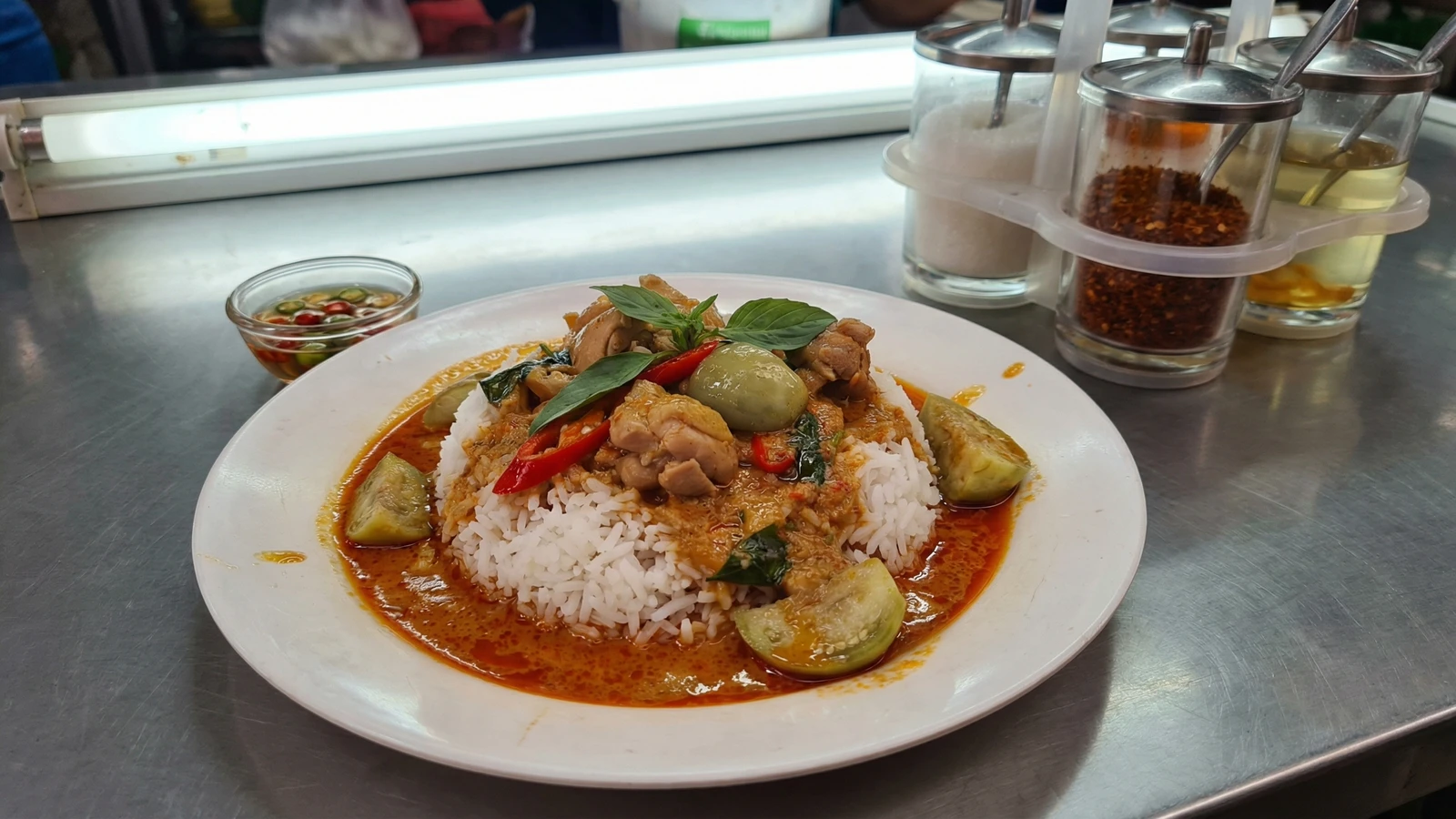
Curry Over Rice (Khao Rad Gaeng)
Created by
Point at the curry, they ladle it over your rice. That's how most Thais eat every day. The kreung tam does the work. The four pillars hold the balance. No menu needed.
This is how Thailand actually eats. Not the restaurant version. Not the cooking show version. The real version. You walk up to a stall with eight curries in steel trays, point at two or three, and they go right on your rice. Khao rad gaeng. Rice topped with curry. No English menu, no Instagram moment. Just a melamine plate, a plastic stool, and a meal that follows every principle of Thai cooking without naming a single one.
The kreung tam is everything here. Every curry in those steel trays started in a mortar. Dried chilies, garlic, shallots, lemongrass, galangal, cilantro root, kaffir lime zest, peppercorns, shrimp paste. Pounded until the oils release and the paste becomes one thing instead of nine separate things. That's the foundation Ajarn McDang taught me on day one: you cannot cook Thai food without a kreung tam. The curry is just the paste expressed through coconut cream.
I'm giving you gaeng phet gai, red curry with chicken, because prik gaeng phet is the mother paste of Central Thai cooking. Learn this one and you understand the system. The dry spices get toasted first (that's the aroma deepening). Then everything goes into the krok in order: hard ingredients first, soft last, shrimp paste at the end. The paste fries in cracked coconut cream until the oil separates and the kitchen smells like a Bangkok lunch stall at eleven in the morning. Fish sauce for salt. Palm sugar for sweet. The kaffir lime leaves and basil for the aromatic finish. Four pillars. One plate.
Ajarn always said: "I don't teach recipes. I teach principles." A khao rad gaeng vendor doesn't follow a recipe either. She made that paste at five in the morning by feel, cooked the curries by memory, and every single one of them is balanced because she understands the system. That's what I want you to understand. The plate is simple. The knowledge behind it is deep.
Khao rad gaeng (ข้าวราดแกง, literally "rice topped with curry") became Bangkok's dominant lunch format in the mid-20th century as rapid urbanization created a workforce that needed fast, cheap, complete meals. The stalls evolved from home kitchens that began selling extra portions to neighbors, eventually becoming the city's most widespread food format. Unlike made-to-order stir-fry stalls (ร้านอาหารตามสั่ง), khao rad gaeng vendors cook everything before service, which allows the curries to develop deeper flavor as the paste, coconut fat, and seasonings meld during the holding period. The red curry paste (prik gaeng phet) featured here is considered the mother paste of Central Thai cuisine, with green and panang pastes being variations on its core structure.
The technique, the tradition, and the story behind every dish.
Discover Culinary AdvisorIngredients
dried red spur chilies (prik chi fa haeng)
Quantity
10
deseeded, soaked in warm water 15 minutes, drained
coriander seeds (met phak chi)
Quantity
1 tablespoon
cumin seeds (yira)
Quantity
1 teaspoon
white peppercorns (prik thai khao)
Quantity
1 teaspoon
garlic
Quantity
5 cloves
shallots (hom daeng)
Quantity
4 small
roughly sliced
lemongrass (takhrai)
Quantity
2 stalks
tender part only, thinly sliced
galangal (kha)
Quantity
1 tablespoon
thinly sliced
cilantro roots (rak phak chi)
Quantity
2
scraped clean, chopped
kaffir lime zest (phiu makrut)
Quantity
zest of 1 lime
shrimp paste (kapi)
Quantity
1 tablespoon
coconut cream (hua kathi)
Quantity
1 cup
thick first press
coconut milk (hang kathi)
Quantity
1½ cups
thinner second press
boneless chicken thigh
Quantity
400g
sliced into bite-sized pieces
Thai eggplant (makhuea phuang)
Quantity
150g
quartered
bamboo shoots (no mai)
Quantity
100g
sliced
fish sauce (nam pla)
Quantity
2-3 tablespoons
palm sugar (nam tan pip)
Quantity
1 tablespoon
kaffir lime leaves (bai makrut)
Quantity
5
torn, central vein removed
Thai sweet basil leaves (horapha)
Quantity
1 cup
red spur chilies (prik chi fa)
Quantity
2
sliced on the bias
steamed jasmine rice
Quantity
for serving
fish sauce for nam pla prik
Quantity
2 tablespoons
bird's eye chilies (prik khi nu) for nam pla prik
Quantity
5
sliced into rounds
lime for nam pla prik
Quantity
1 squeeze
dried chili flakes (phrik pon) (optional)
Quantity
for the table
| Ingredient | Quantity |
|---|---|
| dried red spur chilies (prik chi fa haeng)deseeded, soaked in warm water 15 minutes, drained | 10 |
| coriander seeds (met phak chi) | 1 tablespoon |
| cumin seeds (yira) | 1 teaspoon |
| white peppercorns (prik thai khao) | 1 teaspoon |
| garlic | 5 cloves |
| shallots (hom daeng)roughly sliced | 4 small |
| lemongrass (takhrai)tender part only, thinly sliced | 2 stalks |
| galangal (kha)thinly sliced | 1 tablespoon |
| cilantro roots (rak phak chi)scraped clean, chopped | 2 |
| kaffir lime zest (phiu makrut) | zest of 1 lime |
| shrimp paste (kapi) | 1 tablespoon |
| coconut cream (hua kathi)thick first press | 1 cup |
| coconut milk (hang kathi)thinner second press | 1½ cups |
| boneless chicken thighsliced into bite-sized pieces | 400g |
| Thai eggplant (makhuea phuang)quartered | 150g |
| bamboo shoots (no mai)sliced | 100g |
| fish sauce (nam pla) | 2-3 tablespoons |
| palm sugar (nam tan pip) | 1 tablespoon |
| kaffir lime leaves (bai makrut)torn, central vein removed | 5 |
| Thai sweet basil leaves (horapha) | 1 cup |
| red spur chilies (prik chi fa)sliced on the bias | 2 |
| steamed jasmine rice | for serving |
| fish sauce for nam pla prik | 2 tablespoons |
| bird's eye chilies (prik khi nu) for nam pla priksliced into rounds | 5 |
| lime for nam pla prik | 1 squeeze |
| dried chili flakes (phrik pon) (optional) | for the table |
Equipment Needed
- •Heavy granite mortar and pestle (krok), at least 8 inches diameter
- •Wok or wide heavy-bottomed pan
- •Spice grinder or small mortar for toasting spices
Instructions
- 1
Toast the dry spices
Set a dry pan over medium-low heat. Add the coriander seeds, cumin seeds, and white peppercorns. Shake the pan gently. In about two minutes the coriander will darken slightly and the kitchen will smell warm and round, almost like toast. That aroma change is the volatile oils activating. Once you smell it, they're done. Pull them off the heat immediately. Burned spices are bitter spices. Grind to a fine powder in a spice grinder or a small mortar. Set aside.
Toast the spices dry. No oil. Oil fries the exterior before the heat penetrates the seed. Dry heat toasts evenly from the outside in. You'll know by the smell. - 2
Pound the kreung tam
This is the step that makes or breaks your curry. In a heavy granite mortar (krok), start with the soaked, drained chilies and a pinch of salt. The salt acts as an abrasive and helps break down the fibers. Pound to a rough paste. Now add in order, pounding each addition before the next: garlic, then peppercorn-coriander-cumin powder, then lemongrass, then galangal, then cilantro root, then shallots, then kaffir lime zest. Hard ingredients first, soft last. Every addition gets pounded into the paste until you can't see individual pieces anymore. Finally, add the kapi (shrimp paste) and pound until it's fully incorporated. The finished paste should be smooth, fragrant, and slightly oily. Red-orange. It should smell like a Bangkok curry stall. If it doesn't, you stopped too early. Keep pounding.
Ajarn always said: the kreung tam tells you when it's ready. When the aroma fills the room and the paste pulls away from the mortar walls in a cohesive mass, you're there. Thirty minutes of pounding is normal. Your arm will hurt. That's the price of real curry. - 3
Crack the coconut cream
Pour the thick coconut cream (hua kathi, the first press) into a wok or wide pan over medium-high heat. Stir occasionally. Within three to four minutes, the cream will start to separate. You'll see clear pools of coconut oil forming on the surface and the solids will begin to look slightly grainy. That separation is called "cracking" the coconut cream, and it's the most misunderstood step in Thai curry. Most people dump the paste into cold coconut milk and wonder why their curry tastes flat. The cracked cream provides a fat base for frying the paste. Without it, you're boiling your paste instead of frying it. Everything changes.
Use real coconut cream from a can or, better, freshly pressed. If the can says 'coconut milk,' check the fat content. You want the thick stuff, at least 20% fat. Shake the can before opening and scoop the thick cream off the top if it's separated. That thick layer is your hua kathi. - 4
Fry the paste
Add three to four tablespoons of your kreung tam to the cracked coconut cream. This is where the magic happens. Stir constantly. The paste will sizzle and pop as it hits the hot fat. Fry for three to four minutes. You're looking for the oil to separate again, rising to the surface in red-tinted pools around the edges of the paste. The color deepens. The aroma intensifies. The raw shrimp paste smell disappears and is replaced by something rich and complex. If it starts to stick, add a splash of coconut milk. But don't rush this. Underfrying the paste is the number one reason homemade Thai curry tastes muddy.
- 5
Build the curry
Add the chicken pieces to the pan. Toss them in the fried paste and let them cook for two minutes, getting coated and starting to firm up. Now pour in the thin coconut milk (hang kathi). Add the bamboo shoots and Thai eggplant. Bring to a gentle simmer. The curry should not boil hard. A gentle bubble, that's all. Cook for eight to ten minutes until the chicken is cooked through and the eggplant is tender but still has some bite. The surface of the curry should have a thin layer of red-orange coconut oil. That oil layer is a sign of a properly made curry. Don't stir it in. It belongs there.
- 6
Season and finish
Add the fish sauce and palm sugar. Stir once. Taste. Salty should lead, followed by the richness of coconut, then a background sweetness, then the heat building. Adjust. More fish sauce if it needs depth. A pinch more sugar if the chilies are aggressive. Tear in the kaffir lime leaves and add the sliced red chilies. Stir once more. Kill the heat and scatter the horapha (sweet basil) leaves on top. The residual heat will wilt them just enough. They should be bright green when you serve, not dark.
- 7
Plate khao rad gaeng
Mound jasmine rice on one side of the plate. Ladle the curry generously over and beside the rice, letting the sauce pool and soak into the edges. This is not fine dining. The curry touches the rice. That's the point. Serve with nam pla prik on the side: fish sauce, sliced bird's eye chilies, and a squeeze of lime in a small dish. Set out phrik pon (chili flakes) for the table. Every Thai adjusts at the table. The condiments are part of the dish, not afterthoughts.
At a real khao rad gaeng stall, you'd point at two or three curries and they all go on the same plate. Once you've mastered this red curry, learn a second. Gaeng khiew wan (green curry), gaeng som (sour curry), gaeng massaman. The kreung tam changes. The method stays the same. That's the system.
Chef Tips
- •The kreung tam for gaeng phet (red curry paste) is the mother paste of Central Thai cooking. Green curry paste swaps in fresh green chilies for the dried reds and adds more cilantro root. Panang paste adds roasted peanuts and more cumin. The structure is the same. Learn red, and you understand the system. Principles, not recipes.
- •Coconut cream and coconut milk are not the same thing. Hua kathi (coconut cream) is the first press, thick and fat-rich. Hang kathi (coconut milk) is the second press, thinner and more watery. The cream fries the paste. The milk becomes the curry liquid. Using only one or the other is the reason most homemade curries taste wrong. If you only have cans, refrigerate one overnight, scoop the solid layer for cream, use the liquid as milk.
- •Khao rad gaeng stalls cook their curries hours before service. The curries actually improve as they sit. The paste, the fat, and the seasonings meld and round out. If your curry tastes a little sharp right after cooking, let it rest for twenty minutes. It'll settle. This is one of the few Thai dishes that's better reheated the next day.
- •Nam pla prik is not optional. It's the final adjustment tool on every Thai table. Fish sauce, sliced bird's eye chilies, lime juice. It adds salinity, heat, and acid in one spoonful. Without it, you're eating with one hand tied behind your back. Make a small bowl for the table every time you cook Thai food.
Advance Preparation
- •The kreung tam can be pounded up to three days ahead and stored in an airtight container in the fridge. It also freezes well for up to a month. Make a double batch. Real khao rad gaeng vendors pound their paste at five in the morning. You can do it on a Sunday.
- •The finished curry improves with rest. Cook it, let it cool, refrigerate. Reheat gently the next day. The flavors deepen. This is one of the rare Thai dishes that actually benefits from being made ahead.
- •Jasmine rice can be cooked and held in a rice cooker for several hours. Day-old rice is for fried rice. Fresh rice is for khao rad gaeng. The grains should be fluffy and slightly sticky, not dried out.
Frequently Asked Questions
Nutrition Information
1 serving (about 510g)
Where cooking meets culture.
Culinary mentorship, cultural storytelling, and the editorial depth that makes cooking meaningful.
Explore Culinary Advisor