Culinary Advisor
A cooking platform built around craft, culture, and the stories behind what we eat.
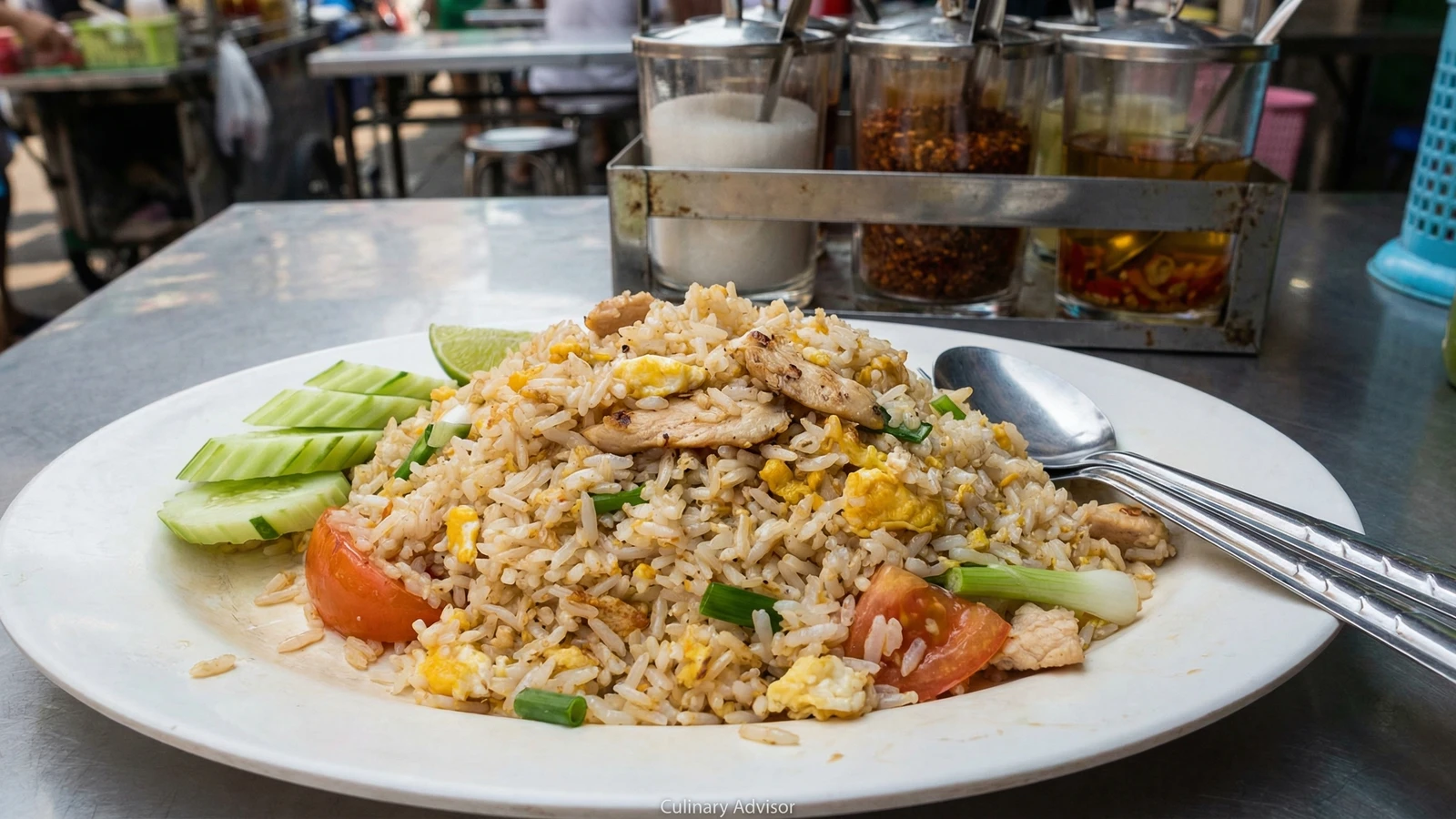
Thai Fried Rice (Khao Pad)
Created by
Day-old rice, a screaming wok, and fish sauce for salt. The simplest Central Thai dish still follows every principle. No paste, no complexity, just the four pillars and violent heat.
Khao pad is the test. If you can make fried rice that tastes like Thailand, you understand the system. No kreung tam here. No complex paste. Just garlic, egg, rice, and the four pillars doing their work in a hot wok.
Ajarn always said: if you understand the principles, you can cook any Thai dish. Khao pad proves it. Nam pla (fish sauce) provides the salt and umami. A pinch of sugar for balance. Manao (lime) squeezed over at the table for sour. Prik from the nam pla prik (chili fish sauce) on the side for heat. All four pillars, present and accounted for, even in a dish that takes five minutes from wok to plate.
Here's what separates Thai fried rice from every other fried rice on the planet: the rice is seasoned with nam pla, not soy sauce. That single decision changes everything. Fish sauce is fermented protein. It carries salt plus a depth of umami that soy sauce, a completely different fermentation from a completely different culinary tradition, does not replicate in this context. When nam pla hits a screaming-hot wok, it caramelizes on contact. That smell, that savory, slightly sweet char, is the smell of every food court and street stall in Bangkok at noon. You know it before you see the wok. That's fish sauce doing its job.
The rice must be day-old. This isn't tradition for tradition's sake. This is physics. Freshly cooked rice is too moist. The surface starch is still hydrated and sticky. Overnight in the refrigerator, the starch retrogrades: it firms up, the grains separate, the surface dries out. That dry surface is what lets each grain toast individually in the wok instead of clumping into a wet, steamed mess. Cook your jasmine rice the night before. Spread it on a plate. Refrigerate it uncovered. Tomorrow, you make khao pad. Principles, not recipes.
Khao pad arrived in Thailand with Chinese immigrants during the late 19th and early 20th centuries, adapting the Cantonese wok-fried rice technique to Thai seasonings. The substitution of fish sauce for soy sauce as the primary seasoning transformed a Chinese method into a distinctly Thai dish, one that now outsells nearly every other one-plate meal in Bangkok's food courts and street stalls. The tradition of serving khao pad with raw cucumber slices, a lime wedge, and a krueng prung (condiment tray) of sugar, chili flakes, fish sauce, and vinegar is purely Thai, an invitation for the eater to complete the four-pillar balance at the table.
The technique, the tradition, and the story behind every dish.
Discover Culinary AdvisorIngredients
day-old cooked jasmine rice (khao hom mali)
Quantity
3 cups (about 400g)
cold from the refrigerator
boneless chicken thigh
Quantity
200g
sliced thin against the grain
garlic (kratiem)
Quantity
3 cloves
minced
eggs
Quantity
2
vegetable oil
Quantity
2 tablespoons
fish sauce (nam pla)
Quantity
1½ tablespoons
granulated sugar
Quantity
1 teaspoon
ground white pepper (prik thai)
Quantity
¼ teaspoon
green onion (ton hom)
Quantity
2 stalks
cut into 1-inch pieces
tomato
Quantity
1 small
cut into thin wedges
cucumber
Quantity
for serving
sliced
lime (manao)
Quantity
for serving
cut into wedges
nam pla prik (chili fish sauce)
Quantity
for serving
chili flakes (phrik pon)
Quantity
for serving
| Ingredient | Quantity |
|---|---|
| day-old cooked jasmine rice (khao hom mali)cold from the refrigerator | 3 cups (about 400g) |
| boneless chicken thighsliced thin against the grain | 200g |
| garlic (kratiem)minced | 3 cloves |
| eggs | 2 |
| vegetable oil | 2 tablespoons |
| fish sauce (nam pla) | 1½ tablespoons |
| granulated sugar | 1 teaspoon |
| ground white pepper (prik thai) | ¼ teaspoon |
| green onion (ton hom)cut into 1-inch pieces | 2 stalks |
| tomatocut into thin wedges | 1 small |
| cucumbersliced | for serving |
| lime (manao)cut into wedges | for serving |
| nam pla prik (chili fish sauce) | for serving |
| chili flakes (phrik pon) | for serving |
Equipment Needed
- •Wok (carbon steel preferred, well-seasoned)
- •Wok spatula
Instructions
- 1
Break up the rice
Take the cold rice out of the fridge and break up any clumps with your hands. Work through it gently until every grain is separate. The rice should feel dry and firm, individual grains that roll between your fingers. If it's soft and sticky, it's too fresh. You need that retrograded starch. Dry surface, separate grains, ready to toast in the wok. This step takes sixty seconds and determines whether you get fried rice or rice porridge.
If you forgot to make rice last night, cook it now, spread it thin on a sheet pan, and put it in the fridge uncovered for at least two hours. Not ideal, but it works. Freshly cooked rice straight from the pot will never fry properly. - 2
Sear the chicken
Get the wok screaming hot over the highest heat your stove can produce. Add the oil and let it shimmer. Lay the chicken slices into the wok in a single layer. Don't touch them. Let the meat sear against the hot metal for about 30 seconds until the edges turn golden. Then flip and cook another 30 seconds until just cooked through. The chicken should have some color, some char at the edges. Push it to the side of the wok.
- 3
Cook garlic and egg
Add the minced garlic to the open center of the wok. It should sizzle on contact and turn golden within seconds. If it sits there doing nothing, your wok isn't hot enough. Immediately crack the two eggs into the wok right on top of the garlic. Let them set for about five seconds on the bottom, then break the yolks and scramble roughly with your spatula. You're not making a fluffy omelet. You want big, uneven curds of egg mixed with the garlic. Some pieces golden, some just set. That's the texture you want.
- 4
Fry the rice
Add all the cold rice to the wok at once. Now toss. Press the rice against the hot surface of the wok, let it sit for a few seconds, then flip and toss again. You're toasting the grains. Each one should get contact with the hot metal. The rice will start to make a crackling sound, like tiny pops, that's the dry starch hitting the heat. That sound means you're doing it right. Keep tossing and pressing for about two minutes. The rice should be hot through and through, with some grains getting a faint golden toast.
- 5
Season with fish sauce
Pour the nam pla around the edge of the wok so it hits the hot metal first, not the rice. It'll caramelize instantly, a burst of savory aroma that fills the kitchen. That's fish sauce meeting a screaming-hot wok. That's the smell of Bangkok. Add the sugar and white pepper. Toss twice to distribute everything evenly. Taste a grain of rice. It should be savory and balanced, salty from the fish sauce with a whisper of sweetness behind it. If it needs more nam pla, add a splash. Trust your tongue.
Fish sauce for salt. That's the law. If you season fried rice with soy sauce, you've made Chinese fried rice. Nothing wrong with that, but it's not khao pad. The fermentation profile is different, the flavor is different, the dish is different. - 6
Finish and plate
Toss in the tomato wedges and green onion pieces. Two or three tosses to wilt the onion slightly and warm the tomato without cooking it to mush. Kill the heat. Mound the fried rice onto a plate. Pile it generously, not neatly. Arrange cucumber slices and a lime wedge on the side. The lime is not decoration. You squeeze it over the rice before you eat. That's the sour pillar arriving at the table. Serve with nam pla prik and phrik pon on the side. The eater finishes the dish. That's the system.
Chef Tips
- •Khao pad is the most forgiving and the most revealing dish in Thai cooking. Forgiving because it's five minutes and five ingredients. Revealing because if your fish sauce is cheap, you'll taste it. If your rice is too wet, you'll see it. If your wok isn't hot enough, you'll know. Use a good nam pla. Squid brand, Tiparos, Megachef. The bottle matters here because there's nowhere for bad fish sauce to hide.
- •The krueng prung (condiment tray) is not optional. In Thailand, every khao pad comes with four jars on the table: sugar, phrik pon (chili flakes), nam pla (fish sauce), and prik nam som (chili vinegar). The cook seasons the dish 80%. The eater finishes it to taste. That's not sloppiness. That's the Thai system. You eat with your tongue, not with a recipe.
- •You can khao pad anything. Chicken (gai), pork (moo), shrimp (goong), crab (poo), or just egg (khai). The principle is identical every time: day-old rice, screaming wok, fish sauce for salt. The protein changes. The method doesn't. Once you understand the method, you don't need a recipe for each variation. That's what Ajarn meant by principles, not recipes.
- •Nam pla prik is the most important condiment on the Thai table. Slice bird's eye chilies (prik khi nu) thin. Drop them into fish sauce. Squeeze a little lime in. Done. It takes thirty seconds to make and it lasts a week in the fridge. This goes on everything: khao pad, rice with curry, plain rice, fried eggs. If you learn one condiment, learn this one.
Advance Preparation
- •Cook jasmine rice the night before. Spread it in a thin layer on a plate or sheet pan and refrigerate uncovered overnight. The surface needs to dry out for the starch to retrograde. This is the single most important prep step for khao pad.
- •Nam pla prik can be made days ahead and stored in the refrigerator. It only gets better as the chilies steep. Make a jar and keep it on hand for everything.
- •Slice the chicken and mince the garlic ahead of time. Once the wok is hot, you have no time to prep. Everything happens in under five minutes.
Frequently Asked Questions
Nutrition Information
1 serving (about 430g)
Where cooking meets culture.
Culinary mentorship, cultural storytelling, and the editorial depth that makes cooking meaningful.
Explore Culinary Advisor