Culinary Advisor
A cooking platform built around craft, culture, and the stories behind what we eat.
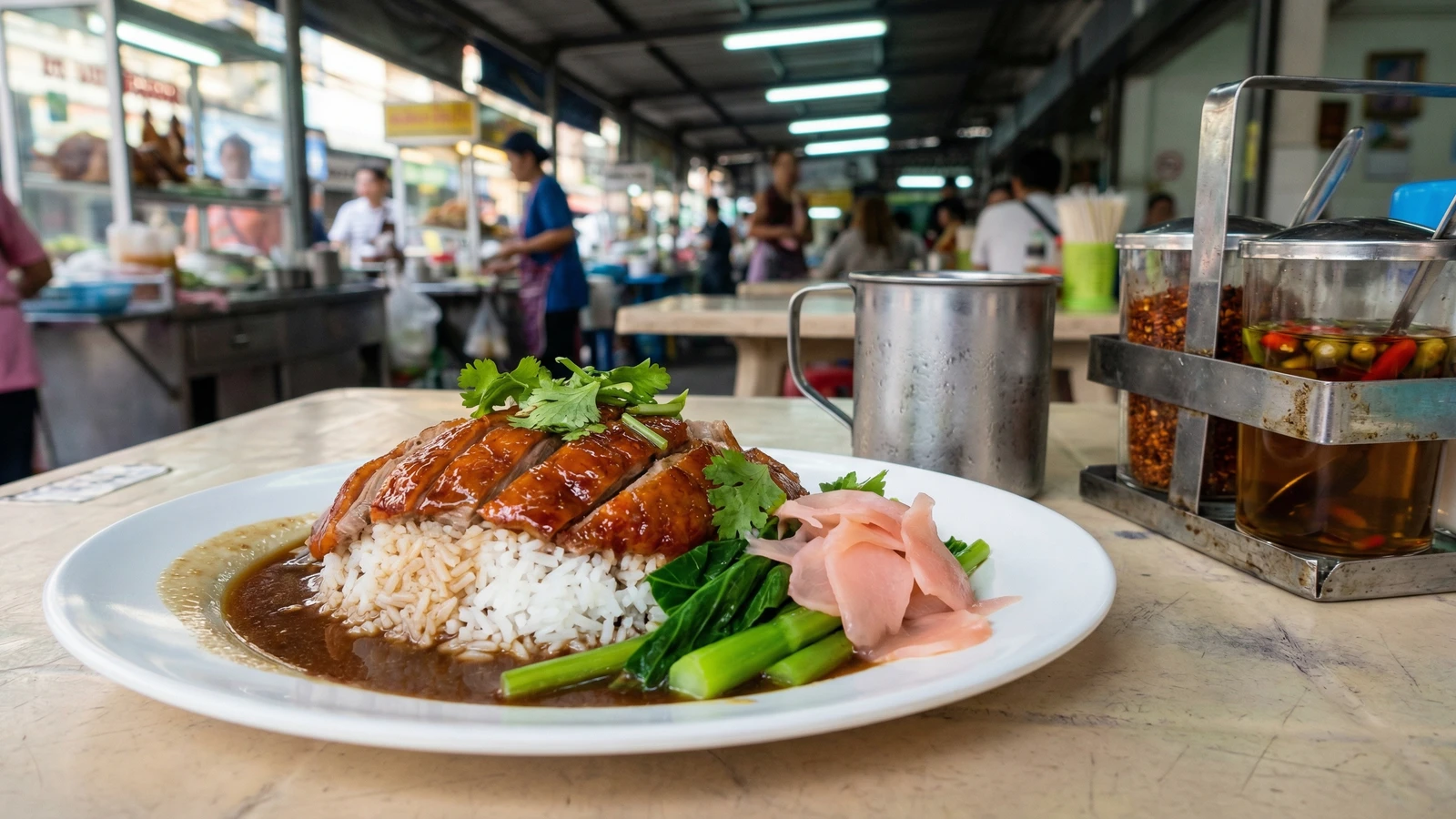
Roast Duck Over Rice (Khao Na Ped)
Created by
Yaowarat's gift to Bangkok: five-spice roasted duck, a dark soy gravy that coats every grain of rice, and pickled ginger that cuts through all of it. This is the dish where soy sauce belongs, because the Chinese tradition that built it demands it.
Here's the truth most people don't understand: Thai food includes Chinese food. It has for two hundred years. Bangkok's Yaowarat district, Chinatown, is not a tourist attraction. It's where entire categories of Thai dishes were born. Khao na ped is one of them.
Ajarn McDang taught me that the four pillars, fish sauce, palm sugar, tropical acids, the kreung tam, govern Thai cuisine. But he also taught me to understand the system, not just memorize it. Yaowarat cooking follows its own logic: five-spice instead of kreung tam, soy sauce instead of fish sauce, rock sugar instead of palm sugar. These aren't violations of the principles. They're a parallel tradition that Thais adopted whole and made their own over generations. If you understand why each ingredient is there, you understand both systems. Principles, not recipes.
The gravy is everything. That dark, glossy, five-spice-scented nam rad (น้ำราด) poured over the rice and duck is what separates khao na ped from any roast duck plate in the world. It's built from pan drippings, light soy for salt, dark soy for color and molasses depth, star anise, cinnamon, and rock sugar. When it's right, the gravy coats every grain of rice so every bite carries the essence of the duck. The rice isn't a bed. It's a participant. That's the design.
And the pickled ginger (khing dong, ขิงดอง). Not a garnish. Not a suggestion. Structural. The sharp, vinegary bite of the pickled ginger cuts through the richness of the duck fat and the sweetness of the gravy. Without it, the plate is heavy. With it, the whole thing lifts. Ajarn always said: the accompaniments are part of the dish. In Thai eating, what's on the side is never optional. You'll find nam pla prik (น้ำปลาพริก) and phrik pon (พริกป่น) on the table too. Use them. They're there for a reason.
Khao na ped traces directly to the Teochew (Chaozhou) Chinese community that settled in Bangkok's Yaowarat district beginning in the late 18th century. Teochew-style roasted and braised duck, adapted with Thai condiments and served over jasmine rice, became one of Bangkok's definitive one-plate meals by the mid-20th century. The nam rad (poured gravy) format parallels the Central Thai khao rad gaeng (rice with ladled curry), suggesting this Chinese import slotted neatly into an existing Thai eating pattern where rice is always the center and sauce is always poured over, never on the side.
The technique, the tradition, and the story behind every dish.
Discover Culinary AdvisorIngredients
whole duck
Quantity
1 (about 2kg / 4.5 lbs)
cleaned and patted dry
light soy sauce (si ew khao)
Quantity
2 tablespoons
for marinade
dark soy sauce (si ew dam)
Quantity
1 tablespoon
for marinade
five-spice powder (phong pha lo)
Quantity
1 teaspoon
for marinade
ground white pepper (phrik thai)
Quantity
1/2 teaspoon
garlic
Quantity
4 cloves
minced
cilantro roots (rak phak chi)
Quantity
3
minced
honey
Quantity
2 tablespoons
for glaze
rice vinegar
Quantity
1 tablespoon
for glaze
dark soy sauce (si ew dam)
Quantity
1 tablespoon
for glaze
water or duck stock
Quantity
2 cups
for gravy
light soy sauce (si ew khao)
Quantity
2 tablespoons
for gravy
dark soy sauce (si ew dam)
Quantity
1 tablespoon
for gravy
oyster sauce
Quantity
1 tablespoon
for gravy
star anise (poy kak)
Quantity
3 whole
cinnamon stick (ob choei)
Quantity
1
five-spice powder (phong pha lo)
Quantity
1/2 teaspoon
for gravy
rock sugar or palm sugar (nam tan pip)
Quantity
2 tablespoons
cornstarch
Quantity
1 tablespoon
mixed with 2 tablespoons water
Chinese broccoli (pak kana)
Quantity
200g
trimmed
cooked jasmine rice
Quantity
4 cups
pickled ginger (khing dong)
Quantity
100g
nam pla prik (chili fish sauce)
Quantity
for serving
phrik pon (chili flakes)
Quantity
for serving
| Ingredient | Quantity |
|---|---|
| whole duckcleaned and patted dry | 1 (about 2kg / 4.5 lbs) |
| light soy sauce (si ew khao)for marinade | 2 tablespoons |
| dark soy sauce (si ew dam)for marinade | 1 tablespoon |
| five-spice powder (phong pha lo)for marinade | 1 teaspoon |
| ground white pepper (phrik thai) | 1/2 teaspoon |
| garlicminced | 4 cloves |
| cilantro roots (rak phak chi)minced | 3 |
| honeyfor glaze | 2 tablespoons |
| rice vinegarfor glaze | 1 tablespoon |
| dark soy sauce (si ew dam)for glaze | 1 tablespoon |
| water or duck stockfor gravy | 2 cups |
| light soy sauce (si ew khao)for gravy | 2 tablespoons |
| dark soy sauce (si ew dam)for gravy | 1 tablespoon |
| oyster saucefor gravy | 1 tablespoon |
| star anise (poy kak) | 3 whole |
| cinnamon stick (ob choei) | 1 |
| five-spice powder (phong pha lo)for gravy | 1/2 teaspoon |
| rock sugar or palm sugar (nam tan pip) | 2 tablespoons |
| cornstarchmixed with 2 tablespoons water | 1 tablespoon |
| Chinese broccoli (pak kana)trimmed | 200g |
| cooked jasmine rice | 4 cups |
| pickled ginger (khing dong) | 100g |
| nam pla prik (chili fish sauce) | for serving |
| phrik pon (chili flakes) | for serving |
Equipment Needed
- •Roasting pan with wire rack
- •Basting brush
- •Medium saucepan for gravy
- •Sharp cleaver or heavy chef's knife
Instructions
- 1
Marinate the duck
Remove any excess fat from the duck cavity. Pat the whole bird completely dry inside and out with paper towels. Dry skin is the difference between crispy and flabby. In a small bowl, mix the light soy sauce, dark soy sauce, five-spice powder, white pepper, minced garlic, and minced cilantro roots into a rough paste. Rub this everywhere: inside the cavity, over the breast, into the leg joints, under the wings. You want every surface seasoned. Cover and refrigerate for at least one hour. Overnight is better.
Cilantro root is the Thai addition to what would otherwise be a purely Chinese preparation. That's the integration at work. Two traditions meeting in one bird. If you can't find cilantro roots, use the bottom two inches of cilantro stems, pounded. - 2
Tighten and glaze the skin
Pull the duck out of the fridge thirty minutes before roasting. Boil a full kettle of water. Hold the duck over the sink and pour the boiling water slowly over the skin, turning the bird to hit every surface. You'll see the skin tighten and the pores close immediately. This is a Teochew technique that Bangkok's Yaowarat duck shops have been using for generations. It's physics: the heat contracts the proteins in the skin, and when that contracted skin hits the oven, it renders and crisps instead of going rubbery. Pat the bird dry again. Mix the honey, rice vinegar, and dark soy sauce for the glaze. Brush the entire surface. Every inch. The honey caramelizes in the oven. The dark soy gives that deep mahogany color. The vinegar helps the skin dry further.
- 3
Roast the duck
Preheat your oven to 220°C (425°F). Set the duck breast-side up on a rack over a roasting pan. Pour about a cup of water into the bottom of the pan to catch drippings and prevent smoking. Roast at 220°C for 30 minutes. The skin should be starting to turn golden and the fat should be rendering. Drop the temperature to 170°C (340°F) and continue roasting for another 1.5 hours. Every 30 minutes, brush with more glaze and let the color build. The duck is done when the leg joint moves freely and the juices from the thigh run clear. The skin should be deep reddish-brown and lacquered looking. Rest the bird for 15 minutes before slicing. Save every drop of liquid from the roasting pan. That's the foundation of your gravy.
If the skin is getting too dark before the duck is cooked through, tent loosely with foil. The color comes from the dark soy and honey in the glaze, so it browns faster than you might expect. Don't panic. Adjust. - 4
Build the five-spice gravy
While the duck rests, pour the pan drippings through a strainer into a saucepan. Skim off excess fat but leave some. A little duck fat in the gravy is flavor, not a problem. Add the water or stock, light soy sauce, dark soy sauce, oyster sauce, star anise, cinnamon stick, five-spice powder, and rock sugar. Bring to a simmer and let it cook for 10 minutes. The kitchen will smell like Yaowarat at sunset. Taste the gravy. It should be savory, slightly sweet, and deeply aromatic from the five-spice and star anise. Adjust the soy for salt, the sugar for sweetness. Give the cornstarch slurry a stir and stream it in slowly while stirring. The gravy should thicken to the consistency of thin cream: pourable but with enough body to cling to rice. Remove the star anise and cinnamon stick.
The gravy is where this dish lives or dies. A Yaowarat duck shop is only as good as its nam rad. Don't rush this step. Taste, adjust, taste again. The soy-to-sugar ratio is the balance. It should never taste like just soy sauce and never taste like candy. - 5
Blanch the greens
Bring a pot of salted water to a rolling boil. Drop in the Chinese broccoli (pak kana) and blanch for 60 to 90 seconds. The stems should be tender-crisp and the leaves still bright green. Drain immediately. Don't overcook. Limp greens on a plate of rich duck and gravy is a textural failure. You need the crunch and the slight bitterness to counterbalance the richness.
- 6
Slice the duck
Use a sharp cleaver or heavy knife. Remove the legs and separate drumsticks from thighs. Slice the breast meat against the grain into pieces about half a centimeter thick. You want clean slices that show the roasted exterior and juicy interior in every piece. If you've got a whole duck, debone the thighs and slice that meat too. Keep the skin attached. That crispy, lacquered skin is half the experience.
- 7
Assemble the plate
Mound a generous portion of jasmine rice on each plate. Lay the sliced duck over one side, slightly overlapping the pieces so the glossy skin faces up. Tuck the blanched pak kana alongside. Ladle the hot five-spice gravy over the duck and rice. Don't be shy. The gravy should pool around the rice and soak in. Place a generous pile of pickled ginger (khing dong) on the plate. Not on the side. On the plate. It's part of the dish. Set nam pla prik and phrik pon on the table. Eat. This is how Bangkok feeds itself.
Chef Tips
- •In Yaowarat, nobody roasts their own duck at home. They buy it from the shop where it's been hanging in the window since dawn, skin lacquered and glistening. If you have a good Chinese roast duck shop near you, buy the duck and focus your energy on making the gravy from scratch. That's the weeknight version, and it's completely legitimate. The gravy is where your skill shows.
- •Five-spice powder (phong pha lo) is the backbone of this dish. It's star anise, cinnamon, cloves, Sichuan pepper, and fennel seed. Buy it from an Asian grocer or make your own by toasting and grinding equal parts. Pre-ground supermarket five-spice from years ago in the back of your cabinet won't do it. The aromatics fade. Fresh five-spice smells like Yaowarat. Old five-spice smells like dust.
- •Pickled ginger (khing dong) is not optional. I'll say it again. Not optional. The sharpness and acidity cut through the duck fat and the sweet-salty gravy. Without it, you have a rich plate of food. With it, you have a balanced meal. Every duck rice shop in Bangkok puts it on the plate. Follow the shops.
- •If you're using duck legs instead of a whole bird, roast them at 200°C for about an hour. Same marinade, same glaze, same technique. The legs have more connective tissue than breast, so they actually benefit from the longer cook time. The gravy still gets made the same way, just use chicken stock if you don't have drippings from a whole bird.
Advance Preparation
- •The duck can be marinated overnight. In fact, it should be. The five-spice and soy penetrate deeper, and the skin dries out in the fridge, which means crispier results in the oven.
- •The gravy can be made up to two days ahead and refrigerated. Reheat gently and adjust seasoning before serving. It actually improves overnight as the star anise and cinnamon continue to infuse.
- •Pickled ginger keeps for weeks in the refrigerator. Make or buy it well in advance. One less thing to think about on cooking day.
Frequently Asked Questions
Nutrition Information
1 serving (about 500g)
Where cooking meets culture.
Culinary mentorship, cultural storytelling, and the editorial depth that makes cooking meaningful.
Explore Culinary Advisor