Culinary Advisor
A cooking platform built around craft, culture, and the stories behind what we eat.
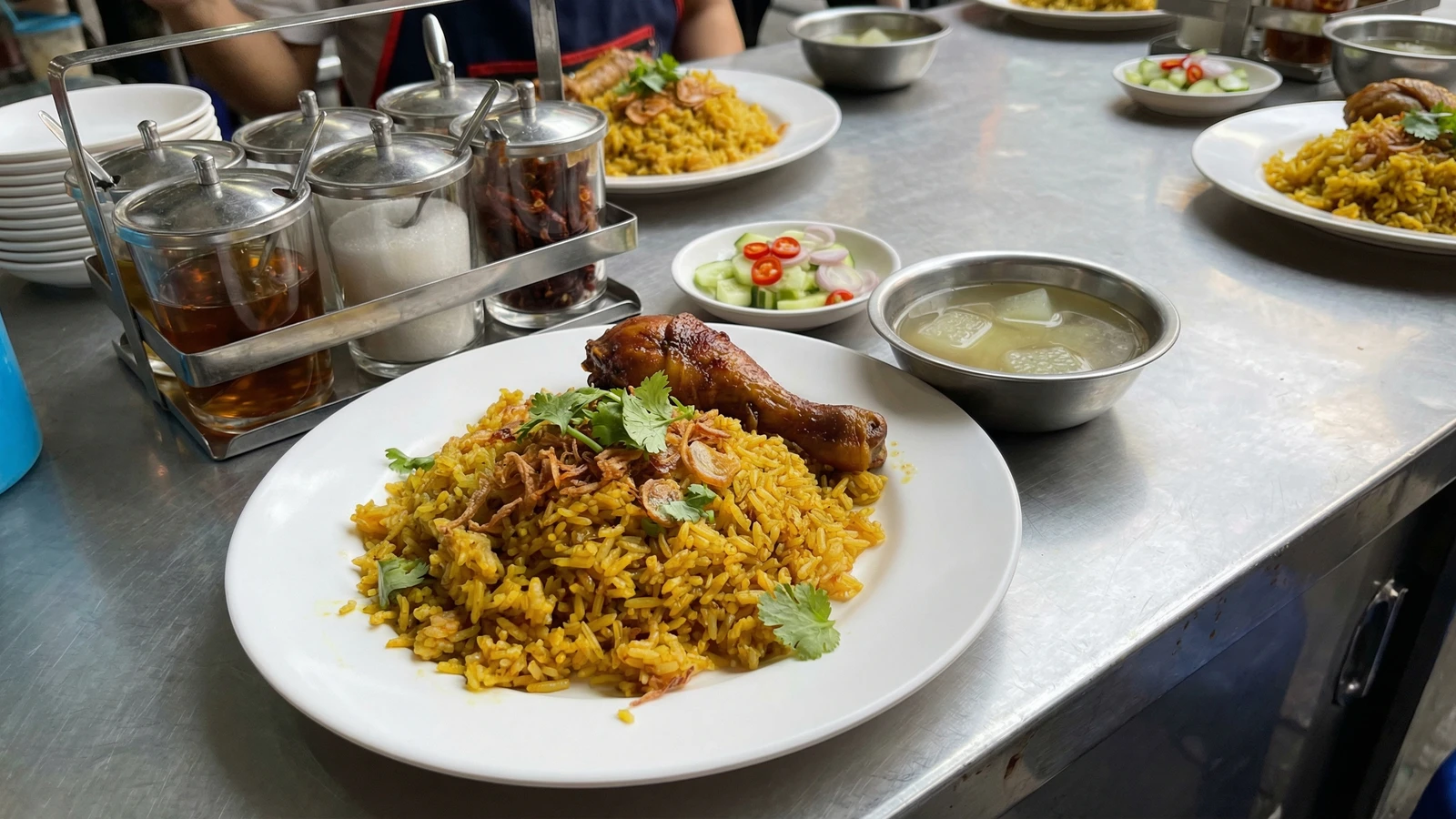
Thai Chicken Biryani (Khao Mok Gai)
Created by
Persian traders brought biryani to Siam. Thai cooks put it through the kreung tam. Turmeric paste stains the rice gold, chicken cooks buried inside, and ajad cuts through it all. That's the system absorbing the world and making it Thai.
Khao mok gai is proof that the kreung tam governs everything. A dish that started as Persian biryani arrived in Siam centuries ago and the first thing Thai cooks did was run it through the system. They built a paste. Coriander root, garlic, shallots, cumin, turmeric, white pepper, all pounded in the krok until the kitchen turns yellow. That paste is what makes khao mok Thai. Not the rice. Not the chicken. The paste.
Ajarn always said the kreung tam is the DNA of a dish. Change the paste, you change the identity. Khao mok's paste shares ingredients with Indian and Malay spice blends, sure, but it's anchored by cilantro root (rak phak chi) and white peppercorns, two of the nine essential ingredients in the Thai system. The moment those go into the mortar, the dish stops being biryani and starts being khao mok.
Here's what separates this from any other spiced rice: the chicken gets marinated in the paste and then buried in the rice. They cook together. The fat from the chicken renders down into the grains. The turmeric stains everything gold. When you flip the pot onto a plate, every grain is infused, every piece of chicken is fall-apart tender, and the whole thing smells like a spice market on Charoen Krung Road.
The accompaniments are not optional. Ajad (cucumber relish) provides the sour-sweet-cool contrast that the rich, fatty rice demands. The clear soup (nam sup) with winter melon cleanses your palate between bites. And nam jim si racha or a green chili sauce brings the heat. Fish sauce for salt. Palm sugar for sweet in the ajad. Lime and vinegar for sour. Chili for spice. The four pillars are all here, distributed across the plate. Thai food is a system, not a single dish. Khao mok gai is the whole system on one plate.
Khao mok (ข้าวหมก, literally 'buried rice') traces directly to the Persian and Indian Muslim traders who settled in Ayutthaya and later Bangkok's Charoen Krung district from the 17th century onward. The dish is a Thai-Muslim adaptation of Mughal biryani, transformed through the kreung tam system by incorporating cilantro root, white peppercorns, and fish sauce in place of the original garam masala and salt. It remains a staple of Thai-Muslim communities and is one of the few Thai dishes where dried spices (cumin, cardamom, cinnamon) play a leading role alongside fresh aromatics.
The technique, the tradition, and the story behind every dish.
Discover Culinary AdvisorIngredients
whole chicken legs (thigh and drumstick)
Quantity
4 pieces, about 1.2kg total
jasmine rice
Quantity
3 cups
rinsed until water runs clear
chicken stock (for rice)
Quantity
3 cups
fish sauce (nam pla) for the rice
Quantity
1 tablespoon
salt
Quantity
1 teaspoon
vegetable oil or ghee
Quantity
3 tablespoons
fried shallots (hom jiew) (optional)
Quantity
2 tablespoons
fresh cilantro leaves
Quantity
for garnish
cilantro roots (rak phak chi)
Quantity
5
scraped clean
garlic
Quantity
8 cloves
shallots
Quantity
4
white peppercorns
Quantity
1 tablespoon
coriander seeds
Quantity
1 tablespoon
toasted
cumin seeds
Quantity
1 teaspoon
toasted
cardamom pods
Quantity
3
seeds removed
cinnamon stick
Quantity
1 small piece (about 2 inches)
cloves
Quantity
3
star anise
Quantity
1
fresh turmeric (khamin)
Quantity
2 tablespoons
grated (or 1 tablespoon ground)
shrimp paste (kapi)
Quantity
1 teaspoon
fish sauce (nam pla) for marinade
Quantity
2 tablespoons
dark soy sauce (si ew dam)
Quantity
1 tablespoon
palm sugar (nam tan pip) for marinade
Quantity
1 tablespoon
cucumber
Quantity
1
quartered lengthwise and sliced
shallots for ajad
Quantity
2
thinly sliced
bird's eye chili (prik khi nu) for ajad
Quantity
1
sliced into rounds
white vinegar
Quantity
3 tablespoons
palm sugar (nam tan pip) for ajad
Quantity
2 tablespoons
salt for ajad
Quantity
1/2 teaspoon
chicken stock (for broth)
Quantity
2 cups
winter melon (fak khiew)
Quantity
100g
peeled and cubed
fish sauce (nam pla) for broth
Quantity
1 tablespoon
white pepper
Quantity
pinch
cilantro leaves and fried garlic for broth
Quantity
for garnish
| Ingredient | Quantity |
|---|---|
| whole chicken legs (thigh and drumstick) | 4 pieces, about 1.2kg total |
| jasmine ricerinsed until water runs clear | 3 cups |
| chicken stock (for rice) | 3 cups |
| fish sauce (nam pla) for the rice | 1 tablespoon |
| salt | 1 teaspoon |
| vegetable oil or ghee | 3 tablespoons |
| fried shallots (hom jiew) (optional) | 2 tablespoons |
| fresh cilantro leaves | for garnish |
| cilantro roots (rak phak chi)scraped clean | 5 |
| garlic | 8 cloves |
| shallots | 4 |
| white peppercorns | 1 tablespoon |
| coriander seedstoasted | 1 tablespoon |
| cumin seedstoasted | 1 teaspoon |
| cardamom podsseeds removed | 3 |
| cinnamon stick | 1 small piece (about 2 inches) |
| cloves | 3 |
| star anise | 1 |
| fresh turmeric (khamin)grated (or 1 tablespoon ground) | 2 tablespoons |
| shrimp paste (kapi) | 1 teaspoon |
| fish sauce (nam pla) for marinade | 2 tablespoons |
| dark soy sauce (si ew dam) | 1 tablespoon |
| palm sugar (nam tan pip) for marinade | 1 tablespoon |
| cucumberquartered lengthwise and sliced | 1 |
| shallots for ajadthinly sliced | 2 |
| bird's eye chili (prik khi nu) for ajadsliced into rounds | 1 |
| white vinegar | 3 tablespoons |
| palm sugar (nam tan pip) for ajad | 2 tablespoons |
| salt for ajad | 1/2 teaspoon |
| chicken stock (for broth) | 2 cups |
| winter melon (fak khiew)peeled and cubed | 100g |
| fish sauce (nam pla) for broth | 1 tablespoon |
| white pepper | pinch |
| cilantro leaves and fried garlic for broth | for garnish |
Equipment Needed
- •Heavy granite mortar and pestle (krok), at least 8 inches diameter
- •Heavy-bottomed pot with tight-fitting lid (Dutch oven or cast iron)
- •Spice grinder or second mortar for dry spices
Instructions
- 1
Toast the dry spices
In a dry pan over medium heat, toast the coriander seeds, cumin seeds, cardamom pods, cloves, cinnamon stick, and star anise. Keep them moving. Two minutes, maybe three. You'll know they're ready when the kitchen smells like a spice market and the coriander seeds darken a shade. Don't walk away. Thirty seconds separates toasted from burnt. Let them cool, then crack the cardamom pods and discard the husks. Grind everything to a powder in a spice grinder or pound it in the mortar. This is the backbone of your paste.
Toasting the whole spices before grinding is what separates khao mok from generic spiced rice. The heat releases volatile oils that grinding alone can't access. Pre-ground spice powder from a bag will never give you this depth. - 2
Pound the kreung tam
Start with the white peppercorns and ground spice mix in the mortar. Pound to a fine powder. Add the cilantro roots, garlic, and shallots. Pound until you have a rough, fragrant paste. The turmeric goes in last. If you're using fresh turmeric, pound it in now. Your mortar, your pestle, your hands, and probably your cutting board will all turn yellow. That's how you know you're doing it right. Add the kapi (shrimp paste) and work it in with a few more strikes. The paste should be thick, golden, and intensely aromatic. This is the kreung tam that makes khao mok Thai.
Fresh turmeric (khamin) has a warmth and earthiness that ground turmeric can't match. If you can find it, use it. It looks like small ginger knobs with bright orange flesh. Wear gloves or accept yellow fingers for a day. - 3
Marinate the chicken
Score the chicken legs with two deep cuts on each side, down to the bone. In a bowl, combine two tablespoons of your kreung tam with the fish sauce, dark soy sauce, and palm sugar. Rub it into every cut, every crevice, under the skin. The dark soy gives color: deep mahogany when it cooks. The fish sauce gives salinity. The palm sugar will caramelize. Let it marinate for at least 30 minutes. An hour is better. Overnight in the fridge is best.
Scoring the chicken to the bone isn't cosmetic. It lets the marinade penetrate and, more importantly, lets the chicken cook evenly when it's buried under rice. Thick meat with no scoring will be raw at the bone while the rice overcooks. - 4
Fry the paste and rice
Heat the oil or ghee in a heavy-bottomed pot (a Dutch oven works well) over medium heat. Fry the remaining kreung tam for about 2 minutes, stirring constantly. The paste should darken slightly and the oil should separate at the edges. The smell will hit you: cumin, coriander, turmeric, garlic. That's the signal. Add the rinsed, drained rice. Stir to coat every grain in the paste. Fry the rice with the paste for another 2 minutes. Each grain should be slick with golden oil and the rice should look like it's been dyed with saffron. It hasn't. That's the turmeric doing its work.
- 5
Bury the chicken
Nestle the marinated chicken legs into the rice, pressing them down so the rice covers them almost completely. Pour the chicken stock over everything. Add the fish sauce and salt. The liquid should sit about one centimeter above the rice. Don't stir again after this point. Bring it to a boil over high heat. The moment it boils, drop the heat to the lowest setting, cover the pot with a tight lid, and leave it alone for 30 minutes. Don't peek. Don't stir. The rice is steaming and the chicken is braising in the same pot. Trust the process.
If your lid doesn't seal well, lay a sheet of aluminum foil over the pot before putting the lid on. You need that seal. Any steam escaping means dry rice on top and soggy rice on the bottom. - 6
Make the ajad
While the rice cooks, make the ajad. Dissolve the palm sugar and salt in the white vinegar over gentle heat. Don't boil it. Just warm enough to melt the sugar. Let it cool to room temperature. Toss in the sliced cucumber, shallots, and chili rounds. The ajad should taste sweet first, then sour, with a small bite of heat from the chili. This is the counterpoint to the rich, fatty rice. Without it, khao mok is incomplete. The sour-sweet of the ajad against the spiced richness of the rice is the balance. That's the four pillars working across the plate.
Ajad is not optional. It's structural. The vinegar and palm sugar provide the sour and sweet that the rice itself lacks. Eating khao mok without ajad is like eating som tam without lime. You've removed a pillar. - 7
Make the clear broth
Bring the chicken stock to a simmer. Add the winter melon cubes and cook until they're translucent, about 5 minutes. Season with fish sauce and a pinch of white pepper. That's it. This broth is meant to be clean and simple. It rinses your palate between bites of the heavy, spiced rice. Finish with cilantro leaves and a small spoonful of fried garlic in each bowl.
- 8
Rest and serve
After 30 minutes, turn off the heat but keep the lid on. Let the pot rest for 10 minutes. This is critical. The residual heat finishes the cooking and the rice firms up. Now open the lid. The rice should be fluffy, golden, and fragrant. Each grain separate. The chicken should be tender enough that the meat pulls away from the bone with a fork. Carefully lift the chicken out. Fluff the rice gently with a fork. Mound the rice on a plate, place the chicken on top or beside it. Scatter fried shallots (hom jiew) and cilantro over the rice. Serve with ajad on the side and the clear broth in a small bowl. Nam pla prik (chili fish sauce) on the table. Always.
Chef Tips
- •Khao mok is a kreung tam dish disguised as biryani. The paste is what makes it Thai. If you skip the mortar and just toss in ground spices, you'll get decent spiced rice. You won't get khao mok. The pounding integrates the fresh aromatics (cilantro root, garlic, shallots) with the dry spices in a way that simply mixing them can't replicate. The cell walls break, the oils merge. Krok ก่อน.
- •The chicken should be bone-in, skin-on, preferably whole legs. The bones add body to the rice as it cooks. The skin renders fat into the grains. Boneless, skinless chicken breast will give you dry, flavorless results. This is not a dish for lean cuts.
- •Ghee is traditional in Thai-Muslim kitchens and gives the rice a nuttier, richer flavor than vegetable oil. If you can find ghee, use it. It's not mandatory, but it's the version you'd get at a Muslim stall on Charoen Krung.
- •Khao mok vendors in Bangkok often deep-fry the marinated chicken before burying it in the rice. This adds a caramelized crust and extra richness. If you want to go the extra mile, sear the chicken legs skin-side down in hot oil until deeply golden before nestling them into the rice. It adds ten minutes and transforms the dish.
- •The nam sup (clear broth) seems like an afterthought. It's not. Thai one-plate meals are designed as systems: the rich main, the sharp relish, the clean broth. Each element does a job. The broth hydrates and cleanses. Skip it and the meal feels heavy by the third bite.
Advance Preparation
- •The kreung tam can be pounded a day ahead and refrigerated in an airtight container. The flavors will deepen overnight.
- •Marinate the chicken the night before for maximum flavor penetration. Keep it covered and refrigerated.
- •The ajad can be prepared up to 2 hours ahead, but add the cucumber no more than 30 minutes before serving or it will go limp. The dressing itself keeps for days.
- •The clear broth can be made ahead and reheated. Add the cilantro and fried garlic only at serving time.
Frequently Asked Questions
Nutrition Information
1 serving (about 750g)
Where cooking meets culture.
Culinary mentorship, cultural storytelling, and the editorial depth that makes cooking meaningful.
Explore Culinary Advisor