Culinary Advisor
A cooking platform built around craft, culture, and the stories behind what we eat.
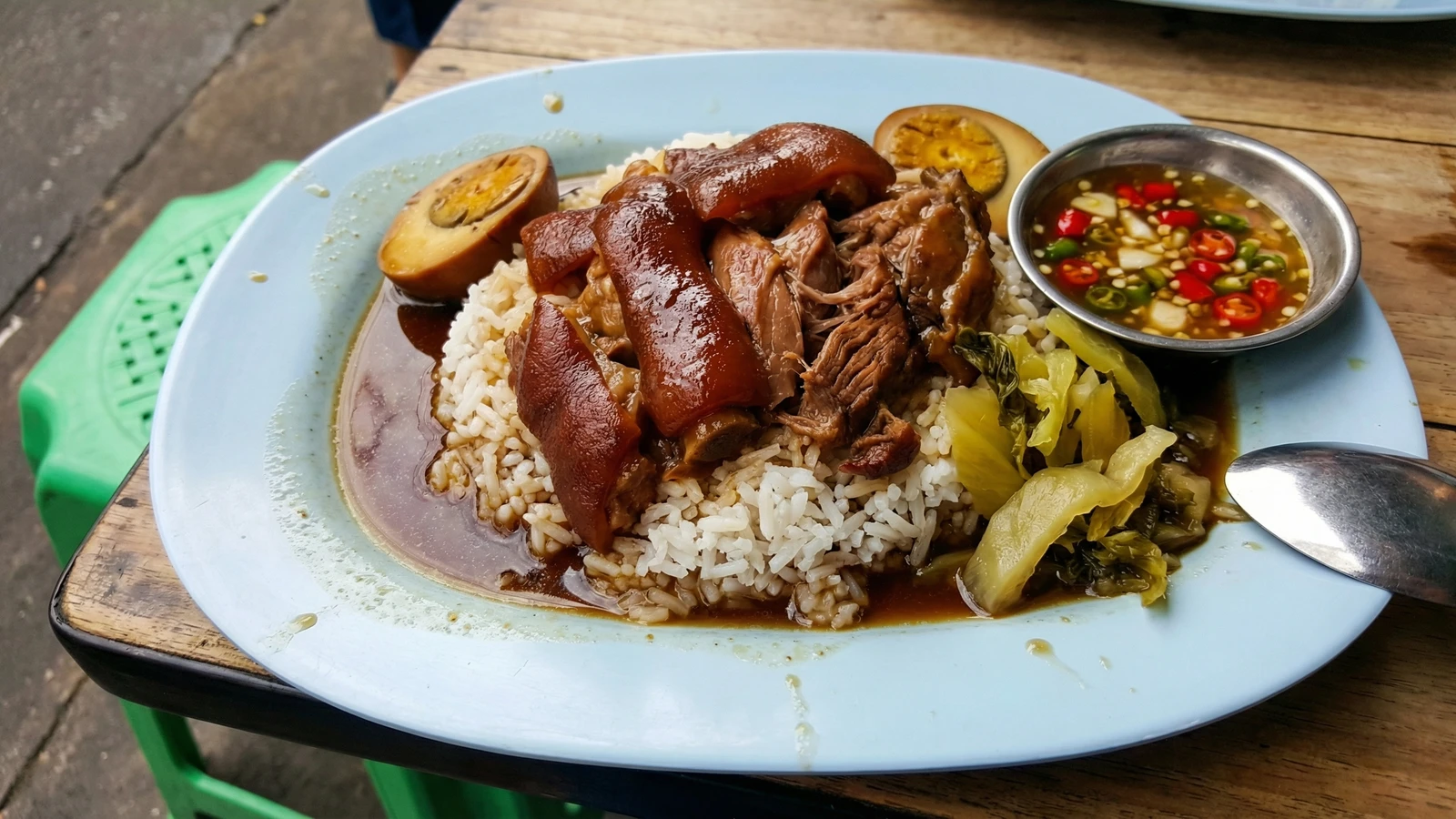
Braised Pork Leg on Rice (Khao Kha Moo)
Created by
Chinese five-spice meets Thai fish sauce in a pot that's been simmering since before dawn. The pork falls apart. The broth is dark and sweet. The nam jim cuts through everything. This is Yaowarat in a bowl.
Khao kha moo is where Chinese technique met Thai principles, and Thai won.
Teochew and Hokkien migrants brought the concept: a whole pork leg braised low and slow in soy sauce, five-spice, and sugar until the collagen surrenders. That's the Chinese blueprint. But walk up to any khao kha moo cart in Bangkok today and watch what happens. The vendor ladles that dark, glossy broth over rice, then hands you a nam jim (น้ำจิ้ม) that changes everything: chilies, garlic, vinegar, lime. Sour. Hot. Sharp. That's the Thai system asserting itself. Without the nam jim, you have Chinese braised pork. With it, you have Thai street food.
Ajarn always said the four pillars show up even in dishes Thailand borrowed. Fish sauce for salt (not just soy). Palm sugar for sweet (not just rock sugar). The nam jim brings the sour and the heat. The pillars adapt. The system holds. Every Chinese-Thai dish in Bangkok tells this story: the technique came from somewhere else, but the flavor balance is Thai.
This isn't a kreung tam dish. There's no pounded paste. But there IS a spice foundation: garlic, cilantro root (rak phak chi), white peppercorns, all pounded together before they go into the braising pot. That trio, garlic-cilantro root-peppercorn, is one of the most important building blocks in Thai cooking. It's the quiet kreung tam that doesn't get enough credit. The five-spice is Chinese. The garlic-cilantro root-pepper foundation is pure Thai.
The vendors who do this right have been braising in the same pot for years. The liquid gets darker, richer, more complex with every batch. They start cooking before the sun comes up. By the time the lunch crowd hits, the pork leg is so tender a spoon goes through it. That's not a shortcut. That's time doing its work. Respect the process.
Khao kha moo arrived in Thailand with Teochew Chinese immigrants who settled in Bangkok's Yaowarat district in the late 19th century, bringing their tradition of soy-braised pork trotters (known as 'lor bak' in Hokkien or 'kha mu palo' in its Thai-ified name). The dish transformed as Thai vendors introduced fish sauce alongside soy, added cilantro root and white pepper to the aromatics, and crucially, developed the chili-vinegar nam jim that now defines the dish as Thai rather than Chinese. The practice of perpetually replenishing the master braising stock, sometimes maintained for decades, mirrors similar Chinese traditions but became a point of pride among Bangkok's khao kha moo vendors.
The technique, the tradition, and the story behind every dish.
Discover Culinary AdvisorIngredients
pork leg (kha moo), skin on
Quantity
1 whole, about 2kg
garlic
Quantity
1 head (about 10 cloves)
peeled
cilantro roots (rak phak chi)
Quantity
5
scraped clean
white peppercorns (prik thai)
Quantity
1 tablespoon
dark soy sauce (si ew dam)
Quantity
3 tablespoons
light soy sauce (si ew khao)
Quantity
3 tablespoons
fish sauce (nam pla)
Quantity
2 tablespoons
palm sugar (nam tan pip)
Quantity
80g
five-spice powder (phong palo)
Quantity
2 tablespoons
star anise
Quantity
3 pods
cinnamon stick
Quantity
1, about 3 inches
whole cloves
Quantity
3
water
Quantity
about 2 liters
enough to cover the pork
hard-boiled eggs
Quantity
4
peeled
pickled mustard greens (pak gat dong)
Quantity
200g
rinsed and sliced
steamed jasmine rice
Quantity
for serving
fresh cilantro sprigs
Quantity
for garnish
bird's eye chilies (prik khi nu) for nam jim
Quantity
10
sliced
garlic for nam jim
Quantity
4 cloves
minced
white vinegar for nam jim
Quantity
3 tablespoons
lime juice (nam manao) for nam jim
Quantity
2 tablespoons
fish sauce (nam pla) for nam jim
Quantity
1 tablespoon
granulated sugar for nam jim
Quantity
1 teaspoon
| Ingredient | Quantity |
|---|---|
| pork leg (kha moo), skin on | 1 whole, about 2kg |
| garlicpeeled | 1 head (about 10 cloves) |
| cilantro roots (rak phak chi)scraped clean | 5 |
| white peppercorns (prik thai) | 1 tablespoon |
| dark soy sauce (si ew dam) | 3 tablespoons |
| light soy sauce (si ew khao) | 3 tablespoons |
| fish sauce (nam pla) | 2 tablespoons |
| palm sugar (nam tan pip) | 80g |
| five-spice powder (phong palo) | 2 tablespoons |
| star anise | 3 pods |
| cinnamon stick | 1, about 3 inches |
| whole cloves | 3 |
| waterenough to cover the pork | about 2 liters |
| hard-boiled eggspeeled | 4 |
| pickled mustard greens (pak gat dong)rinsed and sliced | 200g |
| steamed jasmine rice | for serving |
| fresh cilantro sprigs | for garnish |
| bird's eye chilies (prik khi nu) for nam jimsliced | 10 |
| garlic for nam jimminced | 4 cloves |
| white vinegar for nam jim | 3 tablespoons |
| lime juice (nam manao) for nam jim | 2 tablespoons |
| fish sauce (nam pla) for nam jim | 1 tablespoon |
| granulated sugar for nam jim | 1 teaspoon |
Equipment Needed
- •Heavy granite mortar and pestle (krok hin) for the aromatic paste
- •Large heavy-bottomed pot or Dutch oven, at least 8-quart capacity
- •Tongs for turning the pork leg
Instructions
- 1
Pound the aromatic foundation
In your granite mortar (krok hin), pound the garlic, cilantro roots, and white peppercorns to a rough paste. Not powder. You want a wet, fragrant mash where you can still see pieces. This trio is the Thai signature in the dish: garlic-cilantro root-peppercorn. Chinese five-spice gives you the warmth. This paste gives you the soul. The aroma should be sharp and green from the cilantro root, with the peppercorn hitting your nose a second later.
Cilantro root is not cilantro stem. It's the actual root, sold at Thai and Southeast Asian grocery stores still attached to the bunch. Scrape it clean, but don't peel it. The flavor is earthy, concentrated, nothing like the leaf. If you can't find it, use the lower stems and double the amount, but know it's a compromise. - 2
Blanch the pork leg
Bring a large pot of water to a rolling boil. Lower the whole pork leg in and blanch for 5 minutes. You'll see grey foam and impurities rise to the surface. That's good. That's everything you don't want in your braising liquid. Pull the leg out, rinse it under cold water, and scrub the skin clean. This step is non-negotiable. Skip it and your broth will be murky and greasy instead of dark and clean.
- 3
Build the braising liquid
In a large, heavy pot (a Dutch oven works, but the vendors use enormous steel stockpots), fry the pounded garlic-cilantro root-pepper paste in a splash of oil over medium heat until fragrant, about 1 minute. Add the five-spice powder and stir for 30 seconds. The kitchen should smell like a Bangkok market at 5 AM: warm, sweet-spiced, slightly medicinal. Now add the dark soy sauce, light soy sauce, fish sauce, and palm sugar. Stir until the sugar dissolves. Drop in the star anise, cinnamon stick, and cloves.
Dark soy sauce is for color, not salt. It's what gives the broth and the pork skin that deep mahogany lacquer. Light soy and fish sauce do the seasoning work. Don't confuse the roles. - 4
Braise the pork
Nestle the blanched pork leg into the pot, skin side up. Pour in enough water to just cover the leg. Bring to a boil, then immediately drop the heat to the lowest setting your stove can manage. You want the surface barely trembling. Not bubbling. Not simmering aggressively. A lazy, patient surface with a bubble rising every few seconds. Cover the pot and leave it alone for 2.5 to 3 hours. Turn the leg once, halfway through, so both sides get time submerged in the braising liquid.
Ajarn always said: collagen needs time, not heat. If you braise too aggressively, the meat tightens before the connective tissue can break down. Low and slow turns that tough leg into something a spoon can pull apart. Patience is the technique here. - 5
Add the eggs
After the first 2 hours, add the peeled hard-boiled eggs to the braising liquid. They'll absorb the dark soy color and the five-spice flavor over the last hour, turning a deep brown with a savory, spiced yolk. Push them under the surface so they color evenly. These eggs are part of the dish, not a side. Every plate of khao kha moo gets half an egg.
- 6
Make the nam jim
While the pork braises, make the nam jim. Combine the sliced bird's eye chilies, minced garlic, white vinegar, lime juice, fish sauce, and sugar in a small bowl. Stir to dissolve the sugar. Taste it. It should be: sour first (vinegar and lime), then salty (fish sauce), then the chili heat building. The sugar is barely there, just enough to round the acid. This sauce is the reason the dish is Thai and not Chinese. Without it, you're eating lor bak. With it, you're eating khao kha moo.
The nam jim should be sharp enough to make you wince slightly when you taste it on its own. It needs that aggression because it's cutting through rich, fatty, sweet braised pork. If the sauce is gentle, it can't do its job. - 7
Check the pork
After 3 hours, test the pork. Press a chopstick or spoon into the thickest part of the meat. It should slide in with no resistance. The skin should be gelatinous and wobbling, not tough. If there's resistance, give it another 30 minutes. Don't rush this. When it's ready, the meat will be pulling away from the bone and the skin will have that glossy, dark, almost lacquered look. Taste the braising liquid and adjust: more fish sauce for salt, more palm sugar if the soy is too dominant.
- 8
Assemble and serve
Mound steamed jasmine rice on a plate. Use a large spoon or tongs to pull apart a generous portion of pork, getting both meat and skin, the skin is the best part, don't you dare skip it. Lay the pork over the rice. Ladle a few spoonfuls of the braising liquid over everything so the rice soaks it up. Cut a braised egg in half lengthwise and place it on the plate, yolk facing up so you can see that deep brown ring and the golden center. Pile pickled mustard greens (pak gat dong) on the side. Scatter cilantro over the pork. Serve the nam jim in a separate small bowl. That's the plate. Rice, pork, egg, pickles, sauce. Every component is doing a job.
Chef Tips
- •The best khao kha moo vendors in Bangkok never start with a fresh pot. They top up the same braising liquid day after day, batch after batch. The liquid gets darker and more complex over weeks, months, years. You can do this at home: strain and refrigerate the braising liquid after each use, skim the fat, and use it as the base for your next batch. By the third or fourth braise, you'll taste the difference. That depth can't be faked with more soy sauce.
- •Pork leg (kha moo) includes the trotter, the shin, and the knee joint. You want all of it. The skin and tendons are where the gelatin lives, and gelatin is what makes the braising liquid thick and silky when it cools. If your butcher offers a boneless cut, say no. The bone contributes flavor and the connective tissue is the entire point. Ask for the front leg if you have a choice. It's slightly more tender than the rear.
- •Pickled mustard greens (pak gat dong, ผักกาดดอง) are not optional. They're the sour, crunchy counterpoint to all that rich, sweet pork. You can buy them jarred at any Thai or Chinese grocery store. Rinse them to remove excess salt, then slice thin. Some vendors also offer a side of raw chili slices and whole garlic cloves in vinegar. That's the complete condiment set.
- •Khao kha moo is traditionally a morning and lunch dish. The vendors start braising before dawn and sell through the afternoon. By evening, the good carts are closed. If you see a khao kha moo vendor open for dinner, the pork has been sitting too long. In Bangkok, you eat this before 2 PM. At home, time your braise so the pork finishes right when you're ready to eat.
Advance Preparation
- •The pork leg can be blanched the night before. Refrigerate it after rinsing and scrubbing. This also firms up the skin slightly, which helps it hold together during the long braise.
- •The nam jim can be made up to 2 hours ahead. The chilies and garlic will infuse the vinegar and become more potent as they sit, which is a good thing. Don't make it a day ahead because the lime juice loses its edge.
- •The fully braised pork reheats beautifully. In fact, it's arguably better the next day. Let the pork cool in its braising liquid, refrigerate overnight, then gently reheat the whole pot. The gelatin sets overnight and melts back into a rich, coating sauce when rewarmed. This is one of the rare Thai dishes that improves with a day's rest.
Frequently Asked Questions
Nutrition Information
1 serving (about 500g)
Where cooking meets culture.
Culinary mentorship, cultural storytelling, and the editorial depth that makes cooking meaningful.
Explore Culinary Advisor