Culinary Advisor
A cooking platform built around craft, culture, and the stories behind what we eat.
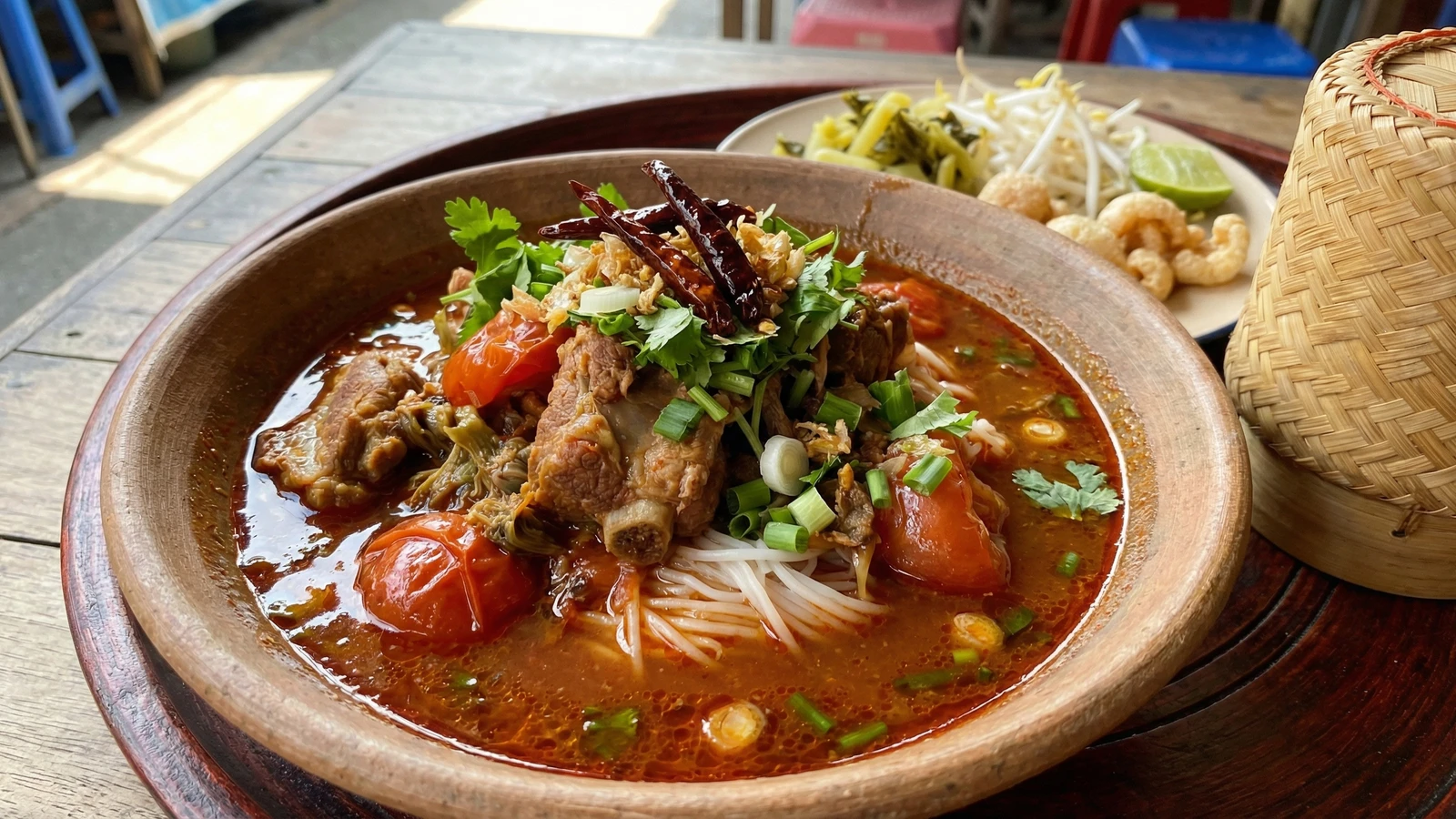
Rice Noodles in Tomato-Pork Broth (Khanom Jeen Nam Ngiew)
Created by
A Lanna kreung tam built on ginger, dried spices from the Burmese border, and tua nao instead of shrimp paste. No coconut. Just pork ribs, tomatoes, and a paste that belongs to the mountains.
The kreung tam changes when you cross the mountains. That was one of the first things Ajarn told me when I started asking about Northern food. In Central Thailand, the mortar holds galangal, kaffir lime zest, cilantro root, shrimp paste. In Lanna, it holds ginger instead of galangal, dried spices from the Burmese trade routes (coriander seed, cumin), and tua nao (ถั่วเน่า), a disc of fermented soybeans that does the work shrimp paste does further south, but with an earthier, funkier depth. Same foundation. Different geography. The kreung tam adapts to its land.
Nam ngiew is the dish that makes this concrete. Pork spare ribs simmered in a brick-red broth built on tomatoes and a Lanna paste. No coconut milk. Coconut palms don't grow in the northern highlands. The richness comes from pork bones and collagen, not from cracked cream. The sourness comes from ripe tomatoes collapsing over an hour of slow simmering, not from lime squeezed in at the end. This is a different branch of the Thai system. Same four pillars (fish sauce for salt, palm sugar for sweet, tomato for sour, dried chilies for heat), but expressed through a highland lens.
The word "ngiew" refers to dok ngiew (ดอกงิ้ว): the dried flower of the cotton tree (Bombax ceiba), which blooms across Northern Thailand during cool season. Soak them, drop them into the broth, and they contribute a gentle crunch and a subtle vegetal quality that ties the dish to the Lanna landscape. You won't find dok ngiew in a Bangkok market. It's a seasonal, regional ingredient. If you can't source it, the broth still works, but the dish loses something that connects it to the mountains where it was born. Tua nao is easier to find: look for flat brown discs at Northern Thai or Shan grocery shops, or order online. There's no true substitute. It's a fermentation product with its own character, closer to Japanese natto than to anything in the Central Thai pantry.
I ran a nam ngiew workshop last cool season in Chiang Mai. Fifteen people, mostly from Bangkok, and not one had pounded tua nao before. They knew shrimp paste. They knew fish sauce. But tua nao? When they dry-roasted the discs, crumbled them into the mortar alongside toasted coriander and cumin, the aroma was completely alien to their experience of Thai food. That's the point. Thai food is bigger than Central Thai food. Lanna has its own system, its own logic, its own mortar full of ingredients that belong to these mountains. Principles, not recipes.
Nam ngiew traces its roots to the Shan people (Tai Yai, ไทใหญ่) of Myanmar's Shan State, whose culinary traditions deeply influenced the Lanna kingdom of northern Thailand through centuries of trade and migration across the highland border. The dish takes its name from dok ngiew (ดอกงิ้ว), the dried flower of the Bombax ceiba (cotton tree), a highland ingredient that blooms during cool season and appears nowhere in Central Thai cooking. Alongside khao soi, nam ngiew is Chiang Mai's other iconic noodle dish, though far less known internationally, and its use of tua nao (fermented soybean disc) instead of shrimp paste reflects a highland food culture that developed far from the sea, where soybean fermentation filled the umami role that fish-based ferments fill on the coasts and plains.
The technique, the tradition, and the story behind every dish.
Discover Culinary AdvisorIngredients
dried red spur chilies (prik haeng)
Quantity
10
seeded and soaked in warm water 15 minutes
shallots (hom daeng)
Quantity
5 medium
sliced
garlic (kratiam)
Quantity
8 cloves
ginger (khing)
Quantity
one 2-inch knob
sliced
lemongrass (takhrai)
Quantity
2 stalks
lower 3 inches only, sliced thin
coriander seeds (look pak chi)
Quantity
1 tablespoon
toasted
cumin seeds (yira)
Quantity
1 teaspoon
toasted
tua nao (fermented soybean discs)
Quantity
2 discs
dry-roasted and crumbled
shrimp paste (kapi) (optional)
Quantity
1 teaspoon
pork spare ribs
Quantity
500g
cut into 2-inch pieces
vegetable oil
Quantity
2 tablespoons
ripe tomatoes
Quantity
5 medium
quartered
dried cotton tree flowers (dok ngiew)
Quantity
15
soaked in warm water 15 minutes
water
Quantity
8 cups
fish sauce (nam pla)
Quantity
3 tablespoons
palm sugar (nam tan pip)
Quantity
1 tablespoon
pork blood (leuad moo) (optional)
Quantity
100g
cut into 1-inch cubes
fresh khanom jeen (fermented rice noodles) or dried rice vermicelli (sen mee)
Quantity
400g fresh or 300g dried
bean sprouts (thua ngok)
Quantity
1 cup
pickled mustard greens (phak kat dong)
Quantity
to taste
chopped
fresh cilantro (phak chi)
Quantity
for serving
sawtooth coriander (phak chi farang)
Quantity
for serving
sliced
green onions (ton hom)
Quantity
for serving
sliced
fried dried chilies (optional)
Quantity
for serving
fried garlic in oil (optional)
Quantity
for serving
pork crackling (kaep moo) (optional)
Quantity
for serving
pickled garlic (kratiam dong) (optional)
Quantity
for serving
lime wedges
Quantity
for serving
| Ingredient | Quantity |
|---|---|
| dried red spur chilies (prik haeng)seeded and soaked in warm water 15 minutes | 10 |
| shallots (hom daeng)sliced | 5 medium |
| garlic (kratiam) | 8 cloves |
| ginger (khing)sliced | one 2-inch knob |
| lemongrass (takhrai)lower 3 inches only, sliced thin | 2 stalks |
| coriander seeds (look pak chi)toasted | 1 tablespoon |
| cumin seeds (yira)toasted | 1 teaspoon |
| tua nao (fermented soybean discs)dry-roasted and crumbled | 2 discs |
| shrimp paste (kapi) (optional) | 1 teaspoon |
| pork spare ribscut into 2-inch pieces | 500g |
| vegetable oil | 2 tablespoons |
| ripe tomatoesquartered | 5 medium |
| dried cotton tree flowers (dok ngiew)soaked in warm water 15 minutes | 15 |
| water | 8 cups |
| fish sauce (nam pla) | 3 tablespoons |
| palm sugar (nam tan pip) | 1 tablespoon |
| pork blood (leuad moo) (optional)cut into 1-inch cubes | 100g |
| fresh khanom jeen (fermented rice noodles) or dried rice vermicelli (sen mee) | 400g fresh or 300g dried |
| bean sprouts (thua ngok) | 1 cup |
| pickled mustard greens (phak kat dong)chopped | to taste |
| fresh cilantro (phak chi) | for serving |
| sawtooth coriander (phak chi farang)sliced | for serving |
| green onions (ton hom)sliced | for serving |
| fried dried chilies (optional) | for serving |
| fried garlic in oil (optional) | for serving |
| pork crackling (kaep moo) (optional) | for serving |
| pickled garlic (kratiam dong) (optional) | for serving |
| lime wedges | for serving |
Equipment Needed
- •Heavy granite mortar and pestle (krok hin) for pounding the kreung tam
- •Large stockpot or Dutch oven
- •Dry wok or small pan for toasting spices and tua nao
Instructions
- 1
Toast and prepare dry ingredients
In a dry wok or small pan over medium heat, toast the coriander seeds and cumin seeds until fragrant and a shade darker, about 2 minutes. Keep them moving. Burnt spices are bitter and useless. Set aside. In the same dry pan, toast the tua nao discs, pressing them flat against the surface, until they darken and release a sharp, earthy smell, about 1 minute per side. Crumble them roughly. While the spices cool, soak the dried chilies and the dok ngiew separately in warm water for 15 minutes. Drain both.
Toasting the tua nao deepens its funk and makes it easier to pound. If you skip the toast, the paste will taste flat. The discs should smell pungent and almost smoky when they're ready. That's the fermented soybean waking up. - 2
Pound the Lanna kreung tam
Start with the toasted spices in your granite mortar. Pound them to a powder. Then the soaked, drained dried chilies, a few at a time. Pound to a rough paste. Add the garlic, shallots, and ginger (not galangal, this is Lanna, ginger is the rule here). Pound until the aromatics break down and merge. Add the lemongrass and pound until fibrous and incorporated. Finally, the crumbled tua nao and shrimp paste if using. Pound everything together until you have a coarse, fragrant paste, reddish-brown from the chilies, speckled with spice. The smell should hit you: warm from cumin, bright from coriander, earthy and funky from the tua nao. That's a Lanna mortar. That's the difference.
Ajarn always said the kreung tam tells you when it's ready by its aroma. This one should smell like nothing in the Central Thai kitchen: warmer, more aromatic, with that deep soybean funk underneath. If it smells like a Bangkok green curry paste, something went wrong. Krok ก่อน. - 3
Fry the paste and sear the ribs
Heat the vegetable oil in a large stockpot or Dutch oven over medium-high heat. Add the entire kreung tam and fry it, stirring constantly, until the oil separates from the paste and the raw smell cooks out. About 3 to 4 minutes. The paste will darken slightly and the oil will turn red-orange at the edges. That's when you know the essential oils have released. Push the paste to the sides and add the pork spare ribs. Let them sear in the paste and oil, turning them to coat and brown on at least two sides. The meat touching hot paste and hot metal is where the first layer of flavor locks in. Give it 3 minutes.
Don't rush the paste frying. Raw kreung tam in the final broth tastes harsh and one-dimensional. Fried kreung tam tastes deep and round. The heat transforms the raw aromatics into something richer. Watch for the oil to separate and pool at the edges of the paste. That's your signal. - 4
Build and simmer the broth
Pour in the water. It will hit the hot paste and bloom into an immediate, fragrant cloud. Stir to dissolve the paste into the liquid. Bring to a boil, then drop to a steady simmer. Partially cover and let the ribs cook for 40 minutes. The pork should be tender enough that a chopstick slides through the meat easily. Skim any grey foam that rises in the first 10 minutes, but don't skim the red chili oil. That oil is flavor. Let it stay.
- 5
Add tomatoes, dok ngiew, and season
Add the quartered tomatoes and the drained dok ngiew to the broth. Simmer for another 15 minutes. The tomatoes should collapse and dissolve partially into the broth, turning it a deeper brick red and adding natural sourness. The dok ngiew will soften but keep a slight crunch. Season with the fish sauce and palm sugar. Taste. The balance should be: savory and salty first, sour from the tomatoes second, a gentle sweetness barely detectable, heat building in the background. If using pork blood, slide the cubes in now and let them warm through for 2 minutes. Don't boil them hard or they'll turn rubbery.
The tomatoes are doing the souring work in this dish, not lime. This is the highland adaptation: ripe tomatoes provide a rounder, gentler acidity than citrus. You'll see lime wedges on the condiment tray for adjusting at the table, but the base sourness is cooked tomato. That's the Lanna way. - 6
Prepare the noodles
If using fresh khanom jeen, separate the noodle nests gently and portion them into bowls. No cooking needed. If using dried rice vermicelli, soak in room-temperature water for 15 minutes, then boil for 1 to 2 minutes until just tender. Drain and rinse in cold water to stop the cooking and remove excess starch. Portion into bowls.
Fresh khanom jeen are fermented rice noodles with a slightly sour tang and a distinctive chew. They're the real thing. Dried rice vermicelli is the backup. If you live near a Thai or Southeast Asian grocer, ask for khanom jeen in the refrigerated section. The Northerners sometimes call them khanom sen (ขนมเส้น). - 7
Assemble and serve
Ladle the hot broth generously over the noodles in each bowl, making sure every bowl gets ribs, tomato pieces, and dok ngiew. Set out the condiment tray: bean sprouts, pickled mustard greens (phak kat dong), cilantro, sawtooth coriander (phak chi farang), sliced green onions, fried dried chilies, fried garlic, pork crackling (kaep moo), pickled garlic (kratiam dong), and lime wedges. Every condiment has a job. The bean sprouts add fresh crunch. The pickled greens add tang. The pork crackling adds fat and crunch. The fried chilies and garlic add toasted heat and aroma. Let each person build their own bowl. That's the Lanna table: the cook makes the broth, the eater finishes the dish.
Chef Tips
- •This kreung tam is Lanna, not Central Thai. Ginger replaces galangal. Toasted coriander and cumin enter the mortar. Tua nao replaces or supplements shrimp paste. If you build this paste with galangal and kaffir lime zest, you've made a Central Thai curry paste and the broth will taste wrong. Regional identity starts in the mortar. Pay attention to what goes in.
- •Tua nao (ถั่วเน่า) is a flat disc of fermented soybeans, sun-dried until hard. It provides a deep, earthy umami that's distinct from shrimp paste or fish sauce. In the Lanna highlands, far from the sea, tua nao was the primary fermented seasoning for centuries. Look for it at Northern Thai or Shan grocery shops, sometimes labeled as 'fermented soybean disc.' Japanese natto is a relative but not a substitute: the flavor profile is different. If you absolutely cannot find tua nao, use 1 tablespoon of Thai yellow soybean paste (tao jiao), but know that you're improvising.
- •Dok ngiew (dried cotton tree flowers) give this dish its name and its connection to the northern landscape. They look like dried brown petals, unremarkable until soaked. They add a gentle crunch and a vegetal quality that rounds out the broth. Available at Northern Thai markets during cool season or online year-round. If you can't find them, the broth is still good, but it's not nam ngiew. It's pork-tomato noodle soup.
- •This is the one dish in a Lanna collection where the starch is noodles, not sticky rice. Khanom jeen (fermented rice noodles) are the correct base. They have a slightly sour tang from the fermentation that complements the tomato broth. Some Chiang Mai vendors serve nam ngiew with both noodles in the bowl and a basket of khao niew (sticky rice) on the side for sopping up broth. That's not wrong. In Lanna, sticky rice is always nearby.
- •Pork blood (leuad moo) is traditional and common in Chiang Mai versions. It adds iron-rich depth and a silky texture. It's not for everyone, and the dish is complete without it. But if you see it at an Asian butcher, try it. Slide the cubes in at the very end and warm gently. Boiled hard, they turn chalky.
Advance Preparation
- •The kreung tam can be pounded up to a day ahead and stored in an airtight container in the refrigerator. Bring to room temperature before frying.
- •The broth can be simmered a day ahead and refrigerated. The flavors deepen overnight. Reheat gently and add the pork blood (if using) fresh when serving.
- •Prepare the condiment tray components (chop pickled greens, fry garlic and chilies, slice herbs) up to a few hours ahead. Cover and set aside at room temperature.
- •Fresh khanom jeen should be used the day of purchase. Dried rice vermicelli keeps indefinitely and can be soaked and boiled just before serving.
Frequently Asked Questions
Nutrition Information
1 serving (about 600g)
Where cooking meets culture.
Culinary mentorship, cultural storytelling, and the editorial depth that makes cooking meaningful.
Explore Culinary Advisor