Culinary Advisor
A cooking platform built around craft, culture, and the stories behind what we eat.
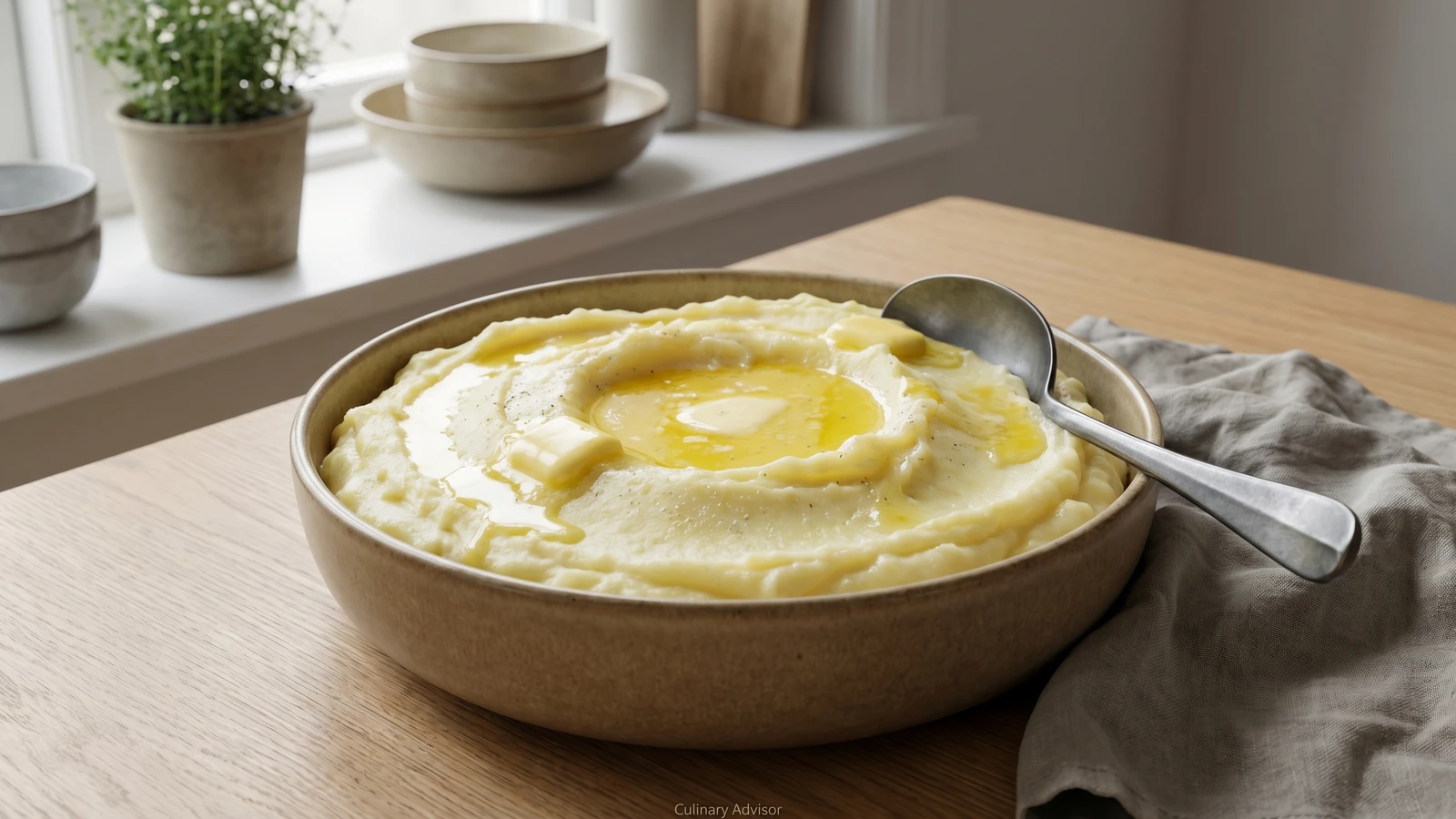
Kartoffelmos med Smor
Created by Chef Freja
Danish mashed potatoes made with plenty of butter and warm milk, shaped with a well in the center where a last piece of cold butter melts slowly into a golden pool. The side dish that anchors half the Danish winter table.
November in Denmark is dark by four o'clock. The kitchen light goes on before dinner starts, and what you cook is shaped by that fact. This is the season of browned meat and rich gravies, of stegt flaesk and frikadeller, and beside every one of them, a generous mound of kartoffelmos with a well of melting butter in the middle.
Danish mashed potato is not a complicated thing. Floury potatoes, real butter, warm milk, and the confidence to use enough of all three. But the details matter, and they're the kind nobody tells you unless someone stands next to you and explains why. Why the potatoes start in cold water. Why the butter goes in before the milk. Why you must never, under any circumstances, put a stick blender near this dish. Each step has a reason, and once you understand the reason, you won't forget the step.
The well in the center is everything. You press it into the surface with the back of a spoon, drop in a cold piece of butter, and watch it melt as the dish travels to the table. That pool of gold is the last layer of flavor and the first thing your eye goes to. It tells you someone made this with love, and it tells you the potatoes are still hot. You'll know when it's right.
Potatoes became a staple of the Danish diet in the late 18th century, initially cultivated in the sandy soils of Jutland where grain struggled to thrive. By the 1800s, kartoffelmos had established itself as the universal accompaniment to the browned-butter and pan-gravy dishes that define Danish weeknight cooking. The tradition of the butter well, smorrehulet, is a detail passed from kitchen to kitchen rather than written in cookbooks, a small ritual of generosity that turns a simple side dish into something people remember.
The technique, the tradition, and the story behind every dish.
Discover Culinary AdvisorIngredients
floury potatoes
Quantity
1kg
peeled and cut into even chunks
unsalted butter
Quantity
80g, plus extra for the well
cold, cut into cubes
whole milk
Quantity
150ml
warmed
fine sea salt
Quantity
1 teaspoon, plus more to taste
white pepper
Quantity
to taste
nutmeg
Quantity
a few passes on the grater
freshly grated
| Ingredient | Quantity |
|---|---|
| floury potatoespeeled and cut into even chunks | 1kg |
| unsalted buttercold, cut into cubes | 80g, plus extra for the well |
| whole milkwarmed | 150ml |
| fine sea salt | 1 teaspoon, plus more to taste |
| white pepper | to taste |
| nutmegfreshly grated | a few passes on the grater |
Equipment Needed
- •Large pot, 4 litre
- •Potato ricer or sturdy potato masher
- •Wooden spoon
- •Colander
Instructions
- 1
Boil the potatoes
Place the potato chunks in a large pot and cover with cold water. Add a teaspoon of fine sea salt. Starting in cold water matters: it lets thepotatoes heat evenly from the outside in, so the centers cook through at the same rate as the edges. If you drop them into boiling water, the outsides turn to mush while the middles stay hard, and no amount of mashing fixes that. Bring to a gentle boil, then lower the heat and simmer for fifteen to twenty minutes.
Cut your potatoes into even chunks, roughly the size of a small egg. Uniformity is everything here. Mismatched pieces cook at different speeds and you end up with some that are waterlogged and others that are still chalky. - 2
Test for doneness
Slide a thin knife into the largest piece. It should meet no resistance at all and the potato should nearly fall off the blade. If there is even a slight firmness at the center, give it another two minutes. Undercooked potatoes leave lumps that no amount of mashing can smooth out. That grain, once it's there, stays.
- 3
Drain and dry
Drain the potatoes thoroughly in a colander, then return them to the empty pot. Set the pot back over a low heat for one minute, shaking it gently. You'll see the surface of the potatoes go from wet and shiny to dry and almost chalky. This step drives off the excess water that would otherwise thin the mash and make it gluey. Dry potatoes absorb butter and milk properly. Wet ones resist both.
Listen for the sound. When the potatoes are dry enough, they'll make a soft, papery scraping against the pot. That's your signal. - 4
Mash by hand
Take the pot off the heat. Mash the potatoes with a potato masher or a ricer. Work quickly and with purpose, but stop as soon as the lumps are gone. Do not use a food processor and do not use a stick blender. Mechanical blades break the starch cells apart and release a thick paste that turns the mash into something closer to wallpaper glue than food. The texture you want comes from pressing, not from cutting. A ricer gives the smoothest result. A hand masher gives a slightly rougher texture that some prefer. Both are honest.
If you have a potato ricer, use it. It presses each piece through fine holes and the result is effortlessly smooth, with no risk of overworking. A ricer does in seconds what a masher takes a minute to achieve. - 5
Add butter first
Add the cold butter cubes to the hot mashed potato and fold them in with a wooden spoon. Butter goes in before milk. This is the order that matters. The fat coats the starch granules before the liquid arrives, and that coating is what keeps the mash fluffy rather than dense. You'll see the butter melt into the potato and the whole mass turn glossy and rich. Keep folding until every trace of solid butter has disappeared.
Cold butter, not softened. The potatoes are hot enough to melt it, and the slight temperature contrast slows the melting just enough for the fat to coat the starch evenly. Softened butter melts too fast and pools instead of incorporating. - 6
Add warm milk
Pour in the warm milk gradually, folding it through with the spoon. Not all at once. Add half, fold it in, then judge whether you need the rest. Different potatoes absorb differently, and the right consistency is a mash that holds a soft peak on the spoon but drops slowly when you tilt it. It should be creamy and yielding, not stiff and not loose. Season with white pepper and a few fine passes of nutmeg on the grater. Taste. Adjust the salt. The mash should taste of butter and potato, with the nutmeg just barely there, a warmth in the background you can't quite name.
The milk must be warm. Cold milk hitting hot potato drops the temperature suddenly and tightens the starch. The result is denser than it should be. Warm the milk while the potatoes boil and you'll never think about it again. - 7
Shape and serve with a butter well
Spoon the kartoffelmos into a warmed serving dish and smooth the top gently with the back of the spoon. Press a shallow well into the center with the bowl of the spoon. Place a generous piece of cold butter into the well. As you carry it to the table, the butter will begin to melt, filling the hollow with a golden pool that runs into each serving as people help themselves. This is not decoration. It's the final layer of richness, and it is how this dish is meant to arrive. Serve immediately, while everything is hot and the butter is still moving.
Chef Tips
- •Use floury potatoes, not waxy. In Denmark that means a variety like Bintje or King Edward. Floury potatoes have a high starch content that breaks down into a light, fluffy texture. Waxy potatoes hold their shape, which is what you want in a salad but exactly wrong here.
- •The amount of butter is not a suggestion. Eighty grams for a kilo of potatoes, plus the piece in the well. Danish kartoffelmos is supposed to taste of butter. If you reduce it, the dish loses its identity. This is comfort food, not health food, and there is nothing wrong with that.
- •White pepper, not black. Black pepper leaves dark specks and a sharper heat that fights the butter. White pepper melts into the background and warms without announcing itself. This is the Danish instinct: season so the cook's hand is invisible.
- •If you're serving this alongside stegt flaesk or frikadeller with brown gravy, the gravy will find its way into the butter well. That's not an accident. That's the architecture of the plate working the way it should.
Advance Preparation
- •Kartoffelmos is best made just before serving. It loses its lightness as it sits. If you must make it ahead, keep it covered in a warm oven with a piece of butter on top to prevent a skin from forming. Reheat gently with a splash of warm milk, folding rather than stirring.
- •You can peel and cut the potatoes up to four hours ahead. Keep them submerged in cold water to prevent browning. Drain and start with fresh cold water when you're ready to cook.
Frequently Asked Questions
Nutrition Information
1 serving (about 310g)
Where cooking meets culture.
Culinary mentorship, cultural storytelling, and the editorial depth that makes cooking meaningful.
Explore Culinary Advisor