Culinary Advisor
A cooking platform built around craft, culture, and the stories behind what we eat.
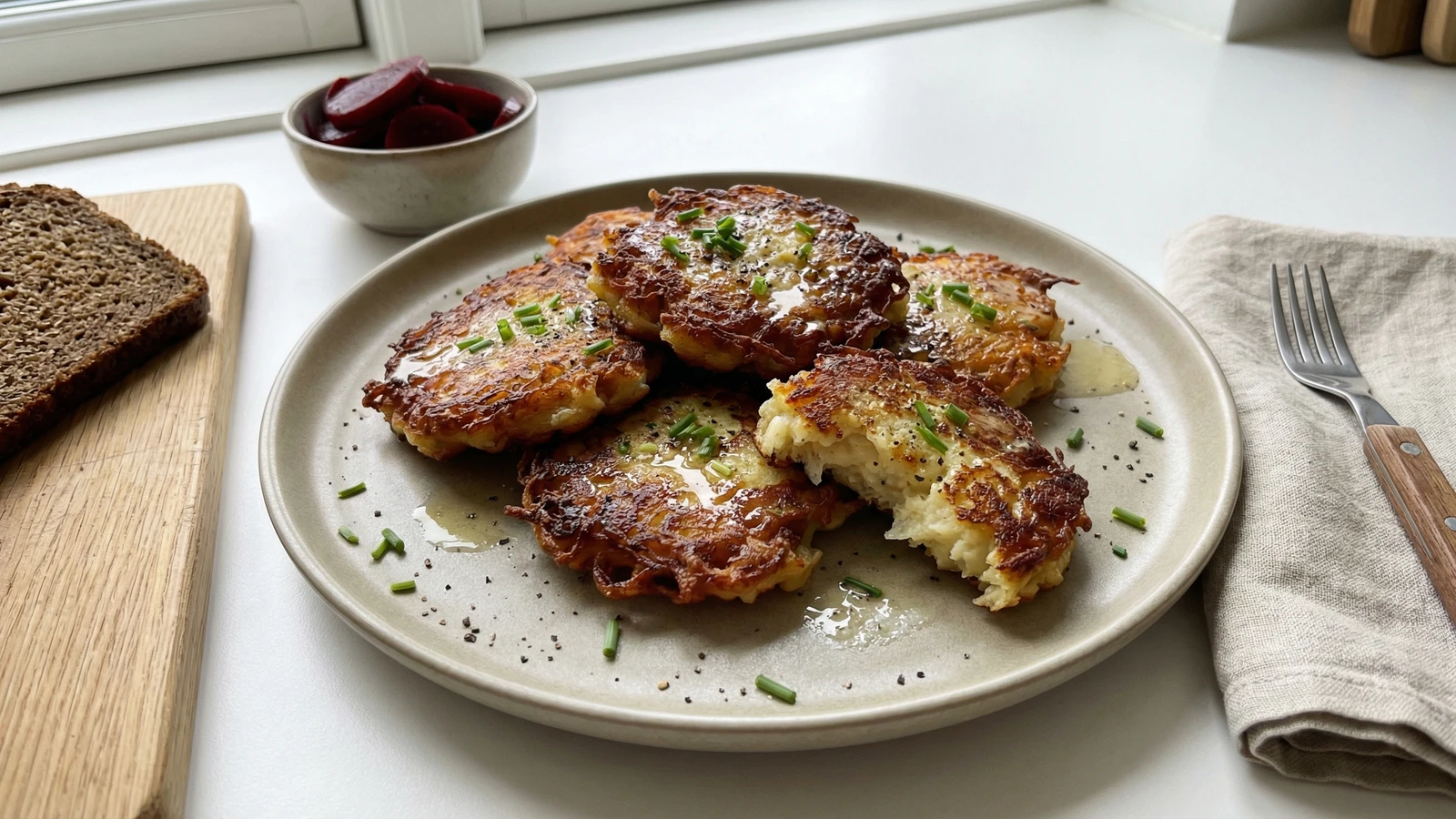
Kartoffelfrikadeller
Created by Chef Freja
Danish potato fritters from yesterday's boiled potatoes, grated coarse and fried in butter until the edges go lacy and crisp. Jutland thrift cooking at its most generous.
Every Danish kitchen has a small set of recipes that exist because nothing should go to waste. Kartoffelfrikadeller belong to this tradition. They are what you make on a Tuesday evening with the boiled potatoes left over from Monday, when the fridge has half a bowl of cold spuds and you need to feed people without much fuss. In Jutland especially, where thrift is not a virtue but a habit, these fritters have been weeknight food for generations.
The technique is simple, almost too simple to call a recipe. You grate cold potatoes and onion, bind them with egg and a little flour, season with chives, salt, pepper, and a grating of nutmeg, and fry the patties in foaming butter until the edges crisp into something lacy and dark. What matters is the temperature of the potatoes when you grate them. They have to be cold. Cold potatoes hold their shape and give you the ragged, golden edges that catch in the butter. Warm potatoes turn to paste and the fritters go heavy, and that is not the dish you want.
I'll walk you through every step so the result is exactly right: crisp on the outside, soft and steaming through the middle, with the gentle sweetness of grated onion running through. Serve them with rugbrod and a bowl of pickled beets, and you have a meal that costs almost nothing and feels like it was cooked with love. You'll know when it's right because the kitchen will smell of browned butter and the fritters will disappear faster than you made them.
Kartoffelfrikadeller emerged from the practical kitchens of rural Jutland in the 19th century, when potatoes had become the foundation of the Danish weeknight meal and the cook's first duty was to make sure nothing went to waste. The fritters share their name with the better-known meat frikadeller, but the word itself came to Denmark from French via German, fricadelle, meaning a small flattened patty cooked in a pan. In the lean kitchens of the heath country, where meat was a Sunday luxury, the potato version became its own tradition: a fritter shaped like a frikadeller, browned in butter the same way, and eaten with the same dark rye bread and pickled vegetables that anchor every honest Danish supper.
The technique, the tradition, and the story behind every dish.
Discover Culinary AdvisorIngredients
cold boiled potatoes
Quantity
700g
peeled, leftover from the night before is ideal
yellow onion
Quantity
1 medium
finely grated
eggs
Quantity
2 large
plain flour
Quantity
60g
chives
Quantity
2 tablespoons, plus extra to finish
finely chopped
fine sea salt
Quantity
1 teaspoon
black pepper
Quantity
freshly ground, to taste
fresh nutmeg
Quantity
a grating
unsalted butter
Quantity
60g
for frying
neutral oil
Quantity
1 tablespoon
for frying
dark rugbrod
Quantity
thick slices, to serve
pickled beetroot (optional)
Quantity
to serve
| Ingredient | Quantity |
|---|---|
| cold boiled potatoespeeled, leftover from the night before is ideal | 700g |
| yellow onionfinely grated | 1 medium |
| eggs | 2 large |
| plain flour | 60g |
| chivesfinely chopped | 2 tablespoons, plus extra to finish |
| fine sea salt | 1 teaspoon |
| black pepper | freshly ground, to taste |
| fresh nutmeg | a grating |
| unsalted butterfor frying | 60g |
| neutral oilfor frying | 1 tablespoon |
| dark rugbrod | thick slices, to serve |
| pickled beetroot (optional) | to serve |
Equipment Needed
- •Box grater
- •Clean tea towel for wringing the onion
- •Heavy frying pan, 28cm
- •Fish slice or wide spatula
Instructions
- 1
Grate the potatoes
Take your cold boiled potatoes and grate them on the coarse side of a box grater into a large bowl. Cold potatoes are essential here. Warm or fresh-boiled potatoes turn to glue when you grate them, and the fritters go heavy. Cold potatoes hold their shape and give you the lacy, ragged edges that crisp up in the butter. This is why kartoffelfrikadeller exist in the first place: they are what you make on Tuesday with Monday's leftover potatoes.
If you don't have leftover potatoes, boil floury potatoes in their skins the night before and leave them in the fridge overnight. Same result, just a little more planning. - 2
Drain the onion
Grate the onion on the same coarse holes, then tip it into a clean tea towel and wring out the liquid over the sink. Onion holds a surprising amount of water, and that water will turn your fritter mixture into a slurry if you let it. You want the onion's flavor, not its juice. Add the wrung-out onion to the bowl with the potatoes.
- 3
Bring the mixture together
Crack in the eggs, add the flour, chives, salt, a good grind of black pepper, and a grating of nutmeg. Mix everything together with a fork until it just holds. Don't overwork it. The texture you want is loose and shaggy, not smooth. If the mixture feels too wet to hold a shape, add another tablespoon of flour. If it feels too dry, add a splash of milk. You'll know when it's right because a heaped spoonful will hold itself together when you scoop it.
The nutmeg is a small thing that does a lot. It's what makes these taste Danish rather than just like a potato pancake. Don't skip it. - 4
Heat the pan
Put your heaviest frying pan over medium heat. Add half the butter and all the oil. The oil keeps the butter from burning before the fritters cook through, and the butter gives you the nutty, browned flavor that makes these worth eating. Wait until the butter foams and the foam starts to subside. That's the moment. Earlier and the fritters will sit in pale fat. Later and the butter is already past its best.
- 5
Fry the fritters
Drop heaped tablespoons of the mixture into the hot butter, then press each one gently with the back of the spoon to flatten it into a rough oval about a centimetre thick. Don't crowd the pan. Four or five at a time is plenty. Cook for three to four minutes on the first side without moving them. You'll hear the butter sizzling steadily, not screaming, not whispering. When the edges have gone deep gold and a little lacy, flip them and cook the second side for another three minutes. The outside should be crisp and brown, the inside soft and steaming.
Resist the urge to flip them early. The crust needs time to form, and if you move them before it does, half the crust stays in the pan. - 6
Finish the batch
Lift the cooked fritters onto a plate lined with kitchen paper to catch any extra butter. Add the rest of the butter to the pan, let it foam, and fry the second batch the same way. Don't try to keep the first batch warm in the oven. They'll go soft. Kartoffelfrikadeller want to be eaten the moment they come out of the pan, while the edges are still crackling.
- 7
Serve
Pile the hot fritters onto a warm plate and scatter with extra chives. Serve with thick slices of rugbrod, a small bowl of pickled beetroot, and not much else. This is weeknight food at its most honest, the kind of meal that costs almost nothing and feels like a small act of care. Tak for mad.
Chef Tips
- •Floury potatoes give you the best texture: King Edward, Maris Piper, or Russet. Waxy salad potatoes stay too firm and don't bind properly.
- •If you have any leftover smoked mackerel or pickled herring in the fridge, lay a small piece on top of each fritter when you serve them. That's how a Jutland cook would turn this into smorrebrod the next day.
- •These don't reheat well, so make only what you'll eat in one sitting. Cold fried potato is not a thing anyone has ever asked for.
Advance Preparation
- •Boil the potatoes the night before and leave them in the fridge overnight. Cold potatoes are not optional, they are the dish.
- •The mixture itself does not hold well once made. Mix it just before you fry, or the salt will pull water out of the potatoes and the fritters will go slack.
Frequently Asked Questions
Nutrition Information
1 serving (about 240g)
Where cooking meets culture.
Culinary mentorship, cultural storytelling, and the editorial depth that makes cooking meaningful.
Explore Culinary Advisor