Culinary Advisor
A cooking platform built around craft, culture, and the stories behind what we eat.
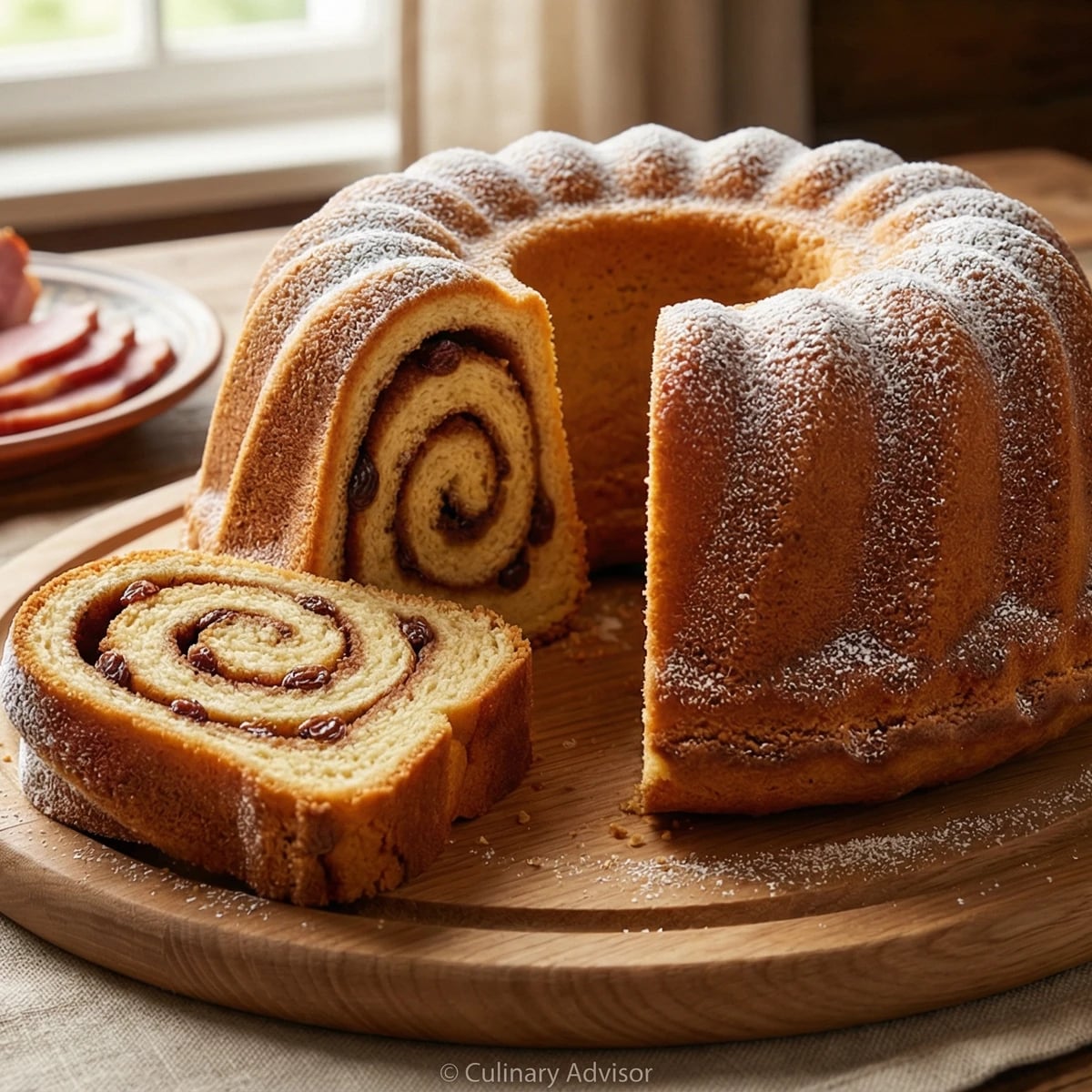
Kärntner Reindling
Created by Chef Elsa
Carinthia's cinnamon-swirled Easter cake, coiled into a traditional Rein and baked until the kitchen smells like brown butter and warm spice. The centerpiece of every Carinthian Osterjause.
I first tasted Reindling on one of those childhood trips to Austria with Gretel and my grandmother Eva. We were somewhere in Carinthia, south of the Tauern, staying at a Gasthaus where the owner's wife had baked one that morning for Easter. She brought it to the table still warm, turned it out of its pot, and sliced it so you could see the spiral: dark cinnamon filling wound through golden dough, raisins scattered through every layer like small, sweet punctuation marks. Gretel took one bite and asked the woman for her recipe. They spent twenty minutes at the kitchen table talking about how much butter to brown, how thin to roll the dough, whether rum in the raisins was tradition or showing off.
Reindling is Carinthia's Easter bread, though calling it bread doesn't do it justice. The dough is rich with eggs and butter and milk, soft enough that it stretches without tearing when you roll it out. You spread it with a filling of brown butter, cinnamon, and sugar, scatter rum-soaked raisins across the surface, then roll the whole thing up tight and coil it into a Rein, the round baking pot that gives the cake its name. When it bakes, the filling melts into the dough and the top turns deep gold. You turn it out and slice it to reveal the spiral.
In Carinthia, Reindling is part of the Osterjause, the Easter spread that goes to church to be blessed on Holy Saturday. It sits on the table alongside Osterschinken (smoked ham), Kren (freshly grated horseradish), colored eggs, and good bread. The sweet cake against the salty ham and sharp horseradish is one of those combinations that makes you wonder why anyone eats Easter any other way. This is not a dessert you eat after dinner. It's the heart of a meal that's been celebrated the same way in Carinthian kitchens for centuries.
Ingredients
plain flour (or griffiges Mehl)
Quantity
500g
granulated sugar (for dough)
Quantity
80g
vanilla sugar (Vanillezucker)
Quantity
1 packet (8g)
| Ingredient | Quantity |
|---|---|
| plain flour (or griffiges Mehl) | 500g |
| granulated sugar (for dough) | 80g |
| vanilla sugar (Vanillezucker) | 1 packet (8g) |