Culinary Advisor
A cooking platform built around craft, culture, and the stories behind what we eat.
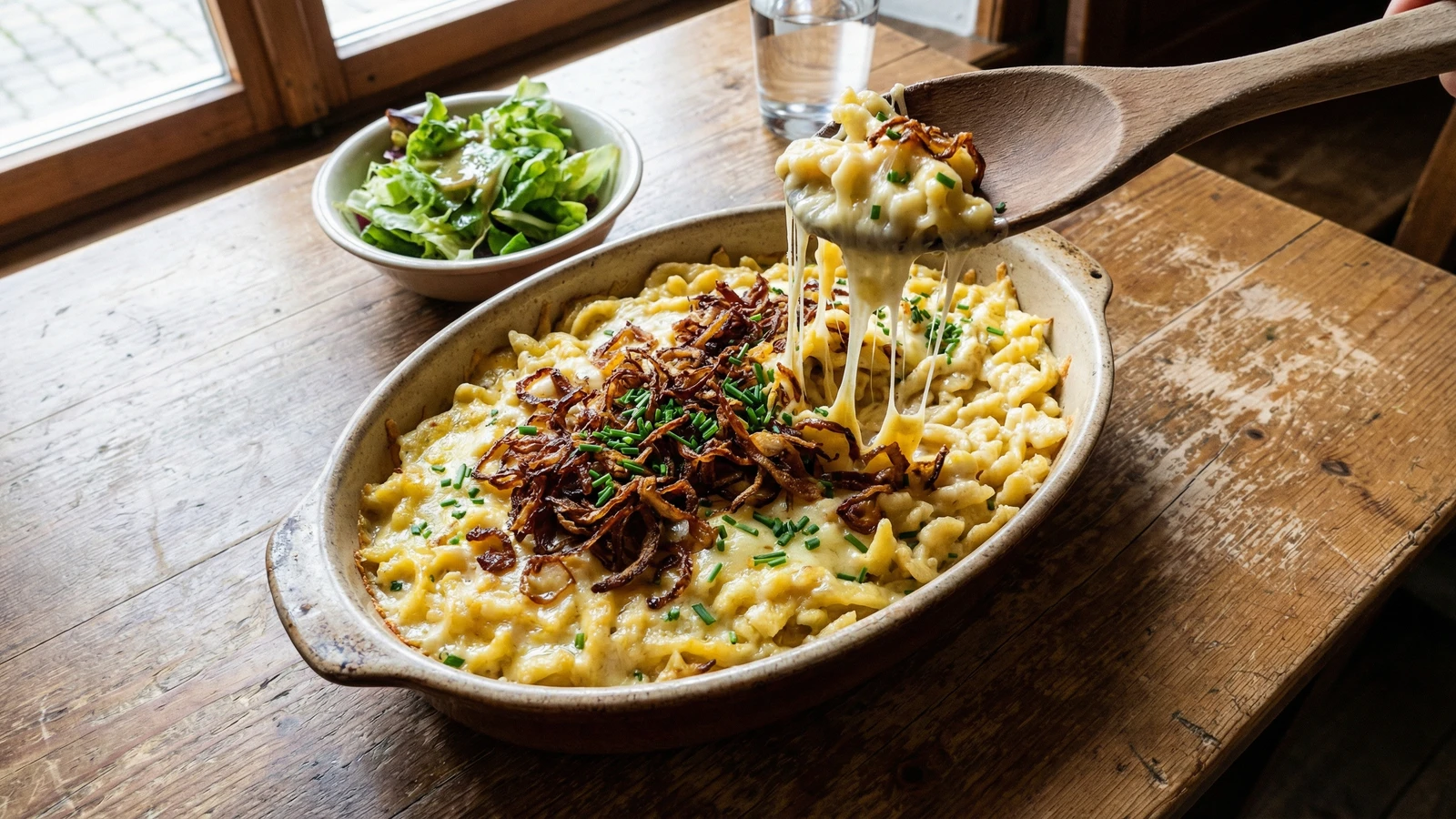
Käsespätzle mit Röstzwiebeln
Created by Chef Elsa
Fresh hand-pressed Spätzle layered with molten Vorarlberger Bergkäse and crowned with slowly caramelized onions so sweet they could be dessert. Mountain food that warms you from the inside out.
Gretel always said that the Alps have their own kitchen, and Käsespätzle is the dish that proves it. This isn't Viennese food. It comes from Vorarlberg and Tyrol, from farmhouse kitchens where the cheese was made that morning and the eggs came from the yard. It's the kind of cooking where three or four ingredients, handled well, become something so satisfying you can't believe nobody's written an opera about it.
I first had proper Käsespätzle at a wooden Gasthaus table in the Bregenzerwald on one of our childhood trips through Austria. I was maybe nine. Gretel ordered it for me because she said I needed to understand that Austrian cooking wasn't only Torten and Strudel. The Spätzle came in a hot iron pan, the cheese still pulling in long strings when you lifted your fork, and on top, a tangle of onions fried so slowly they'd gone dark and sweet and almost crispy. I ate the entire portion and tried to order another.
The technique is straightforward but it asks you to pay attention. The dough should be wetter and stickier than you think is right. You press or scrape it into boiling water in rough, uneven pieces, and those irregular shapes are what catch the cheese and hold the sauce. Then you layer: Spätzle, grated cheese, Spätzle, more cheese, into a hot dish where everything melts together. The Röstzwiebeln go on at the very end, piled high, still warm from the pan. If the onions aren't deeply caramelized, almost mahogany, you haven't gone far enough. Patience with those onions is the difference between a good Käsespätzle and the kind that makes a whole table go quiet.
Käsespätzle is rooted in the Alpine dairy traditions of Vorarlberg and Tyrol, where mountain cheeses like Bergkäse have been produced in summer Alp dairies for centuries. The dish appears in Vorarlberg farmhouse cooking records from the 18th century, originally made with whatever cheese the Sennerin had on hand. Today, Vorarlberg and Tyrol both claim it as their own, and the argument over whether the cheese should be layered or stirred through has never been settled to anyone's satisfaction.
The technique, the tradition, and the story behind every dish.
Discover Culinary AdvisorIngredients
plain flour (griffiges Mehl if available)
Quantity
400g
eggs
Quantity
4 large
cold water
Quantity
200ml
salt (for dough)
Quantity
1 teaspoon
freshly grated nutmeg
Quantity
pinch
Vorarlberger Bergkäse or aged Alpine Emmentaler
Quantity
250g
coarsely grated
onions
Quantity
4 large
halved and thinly sliced
unsalted butter
Quantity
60g
neutral oil
Quantity
1 tablespoon
sugar
Quantity
pinch
salt and black pepper
Quantity
to taste
fresh chives
Quantity
generous handful
finely cut
| Ingredient | Quantity |
|---|---|
| plain flour (griffiges Mehl if available) | 400g |
| eggs | 4 large |
| cold water | 200ml |
| salt (for dough) | 1 teaspoon |
| freshly grated nutmeg | pinch |
| Vorarlberger Bergkäse or aged Alpine Emmentalercoarsely grated | 250g |
| onionshalved and thinly sliced | 4 large |
| unsalted butter | 60g |
| neutral oil | 1 tablespoon |
| sugar | pinch |
| salt and black pepper | to taste |
| fresh chivesfinely cut | generous handful |
Equipment Needed
- •Spätzlehobel, Spätzle press, or cutting board with knife
- •Large pot for boiling (6-liter minimum)
- •Wide heavy-bottomed pan (28cm) for the onions
- •Ovenproof baking dish
- •Slotted spoon
Instructions
- 1
Start the Röstzwiebeln
Begin with the onions because they take the longest and cannot be rushed. Melt the butter with the oil in a wide, heavy pan over medium-low heat. Add all the sliced onions at once. They'll fill the pan completely. That's fine. Stir to coat them in the fat, add a pinch of sugar and a good pinch of salt, then turn the heat to low. Now leave them alone. Stir every five minutes or so, scraping the bottom of the pan where the good stuff collects. You're looking at twenty-five to thirty minutes of slow cooking. The onions will shrink to a quarter of their volume and turn deep mahogany brown, soft and sweet and just starting to crisp at the edges. If they're still blond and limp, you stopped too early.
Use four onions, not two. They shrink dramatically during caramelization and you want a generous crown on top. Skimping on onions is the most common mistake people make with this dish. - 2
Make the Spätzle dough
While the onions cook, combine the flour, eggs, water, salt, and nutmeg in a large bowl. Beat the dough vigorously with a wooden spoon until it starts to pull away from the sides and develops visible air bubbles. This takes a solid three to four minutes of real effort. Your arm will know when it's ready. The dough should be sticky, elastic, and thicker than pancake batter but thinner than bread dough. If it's stiff enough to roll, it's too dry. Add a splash more water. Let it rest for ten minutes while you bring a large pot of salted water to a rolling boil.
If you can find griffiges Mehl, the coarse Austrian flour, use it. The larger granules absorb liquid differently and give the Spätzle a slightly rougher texture that holds the cheese better. Standard plain flour works, but the result is a touch smoother. - 3
Press the Spätzle
Preheat your oven to 180°C (160°C fan) and butter an ovenproof dish. Now, press or scrape the dough into the boiling water. If you have a Spätzlehobel (Spätzle press or grater), load a portion of dough and press it through directly over the pot. If you don't, spread a small amount of dough on a wet cutting board and use the edge of a knife or spatula to scrape thin strips into the water. Work in batches. The Spätzle are done when they float to the surface, about two minutes. Lift them out with a slotted spoon and let them drain briefly in a colander. Don't rinse them. That starchy surface is what the cheese clings to.
- 4
Layer with cheese
Spread a layer of hot Spätzle across the bottom of your buttered dish. Scatter a generous handful of grated cheese over the top. Add another layer of Spätzle, then more cheese. Repeat until everything is used, finishing with cheese on top. Season each layer with a grinding of black pepper. The heat from the fresh Spätzle starts melting the cheese immediately, and by the time you've finished layering, the bottom will already be turning into that beautiful, stringy mess you want.
Layer as you cook. Don't drain all the Spätzle and layer them cold. Each batch should go straight from the water into the dish while it's still steaming hot. That heat is what melts the cheese between the layers. - 5
Bake until molten
Slide the dish into the oven for ten to twelve minutes. You're not cooking anything at this stage. You're letting the oven finish what the residual heat started, melting the top layer of cheese into a golden, bubbling surface and binding everything together. The edges of the dish should be starting to turn golden brown. Pull it out the moment the cheese looks alive and molten.
- 6
Crown with Röstzwiebeln and serve
Pile the caramelized onions on top in a generous, shaggy heap. Don't press them down. Scatter fresh chives over everything. Bring the dish to the table in the pan it was baked in. Serve it with a simple green salad dressed in a tangy vinaigrette, because the richness of the cheese and butter wants something sharp alongside it. Mahlzeit!
Chef Tips
- •The cheese makes or breaks this dish. Vorarlberger Bergkäse is the traditional choice: a firm, nutty, aged mountain cheese with real depth. If you can't find it, a good aged Emmentaler or Gruyère will work. What won't work is mild, rubbery cheese that melts into nothing. You need a cheese with personality.
- •Don't wash the Spätzle after cooking. That starchy coating on the surface is what helps the cheese cling and melt into the noodles. Rinsing them gives you clean Spätzle and loose cheese sitting in a puddle at the bottom of the dish. Nobody wants that.
- •In Vorarlberg, they sometimes stir the cheese through the Spätzle in the pot rather than layering it. Both methods are correct and the argument has been going on for generations. I layer, because I like the pockets of melted cheese you get between the layers, but I won't tell a Vorarlberger she's wrong. Not to her face, anyway.
- •Leftover Käsespätzle reheats beautifully in a hot pan with a little extra butter. The edges go crispy and the cheese gets a second life. Some people like it better the next day, and I'm not going to argue with them.
Advance Preparation
- •The Röstzwiebeln can be made up to two hours ahead and kept at room temperature. Rewarm gently in the pan before serving, or pile them on at room temperature. They're forgiving.
- •The Spätzle dough can rest in the fridge for up to two hours before pressing. The gluten relaxes further and the dough becomes easier to work with.
- •Käsespätzle is best assembled and baked just before serving. The cheese needs to be molten and stretchy when it reaches the table. If you must hold it, keep the layered dish in a low oven (120°C) covered with foil for up to fifteen minutes.
Frequently Asked Questions
Nutrition Information
1 serving (about 355g)
Where cooking meets culture.
Culinary mentorship, cultural storytelling, and the editorial depth that makes cooking meaningful.
Explore Culinary Advisor