Culinary Advisor
A cooking platform built around craft, culture, and the stories behind what we eat.
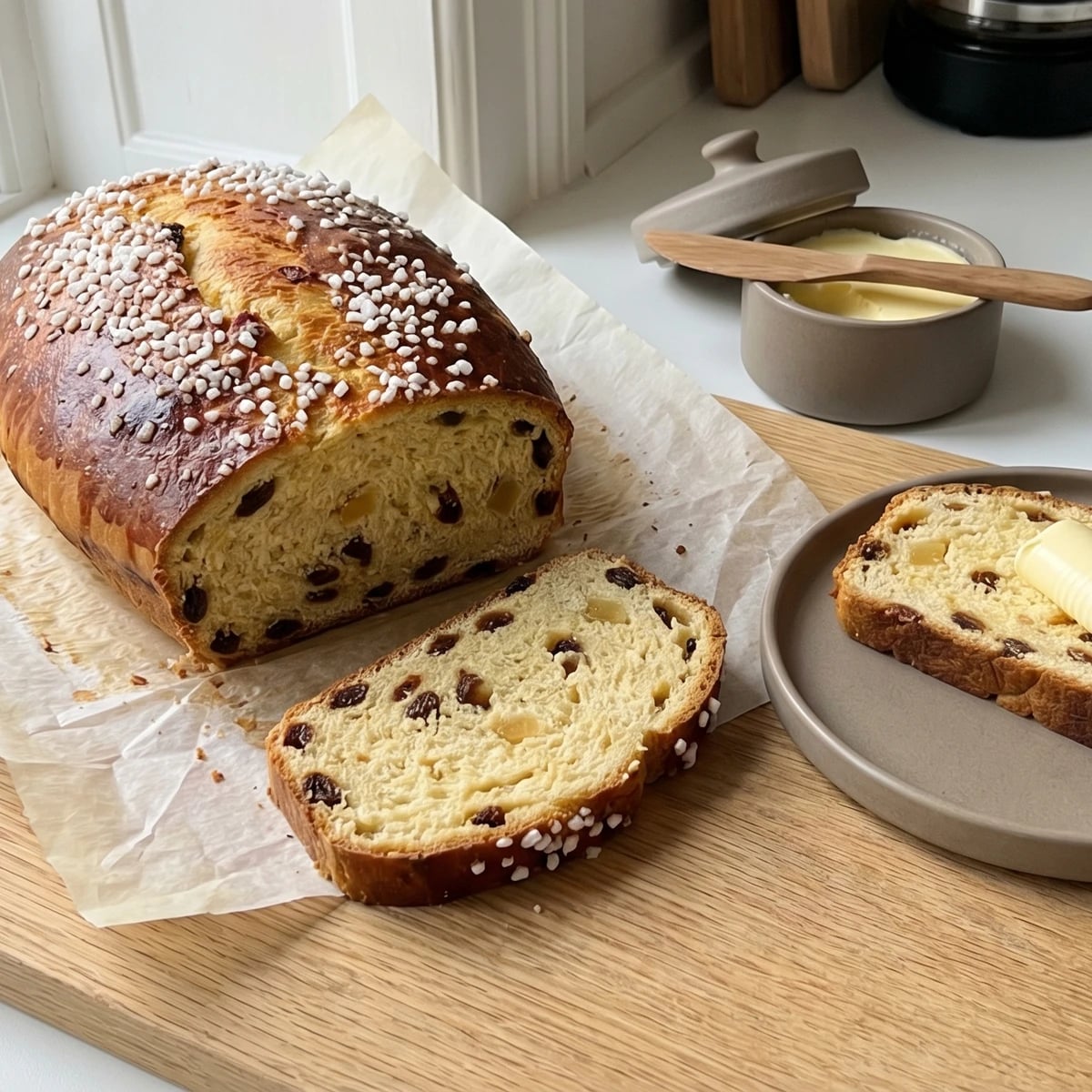
Julekage
Created by Chef Freja
A cardamom yeast loaf studded with raisins, candied citron, and almonds. The bread that marks the start of Danish December, sliced thick with cold butter and strong coffee at the table where it all happens.
The first Sunday of advent, someone in every Danish household reaches for the flour and the cardamom. That's when julekage begins. Not as an event, not as a project, but as a quiet signal that the darkest month has arrived and the kitchen is answering it with warmth and spice and the smell of yeast rising in a bowl by the window.
Julekage is a sweet, enriched bread, soft and golden, fragrant with cardamom, studded with raisins, candied citron peel, and almonds. It's not cake, despite the name. It's bread, a bread you slice thick and eat with cold butter and a cup of coffee so strong it holds the spoon up. In most Danish families it appears in early December and doesn't leave the table until Christmas is over. It sits on the counter wrapped in a cloth, available to anyone who walks through the kitchen, which is exactly where it belongs.
The technique is simple enriched-dough baking, the same family as kanelsnegle and wienerbrod, but slower and more forgiving. You mix a soft dough, let it rise twice, and bake it into a golden oval. What I want you to watch for is the cardamom. Use enough. Two full teaspoons. The cardamom is the soul of this bread, and without it you have something pleasant but anonymous. With it, you have the smell that every Dane associates with December. You'll know when it's right.
Ingredients
strong white bread flour
Quantity
500g, plus extra for dusting
caster sugar
Quantity
100g
fine sea salt
Quantity
1 teaspoon
| Ingredient | Quantity |
|---|---|
| strong white bread flour | 500g, plus extra for dusting |
| caster sugar | 100g |
| fine sea salt | 1 teaspoon |