Culinary Advisor
A cooking platform built around craft, culture, and the stories behind what we eat.
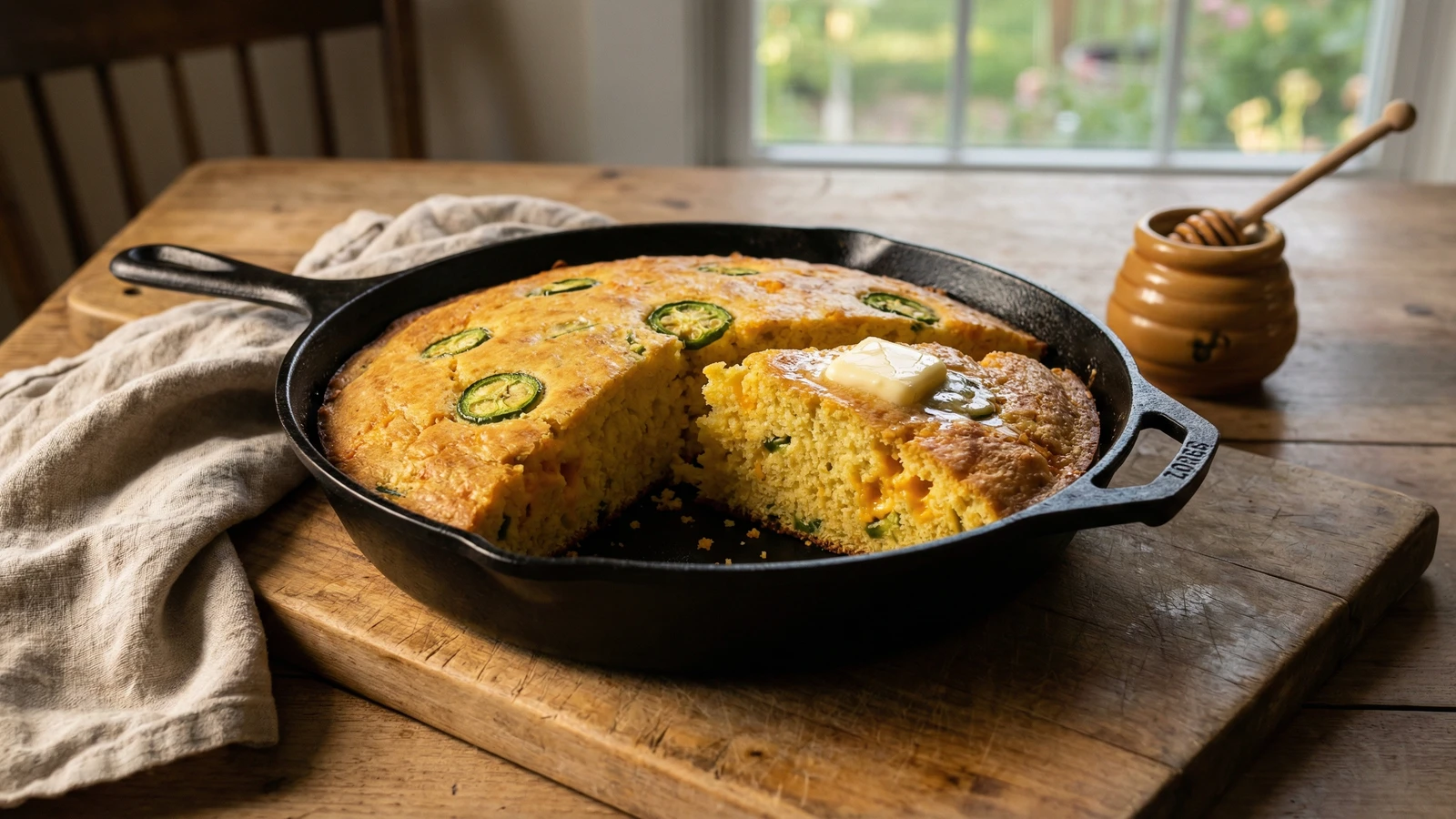
Jalapeño Cheddar Cornbread
Created by Chef Remy
Sharp aged cheddar and fresh jalapeños folded into tangy buttermilk batter, baked in a screaming hot cast iron skillet until the edges turn golden and crisp while the center stays tender and crumbly.
Cornbread is the soul of Louisiana cooking. Every pot of red beans, every bowl of gumbo, every plate of greens demands a wedge of cornbread on the side. My grandmother Evangeline baked cornbread in the same cast iron skillet her mother used, and that pan came to me when she passed. Four generations of Boudreaux cornbread, all from the same seasoned iron.
The secret starts with the skillet. You get that cast iron screaming hot in the oven, add a generous pour of bacon fat or butter, then pour your batter into that sizzling pan. The bottom crust forms instantly, creating that crispy edge that cornbread lovers fight over. At Lagniappe, we bake dozens of skillets a day, and every one gets pulled from the oven with the same golden crust.
Now, I've added jalapeños and sharp cheddar because that's the bayou way: take something good and make it better. The cheese melts into pockets throughout the bread, and the jalapeños bring a heat that builds slow and honest. You control the fire by adjusting how many peppers you use and whether you leave the seeds in. Start mild if you're uncertain. You can always add more heat next time.
The technique, the tradition, and the story behind every dish.
Discover Culinary AdvisorIngredients
yellow cornmeal
Quantity
1 1/2 cups
preferably stone-ground
all-purpose flour
Quantity
1/2 cup
granulated sugar
Quantity
1 tablespoon
baking powder
Quantity
1 teaspoon
baking soda
Quantity
1/2 teaspoon
fine sea salt
Quantity
1 teaspoon
cayenne pepper
Quantity
1/2 teaspoon
black pepper
Quantity
1/4 teaspoon
freshly ground
buttermilk
Quantity
1 1/3 cups
at room temperature
large eggs
Quantity
2
at room temperature
unsalted butter
Quantity
4 tablespoons
melted and cooled slightly
sharp aged cheddar cheese
Quantity
2 cups (about 8 ounces)
shredded
fresh jalapeño peppers
Quantity
2-3
seeded and diced
bacon fat, butter, or vegetable oil
Quantity
3 tablespoons
for the skillet
| Ingredient | Quantity |
|---|---|
| yellow cornmealpreferably stone-ground | 1 1/2 cups |
| all-purpose flour | 1/2 cup |
| granulated sugar | 1 tablespoon |
| baking powder | 1 teaspoon |
| baking soda | 1/2 teaspoon |
| fine sea salt | 1 teaspoon |
| cayenne pepper | 1/2 teaspoon |
| black pepperfreshly ground | 1/4 teaspoon |
| buttermilkat room temperature | 1 1/3 cups |
| large eggsat room temperature | 2 |
| unsalted buttermelted and cooled slightly | 4 tablespoons |
| sharp aged cheddar cheeseshredded | 2 cups (about 8 ounces) |
| fresh jalapeño peppersseeded and diced | 2-3 |
| bacon fat, butter, or vegetable oilfor the skillet | 3 tablespoons |
Equipment Needed
- •10-inch cast iron skillet
- •Large mixing bowl
- •Medium mixing bowl
- •Whisk
- •Wooden spoon or spatula
- •Heavy oven mitts
Instructions
- 1
Preheat skillet in oven
Position a rack in the center of your oven and set a 10-inch cast iron skillet on it. Preheat the oven to 425°F with the skillet inside. This takes about twenty minutes, but that empty skillet needs every bit of that time to get properly hot. The pan should be too hot to touch when you're ready. That heat is what gives you the crust.
If you don't have a 10-inch skillet, a 9-inch works fine but yields a slightly thicker cornbread. A 12-inch will spread too thin. - 2
Combine dry ingredients
While the skillet heats, whisk together the cornmeal, flour, sugar, baking powder, baking soda, salt, cayenne, and black pepper in a large bowl. Make sure there are no lumps of baking soda hiding. Run your whisk through several times until everything looks uniform. This is where you're building your flavor base.
- 3
Mix wet ingredients
In a separate bowl, whisk the buttermilk and eggs together until completely combined. The buttermilk should be at room temperature, not cold from the refrigerator. Cold buttermilk shocks the batter and keeps it from rising properly. Add the melted butter and whisk again until you see no streaks of fat floating on top.
- 4
Fold batter together
Pour the wet ingredients into the dry and stir with a wooden spoon or spatula just until the flour disappears. Stop the moment you no longer see dry spots. Overmixing makes tough cornbread. A few small lumps are fine. Fold in the shredded cheddar and diced jalapeños, distributing them evenly throughout the batter.
For milder heat, remove all the seeds and white membrane from your jalapeños. For more fire, leave some seeds in. Taste a small piece of raw pepper to gauge its heat before deciding. - 5
Prepare the hot skillet
Carefully remove the screaming hot skillet from the oven using heavy oven mitts. Add the bacon fat or butter. It will sizzle and smoke immediately. Swirl it around to coat the bottom and about an inch up the sides. Work quickly here. The pan is hot enough that the fat is ready the moment it melts.
- 6
Pour and bake
Pour the batter into the center of the hot skillet. You'll hear it sizzle as it hits the fat. Don't stir or spread it. Just let the batter find its own level. The edges will already be cooking. Immediately return the skillet to the oven and bake for 22 to 25 minutes.
The sizzle when the batter hits the pan is what creates that crunchy bottom crust. If you don't hear that sizzle, your pan wasn't hot enough. - 7
Check for doneness
The cornbread is ready when the top turns deep golden, the edges pull away slightly from the skillet, and a toothpick inserted in the center comes out clean or with just a few moist crumbs. The top should feel firm when you press it gently. The cheese pockets may look slightly darker where they've browned.
- 8
Rest and serve
Let the cornbread rest in the skillet for five minutes before slicing. This allows the crumb to set so your wedges hold together. Run a butter knife around the edge to loosen any spots that may have stuck. Cut into wedges and serve warm, right from the skillet. Bring the whole thing to the table. That's the bayou way.
Chef Tips
- •Stone-ground cornmeal has more flavor and texture than the fine grocery store kind. It's worth seeking out at a farmers market or ordering online. The difference in taste is night and day.
- •Room temperature ingredients are not a suggestion. Cold eggs and buttermilk prevent proper rising and give you a dense, heavy cornbread. Set them out an hour before you start.
- •Bacon fat is traditional and adds a depth of flavor that butter cannot match. If you're cooking bacon that morning, save that rendered fat. Your cornbread will thank you.
- •At Lagniappe, we serve this alongside our gumbo and red beans. It's also perfect split and toasted the next morning, spread with butter and a drizzle of Louisiana cane syrup.
- •If you want more heat, add a quarter teaspoon more cayenne to the batter, or slice a fresh jalapeño into rings and press them into the top before baking.
Advance Preparation
- •Dry ingredients can be whisked together and stored in an airtight container for up to one week.
- •Cornbread is best eaten the day it's made, but leftovers keep wrapped at room temperature for two days. Reheat wedges in a 350°F oven for ten minutes to restore the crust.
- •Leftover cornbread makes excellent cornbread croutons: cube, toss with butter, and toast until crisp.
Frequently Asked Questions
Nutrition Information
1 serving (about 120g)
Where cooking meets culture.
Culinary mentorship, cultural storytelling, and the editorial depth that makes cooking meaningful.
Explore Culinary Advisor