Culinary Advisor
A cooking platform built around craft, culture, and the stories behind what we eat.
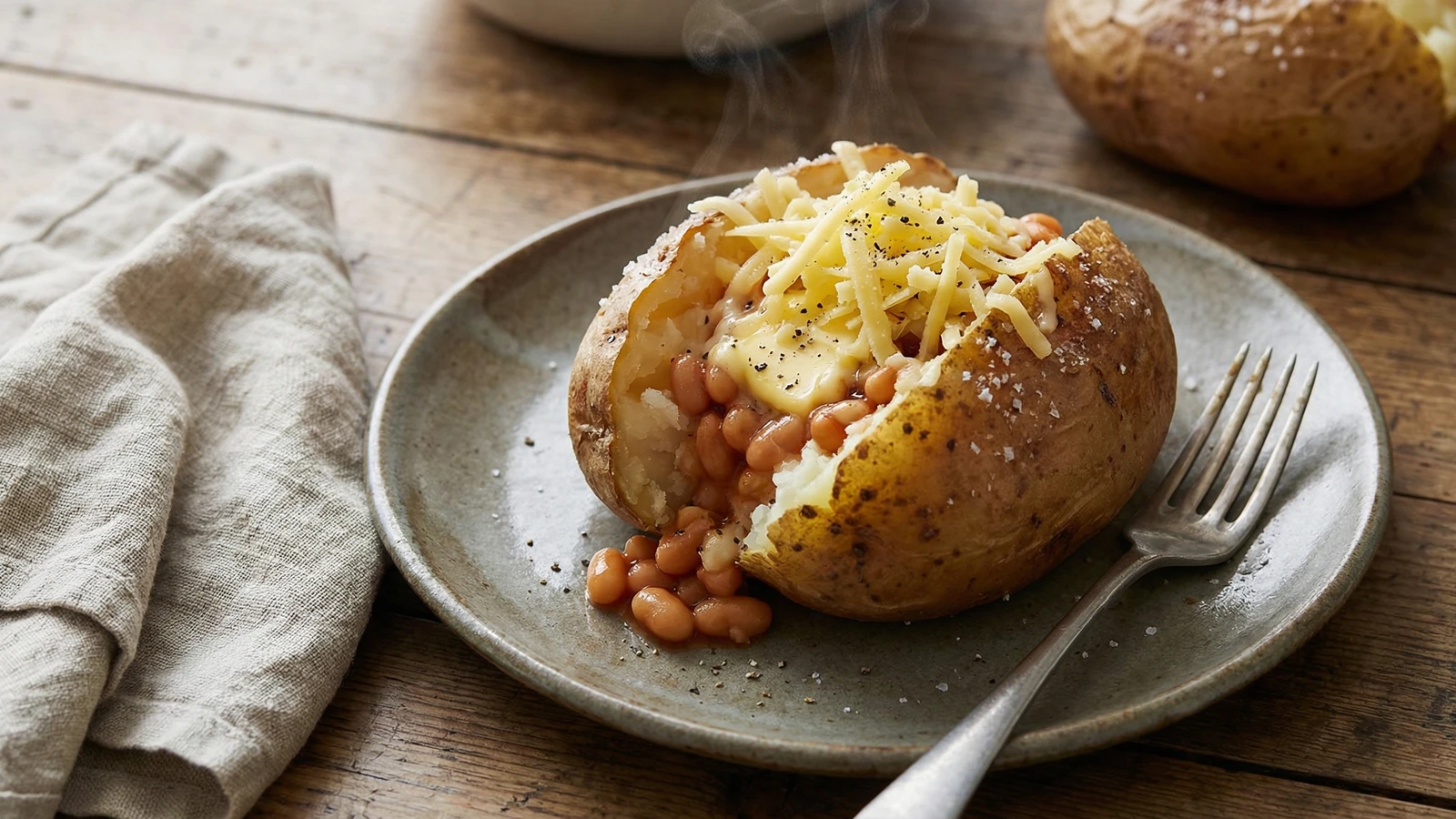
Jacket Potato with Cheese and Beans
Created by Chef Thomas
A baked potato split open and filled with butter, warm beans, and a pile of sharp cheddar, the meal that half the country comes home to when the evening asks for nothing more than comfort and a warm plate.
Rain on the window. Half past six. Nothing in the fridge that inspires you and no desire to be inspired. This is a jacket potato evening.
There are meals you plan and meals you fall back on, and the jacket potato is the greatest fallback in British cooking. A tin of beans, a block of cheddar, a potato, an hour in the oven. It costs almost nothing. It asks almost nothing. And yet the moment you split one open and the steam rises and the butter goes in and starts to melt through that floury white interior, something in you settles. Your shoulders drop. We're only making dinner.
I have written this in the notebook more times than I should probably admit. Not with any detail, just: jacket potato, beans, cheddar, Tuesday. Or Thursday. Or the kind of Sunday evening that follows a long walk when you want food that feels like being looked after without anyone having to try. The potato does all the work. You just have to let it.
Get a proper baking potato. Scrub it, oil it, salt it, and give it time. The skin should go crisp and papery, the inside so soft it almost collapses when you push the sides in. Good butter, not margarine. A mature cheddar with some bite. Beans from a tin, because that's what this meal is and there's nothing to apologise for. Some things don't need improving. They need making with care, and eating while they're hot.
The technique, the tradition, and the story behind every dish.
Discover Culinary AdvisorIngredients
large baking potatoes
Quantity
2
Maris Piper or King Edward, scrubbed clean
olive oil
Quantity
a drizzle
flaky sea salt
Quantity
generous pinch
unsalted butter
Quantity
a generous knob
baked beans
Quantity
1 x 400g tin
mature cheddar
Quantity
150g
coarsely grated
black pepper
Quantity
to taste
| Ingredient | Quantity |
|---|---|
| large baking potatoesMaris Piper or King Edward, scrubbed clean | 2 |
| olive oil | a drizzle |
| flaky sea salt | generous pinch |
| unsalted butter | a generous knob |
| baked beans | 1 x 400g tin |
| mature cheddarcoarsely grated | 150g |
| black pepper | to taste |
Equipment Needed
- •Fork for pricking
- •Small saucepan for the beans
- •A sharp knife and your hands
Instructions
- 1
Prepare the potatoes
Set the oven to 200C/180C fan. Scrub the potatoes under cold water and dry them properly. Prick each one a few times with a fork, rub them with a little olive oil, and roll them in flaky salt until the skin is coated. Put them straight on the oven shelf, no tray. This matters. Air needs to circulate around the whole potato or the base goes soggy and you've wasted an hour.
Choose potatoes that are roughly the same size so they finish together. A proper baking potato should feel heavy in your hand and have a floury variety name. Maris Piper or King Edward. Avoid waxy salad types; they won't fluff. - 2
Bake until crisp
Bake for an hour to an hour and a quarter. You'll know they're done because the skin will feel dry and papery, and if you give one a squeeze with a tea towel it will yield, the inside giving way beneath the crust. If the skin still feels tight, give them another ten minutes. There is no overcooking a jacket potato. Every minute in the oven makes the inside fluffier and the skin crispier. Patience is the only technique here.
- 3
Warm the beans
About ten minutes before the potatoes are ready, tip the beans into a small saucepan and warm them over a low heat. Stir them now and then. You want them hot and loose, not reduced to a thick paste. If they start to catch or bubble too aggressively, the heat is too high. Gentle. They need almost no attention.
- 4
Split and butter
Take the potatoes from the oven. Cut a deep cross in the top of each and squeeze the sides inward so the potato opens up like a flower, the fluffy white interior breaking through the crisp shell. A cloud of steam will come off it. Drop the butter in now, while it's too hot to think about, so it melts immediately into the flesh. Season with salt and black pepper.
- 5
Fill with beans and cheese
Spoon the warm beans over the butter, letting them run into the splits and pool around the base of the potato. Pile the grated cheddar on top, generously, more than you think looks reasonable. The heat of the potato and the beans will start to melt the cheese from the bottom up, and the top will stay in shreds that catch between your teeth. Eat immediately. This isn't a meal that waits for anyone.
Chef Tips
- •Don't wrap the potato in foil. I know people do. It steams the skin instead of crisping it, and the whole point of a jacket potato is the contrast between that shatteringly crisp, salty shell and the soft, floury inside. Foil robs you of the best part.
- •Use a mature or extra mature cheddar. Something with real sharpness and a slightly crumbly texture. A mild cheddar melts well enough but it won't taste of anything against the beans. You want the cheese to stand up and be noticed.
- •If you're feeding someone who wants more, a side of dressed leaves is enough. Watercress, if you can get it, with a squeeze of lemon. It cuts through the richness and makes the whole plate feel balanced without trying too hard.
- •Leftover baked potatoes, if such a thing exists in your house, are good halved and crisped in a hot pan with butter the next day. Breakfast, arguably.
Advance Preparation
- •You can bake the potatoes ahead of time and reheat them in a hot oven for fifteen minutes to re-crisp the skin. Not quite as good as fresh, but serviceable for a night when even an hour feels too long.
- •Grate the cheese in advance and keep it covered in the fridge. One less thing to do when you're tired and hungry.
Frequently Asked Questions
Nutrition Information
1 serving (about 535g)
Where cooking meets culture.
Culinary mentorship, cultural storytelling, and the editorial depth that makes cooking meaningful.
Explore Culinary Advisor