Culinary Advisor
A cooking platform built around craft, culture, and the stories behind what we eat.
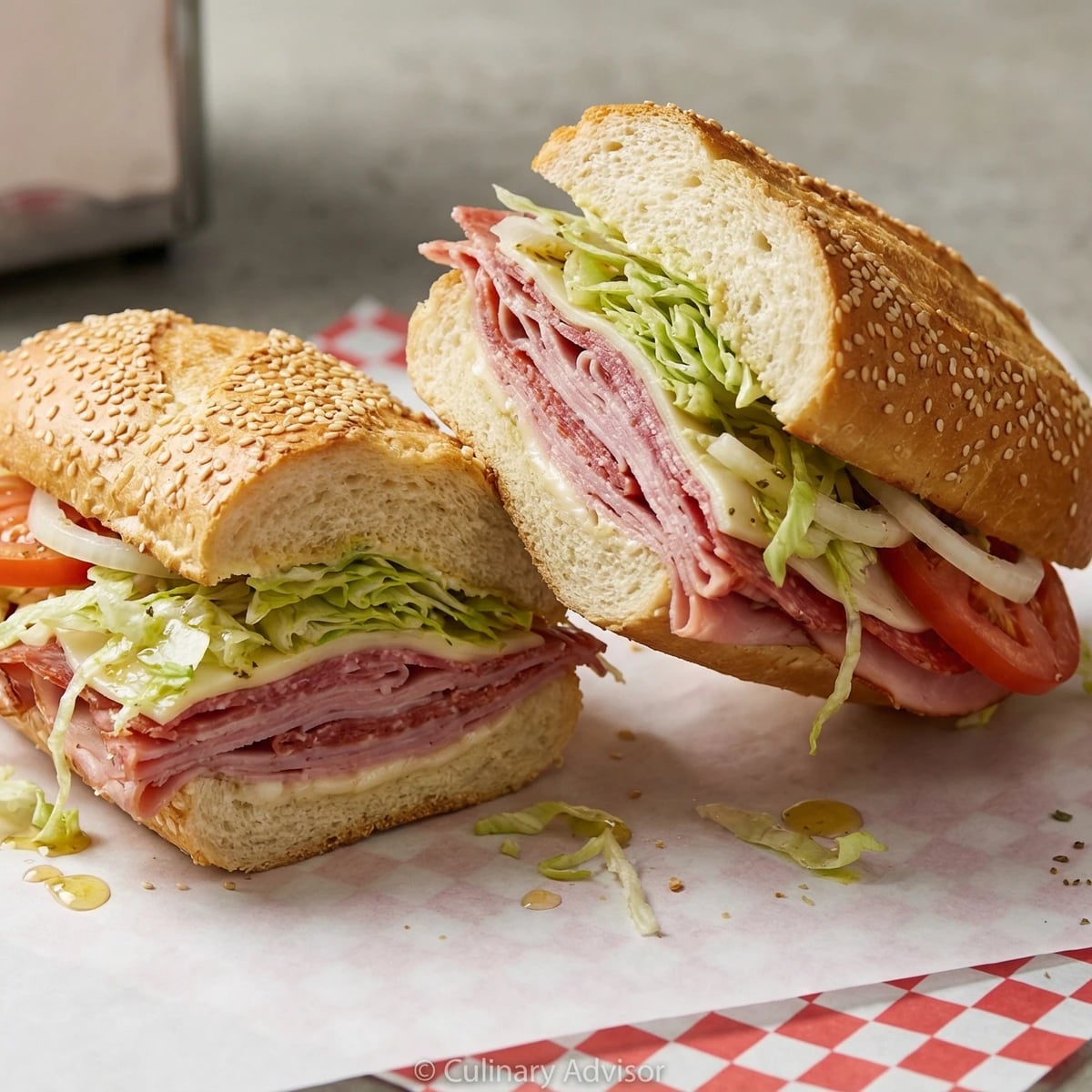
Italian Hoagie
Created by Chef Dean
The sandwich that built South Philly: three Italian cured meats layered with sharp provolone, crisp vegetables, and a garlicky oil-and-vinegar dressing on bread that crackles when you bite through it.
The Italian hoagie is Philadelphia's gift to American sandwich making. Walk into any corner deli from Passyunk to Port Richmond and you'll find the same beautiful architecture: cured meats shingled like roof tiles, sharp provolone draped over the top, shredded lettuce and tomatoes dressed in oil and oregano, all of it stuffed into bread that shatters at first bite. This is not a submarine sandwich. It is not a hero. It is a hoagie, and the distinction matters to people who grew up eating them.
The name likely comes from Hog Island, the shipyard where Italian immigrants built warships during the First World War. They brought their lunches in crusty rolls stuffed with cold cuts and cheese. Those sandwiches became hoggies, then hoagies, and eventually the defining food of a city that takes its sandwiches as seriously as its sports teams.
What makes a proper hoagie is restraint in some places and generosity in others. The bread must have structure. Soft rolls collapse under the weight and soak through with dressing. The meats should be sliced thin enough to fold, never so thick they require chewing. The vegetables stay crisp because you dress them separately and add them at the last moment. Every element earns its place.
Ingredients
Italian hoagie rolls
Quantity
4 (10-12 inches each)
preferably seeded
capicola
Quantity
1/2 pound
sliced thin
Genoa salami
Quantity
1/2 pound
sliced thin
| Ingredient | Quantity |
|---|---|
| Italian hoagie rollspreferably seeded | 4 (10-12 inches each) |
| capicolasliced thin | 1/2 pound |
| Genoa salamisliced thin | 1/2 pound |