Culinary Advisor
A cooking platform built around craft, culture, and the stories behind what we eat.
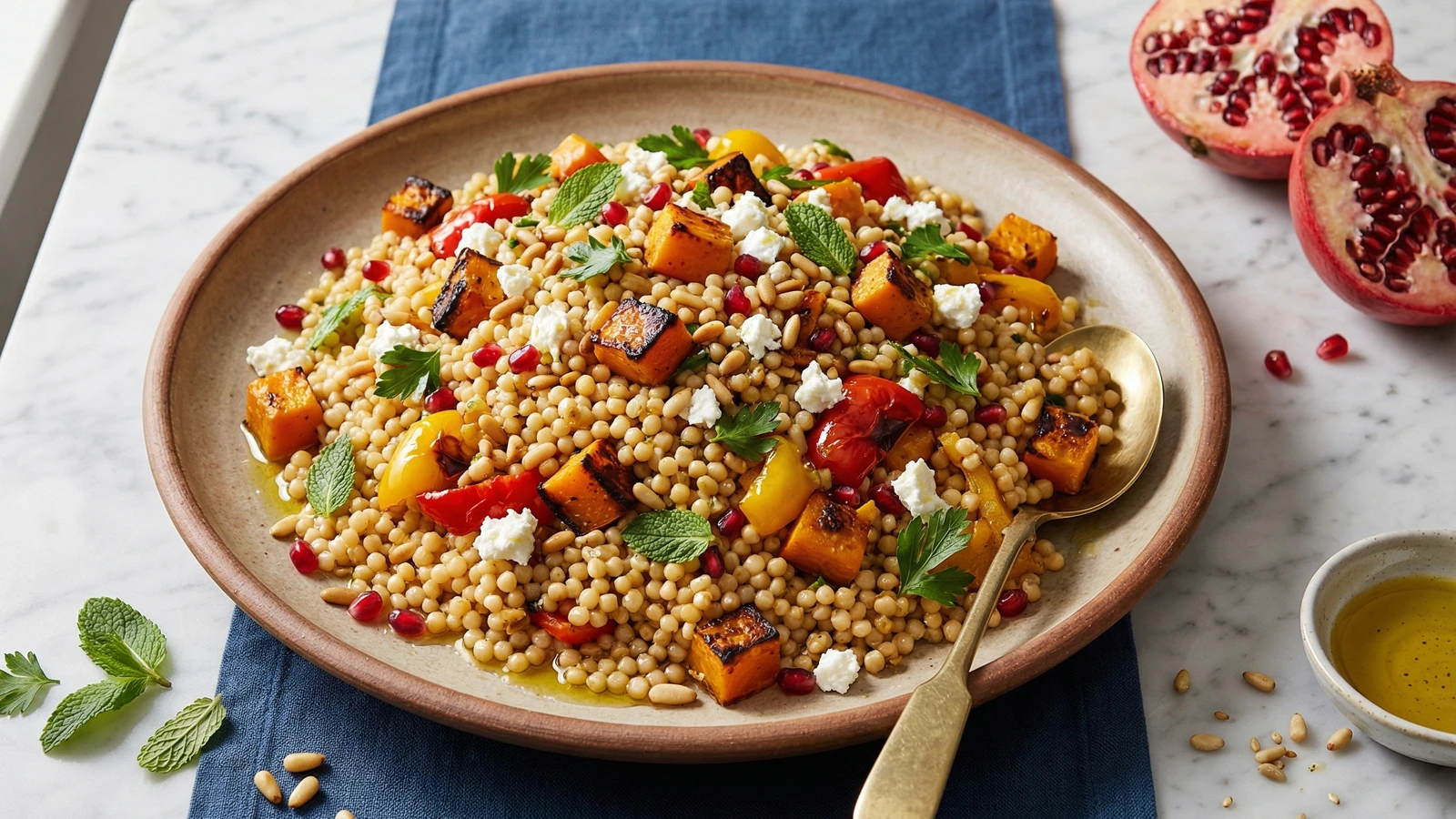
Israeli Couscous with Roasted Vegetables
Created by
Toasted pearl couscous mingled with deeply caramelized winter vegetables, bright lemon, and fresh herbs. This is Mediterranean comfort food built for celebration, equally stunning on a Hanukkah buffet or a Tuesday supper.
Israeli couscous has a story worth knowing. Born in the 1950s during Israel's austerity years when rice was scarce, these little pearls of toasted semolina became a staple out of necessity. The Israelis call it ptitim. What started as a humble substitute evolved into something beloved on its own merits: chewy, nutty, golden when properly toasted, and infinitely versatile.
For Hanukkah, this dish carries particular meaning. The holiday celebrates the miracle of oil, and good olive oil runs through every element here. It roasts your vegetables to caramelized perfection. It coats the couscous with richness. It binds the final dressing into something silky and bright. Use the best you can afford. You'll taste the difference.
What makes this recipe ideal for gatherings is its patience. Unlike delicate sides that demand last-minute attention, this one improves as it sits. The vegetables meld with the couscous. The herbs perfume everything. You can make it entirely ahead, refrigerate it overnight, and bring it to room temperature while the latkes fry and the brisket rests. That's the kind of dish a cook needs during the holidays.
The technique is honest and forgiving. High heat for the vegetables, a proper toast on the couscous, and a lemon dressing that brightens without overwhelming. Nothing complicated. Just good ingredients treated with respect.
The technique, the tradition, and the story behind every dish.
Discover Culinary AdvisorIngredients
Israeli couscous (pearl couscous/ptitim)
Quantity
2 cups
butternut squash
Quantity
1 medium (about 2 lbs)
peeled and cut into 3/4-inch cubes
red bell peppers
Quantity
2
cut into 1-inch pieces
yellow bell pepper
Quantity
1
cut into 1-inch pieces
red onion
Quantity
1 large
cut into 1-inch wedges
extra-virgin olive oil
Quantity
6 tablespoons, divided
ground cumin
Quantity
1 teaspoon
ground coriander
Quantity
1/2 teaspoon
kosher salt
Quantity
to taste
freshly ground black pepper
Quantity
to taste
garlic
Quantity
4 cloves
minced
chicken or vegetable broth
Quantity
2 3/4 cups
lemon
Quantity
1 large
zested and juiced
fresh flat-leaf parsley
Quantity
1/2 cup
roughly chopped
fresh mint leaves
Quantity
1/4 cup
torn
pine nuts
Quantity
1/3 cup
toasted
pomegranate seeds
Quantity
1/2 cup
feta cheese (optional)
Quantity
4 oz
crumbled
| Ingredient | Quantity |
|---|---|
| Israeli couscous (pearl couscous/ptitim) | 2 cups |
| butternut squashpeeled and cut into 3/4-inch cubes | 1 medium (about 2 lbs) |
| red bell pepperscut into 1-inch pieces | 2 |
| yellow bell peppercut into 1-inch pieces | 1 |
| red onioncut into 1-inch wedges | 1 large |
| extra-virgin olive oil | 6 tablespoons, divided |
| ground cumin | 1 teaspoon |
| ground coriander | 1/2 teaspoon |
| kosher salt | to taste |
| freshly ground black pepper | to taste |
| garlicminced | 4 cloves |
| chicken or vegetable broth | 2 3/4 cups |
| lemonzested and juiced | 1 large |
| fresh flat-leaf parsleyroughly chopped | 1/2 cup |
| fresh mint leavestorn | 1/4 cup |
| pine nutstoasted | 1/3 cup |
| pomegranate seeds | 1/2 cup |
| feta cheese (optional)crumbled | 4 oz |
Equipment Needed
- •Two large rimmed baking sheets
- •Medium saucepan with lid (3-quart capacity)
- •Large wide serving bowl or platter
- •Small dry skillet for toasting nuts
Instructions
- 1
Roast the vegetables
Heat your oven to 425°F with racks positioned in the upper and lower thirds. Spread the butternut squash on one large rimmed baking sheet and the peppers and onion on another. Drizzle each pan with 2 tablespoons of olive oil. Sprinkle the cumin and coriander over the squash, then season everything generously with salt and pepper. Toss with your hands until every piece glistens. Spread in single layers with space between the pieces. Crowding creates steam, and steam prevents browning. Roast for 35 to 40 minutes, rotating the pans halfway through, until the vegetables are deeply caramelized at the edges and tender when pierced. The squash should have golden, slightly charred spots. Set aside to cool slightly.
Cut your vegetables to uniform sizes. The squash takes longer than the peppers, so slightly smaller squash cubes help everything finish together. - 2
Toast the couscous
While the vegetables roast, heat the remaining 2 tablespoons of olive oil in a medium saucepan over medium heat. Add the couscous and stir constantly for 3 to 4 minutes. Listen for it. The pearls will begin to crackle and pop like distant rain on a roof. Watch the color shift from pale to golden, some pearls turning the color of hazelnuts. This toasting step is not optional. It transforms bland pasta into something with real depth and a pleasant chew.
Don't walk away during toasting. The pearls go from golden to burned in about thirty seconds, and there's no recovering from that. - 3
Cook the couscous
Add the minced garlic to the toasted couscous and stir for 30 seconds until fragrant. Pour in the broth carefully. It will sputter and hiss. Add a generous pinch of salt, bring to a boil, then reduce to a simmer. Cover and cook for 10 to 12 minutes until the liquid is absorbed and the couscous is tender but still has some bite. Remove from heat and let it stand, covered, for 5 minutes. Fluff with a fork and transfer to a large, wide serving bowl to cool slightly.
- 4
Make the lemon dressing
In a small bowl, whisk together the lemon juice, lemon zest, and 2 tablespoons of olive oil. Season with salt and pepper. Taste it. The dressing should be bright and assertive. It will mellow once it meets the starchy couscous and sweet vegetables.
- 5
Combine everything
Add the roasted vegetables to the couscous. Pour the lemon dressing over and fold gently with a large spoon, taking care not to crush the squash cubes. They should hold their shape. Add the parsley and mint, reserving a tablespoon of each for garnish, and fold again. Taste and adjust seasoning. The dish can handle more lemon if it tastes flat, more salt if the flavors aren't singing.
- 6
Garnish and serve
Transfer to a serving platter if not already in one. Scatter the toasted pine nuts and pomegranate seeds across the top. The red jewels against the gold and green make this dish look like a celebration, which it is. Add crumbled feta if using. Finish with the reserved herbs and a final drizzle of your best olive oil. Serve at room temperature for the fullest flavor.
For Hanukkah tradition, use a particularly fine olive oil for that finishing drizzle. The holiday honors the miracle of oil, and this small gesture connects the dish to its occasion.
Chef Tips
- •Seek out Israeli couscous in the international aisle or order it from a Middle Eastern grocery. The imported brands from Israel often have better texture than domestic versions. In a pinch, look for it labeled as pearl couscous or ptitim.
- •Toast your pine nuts in a dry skillet over medium-low heat, shaking frequently, until golden and fragrant. This takes only 2 to 3 minutes. Watch them like a hawk. They burn without warning and turn bitter.
- •For a vegan version, use vegetable broth and skip the feta. The dish is just as satisfying. Add a handful of chickpeas for protein if you want more substance.
- •This pairs beautifully with a crisp, unoaked white wine. A Sauvignon Blanc or an Israeli Viognier would complement the lemon and herbs without competing with the sweeter vegetables.
- •Leftover couscous keeps well for 4 days refrigerated. It makes an excellent lunch, cold or gently reheated. Add fresh herbs before serving again to brighten it.
Advance Preparation
- •The entire dish can be assembled up to 24 hours ahead. Store covered in the refrigerator and bring to room temperature 1 hour before serving. Add the pine nuts, pomegranate seeds, and fresh herbs just before presenting.
- •Vegetables can be roasted 2 days in advance and refrigerated. Bring to room temperature before combining with freshly made couscous.
- •The couscous itself can be cooked a day ahead, tossed with a tablespoon of olive oil to prevent clumping, and refrigerated. Let it come to room temperature before proceeding.
- •For large gatherings, double the recipe and use two platters. The dish holds well on a buffet for 2 to 3 hours at room temperature.
- •Toast pine nuts up to a week ahead and store in an airtight container at room temperature. This removes one last-minute task on the day of your gathering.
Frequently Asked Questions
Nutrition Information
1 serving (about 356g)
Where cooking meets culture.
Culinary mentorship, cultural storytelling, and the editorial depth that makes cooking meaningful.
Explore Culinary Advisor